
China Top 10 LCD Display Screen Manufacturers

Time:2026-10-31 Author:Mason
0%

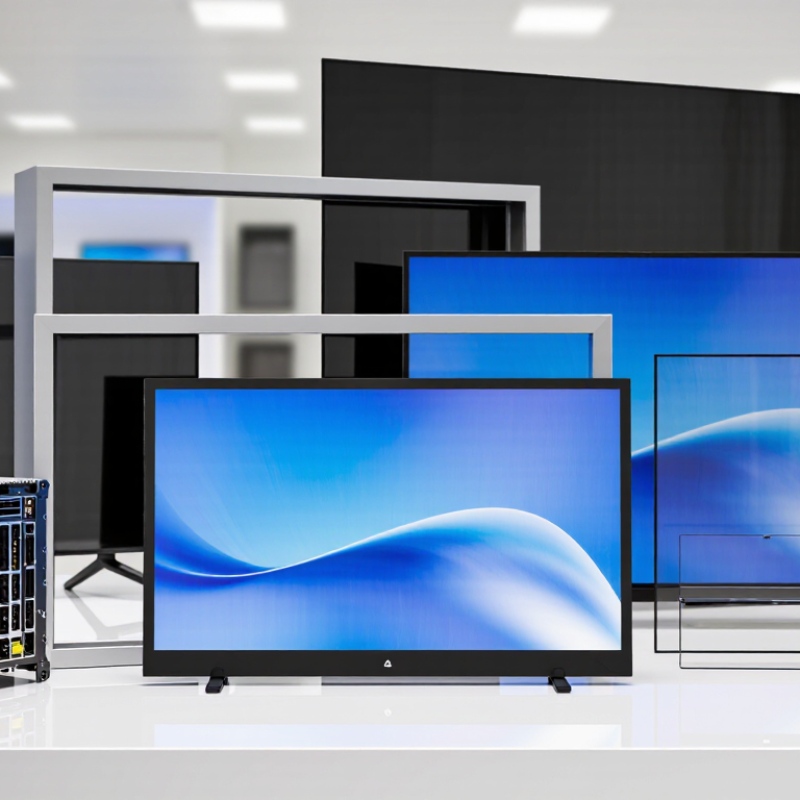
Choosing a supplier from China’s top 10 LCD display screen manufacturers takes more than comparing prices. A Lcd Display Screen may look simple in a product photo, yet its performance depends on the panel, backlight, touch layer, controller, and assembly quality. Small differences can affect brightness, viewing angles, color consistency, and service life. Details matter.

This guide introduces manufacturers serving different needs, from compact industrial displays to larger commercial panels. It considers practical factors such as product range, customization options, production experience, quality-control processes, and communication during sampling. Buyers should also confirm specifications, request current test records, and assess whether a supplier can support the intended operating environment. A screen used near a sunny shop window faces different demands from one installed inside a control cabinet.

A ranked list can help narrow the field, but it cannot replace direct verification. Capabilities change, and a strong catalogue does not guarantee a smooth project. That part is easy to overlook. Compare sample units, clarify warranty terms, and ask how defects are handled before placing a substantial order. This overview offers a starting point, not a final verdict. The best manufacturer is the one whose documented capabilities and actual samples match your requirements—not simply the one with the boldest claims.
China Top 10 LCD Display Screen Manufacturers

LCD Technology and Core Metrics: Pixel Density, Refresh Rate, and Response Time

For LCD screens, pixel density tells you how finely a panel can render detail. A 27-inch, 2560 × 1440 display measures about 109 pixels per inch; the same size at 3840 × 2160 reaches about 163 PPI. These figures are calculated from resolution and screen diagonal. The Society for Information Display’s International Display Measurements Standard (IDMS) provides standardized methods for characterizing display performance, helping buyers compare specifications on consistent terms.

Refresh rate describes how often the image updates. At 60 Hz, a frame lasts about 16.7 milliseconds; at 144 Hz, it lasts about 6.9 milliseconds. The shorter interval can make scrolling and motion look smoother, but only when the source content and graphics hardware can supply matching frames. VESA’s Adaptive-Sync Display Compliance Test Specification evaluates variable-refresh behavior across supported ranges. The headline number is not the whole story.

Response time measures how quickly pixels change between shades, often reported as gray-to-gray. A quoted 1 ms result may reflect a specific transition or overdrive setting, not every pixel change. That detail matters. Fast overdrive can create bright or dark trails around moving objects, visible against a gray test pattern. Compare measurements taken with consistent methods, such as those described in SID’s IDMS, and check whether the test reports average transitions. Still, no single number captures every viewing condition; ambient light, panel tuning, and the content itself can alter what the eye notices.

China’s LCD Industry: Gen 8.6–10.5 Fabs and Panel Production Capacity

China Top 10 LCD Display Screen Manufacturers

China’s LCD Industry: Gen 8.6–10.5 Fabs and Panel Production Capacity

China’s LCD capacity is shaped by large-generation fabs, especially Gen 8.6 and Gen 10.5 lines. Their wide glass sheets can yield multiple television panels in one cutting plan. The exact number depends on panel size, layout, and production yield. Bigger sheets help, but they do not guarantee lower costs.

Capacity figures need careful reading. Monthly glass input is not the same as finished-panel output. Product mix, maintenance, and process yield all affect what a fab can deliver. A line running at high utilization may still produce fewer usable panels when defects rise. It is a detail worth checking.

Gen 8.6 lines can serve several panel formats, while Gen 10.5 fabs are often suited to very large displays. Equipment investment is substantial, and stable output depends on precise temperature control, clean handling, and consistent materials. A tiny particle can spoil a panel. Capacity alone tells only part of the story; buyers should also examine yield, delivery records, and quality controls. Public figures may be estimates, so comparisons deserve some caution.

China Top 10 LCD Display Screen Manufacturers — China’s LCD Industry: Gen 8.6–10.5 Fabs and Panel Production Capacity An anonymized overview of major LCD fab sites and their publicly reported nominal substrate capacity
Profile Fab Location Generation Nominal Capacity
(substrates/month)
Typical Panel Applications
Anonymous Site 01 Hefei, Anhui Gen 10.5 Approximately 120,000 Large-size televisions and commercial displays
Anonymous Site 02 Wuhan, Hubei Gen 10.5 Approximately 120,000 Large-size television panels and ultra-high-definition displays
Anonymous Site 03 Shenzhen, Guangdong Gen 11 Approximately 90,000 Large television panels and digital signage
Anonymous Site 04 Guangzhou, Guangdong Gen 11 Approximately 90,000 Large television panels and public-information displays
Anonymous Site 05 Xiamen, Fujian Gen 8.6 Approximately 120,000 Television, monitor, notebook, and automotive displays
Anonymous Site 06 Mianyang, Sichuan Gen 8.6 Approximately 120,000 Television and monitor panels
Anonymous Site 07 Chongqing Gen 8.6 Approximately 120,000 Large television panels and commercial displays
Anonymous Site 08 Chuzhou, Anhui Gen 8.6 Approximately 120,000 Television and monitor panels
Anonymous Site 09 Nanjing, Jiangsu Gen 8.5 Approximately 60,000 Television, monitor, and notebook panels
Anonymous Site 10 Chengdu, Sichuan Gen 8.6 Approximately 60,000 Television, monitor, and IT display panels

Note: Company and brand names are intentionally omitted. Capacities are rounded public-announcement/design figures for fab substrate input, not finished-panel output. Actual operating capacity and product mix vary by site and over time; the profiles are not a corporate ranking.

Ranking the Top 10: Shipments, Capacity, Yield, and R&D Investment

A credible top-ten ranking needs more than shipment volume. TrendForce’s 2024 outlook placed global LCD TV panel shipments at roughly 265 million units, showing the scale of the market. Yet shipments alone can reward size, not consistency. A useful comparison should weigh shipments, installed capacity, production yield, and research spending separately. Capacity is the factory’s ceiling; shipments show what actually left the line. The gap matters.

Regional capacity also shapes the contest. Display Supply Chain Consultants’ capacity analysis has placed China at roughly 70% of global LCD capacity, though estimates vary by panel type and measurement year. Yield figures are less transparent, so public rankings should label them as estimates, not audited facts. Look for sustained utilization, defect trends, and delivery reliability. Tiny flaws count. R&D investment needs similar care: compare spending as a share of revenue, not only in dollars, or larger manufacturers gain an automatic advantage. One weakness remains: public data rarely lets readers verify comparable yields across factories. A ranking should say so plainly.

Profiles of Leading Chinese LCD Makers: Products, Markets, and Specifications

China’s LCD makers serve a wide range of display needs, from compact control panels to large commercial screens. Their product portfolios may include standard TFT modules, touch displays, high-brightness panels, and custom-sized assemblies. Some focus on high-volume consumer devices, while others support industrial equipment, vehicle dashboards, or retail signage.

Specifications vary by model. Buyers should compare screen size, resolution, brightness, viewing angle, interface, operating temperature, and expected service life. A 7-inch panel with an LVDS connection, for example, may suit a machine console but not a sunlit outdoor kiosk. Ask for the full datasheet and sample unit. Check how brightness is measured, too; figures can be difficult to compare when testing conditions differ.

Manufacturing capabilities matter beyond the panel itself. Confirm whether a supplier handles touch bonding, cover glass, backlight customization, and reliability testing in-house or through partners. Request details on production capacity, quality checks, and replacement procedures. A polished catalog helps, but it cannot reveal every limitation. Sample testing may expose color shifts or connector issues that specifications overlook. This extra step takes time, and it is easy to skip when schedules tighten.

China’s LCD Display Industry: Common Screen Resolutions

A specification comparison of widely used LCD display formats, expressed as total pixels in megapixels.

Pixel counts are calculated from each format’s horizontal and vertical resolution. They describe display specifications, not manufacturer output or market share.

Supplier Comparison: Resolution, Brightness, Contrast Ratio, and Reliability

When comparing China’s top LCD display screen manufacturers, look beyond a quoted resolution. A 1920 × 1080 panel may appear sharp on paper, yet viewing distance and screen size affect perceived detail. Ask for the exact panel specification and a sample image at its intended operating distance. Brightness should suit the environment: a display near a sunlit window needs more output than one used in a dim control room. Request measured brightness, not just a marketing figure, and check whether it remains consistent across the screen.

Tips: Compare contrast under the same settings. Ask how it was measured, and request a sample for side-by-side viewing. Small differences can be hard to judge from datasheets alone.

Reliability depends on more than a long-life claim. Ask about operating temperature, backlight lifetime assumptions, burn-in or aging tests, and inspection procedures. Clarify whether replacement units will match the original brightness and color, especially for multi-screen installations. Review warranty terms and typical production lead times in writing. A supplier’s test report is useful, but it does not guarantee every shipment will perform identically. I would also check a sample after several hours of use; a quick inspection can miss uneven backlighting or slow response. Comparison tables help, but they can hide important testing differences.

FAQS

What is the difference between Gen 8.6 and Gen 10.5 LCD fabs?

Gen 8.6 lines can serve several panel formats. Gen 10.5 fabs often suit very large displays. Cutting results depend on panel size, layout, and production yield.

Does monthly glass input show how many finished panels a fab can deliver?

No. Product mix, maintenance, and process yield affect finished output. High utilization can still produce fewer usable panels when defects rise. Not quite.

Which display specifications should buyers compare?

Compare screen size, resolution, brightness, viewing angle, interface, operating temperature, and service life. A 7-inch LVDS panel may suit a machine console, but not a sunlit kiosk.

How can buyers compare brightness fairly?

Ask for measured brightness and the conditions used for testing. Check consistency across the screen. Numbers can mislead.

What should buyers check in a sample display?

View it at the intended distance and compare samples side by side. Check color shifts, connector fit, uneven backlighting, and response after several hours. Quick checks can miss things.

Which manufacturing capabilities should buyers confirm?

Ask whether touch bonding, cover glass, backlight customization, and reliability testing are handled in-house or through partners. Request production capacity and replacement details.

What reliability information is useful?

Request operating temperature limits, backlight lifetime assumptions, aging tests, inspection procedures, warranty terms, and lead times. Ask whether replacement panels will match brightness and color.

Do test reports guarantee every shipment will perform identically?

No. Reports are useful, but individual shipments may vary. I would check a sample after extended use, even when the paperwork looks complete.

Conclusion

This article explores the technology and manufacturing landscape behind China’s LCD display industry. It explains how pixel density, refresh rate, and response time shape image clarity and motion performance, then examines the role of Gen 8.6–10.5 fabrication lines in expanding panel production capacity. The ranking framework considers shipment volume, manufacturing capacity, yield, and research and development investment, offering a structured way to compare leading manufacturers without focusing on brand names.

The article also reviews common product categories, target markets, and technical specifications across the industry. A practical supplier comparison highlights resolution, brightness, contrast ratio, and reliability, helping readers understand how these factors affect an Lcd Display Screen’s suitability for different applications. Together, these topics provide a clear overview of China’s LCD manufacturing strengths and the metrics that matter when evaluating display suppliers.

Mason

Mason

Mason is a seasoned marketing professional with a deep expertise in the company's offerings and a passion for driving brand awareness. With a strong background in digital marketing strategies, he has an innate ability to connect with diverse audiences and effectively communicate product benefits.......