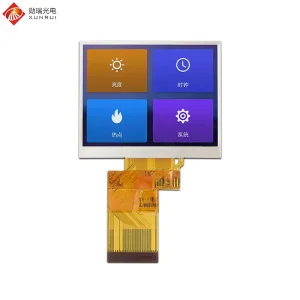
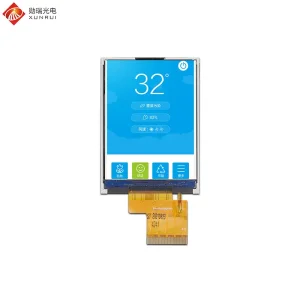
Featured Standard TFT LCD Panels
Factory-direct high-yield modules available for sample benchmarking, pilot trials, and volume deployment across industrial platforms.








Anatomy of an Industrial-Grade Standard TFT LCD Module
Standard thin-film transistor liquid crystal displays (TFT LCD) represent the backbone of mission-critical visual interfaces. Understanding optoelectronic stack dynamics ensures resilient deployment across harsh operating lifecycles.
Liquid Crystal Mode: TN vs. IPS
Twisted Nematic (TN) panels provide cost efficiency and rapid response rates ideal for straightforward numerical readouts. In-Plane Switching (IPS) modulates crystal molecules parallel to the glass substrates, enabling full symmetric viewing angles (85/85/85/85) without color shift or grayscale inversion in multi-operator cockpits.
Backlight Rail & Thermal Dissipation
Standard modules utilize high-efficacy white phosphor LED (WLED) edge-lit matrices driven by constant current circuits. Thermal modeling minimizes localized hotspot degradation, preserving luminance half-life exceeding 50,000 operational hours at elevated ambient thresholds.
Signaling Architecture & EMI Immunity
Display interfacing demands strict balance between pin count and clock frequency. Xunrui configures RGB TTL, MCU 8080/6800, SPI, LVDS differential signaling, and high-speed MIPI-DSI, integrating high-density FPC layout with grounding planes to surpass EN 55032 Class B EMC standards.
| Interface Protocol | Typical Screen Size Range | Pixel Bandwidth Capability | Pin Count Envelope | Optimal Deployment Arena |
|---|---|---|---|---|
| SPI (Serial Peripheral) | 0.96" to 3.5" | Low to Medium (QVGA) | 4 to 10 Pins | Ultra-low-power microcontrollers, IoT wearables |
| MCU (8/16-bit Parallel) | 2.0" to 4.3" | Medium (up to 480×320) | 30 to 40 Pins | Industrial instrumentation, smart thermostats |
| RGB TTL (16/18/24-bit) | 3.5" to 7.0" | High (WVGA 800×480) | 40 to 54 Pins | Medical diagnostic terminals, laboratory equipment |
| LVDS (Single/Dual CH) | 7.0" to 21.5" | Very High (1080p, WXGA) | 20 to 40 Pins | HMIs, factory automation, commercial infotainment |
| MIPI-DSI (2/4 Data Lanes) | 4.0" to 10.1" | Ultra-High (FHD+) | 24 to 34 Pins | AI edge smart cameras, rugged mobile tablets |
China Factory 4.0: Supply Chain Agility & Precision Execution
Established in 2016 in Shenzhen's Bao'an industrial corridor, Xunrui Optoelectronic leverages the world's most concentrated display ecosystem to deliver scalable, disruption-proof component lifecycles.
Automated COG & FOG Bonding
Our facility houses high-precision chip-on-glass (COG) and film-on-glass (FOG) thermo-compression bonding equipment. Visual alignment tolerances within ±3 microns ensure perfect conductive particle contact, eliminating micro-cracking and intermittent open-circuit faults.
Direct Upstream Glass Agreements
Strategic partnerships with primary tier-1 glass foundries guarantee long-term cell availability. We mitigate End-of-Life (EOL) volatility by establishing 5 to 7-year continuous availability agreements for our industrial-tier standard product line.
100% Thermal & Burn-In Aging
Zero-defect reliability is maintained through mandatory burn-in cycles. Every batch undergoes accelerated high-temperature (+70°C) and cold-storage (-30°C) stress testing before final visual inspection with optical micro-analyzers.
Domain-Specific Human-Machine Display Paradigms
Standard TFT LCD modules must be architecturally tuned to the mechanical, environmental, and computational constraints of target application sectors.
Smart Industrial HMIs
Configured for constant industrial plant operation. High electromagnetic susceptibility (EMS) shielding, heavy-duty resistive touch (RTP) for thick leather glove operation, and anti-static coating rated for harsh industrial environments.
Medical Diagnostics & Care
Crisp IPS panels engineered with precise gamma calibration for patient telemetry monitors, infusers, and ultrasound stations. Chemically strengthened anti-glare cover glasses tolerate frequent hospital sterilization with alcohol solvents.
Automotive & Marine Fleets
High-brightness backlights scaling up to 1,000+ nits with transflective polarizers ensure direct sunlight readability. Wide operating temperature tolerance (-30°C to +85°C) withstands intense dashboard solar load and sub-zero engine cold-starts.
Smart IoT & Building Automation
Bar, round, and square standard modules optimized for smart thermostats, luxury appliances, and rotary encoders. Supports simplified SPI/MCU driver topologies that reduce MCU peripheral costs on mass-market smart devices.
Enterprise Sourcing Mandates: Quality, Logistics & Compliance
We align with international supply-chain procurement protocols, mitigating supplier switching risks and ensuring smooth customs clearance worldwide.
RoHS, REACH & Conflict Mineral Compliance
Every standard module is manufactured with strictly vetted bill of materials (BOM). Xunrui provides full RoHS 2.0 (EU 2015/863) certifications, REACH SVHC declarations, and Responsible Minerals Initiative (RMI) reporting for frictionless compliance audits.
Flexible Pilot-to-Volume MOQ Framework
Bridging the gap between initial prototyping and container-scale production: Sample batches for verification, 5–500 pcs pilot production runs for pre-market testing, and scalable 1,000+ unit mass production scaling with locked pricing tiers.
Dedicated Engineering Application Support (FAE)
Hardware engineers work directly with your firmware designers. Xunrui provides standard driver source code (C/C++), timing initialization tables, connector pin mapping, and quick-turn hardware adapter boards for rapid system integration.
Future Display Technology: The 2026-2030 Horizon
Standard TFT architectures continue to evolve. Here is how our optoelectronic R&D pipeline is advancing panel longevity, optical contrast, and energy efficiency.
Mini-LED Local Dimming Backlights
By replacing traditional edge-lit arrays with thousands of discrete micro-diodes grouped into local dimming zones, next-generation standard modules achieve contrast ratios exceeding 100,000:1 without the burn-in vulnerabilities of organic OLED displays.
Ultra-Low Power Reflective & Transflective Cell Tech
Engineered for off-grid outdoor nodes and portable medical gear. Combining ambient light harvesting with auxiliary LEDs drops daytime operational backlight power consumption by up to 75% compared to emissive-only screens.
Integrated Edge-AI Touch & Haptic Microcontrollers
Integrating touch sensing controllers, temperature drift compensation, and haptic driver ICs straight onto the module's FPC reduces external host PCB component counts while delivering instantaneous capacitive interaction.
Frequently Asked Technical Questions
Common inquiries evaluated by our senior optoelectronic engineers during procurement reviews.
Industrial-grade standard TFT LCD backlights from Xunrui feature an MTBF (Mean Time Between Failures) rated at 30,000 to 50,000 operational hours before reaching 50% luminance degradation, assuming operation within standard current parameters and an ambient temperature range of 25°C.
Sunlight readability is achieved by configuring high-efficiency LED strings (producing 800 to 1,500 nits of surface luminance), applying Anti-Reflective (AR) and Anti-Glare (AG) surface films, and utilizing optical bonding (OCA/OCR) to eliminate internal air-gap refractions.
TN panels align liquid crystal molecules perpendicularly, providing low-cost performance with restricted viewing angles (prone to grayscale inversion when viewed from below). IPS switches crystals horizontally, delivering wide 178° viewing angles and uniform color reproduction across all perspectives.
Yes. Although our standard models feature established catalog pinouts, Xunrui supports fully tailored Flexible Printed Circuit (FPC) redesigns, pin remapping, custom trace layouts, and connector transitions (e.g., ZIF to Board-to-Board) to drop directly into existing enclosures.
More Standard TFT LCD Modules
Explore additional compact, handheld, and sub-system display configurations manufactured for global technology integrators.