

Featured High Brightness TFT Modules
Optical bonding ready, sunlight-readable modules ranging from 1000 to 1200+ nits with IPS/TN glass configurations.

China 7 inch 1024×600 1000nit High brightness IPS TFT LCD module Manufacturers, Suppliers
View Specifications
China 5 inch 800×480 1200nit High brightness TN TFT LCD module Suppliers, Factories
View Specifications
China 4.3 inch 800×480 1000nit High brightness IPS TFT LCD module Supplier, Factory
View Specifications
Custom 3.5 inch 1000nit High Brightness IPS TFT LCD Module Manufacturers, Suppliers
View Specifications
Custom 5 inch 720×1280 MIPI 40pin 1000nit IPS TFT LCD Display Manufacturer, Supplier
View Specifications
Custom 5 inch 480×854 RGB 40pin 1000nit IPS TFT LCD Module Manufacturer, Manufacturers
View Specifications
China 7 inch 800×480 1000nit Wide Operating Temperature Range TN TFT LCD Display Manufacturer, Manufacturers
View SpecificationsGlobal Landscape & Industrial Engineering Realities
A rigorous examination of optical physics, thermal dissipation dynamics, and solar wash-out mitigation in industrial human-machine interfaces.
Contrast Ratio vs. Raw Luminance
Deploying outdoor display hardware requires more than driving high current into LED strings. In environments with direct ambient illumination exceeding 10,000 lux, readability is dictated by the Effective Contrast Ratio (ECR). Without specialized optical treatment, surface reflections wash out luminance. Xunrui optoelectronics integrates high-transmission polarizers and anti-reflective coatings to ensure crisp readability even at wide viewing angles.
Thermal Equilibrium & Blackout Protection
Driving LED arrays at 1000–1500 nits produces elevated thermal concentrations within the back bezel. When liquid crystal molecules breach their clearing point (Tni), isotropic phase transition causes irreversible liquid crystal blackening. Our high-brightness modules combine thermal dissipation substrates, high-clearing-point fluid (-30°C to +85°C), and copper-alloy FPC routing to ensure uninterrupted uptime under solar load.
Full Optical Lamination (OCA/LOCA)
Traditional air-gap bonding leaves an air buffer between the cover glass, touch sensor, and LCD stack, resulting in an internal refraction loss of roughly 8.5%. Xunrui deploys vacuum optical bonding using optically clear adhesive (OCA) or liquid resin (LOCA). This index-matches refractive indices, eliminates internal condensation, and enhances impact absorption against mechanical shock (IK08 to IK10).
| Architecture Parameter | Standard Commercial TFT | High-Brightness Industrial (Xunrui) | Operational Value |
|---|---|---|---|
| Luminance Target | 250 - 350 cd/m² | 1,000 - 1,500+ cd/m² | Direct solar readability without wash-out |
| Bonding Architecture | Air Gap (Double-sided tape) | Full Optical Bonding (OCA / LOCA) | Eliminates internal fogging; boosts shock resistance |
| Operating Temperature | -10°C to +60°C | -30°C to +85°C (Extended) | Prevents liquid crystal clearing/freezing in outdoor gear |
| Surface Coatings | Standard Glossy / Semi-Glare | AG (Anti-Glare) + AR (Anti-Reflective) + AF | Reflectivity pushed below 1.5%; smudge-resistant touch |
| LED Half-Life (MTTF) | 20,000 - 30,000 Hours | 50,000 - 70,000 Hours | Guarantees 24/7 continuous operation in kiosk and automotive use |
Macro Industry Trends & Future Roadmap
Evaluating the market shift toward intelligent local dimming, dynamic power efficiency, and unified interface convergence.
Edge-Lit to Direct Mini-LED Migration
Next-generation rugged equipment is moving beyond conventional edge-lit backlights. Micro/Mini-LED local dimming zones provide deep blacks, eliminate light bleed, and drastically reduce standby power draw in battery-powered instrumentation.
Photometric Smart Dimming
Modern outdoor terminals incorporate PWM ambient sensor controllers that modulate nit output dynamically from broad daylight (1200+ nits) down to pitch blackness (under 50 nits), mitigating operator glare and prolonging LED lifetime.
Interface Harmonization (eDP & MIPI)
Industrial motherboards and smart SoCs are transitioning rapidly away from classic parallel RGB interfaces toward dual-lane LVDS, 4-lane MIPI-DSI, and multi-lane embedded DisplayPort (eDP), delivering improved EMI containment and higher refresh rates.
Integrated PCAP Touch Tuning
High-brightness panels produce electromagnetic high-frequency noise from boosted LED drivers. Xunrui integrates custom Ilitek, Goodix, or FocalTech firmware to deliver reliable palm rejection, water-surface operation, and thick winter-glove tracking.
Engineered Field Deployments & Case Scenarios
Configured for strict mechanical tolerances, environmental stressors, and critical human-machine interface requirements.
Automotive & Fleet Dashboards
Engineered to handle severe vehicular vibration, direct cabin solar irradiance, and strict automotive standards. Custom bar-cut and circular displays integrate into dashboard instrumentation and agricultural telematics.
EV Charging & Fuel Terminals
Public-facing kiosks demand 1000–1500 nit continuous luminance, IK09 vandal-proof toughened cover lenses, UV-resistant polarizers, and wide-temp fluids resistant to solar baking in open asphalt lots.
Marine Navigation & Fishfinders
Salt spray, intense reflections over open water, and corrosive humidity are countered via optically bonded marine-grade cover glass, high-spec circular polarizers, and conformal coated driver boards.
Handheld Field Diagnostics & Surveying
Rugged mobile computers require ultra-thin, low-power high-transmittance panels with glove-compatible touch sensors, delivering long battery life without sacrificing readability in broad daylight.
High Brightness TFT LCD Procurement & Engineering FAQ
Comprehensive engineering clarifications addressing power consumption, optical mechanics, and integration feasibility.
What differentiates high-brightness TFTs from simply running standard LEDs at higher current?
Overdriving standard backlights causes rapid phosphor degradation, severe color shifting, and thermal runaway. Xunrui utilizes purpose-engineered LED dies with high lumen-per-watt efficiency, mounted on high-conductivity aluminum or ceramic backplanes. Our light guide plates (LGPs) and optical films (such as dual BEF prism sheets) boost directional light output without stressing the diodes.
How does ambient temperature influence solar-facing LCD performance?
Direct solar radiation can elevate internal panel temperatures by 20°C to 35°C above ambient levels. If panel thermals exceed the liquid crystal clearing threshold, the screen develops temporary black spots. We incorporate liquid crystal formulations rated up to Tni 110°C, combined with passive perimeter heat spreading, to prevent blackout in high-irradiance conditions.
What optical bonding technique is recommended for sunlight readability?
Full optical bonding (OCA film or LOCA liquid resin) is strongly recommended over perimeter tape bonding. Air gaps create two reflective boundaries that bounce back approximately 8.5% of incident light, washing out images. Optical bonding matches refractive indices, reduces internal reflections below 0.5%, boosts impact resistance, and permanently stops internal condensation.
What are the typical driver board options available for Xunrui modules?
We provide matching industrial controller boards supporting HDMI, DisplayPort, VGA, and CVBS inputs. These boards feature integrated LED backlight drivers with analog or PWM dimming controls, wide-range DC input protection (9V–36V), and onboard ambient light sensor headers for real-time automatic brightness adjustments.
What is your customization process for unique mechanical enclosures?
Our engineering team evaluates mechanical CAD models, FPC routing paths, and connector specifications. We build prototypes within 15–20 business days. Following engineering verification tests (EVT) and customer sign-off, we offer pilot batches of 5 to 500 units to support field trials before ramping to mass production.
How is electromagnetic interference (EMI) handled on high-brightness lines?
Boosted DC-DC converters driving 1000+ nit LED arrays can introduce high-frequency switching noise into capacitive touch lines and nearby radios. Xunrui applies dedicated copper/ITO grounding shields, uses differential signaling (LVDS/MIPI), and implements ferrite suppression across our custom FPC harnesses to ensure full CE and FCC Class B compliance.
Extended Specialized Display Portfolio
Explore our versatile bar-type, ultra-compact SPI/MCU, high-definition IPS, and custom touch assemblies.

Custom 8 inch 1280×720 LVDS 1000nit High Brightness IPS TFT LCD Module Manufacturer, Manufacturers
View Specifications
Custom 10.1 inch 1024×600 LVDS 40pin 1000nit IPS TFT LCD Display Manufacturers, Factory
View Specifications
Custom 6.9 inch 280×1424 MIPI 30pin interface long strip IPS TFT LCD module Manufacturer, Factories
View Specifications
China 2.8 inch 240×320 MCU 30pin interface 250nit TN TFT LCD display Manufacturers, Factories
View Specifications
Custom 10.1 inch 1024×600 LVDS 40pin 1000nit IPS TFT LCD Display Manufacturers, Factory
View Specifications
Custom 7 inch 800×480 TN TFT LCD display with resistive touch panel Supplier, Factory
View Specifications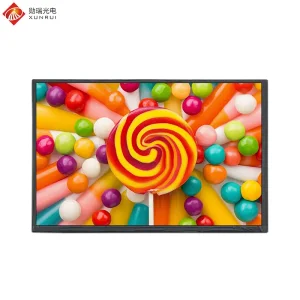
China 10.1 inch 1920×1200 LVDS 45pin 350nit IPS TFT LCD Display Manufacturers, Factories
View Specifications