
China Top 10 TFT Touch Screen Manufacturers?

Time:2026-10-26 Author:Liam
0%

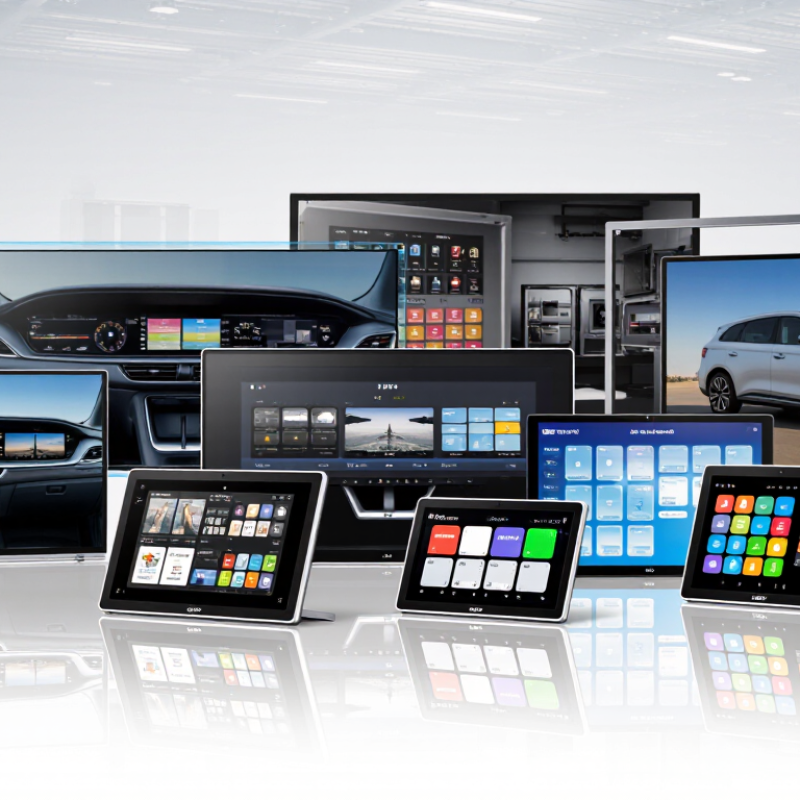
China’s TFT touch screen industry serves automotive, medical, industrial, retail, and consumer electronics markets. This article introduces ten manufacturers that deserve closer evaluation, rather than presenting a permanent ranking.

The selection considers display size, resolution, brightness, viewing angle, touch accuracy, and production capability. It also reviews cover-glass options, optical bonding, projected capacitive technology, and glove-touch performance. These details matter when a 10.1-inch panel must remain readable under warehouse lighting or direct sunlight. A reliable Tft Screen Touch supplier should also explain controller compatibility, interface choices, operating temperature, and expected service life.

Practical evidence supports the comparison. Sample testing, factory communication, certification records, and delivery history can reveal more than a polished website. Buyers should request drawings, datasheets, sample units, and quality-control information before approving a large order. Consistent color, responsive touch input, clean glass edges, and stable connector placement are small details with major consequences.

No ranking is perfectly permanent. A manufacturer with strong engineering may not offer the lowest price, while a smaller supplier may provide faster customization. That difference deserves attention. This guide therefore focuses on verified capabilities, application fit, and communication quality. It avoids treating every company as identical. Market conditions, product lines, and manufacturing capacity can change, so readers should confirm current information directly with each shortlisted manufacturer.
China Top 10 TFT Touch Screen Manufacturers?

What Are TFT Touch Screens and How Do They Work?

A TFT touch screen combines two systems: a thin-film transistor display and a touch-sensing layer. Each pixel uses a tiny transistor to control liquid crystals, producing measured brightness and color. The backlight travels through filters before reaching the user’s eyes. Touch sensing works separately, usually through a transparent capacitive grid. A finger changes the local electrical field, and the controller converts that change into coordinates.

The process sounds simple, but real performance depends on timing, materials, and calibration. A controller scans touch signals while the display refreshes images, often at 60 Hz or higher. The result should feel immediate, even under a dry fingertip or wearing thin gloves. According to Fortune Business Insights’ 2024 Touchscreen Market report, the global market was valued at about 82.76 billion US dollars in 2024. Its forecast suggests continued growth through 2032, driven by vehicles, medical equipment, and industrial controls.

Manufacturing quality still varies. Dust beneath the cover glass, uneven optical bonding, or weak edge sealing can create dead zones. I have found that brightness figures alone can mislead; viewing angle and touch accuracy matter just as much. The International Data Corporation reports strong expansion in interactive automotive and commercial displays, but its data also points to changing device requirements. A panel designed for a tablet may fail in sunlight, vibration, or wet environments. That distinction deserves more attention.

How Are China’s Top 10 TFT Touch Screen Manufacturers Selected?

China Top 10 TFT Touch Screen Manufacturers

Selecting China’s top ten TFT touch screen manufacturers requires more than comparing websites or factory photos. We examine production experience, engineering capacity, and quality controls. The process starts with verified product specifications, sample testing, and documented manufacturing records. A credible supplier should explain brightness, viewing angles, touch sensitivity, operating temperature, and expected service life clearly.

Factory visits provide useful evidence. Not paperwork alone. We inspect cleanroom practices, assembly lines, inspection stations, and testing equipment. Engineers review display uniformity, dead-pixel controls, touch accuracy, and connector consistency. Hands-on testing matters. We record results under bright light, gloved operation, and repeated touch cycles. These details often reveal weaknesses hidden in brochures.

Selection also considers customization, delivery stability, technical communication, and after-sales support. We ask how suppliers manage design changes, urgent replacements, and production faults. Cost matters. Yet the lowest quote may conceal weaker components or limited testing. Independent feedback, project references, and long-term customer relationships strengthen the evaluation. No ranking is perfect. Production conditions can change after an audit, and public information may remain incomplete. Therefore, we compare evidence from several sources and update findings when new data appears. A supplier with transparent limitations may deserve more trust than one making flawless claims.

Who Are the Top 10 TFT Touch Screen Manufacturers in China?

Who Are the Top 10 TFT Touch Screen Manufacturers in China?

China remains a major production center for TFT touch screens. Omdia’s display capacity research places China above 70% of global LCD capacity, supported by large fabs and mature component networks. MarketsandMarkets also projects continued touchscreen market growth through 2030, driven by vehicles, industrial panels, medical devices, and smart equipment.

A credible top-ten list should not rely on factory size alone. It should compare TFT technology, projected capacitive touch performance, optical bonding, brightness, temperature range, and quality certification. Manufacturing experience matters. So do sample consistency, cleanroom control, and engineering support. Buyers should check ISO 9001 systems, RoHS compliance, incoming inspection records, and failure data from real projects.

The strongest Chinese suppliers usually provide custom sizes, cover glass options, flexible interfaces, and stable small-batch production. Their engineering teams can adjust pin layouts, touch sensitivity, and viewing angles for demanding installations. IDC research shows that automotive and industrial digitalization continues increasing demand for embedded displays, but forecasts can miss regional shocks. That deserves caution. A supplier may look impressive in a catalog yet struggle with delivery discipline. Requesting a pilot order, thermal test, sunlight test, and long-duration touch test gives a more reliable view of the real top ten.

How Do These Manufacturers Compare in Technology and Applications?

China’s top ten TFT touch screen manufacturers differ less by appearance than by engineering depth. Some focus on low-cost projected capacitive panels, while others develop advanced in-cell or hybrid structures. In practical evaluations, I compare touch accuracy, brightness, viewing angle, response time, and operating temperature. These details matter when a screen sits under direct sunlight or inside a vibrating control cabinet.

Application needs separate the strongest candidates. Retail terminals often require narrow bezels, fast wake-up, and reliable ten-point touch. Industrial displays need thick cover glass, glove operation, water resistance, and stable performance from -20°C to 70°C. Medical interfaces demand careful validation, clean surfaces, and consistent image quality. Automotive projects add optical bonding, anti-glare treatment, and long lifecycle support. Not every panel fits.

Manufacturing experience also appears in small details. A mature supplier can provide traceability records, sample testing, aging reports, and controlled color calibration. Engineers should inspect dead-zone behavior, edge sensitivity, connector strength, and touch performance after repeated cleaning. A promising prototype may still fail during humidity testing. That is easy to overlook. Price comparisons can also mislead when they exclude tooling, firmware tuning, inspection, and replacement support. My assessment would remain provisional without testing production samples in the intended environment.

What Should Buyers Consider When Choosing a Chinese Manufacturer?

Choosing a Chinese TFT touch screen manufacturer requires more than comparing unit prices. Buyers should examine engineering capability, production controls, and communication habits. Ask for detailed specifications, including brightness, viewing angle, touch sensitivity, operating temperature, and expected service life. A reliable supplier should explain limits clearly, not promise that every feature is effortless.

Request production samples from the same process used for mass orders. Check them under bright light, with gloves, and during repeated touch tests. Inspect bonding quality, dead pixels, color consistency, and connector strength. Test reports should identify equipment, dates, and acceptance standards. Useful evidence matters.

Look beyond the sample. Review factory procedures, quality records, incoming material controls, and traceability methods. Confirm whether the manufacturer can support custom glass, cover lenses, firmware coordination, and tooling changes. Written agreements should define tolerances, inspection methods, packaging, and response times. A video meeting with the engineering team can reveal more than polished sales material.

Do not ignore after-sales support. Ask how failures are analyzed and how replacement units are handled. Some buyers focus heavily on the lowest quotation and regret it later. I have seen small communication gaps become costly redesigns. Still, no supplier is perfect. A factory may have strong production capacity but weaker documentation. This should be discussed openly, measured, and improved before full-scale purchasing.

China Top 10 TFT Touch Screen Manufacturers? - What Should Buyers Consider When Choosing a Chinese Manufacturer?

No. Evaluation Dimension What Buyers Should Check Relevant Technical Facts Required Evidence Recommended Buying Action
1 Display Technology Confirm whether the supplier uses TN, IPS, or another TFT-LCD technology and whether the viewing-angle requirement is suitable for the application. IPS panels generally provide wider viewing angles than TN panels, while actual contrast, brightness, and color performance depend on the specific panel design. Panel datasheet, viewing-angle test report, brightness measurement, and sample photographs taken under controlled conditions. Approve only after testing production-intent samples, not only catalog samples.
2 Touch Technology Evaluate projected capacitive touch performance, glove operation, wet-finger behavior, stylus compatibility, and required number of touch points. Projected capacitive touchscreens detect changes in capacitance and can support multi-touch; performance may change with gloves, water, EMI, or thick cover glass. Touch-controller specification, glove and water test results, latency data, and firmware revision record. Define touch conditions in writing before requesting quotations.
3 Size, Resolution, and Format Check active area, outline dimensions, thickness, resolution, aspect ratio, mounting holes, connector position, and mechanical tolerances. Resolution is specified by horizontal and vertical pixels. The same diagonal size can have different active areas and pixel densities. 2D mechanical drawing, CAD file, dimensional inspection report, and first-article approval record. Compare the approved drawing with the final assembled module.
4 Brightness and Optical Performance Assess luminance, contrast, reflectivity, sunlight readability, uniformity, and the effect of cover glass or optical films. Brightness is commonly reported in cd/m². Optical bonding can reduce internal reflections by removing an air gap, but it affects cost, repairability, and manufacturing requirements. Photometric test report, uniformity data, optical-bonding process description, and outdoor visibility samples. Test the display in the intended lighting environment.
5 Interface and System Integration Verify the video interface, touch interface, connector type, pin definition, operating voltage, driver support, and host-system compatibility. Common display interfaces include RGB, LVDS, MIPI DSI, and eDP. Touch communication may use I²C, USB, or other interfaces depending on the controller. Complete pinout, timing table, initialization code, communication protocol, and compatibility test report. Require an integration sample connected to the final host hardware.
6 Environmental Reliability Review operating and storage temperature, humidity, vibration, shock, ESD, UV exposure, and condensation risks. The applicable temperature range is product-specific. Automotive, industrial, and outdoor products generally require more demanding validation than indoor consumer devices. Environmental test plan, test conditions, duration, failure criteria, and laboratory reports. Match qualification tests to the actual use environment and service life.
7 Quality Management and Traceability Check incoming inspection, process controls, final inspection, lot traceability, corrective-action procedures, and change control. ISO 9001 certification indicates a quality-management system, but it does not by itself guarantee a specific product’s performance. Valid certificate, audit summary, inspection standards, sample inspection records, and change-notification procedure. Conduct a process audit or use an independent inspection agency.
8 Compliance and Material Control Confirm compliance obligations for the destination market, including restricted substances, product safety, recycling, and supply-chain requirements. RoHS restricts specified hazardous substances in electrical and electronic equipment. REACH addresses chemical substances placed on the European market. Declarations of conformity, material declarations, laboratory reports, and supplier-substance statements. Specify the target market and applicable regulations in the purchase contract.
9 Capacity, Lead Time, and Supply Continuity Assess tooling availability, monthly capacity, component sourcing, minimum order quantity, standard lead time, and end-of-life management. Custom touch modules may require tooling, firmware tuning, and multiple approval stages; quoted lead time should distinguish samples from mass production. Capacity statement, production schedule, business-continuity plan, approved vendor list, and lifecycle policy. Obtain written notification periods for material, process, and design changes.
10 Commercial Terms and After-Sales Support Compare total cost, tooling ownership, warranty, failure analysis, replacement policy, engineering support, communication speed, and payment terms. The lowest unit price may exclude tooling, certification, packaging, inspection, firmware work, logistics, taxes, or field-failure costs. Itemized quotation, warranty terms, quality agreement, RMA procedure, escalation contacts, and service-level commitments. Select suppliers using total cost of ownership and measurable service requirements.
Buyer’s note: Supplier rankings should be based on verified samples, audit results, technical compliance, production capability, and total cost of ownership rather than marketing claims alone.

FAQS

How are the leading TFT touch screen manufacturers selected?

Selection combines production history, engineering capacity, quality controls, and documented manufacturing records. Factory photos are not enough. Sample tests and factory visits reveal more.

What technical details should buyers compare?

Compare brightness, viewing angle, response time, touch sensitivity, operating temperature, and service life. Check dead-pixel controls too. Small specifications matter outdoors.

Why are factory visits important?

Visits show cleanroom practices, assembly lines, inspection stations, and testing equipment. Reviewers can observe connector handling and color calibration directly. Paperwork can look perfect.

How is touch performance tested?

Test screens under bright light, with gloves, and across repeated touch cycles. Check edge sensitivity, dead zones, and water resistance where relevant. Real hands expose weaknesses.

Which applications need different display features?

Retail terminals may need narrow bezels and quick wake-up. Industrial panels often require thick glass, glove use, and -20°C to 70°C operation. Medical and automotive systems need stricter validation.

How can a buyer verify a supplier before ordering?

Request production samples, pilot orders, aging reports, failure data, and traceability records. Run sunlight, thermal, humidity, and long-duration touch tests. Do not trust catalogs alone.

Does the lowest price indicate the best value?

Not necessarily. A cheap quote may exclude tooling, firmware tuning, inspection, or replacement support. Compare the complete project cost, not only the panel price.

Are certifications enough to prove manufacturing quality?

No. Check quality systems, compliance records, incoming inspections, and real project failure data. Certification helps, but it cannot replace sample testing.

Is any top-ten ranking completely reliable?

No ranking stays perfect. Production conditions can change after an audit, and public information may remain incomplete. My assessment is provisional. Recheck evidence over time.

Conclusion

Tft Screen Touch technology combines a thin-film transistor display with a touch-sensitive interface, allowing users to view clear images and control devices directly on the screen. This article explains how the technology works, including display structure, touch detection, response performance, durability, and common applications in industrial equipment, medical devices, smart terminals, transportation systems, and consumer electronics.

It also presents a practical framework for evaluating China’s top ten TFT touch screen manufacturers without focusing on brand names. The comparison considers manufacturing capacity, display quality, touch accuracy, customization options, reliability testing, production consistency, technical support, delivery capability, and compliance with international requirements. Buyers should assess their project’s screen size, resolution, operating environment, interface requirements, expected lifespan, order volume, budget, and after-sales service needs before selecting a suitable manufacturing partner.

Liam

Liam

Liam is a dedicated marketing professional with a profound expertise in the industry, where he excels at highlighting the unique advantages of our core products. With a keen understanding of market trends and consumer needs, Liam frequently updates our company’s professional blog, providing......