
China Best TFT LCD Module Manufacturers for Global Buyers
Choosing reliable Tft Lcd Module Manufacturers requires more than comparing unit prices. Global buyers must examine panel size, brightness, viewing angle, interface stability, and long-term supply capacity. A module may look identical on a quotation sheet. Its performance can differ sharply inside a factory, vehicle, or medical instrument.
Omdia’s Display Long-Term Demand Forecast continues to identify TFT LCD as a major display technology across industrial, automotive, consumer, and embedded applications. TrendForce’s panel-market reports also track utilization rates, generation-line capacity, and monthly price movements. These indicators matter. They reveal whether a supplier depends on temporary oversupply or maintains resilient production planning. DSCC’s display industry research adds valuable insight into equipment investment and regional manufacturing shifts. Buyers should still verify every figure against current specifications.
Display analyst David Hsieh has described the market’s direction this way: “Display demand is increasingly driven by application requirements, not simply by panel volume.” That observation deserves attention. A warehouse terminal needs readable text under harsh lighting. A vehicle display needs stable operation across temperature changes. A handheld device needs low power consumption and precise touch integration. The strongest Tft Lcd Module Manufacturers therefore combine engineering experience, documented quality systems, responsive sampling, and traceable component sourcing. Certification alone is not enough. I would also request aging-test results, interface samples, and failure-rate data. Suppliers sometimes present perfect charts. Real production is less perfect. That is why careful audits, pilot orders, and independent validation remain essential for global purchasing decisions.
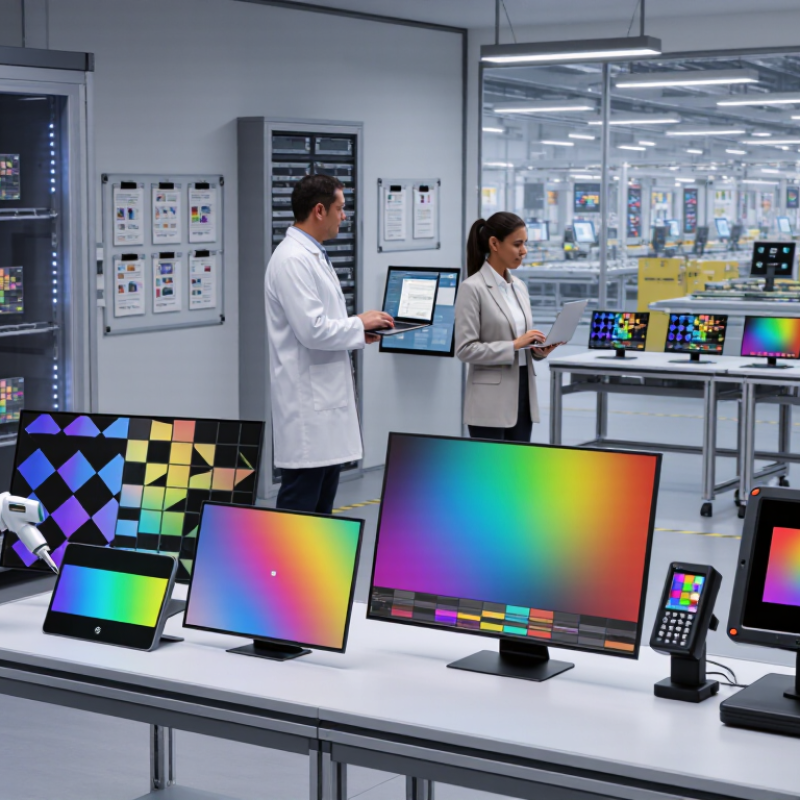
China’s LCD Capacity Exceeds 70% of Global Supply (TrendForce, 2024)
China’s LCD capacity now exceeds 70% of global supply, according to TrendForce’s 2024 data. This scale gives global buyers broad access to TFT LCD modules. It also supports flexible production volumes and competitive lead times. Yet capacity is not the same as consistent quality. A module may look identical in a quotation, but differ in brightness, connector layout, or operating temperature. Experienced buyers verify these details before approving samples.
Tips: Request a current datasheet, dimensional drawing, and measured sample report. Check luminance, viewing angle, response time, and touch performance under real conditions. Ask how suppliers control dust, dead pixels, and bonding strength. Confirm inspection records, packaging methods, and replacement procedures. Small checks prevent expensive redesigns. Do not rely on price alone.
A reliable supplier should explain its process clearly, from glass cutting to final inspection. Buyers should also review sample consistency across several production batches. This step is often skipped. It should not be. Strong technical communication helps adapt screen size, interface type, and backlight brightness to the device. However, overseas projects may face delays from freight, documentation, or changing component availability. Build reasonable schedule space. The market is powerful, but not perfectly predictable.
FAQS
China’s LCD capacity exceeds 70% of global supply, based on 2024 industry data. This supports broad sourcing options and flexible production volumes. Capacity alone does not guarantee consistent quality.
Request a current datasheet, dimensional drawing, and measured sample report. Check brightness, viewing angle, response time, and touch performance. Specifications can change, so confirm the revision date.
Inspect dead pixels, dust, bonding strength, and luminance uniformity. Review inspection records and packaging methods. Small defects can force an expensive redesign.
Compare samples from several production batches, not only one unit. Check connector layout, operating temperature, and backlight brightness. This step is often skipped. It should not be.
a-Si TFT is practical for many industrial panels. Mature production supports stable yields and broad size options. It may not provide the highest pixel density.
LTPS suits compact instruments, handheld devices, and premium vehicle interfaces. It offers higher pixel density and faster switching. Oxide TFT can support larger, sharper panels with lower leakage current.
No. A 60 Hz panel may suit dashboards, kiosks, and factory equipment. Higher refresh rates create smoother motion but increase interface, backlight, and power demands. Faster is not automatically better.
Test moving text, not only static images. Watch for ghosting at the actual operating temperature. Check viewing angles, response time, interface stability, and power consumption together.
Freight delays, documentation issues, and changing component availability can affect schedules. Add reasonable time before final delivery. The market is strong, but not perfectly predictable.
Conclusion
China has become a major global hub for TFT LCD production, with its manufacturing capacity exceeding 70% of worldwide supply according to the 2024 industry outlook. This strong industrial base supports a wide range of display solutions using a-Si, LTPS, and oxide technologies, with refresh rates typically ranging from 60 Hz to 144 Hz. For global buyers, evaluating brightness, color consistency, viewing performance, and reliability is essential. Commercial modules may offer brightness levels from approximately 300 to 1,000 nits and should be assessed according to ISO 9241-307 pixel-class requirements.
When selecting Tft Lcd Module Manufacturers, buyers should conduct thorough factory due diligence. Important indicators include ISO 9001 quality management, AQL 0.65 sampling standards, and 100% functional testing before shipment. Export readiness is equally important, including compliance with RoHS restrictions on ten substances, REACH SVHC requirements, and IEC 62368-1 safety principles. Clear technical specifications, traceable production records, stable quality control, and responsive engineering support can help international customers reduce risks and build dependable long-term supply partnerships.
