
Featured Industrial TFT Displays Deployed in Iraqi Projects
The initial four engineering modules spotlighted below deliver unmatched optical stability, custom pin-outs, and hardened environmental seals tailored for Middle Eastern industrial consoles and smart installations.

Custom 6.9 inch 280×1424 MIPI 30pin Interface Long Strip IPS TFT LCD Module
- • Resolution: 280 × 1424 Native IPS
- • Interface: MIPI 30-Pin High Speed
- • Viewing Angle: Full 85/85/85/85 All-Direction
- • Iraqi Application: 1U Rackmount Oilfield Telemetry

Custom 4 inch IPS 720×720 MIPI 30pin Interface Circular TFT LCD Module
- • Display Area: True Round Ø 4.0-inch Active
- • Resolution: 720 × 720 High Pixel Density
- • Optical Stack: OCA Optical Lamination
- • Iraqi Application: Digital Substation Rotary Encoders
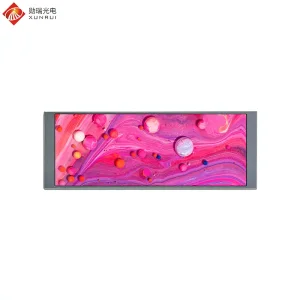
Custom 6.86 inch 480×1280 MIPI 40pin 700nits IPS Strip TFT LCD Module
- • Luminance: 700 cd/m² Sunlight Legible
- • Resolution: 480 × 1280 Crisp Bar Aspect
- • FPC: EMI Shielded 40-Pin MIPI Cable
- • Iraqi Application: Commercial Fleet Logistics HUD

China 12.3 inch 1920×720 EDP 60pin 400nit IPS Strip TFT LCD Display
- • Resolution: 1920 × 720 Ultrawide HD
- • Video Channel: Embedded DisplayPort (eDP)
- • Operating Temp: -30°C to +85°C Extended
- • Iraqi Application: Heavy Excavator & Transit Console
Engineering Circular, Strip, and Square TFT LCD Solutions for Iraq's Industrial Revival
As the Republic of Iraq accelerates the modernization of its petroleum extraction infrastructure, municipal water distribution grids, telecommunications networks, and commercial retail logistics, standard 4:3 and 16:9 rectangular displays no longer satisfy the spatial and mechanical demands of modern engineering.
Circular TFTs for Valve & Switchgear Knobs
In oil extraction centers across Basra, Zubair, and Rumaila, mission-critical valves, flow transmitters, and digital pneumatic actuators require real-time pressure and flow readouts embedded directly inside rotary dials. Our circular TFT panels (1.8" to 4.0") feature true-round active areas with 360-degree viewing angles and custom CNC cover glass, allowing operators to rotate physical control dials while keeping process telemetry perfectly legible.
Bar-Type Strip Displays for 1U Racks & Dashboards
Iraqi electrical distribution substations managed by the Ministry of Electricity rely heavily on legacy 19-inch 1U and 2U server racks. Standard monitor form factors physically cannot fit these vertical enclosures. Our custom ultra-wide cut-bar LCDs (6.86", 6.9", 11.6", 12.3") offer aspect ratios stretching up to 16:3 and 32:9, transforming narrow panel strips into multi-variable SCADA waveform analyzers without mechanical redesign.
1:1 Square TFTs for Smart City & POS Kiosks
Urban commercial hubs in Baghdad, Erbil, and Sulaymaniyah are rapidly rolling out smart municipal terminals, intelligent HVAC control thermostats, and compact retail self-checkout units. Symmetrical 1:1 square TFT modules provide balanced aesthetic layouts for complex Arabic calligraphy, QR-code payment generation, and bidirectional data entry while reducing overall terminal enclosure volume by 35%.
Environmental Stress Matrix: Engineering for the Iraqi Climate
Southern Iraq experiences summer ambient temperatures exceeding +52°C, solar irradiance hitting 1,100 W/m², and severe airborne silicate dust storms. Operating electronic visual modules under these circumstances causes conventional consumer-grade displays to suffer from liquid crystal isotropic phase transition (blackening effect), adhesive bubble delamination, and rapid backlight degradation.
| Environmental Stressor | Standard Consumer TFT | Xunrui Middle East Industrial Class TFT | Engineering Mitigation Applied |
|---|---|---|---|
| High Ambient Heat (+55°C) | Liquid crystal blackens at 60°C clearing point; controller thermal shutdown. | Wide-Temp Operation: -30°C to +85°C (Storage: -40°C to +90°C) | High-Ni nematic liquid crystal mix with clearing point (Tni) > +105°C prevents solar blackouts. |
| Desert Direct Solar Flare (120k Lux) | 250–350 nits washed out; screen unreadable; safety hazard in field ops. | 700 to 2,000+ nits Sunlight Readable with PWM dynamic dimming. | High-efficiency side/direct LED backlights with heat-dissipating aluminum chassis and light guide plates. |
| Silica Dust & Particulate Abrasion | Dust penetrates backlight air gap; capacitive touch false-triggers on dust layer. | Full Optical LOCA/OCA Bonding; IP65/IP67 Front Ingress | Zero air-gap optical lamination blocks dust entirely; tuned touch firmware rejects dry sand interference. |
| High UV Radiation Index (>11 UVI) | Polarizer yellowing, optical adhesive degradation, bezel warping. | UV-Stabilized Polarizers & Ceramic Inks | Cover glass with 99.5% UV blocking; ceramic baked borders prevent border bubbling over 10-year service life. |
Technology Roadmap: High-Transmittance Cell Structure and Touch Integration
Our specialized manufacturing facility operates advanced dry-etching laser glass cutting equipment and Class 1,000 to Class 100 dust-free cleanrooms. We transform raw mother-glass into custom-contoured circular and stretch displays while preserving pixel aperture ratios.
1. Precision Laser Micro-Cutting of Mother Glass
Cutting non-standard displays requires extreme precision. While low-tier factories use mechanical abrasive scribing that leaves micro-cracks along the edge—leading to vacuum seal degradation and moisture ingress—our Shenzhen fabrication center utilizes picosecond laser cutting paired with continuous edge-polishing and secondary UV-curable polymer passivation. This ensures that every circular TFT edge and stretched strip edge maintains mechanical shear strength capable of surviving the severe road vibrations of Iraqi oil transport corridors.
Whether slicing a 12.3-inch ultra-wide bar display from an IPS Gen 6 panel or rounding off a 4.0-inch circular display with an embedded center hole for physical shaft rotary encoders, our automated cutting tolerances are maintained within ±0.05 mm.
2. Optical Bonding vs. Air Gap in High-Humid & Dusty Field Hubs
Standard displays rely on perimeter foam tape, leaving a 0.5 mm to 1.5 mm air gap between the TFT polarizer and the protective cover lens. In coastal regions such as Al-Faw or industrial river ports along the Shatt al-Arab, drastic diurnal temperature shifts cause condensation inside the air gap, creating fogging that permanently obscures data readouts.
We resolve this by applying Optical Clear Resin (LOCA) or Optical Clear Adhesive (OCA) vacuum bonding. By filling the void with an index-matched refractive polymer (n ≈ 1.49), internal light reflection drops from 8.5% to under 0.4%, drastically increasing contrast while doubling mechanical shock resistance against accidental tool drops or vandalistic strikes.
3. Specialized Surface Treatments: AG, AR, and AF Chemistry
Operating a heavy crane or operating outdoor oil metering skids requires visibility from oblique angles under merciless midday sun. We customize industrial cover lenses with three chemical treatments:
- Anti-Glare (AG) Chemical Etching: Diffuses direct reflections by converting specular reflections into diffuse light without image fuzziness.
- Anti-Reflective (AR) Multi-Layer Sputtering: Cuts total surface reflectance to < 0.5%, maximizing the effective output of high-brightness LED backlights.
- Anti-Fingerprint (AF) Oleophobic Coating: Produces a contact angle exceeding 115°, preventing oil, greasy fingerprints, and moisture from adhering during heavy industrial use.
4. Custom Driver & Controller Interface Ecosystem
Industrial compute engines vary across legacy PLCs, microcontrollers (STM32, ESP32, NXP), and modern embedded Linux/Android SoCs (Rockchip, Raspberry Pi, NXP i.MX8). We configure driver boards and flexible printed circuits (FPC) to match your native pinout:
- MIPI DSI (Display Serial Interface): 30-pin and 40-pin high-bandwidth lane configurations for zero-latency graphical refresh rates on round and strip modules.
- Embedded DisplayPort (eDP) & LVDS: High noise-immunity protocols capable of traversing 1-meter cable lengths without electromagnetic dropouts in industrial machinery.
- SPI & MCU 8/16-Bit Interfaces: Ideal for lightweight RTOS setups where system memory and pin counts are restricted.
China Industry 4.0: Supply Chain Resilience, Velocity & Agility for Iraq
Procuring custom-dimensioned circular and strip displays from Western or domestic Middle Eastern intermediaries frequently involves 26-week lead times, exorbitant NRE (non-recurring engineering) fees, and rigid minimum order quantities exceeding 10,000 units. Our Shenzhen smart manufacturing complex breaks these supply bottlenecks.
5-Gate Zero-Defect Inspection Quality System
Industrial projects deployed 7,000 kilometers away in Baghdad cannot afford field failures. Every batch produced in our facilities passes through five mandatory gates:
- Gate 1 (IQC): 100% incoming inspection of ICs, polarizers, and driver silicon.
- Gate 2 (Glass Substrate): Micro-particle laser screening for cell defects.
- Gate 3 (FOG Bonding): Thermal-compression bonding inspected via AOI.
- Gate 4 (Thermal Aging): 72-hour dynamic thermal load testing in heat chambers.
- Gate 5 (OQC Outgoing): Complete optical spectrophotometer and touch calibration.
De-Risked Pilot Batches: 5 to 500 Pcs
Developing specialized enclosures for Iraqi pipeline monitoring or smart gas distribution requires extensive physical mechanical validation. We support industrial R&D teams with:
- Rapid mechanical 2D/3D CAD step file sign-off within 48 hours.
- Physical working prototype delivery within 12 to 18 business days.
- Small-batch trial runs of 5 to 500 units to validate tooling and fitment.
- Seamless ramp-up to volume production (1,000 to 50,000+ units) without redesign.
Full Component Lifecycle Management
Long-term municipal and energy contracts across Iraq span 5 to 10 years of ongoing deployment. Xunrui enforces rigorous supply chain lifecycle safeguards:
- Guaranteed 5 to 7 year supply availability for all core industrial panels.
- Formal 6-month EOL (End of Life) notification with Last Time Buy (LTB) options.
- Pin-to-pin, firmware-identical drop-in replacement path guarantee.
- Raw wafer and IC silicon buffer storage for contracted Iraqi annual runs.
Localized Compliance, COSQC Clearance & Middle East Logistics Assurance
Importing electronic display modules into Iraq requires rigorous compliance with the Central Organization for Standardization and Quality Control (COSQC) and designated pre-shipment inspection regimes. Xunrui delivers turnkey export documentation to prevent border transit impoundments.
Iraqi Customs & Certification Protocol
Every shipment destined for Baghdad International Airport (BGW), Erbil International Airport (EBL), or the maritime port of Umm Qasr is accompanied by full regulatory documentation:
- Certificate of Conformity (COC) / Verification of Conformity (VOC): Coordinated through accredited international inspection partners (such as Bureau Veritas, SGS, or TÜV) to satisfy COSQC port authorities.
- International Environmental Directives: Full compliance with EU RoHS 2.0 (2011/65/EU) and REACH (EC 1907/2006) preventing hazardous heavy metals.
- Electromagnetic Compatibility (EMC): Certified under CE (EN 55032 / EN 55035) and FCC Class B, preventing spurious high-frequency emissions from disrupting oilfield wireless telemetry or emergency avionics.
Heavy-Duty Packaging for Desert Air & Ocean Freight
High heat during tarmac layovers in Dubai, Doha, or Basra can warp standard plastic blisters. We ship display hardware in specialized international cargo configurations:
- ESD Conductive Trays: Precision vacuum-formed high-density antistatic trays shielding micro-controller ICs from static electricity discharges.
- Moisture & Desiccant Vacuum Barrier Bags: Mil-spec heat-sealed moisture barrier bags maintaining < 20% relative humidity throughout the freight voyage.
- Shock-Isolated Reinforced Corrugated Outer Cartons: Drop-tested according to ISTA-1A standards, with corner armor and impact indicator labels ensuring tamper-free arrival at your Baghdad or Erbil facility.
Frequently Asked Technical Questions by Middle Eastern Buyers
Straightforward engineering specifications, lead times, and integration parameters addressed by our technical hardware team.
How do Xunrui's circular and strip TFT displays avoid solar blackening in southern Iraq's 50°C+ ambient temperatures?
Standard consumer displays use low-clearing-point liquid crystal fluid that experiences phase transition (isotropic clearing) at around 60°C to 65°C; under direct sunlight, solar energy heats the glass 15°C to 20°C above ambient, causing immediate black blotches. Xunrui specifies specialized ultra-wide-temperature nematic liquid crystal fluids featuring an isotropic clearing point (Tni) exceeding +105°C and an operational envelope of -30°C to +85°C. Combined with high-efficiency LED arrays mounted to aluminum heatsinks, the panels maintain clear, sharp graphics under direct sun in Basra, Kuwait border stations, and desert oil facilities.
Can you customize the capacitive touch panel to function with operator work gloves and water/oil droplets?
Yes. Standard projected capacitive (PCAP) touch sensors false-trigger when exposed to conductive water films or fail to detect inputs through heavy industrial gloves. We integrate high-SNR touch controller ICs (such as Ilitek, Goodix, or EETI) with custom-tuned firmware. We adjust mutual and self-capacitance sensing algorithms, allowing reliable single-touch and gesture recognition through 3 mm thick nitrile or leather gloves, as well as enabling waterproof tracking where water or hydraulic oil droplets on the glass surface are filtered out.
What is the minimum order quantity (MOQ) and lead time for custom cut-bar or circular TFT samples?
For standard inventory models, there is no MOQ constraint. For customized engineering projects (custom FPC pin layout, tailored backlight brightness up to 2,000 nits, or custom cover glass shaping), we offer an initial pilot batch of 5 to 500 units after drawing sign-off so you can assemble functional prototypes. Customized tooling and engineering drawings are delivered within 48 to 72 hours, golden samples ship within 15 to 20 working days, and full mass production batches (>1,000 units) require 4 to 6 weeks.
Can driver boards be supplied with HDMI, USB Type-C, or RS-485 for plug-and-play retrofit in Iraqi facilities?
Absolutely. While raw panels communicate via MIPI, LVDS, or RGB, industrial customers in Iraq frequently require plug-and-play connectivity for PC-based terminals, PLCs, or embedded SBCs. Xunrui provides custom matching industrial controller boards with HDMI, VGA, USB-C video input, and 12V/24V wide-input DC power supplies designed to absorb voltage surges common in field generator networks.
Extended Industrial TFT Display Models Supporting Middle East Systems
Browse our additional standardized and semi-custom form factors from 1.8-inch micro-wearables to 15.0-inch heavy machine control panels, readily deliverable to Iraq with full technical support.

China 1.8 inch 360×360 MIPI 30pin 400nit IPS Circular TFT LCD Module
- • Screen Format: True Round 1.8" Active
- • Resolution: 360 × 360 Sharp Dots
- • Brightness: 400 cd/m² Sunlight Usable
- • Interface: MIPI 30-Pin Micro Connection
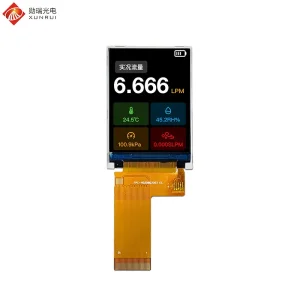
China 2 inch 240×320 SPI 30PIN 250nit IPS TFT LCD Module
- • Pixel Matrix: 240 × 320 Full Color
- • Bus Interface: Low-Pin SPI 30-Pin
- • Panel Technology: All-Perspective IPS
- • System Target: Microcontroller DIN-Rail Loggers
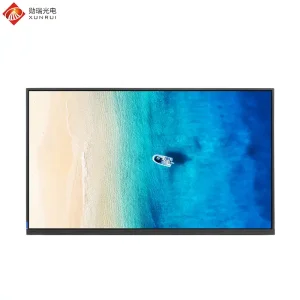
Custom 15 inch 1920×1080 EDP 30pin 300nit IPS TFT LCD Display
- • Dimensions: 15.0" Diagonal Active Glass
- • Resolution: 1920 × 1080 High Definition
- • Interface: 30-Pin Embedded DisplayPort
- • Target Sector: Petrochemical SCADA Workstations
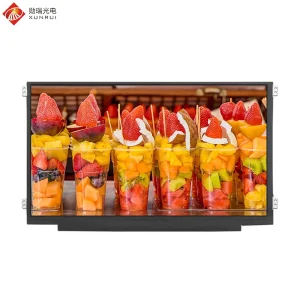
Custom 11.6 inch 1920×1080 EDP 30PIN 220nit IPS TFT LCD Module
- • Screen Size: 11.6" Widescreen Display
- • Resolution: 1920 × 1080 FHD Resolution
- • Viewing Angle: 89/89/89/89 Symmetrical
- • Application: Medical & Financial Self-Service

China 4.3 inch Vertical Screen 480×800 RGB 40pin IPS TFT LCD Display
- • Layout: Native Portrait Form 480 × 800
- • Interface: Parallel RGB 40-Pin Header
- • Contrast: 800:1 Deep Black Ratio
- • Iraqi Application: Facial Recognition Access Gate

Custom 5 inch 800×480 RGB 50pin Interface 500nit TN TFT LCD Display
- • Resolution: 800 × 480 WVGA Resolution
- • Backlight: High-Intensity 500 cd/m²
- • Connection: 50-Pin Robust RGB Bus
- • Application: Generator Set Control Panel

Custom 2 inch 480×240 RGB 40pin 150nit TN TFT LCD Display
- • Active Dimensions: 2.0" Aspect Screen
- • Resolution: 480 × 240 Distinct Pixels
- • Flexibility: Slim FPC Profile for Tight Cabs
- • Target Sector: Portable Gas Detection Sniffers
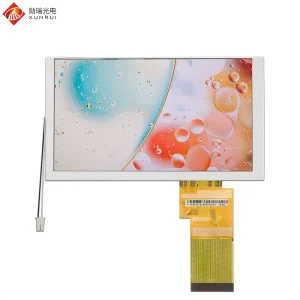
China 6.2 inch 800×480 RGB 60pin 500nit TN TFT LCD Module
- • Visual Size: 6.2" Automotive Screen
- • Brightness: 500 nits High Clarity
- • Interface: Standard RGB 60-Pin Bus
- • Application: Commercial Vehicle Rearview & Dash