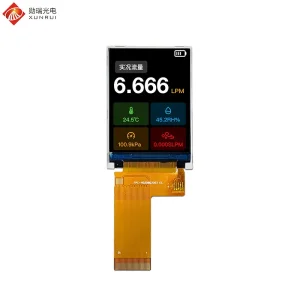
High-Reliability Resistive TFT LCD Modules for Algerian Field Terminals
Engineered for pressure-actuated input under extreme conditions: operable with heavy work gloves, styluses, and unaffected by conductive Saharan mineral dust or petroleum oils.

Custom 7 inch 800×480 TN TFT LCD Display with Resistive Touch Panel — Algerian Energy & Oil HMI Edition
View Product Specs
Custom 10.1 inch 1024×600 TN TFT LCD Display with Resistive Touch Panel — Heavy Industrial Control Algeria
View Product Specs
Custom 4.3 inch 480×272 TN TFT LCD Display with Resistive Touch Panel — Algerian Outdoor Telemetry Station
View Product Specs
China 5 inch 800×480 TN TFT LCD Display with Resistive Touch Panel — Rugged Handheld Scanners Algeria
View Product SpecsAlgeria's Industrial Modernization & Display Ruggedization Requirements
From the hydrocarbon basins of Hassi Messaoud to maritime trade terminals in Algiers and Oran, Algerian infrastructure demands resilient human-machine interface (HMI) hardware capable of surviving the planet's harshest operational parameters.
The People's Democratic Republic of Algeria represents North Africa’s leading economic powerhouse, spearheaded by intense upstream oil extraction, extensive natural gas processing plants, expanding phosphate mining operations across Tébessa, and massive multi-gigawatt solar infrastructure under the national renewable energy roadmap. As state-owned operators such as Sonatrach and Sonelgaz aggressively digitize pipelines, pumping complexes, and sub-stations, the demand for ruggedized human-machine interfaces has outstripped domestic manufacturing capability.
Standard consumer displays and off-the-shelf capacitive screens routinely fail within weeks of deployment in Algeria’s interior. The southern Wilayas experience summer ambient temperatures consistently surpassing 50°C (122°F), causing thermal optical blacking and liquid crystal bubbling in unfortified displays. Simultaneously, relentless sirocco sandstorms carry fine microscopic silica dust, which creates immense electrostatic charges and forms abrasive coatings on touch surfaces. Projected Capacitive (PCAP) displays frequently trigger catastrophic "false ghost touches" or fail entirely under heavy oil residue, moisture accumulation, and thick operator gloves.
This exact operational bottleneck is why custom resistive touch TFT LCD technology remains the gold standard for Algerian industrial automation. By depending on pressure-actuated electrical contact between conductive Indium Tin Oxide (ITO) layers rather than electrical capacitance, resistive touch displays guarantee deterministic, fail-safe actuation whether operators use grease-coated nitrile gloves, heavy leather welding gear, insulated sub-zero protective wear, or a ruggedized metallic stylus.
Technical Roadmap: Resistive Touch TFT LCD Architecture & Innovation
How Xunrui solves solar reflection, thermal degradation, contact wear, and mechanical shock through advanced optical materials and structural engineering.
4-Wire vs. 5-Wire Topology
4-wire resistive panels offer unmatched cost efficiency for compact 2.8"–7.0" handheld devices. For 8.4"–15.6" critical control consoles, our 5-wire systems assign voltage mapping exclusively to the base glass layer, maintaining 100% calibration integrity even if the flexible top PET layer sustains localized surface punctures.
Sunlight Readability (800–1200 Nits)
Desert daylight can easily wash out displays below 500 nits. We engineer dedicated high-efficiency constant-current LED backlight matrices combined with anti-glare (AG) and circular polarizers, maintaining contrast ratios >800:1 under direct Algerian noon solar irradiation without excessive heat generation.
Ultra-Wide Industrial Temperature (-30°C to +85°C)
Standard commercial nematic liquid crystals turn isotropic (milky and unreadable) when ambient temperatures surge. Our custom glass cuts utilize high-clearing-point liquid crystal fluids and high-Tg polarizers to prevent clearing and freezing from frozen desert winters to scorching summer oilfields.
Glass-Film-Glass (GFG) Armor
To resist vandal impacts and repetitive abrasive tool strikes, we provide Glass-Film-Glass (GFG) construction. By laminating an ultra-thin 0.2mm chemically strengthened aluminosilicate cover sheet over the upper ITO film, we elevate surface hardness from traditional 3H pencil hardness to a scratch-proof 7H Mohs rating.
Electromagnetic Noise Isolation
Heavy oil pumps, industrial generators, and high-voltage converters radiate severe EMI/RFI noise that distorts sensitive electronic coordinates. Resistive matrix sensors act as pure passive voltage dividers, completely immune to electromagnetic fields, electric motor hum, and ground-loop noise.
Drop-In Controller & Board Customization
We supply turnkey integration including custom FPC flat cables, embedded EEPROM calibration chips, and multi-protocol driver boards (supporting TTL RGB, LVDS, eDP, SPI, alongside USB and RS-232 resistive controller modules) eliminating software redesign overhead for Algerian engineers.
| Performance Specification | Standard Consumer Display | Industrial PCAP (Capacitive) | Xunrui Custom Resistive TFT LCD |
|---|---|---|---|
| Operating Temperature Window | 0°C to +50°C | -20°C to +70°C | -30°C to +85°C (Wide Temperature Grade) |
| Gloves Operability (Leather/Thermal/Nitrile) | Incompatible (Requires Conductive Tips) | Requires Specialized Firmware Tuning | 100% Universal Compatibility (Mechanical Pressure) |
| Immunity to Water/Oil Sludge Surfaces | Failure / False Coordinate Triggers | Ghost Touches Common | Zero Ghost Touches; Flawless Operation |
| Sunlight Legibility in Algerian Desert | 200–300 Nits (Unreadable in Sun) | 400–600 Nits (Moderate Glare) | Up to 1200 Nits + Optical AG/AR Polarizers |
| Surface Hardness & Sand Abrasion | 2H–3H (Quickly Scratched) | 6H–7H (Brittle Edge Chipping) | Up to 7H GFG Armor (Sandstorm & Impact Proof) |
| BOM Continuity & Production Lifecycle | 12–18 Months (Frequent EOL) | 3–5 Years | 7–10 Years Stable Availability Guarantee |
Field-Proven Deployments Across Algeria’s Core Economic Sectors
Engineered to satisfy national tenders, ministerial specifications, and private infrastructure contractors throughout North Africa.
1. Oil & Gas Upstream Drilling & Pipeline SCADA Terminals
In the hydrocarbon basins of Hassi R'Mel, Berkine, and In Salah, automated drilling instrumentation and high-pressure manifold monitoring systems operate 24/7 in explosive, dust-laden atmospheres. Our custom 7.0-inch and 10.4-inch resistive touch TFT modules are engineered with ATEX/IECEx intrinsic safety guidelines in mind, utilizing low-current drive circuitry, sealed gaskets, and chemically bonded optical polarizers that shrug off diesel spills and aromatic solvents.
"During a continuous 180-day field validation at a Sahara booster pumping station, our customized 10.4-inch 5-wire resistive display operated without coordinate drift despite midday cabin temperatures exceeding 63°C and sustained fine sand infiltration."
2. Gara Djebilet Mining Haulage & Fleet Telematics Consoles
Algeria's landmark mega-project at Gara Djebilet iron mine demands earthmoving and haul truck cab terminals that withstand violent mechanical vibrations, chassis shock shocks up to 50G, and intense dust generation. Our 4.3-inch and 5.0-inch compact resistive displays feature custom high-flexibility FPC cabling, reinforced structural frames, and automotive-grade driver ICs that eliminate solder fatigue and interface micro-cracking.
Integrated metal bezel encasements, silicone-cushioned optical bonding, and 30-pin reinforced MCU interfaces safeguard system telemetry against sudden drop impacts and sustained engine harmonic vibration.
3. Saharan Pivot Irrigation & Multi-Megawatt Solar Telemetry
The agricultural transformation in Biskra, El Oued, and Adrar relies on intelligent center-pivot irrigation systems and decentralized solar pumping inverters. Our 6.86-inch bar-type and 7-inch sunlight readable resistive TFTs provide clear diagnostic monitoring in direct sunshine, letting agricultural technicians make critical water adjustments even while wearing mud-caked boots and heavy rubber gloves.
Advanced UV-resistant anti-yellowing optical adhesives and ITO coatings shield internal display layers from rapid polymer discoloration caused by aggressive Mediterranean and Saharan ultraviolet indices.
4. Postal Kiosks, Ticketing & Algérie Poste Transaction Terminals
National financial infrastructure across Algiers, Constantine, and Annaba requires tamper-evident, high-duty public terminals. Algérie Poste ATMs, national railway (SNTF) ticket machines, and fuel dispensing payment hubs employ our 10.1-inch and 10.4-inch ruggedized resistive modules with integrated privacy filters and vandal-resistant GFG glass layers that resist coin gouging, keys, and extreme environmental wear.
Equipped with high-linearity ITO films to guarantee coordinate accuracy across more than 10,000,000 point touches, preventing the edge dead zones common to cheaper commercial displays.
China Industry 4.0: Shenzhen Manufacturing Speed & Global Agility
Combining world-class display R&D with end-to-end automated cleanroom assembly to deliver reliable bespoke display solutions for international OEM engineering teams.
Headquartered in the global electronics manufacturing epicenter of Shenzhen, Shenzhen Xunrui Optoelectronic Technology Co., Ltd. has specialized since 2016 in the research, design, and precision fabrication of TFT LCD modules spanning 0.96 inches to 27 inches. Our production campus houses over 5,000 square meters of high-level Class 1,000 and Class 100 cleanrooms, equipped with fully automated high-speed Chip-on-Glass (COG), Film-on-Glass (FOG), and optical bonding lines producing over 2,000,000 display units every month.
Unlike assembly middlemen or trading brokers, Xunrui controls every link of the display manufacturing chain. We cut raw glass motherboards, bond flex printed circuits (FPCs) with sub-micron precision, customize multi-die high-efficiency LED backlight assemblies, and assemble custom resistive touch screens in-house. This direct factory control gives Algerian procurement officers and engineering directors three decisive advantages:
Rapid NRE & Pilot Batch Flexibility
We break the rigid barriers of tier-1 display giants. Following sample sign-off, we support one-time pilot trial batches of 5 to 500 units, empowering your R&D team to complete field tests in Algerian environments before committing to mass manufacturing.
5-Gate Total Quality Assurance
Every single resistive touch TFT module undergoes rigorous multi-stage testing: 100% IQC raw glass analysis, automated optical inspection (AOI), 48-hour high-temperature/high-humidity burn-in aging, drop tests, and final OQC coordinate precision calibration.
10-Year Anti-EOL Longevity Policy
Industrial projects in Algeria have operating lifespans of 10 to 15 years. We guarantee pin-to-pin, firmware-matched display continuity. If an underlying glass panel ever sunsets, our engineering group proactively redesigns internal FPCs to prevent client redesigns.
Algerian Import Clearance, Regulatory Standards & Logistics
Seamless international procurement with complete documentation, testing compliance, and flexible freight shipping to Algiers, Oran, and inland free-zones.
Importing optoelectronic components into Algeria requires rigorous compliance with both national standards and local banking procedures. Xunrui's international sales and trade compliance group is well-versed in Algerian trade conventions, including Letter of Credit (Credoc / Crédit Documentaire) terms under Bank of Algeria regulations, Executive Decrees governing electronic components, and mandatory quality verification standards.
IANOR & Customs Conformity
We provide full Certificate of Conformity (CoC) dossiers aligning with Algerian Institut Algérien de Normalisation (IANOR) guidelines. All products ship with certified CE, RoHS, and FCC lab test documentation, ensuring rapid, issue-free customs clearance at Port of Algiers or Houari Boumediene Airport.
Flexible Multimodal Logistics
We offer diverse Incoterms including EXW, FOB Shenzhen/Hong Kong, CIF Algiers/Oran, and DDP door-to-door air freight via DHL, FedEx, and specialized cargo forwarders, with ESD anti-static vacuum sealed moisture-barrier packaging tailored for transit across high-humidity coastal and arid desert routes.
Dedicated Engineering Field Support
Our senior optoelectronics application engineers provide direct bilingual (English/French communication) support covering touch controller integration, register configuration, Linux/Android/RTOS driver porting, timing diagrams, and mechanical CAD 3D step model verification.
Frequently Asked Questions by Algerian Industrial Buyers
In-depth technical clarifications for electronics designers, procurement specialists, and industrial system architects.
Why choose a resistive touch display over projected capacitive (PCAP) in Algerian facilities?
While PCAP excels in consumer smartphones, Algerian industrial sectors are dominated by airborne silica sand, motor oils, high electromagnetic noise, and the requirement for operators to wear thick protective leather or rubber gloves. Resistive touch operates on mechanical pressure contact between two micro-spaced ITO layers, ensuring 100% deterministic operation with any stylus or glove, complete immunity to surface moisture or dust accumulation, and zero ghost touch anomalies.
Can your resistive touch displays withstand southern Algeria's +50°C summer heat?
Yes. Standard consumer displays fail when solar absorption pushes glass temperatures past +60°C, causing liquid crystals to lose orientation (solar blacking). We build our modules using ultra-wide temperature liquid crystals rated for -30°C to +85°C operation, matched with high-clearing-point isotropic polarizers and heat-dissipating aluminum alloy back bezels that prevent thermal degradation in direct Saharan sunlight.
What is the minimum order quantity (MOQ) for custom customized resistive modules?
Following sample prototype validation and client drawing sign-off, we offer an initial small-batch pilot trial run of 5 to 500 pieces. Once your field trials in Algeria confirm performance, mass production orders are typically supported with an MOQ of 1,000 units. For off-the-shelf standard catalog models, we accommodate low-volume initial batch requirements.
How do you solve coordinate calibration drift common in cheaper resistive screens?
Coordinate drift in sub-standard panels stems from uneven ITO film resistance and thermal expansion under cycling heat. Xunrui employs top-tier optical-grade ITO sputtering on high-Tg polyethylene terephthalate (PET) films, paired with precision micro-dot spacer printing. For mission-critical terminals, we recommend our 5-wire resistive architecture, where voltage distribution is confined to the rigid substrate glass, completely neutralizing coordinate drift.
Which video interfaces and touch controller communication buses do you support?
Our TFT modules support all mainstream industrial display interfaces, including MCU 8/16/24-bit, SPI (3-wire and 4-wire), RGB (16/18/24-bit), LVDS (single/dual channel), and MIPI DSI. For resistive touch coordination, we supply integrated 4-wire/5-wire FPC pinouts directly for your MCU ADC lines, or pre-engineered controller boards supporting USB HID plug-and-play and RS-232 serial interfaces compatible with Linux, Windows, and Android.
How do you safeguard shipments against physical damage during long transit to North Africa?
All display shipments follow stringent export packaging protocols: individual anti-static ESD shielding bags, desiccated moisture-barrier inner packs, precision-molded EPE high-density foam trays, and reinforced five-layer corrugated master cartons bound on fumigated heavy-duty pallets. Drop-tested to ISTA-1A standards, our cargo withstands transit vibrations and rough handling during air or sea transport to Algeria.
Comprehensive Resistive Touch TFT LCD Portfolio for Industrial OEM Integration
Explore our battle-tested display configurations spanning compact handheld formats, high-resolution widescreen panels, and specialized ultra-bright outdoor modules.

China 4.3 inch 800×480 IPS TFT LCD Module with Resistive Touch Panel — High Angle Visibility Algeria
View Product Specs
Custom 5 inch 480×272 TN TFT LCD Module with Resistive Touch Panel — Algerian Smart Grid Controller
View Product Specs
Custom 2.8 inch 240×320 TN TFT LCD Module with Resistive Touch Panel — Compact Handheld Terminals
View Product Specs
China 2.8 inch 240×320 MCU 30pin Interface 250nit TN TFT LCD Display — Low Power Field Gauges
View Product Specs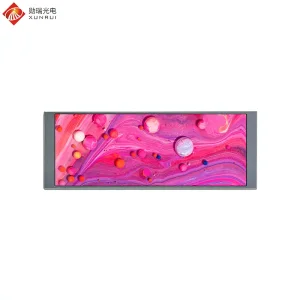
Custom 6.86 inch 480×1280 MIPI 40pin 700nits IPS Strip TFT LCD Module — Algerian 1U Rackmount Server HMI
View Product Specs
China 4.3 inch 800×480 1000nit High Brightness IPS TFT LCD Module — Full Desert Sunlight Sunlight Readable
View Product Specs
Custom 10.4 inch 1024×768 LVDS 30pin 600nit IPS TFT LCD Module — Heavy Industry & SCADA Consoles
View Product Specs