
Precision Small & Medium Display Modules
Engineered for high-reliability medical devices, IoT rotary switches, portable test instruments, and industrial automation interfaces.

Custom 4 inch IPS 720×720 MIPI 30pin Circular TFT LCD Module
View Product Specs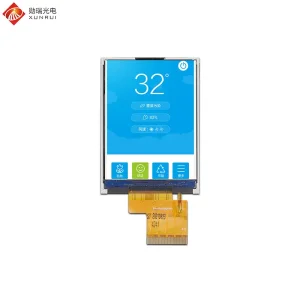
China 2.8 inch TN TFT LCD Module 240×320 RGB 40pin Interface 250nit
View Product Specs
Custom 4.3 inch 480×272 MCU/SPI 40pin 350nit TN TFT LCD Display
View Product Specs
China 1.44 inch 128×128 SPI 15pin 250nit TN TFT LCD Module
View Product Specs
Custom 8 inch TFT LCD Module 800×1280 MIPI 31pin 480nit IPS Screen
View Product Specs
China 10.1 inch 800×1280 MIPI 40pin 350nit IPS TFT LCD Display
View Product Specs
China 5 inch 800×480 1200nit High Brightness Sunlight-Readable Module
View Product Specs
Custom 2 inch 176×220 MCU 45pin Interface 220nit TN TFT LCD Module
View Product SpecsEngineering Trajectory of 4-Inch TFT LCD Panels
From simple monochromatic alphanumeric modules to ultra-dense IPS panels with In-Cell PCAP integration, 4-inch display modules represent the convergence of high-pixel density and rugged physical encapsulation.
IPS All-Perspective Alignment
Traditional Twisted Nematic (TN) panels in the 4-inch class frequently suffered from severe grayscale inversion at steep viewing angles (6 or 12 o'clock). Current Tier-1 Chinese manufacturers utilize In-Plane Switching (IPS) and Advanced Super View (ASV) liquid crystal alignment. This guarantees full symmetrical viewing angles of 85°/85°/85°/85°, critical for wall-mounted smart home panels and handheld clinical analyzers operated off-axis.
High-Luminance Backlight Modules
Standard consumer 4-inch screens offer 250–350 cd/m² (nits), which washes out completely in outdoor or high-ambient industrial illumination. Modern factory setups customize the Light Guide Plate (LGP), integrating high-efficiency Nichia or Epistar LED arrays with enhanced optical prism films (BEF/DBEF). This elevates optical output up to 1,000–1,500 nits while preserving an operational half-life (LT50) exceeding 50,000 hours.
Full Optical Lamination (OCA/LOCA)
Air-bonding between the display polarizer and cover glass introduces two reflective boundary layers, degrading optical clarity and inducing internal condensation in humid operating environments. Industrial 4.0 production utilizes automated vacuum liquid optical clear adhesive (LOCA) or dry optical clear adhesive (OCA) autoclaving. This reduces internal surface reflectance from 4.5% to under 0.2% while providing high shock absorption.
Global Enterprise Sourcing Architecture & Interfaces
Enterprise procurement engineers must balance hardware resource overhead against graphics throughput. The 4-inch display sector is split between distinct signaling architectures depending on the host Microcontroller (MCU) or System-on-Chip (SoC).
When procurement managers from Tier-1 European or North American automation firms source 4-inch TFT LCD panels, they require granular traceability beyond basic datasheets. Critical parameters include Driver IC lineage (e.g., ST7701S, ILI9806E, or GC9503V), Flexible Printed Circuit (FPC) mechanical impedance matching, and long-term lifecycle commitments. Because medical and industrial certifications take 12 to 24 months, Chinese suppliers must offer guaranteed product availability for 5 to 7 years without unannounced silicon or panel glass die revisions.
| Interface Protocol | Pin Density | Max Refresh Rate | Host Processor Compatibility | Primary Industrial Use Case | Procurement Cost Profile |
|---|---|---|---|---|---|
| MIPI-DSI (2 or 4-Lane) | 24 – 30 Pin FPC | 60 – 90 Hz | Linux / Android Application Processors (NXP i.MX8, Rockchip, STM32MP1) | Complex UI, Video Streaming, Graphical OS, Smart Home Central Hubs | Performance-Optimized |
| RGB 16/18/24-Bit Parallel | 40 – 50 Pin FPC | 60 Hz | Mid-tier MCUs with integrated LCD controllers (STM32F4/F7/H7, ESP32-S3) | Factory Automation HMIs, Variable Frequency Drives, Testing Equipment | Standard Industrial |
| SPI (3-Wire / 4-Wire) + QSPI | 8 – 15 Pin FPC | 20 – 35 Hz | Low-power microcontrollers (STM32L, Nordic nRF52/53, Microchip PIC) | Battery-operated field instruments, Smart Thermostats, EV charging guns | Ultra-Cost-Efficient |
| MCU 8080 / 6800 8/16-Bit | 30 – 40 Pin FPC | 30 – 45 Hz | Legacy industrial microprocessors with external memory bus interfaces | Retrofit avionics, sub-station metering, ruggedized power grid tools | Legacy Longevity |
Custom Touch Layer Engineering: Standard off-the-shelf capacitive touch sensors (PCAP) often fail when operated in industrial environments with airborne moisture, oil mist, or conductive water droplets. OEM buyers can specify customized cover glass thickness (0.7mm up to 6.0mm chemically strengthened tempered glass), anti-fingerprint (AF), anti-glare (AG), anti-reflective (AR) coatings, and tuned touch controller ICs (e.g., FocalTech, Goodix, or EETI) supporting full glove operation and EN 61000-4-6 conducted noise immunity.
China Factory 4.0: Supply Chain Resilience & Cluster Efficiency
The manufacturing ecosystem in Shenzhen and the greater Pearl River Delta combines raw glass mother-sheet cutting, automated cleanroom assembly, and component localization into a unified fabrication matrix.
Automated COG & FOG Bonding
Modern display facilities operate Class 1,000 cleanrooms equipped with automated Chip-on-Glass (COG) and Film-on-Glass (FOG) hot-press machines. Automated optical inspection (AOI) systems verify conductive anisotropic conductive film (ACF) particle alignment with sub-micron accuracy, driving defect rates below 50 PPM.
End-to-End Vertical Component Sourcing
Within a 30-kilometer radius in the Guangdong optoelectronics cluster, Chinese factories source mother glass substrates (from BOE, CSOT, HannStar, or IVO), specialized LED chips, FPC etching lines, and precision mold stamping facilities. This geographical clustering reduces physical transit times and eliminates customs drag.
Engineering-Led Customization Agility
Unlike massive international consumer-display conglomerates that only handle runs of 100,000+ units, Chinese specialized manufacturers offer small-batch NPI (New Product Introduction) trial runs of 5 to 500 units. Prototype mechanical drawings and FPC routing modifications are often completed in under 72 business hours.
Application Scenarios & Physical Engineering Specs
The 4-inch display profile is versatile, appearing in square, circular, and traditional 4:3 or 16:9 aspect ratios across multiple technical disciplines.
Smart Thermostats & Rotary Knobs
Deployed in circular (4.0-inch 720×720) or square formats. Features ultra-wide viewing angles, deep blacks, and integrated rotary encoder support for high-end HVAC and building environmental controllers.
- Resolution: 720×720 IPS Round / Square
- Interface: MIPI-DSI / RGB + SPI
- Touch: Custom round PCAP with center hole
EV Wallbox & Charging Terminals
Exposed to direct sunlight and wide seasonal temperature swings. Demands a minimum of 1000 nits luminance, anti-UV cover glass lamination, and reliable cold-start capability down to -30°C.
- Luminance: 1,000 to 1,200 nits
- Temperature: -30°C to +85°C Operating
- Glass: 3.0mm IK08 Vandal-Resistant
Portable Diagnostic Equipment
Handheld blood gas analyzers, infusion pump interfaces, and mobile ECG monitors requiring strict color calibration, high pixel density for crisp waveforms, and resistance to hospital-grade chemical disinfectants.
- High DPI: 250+ Pixels Per Inch
- Surface: Anti-bacterial & chemical-resistant
- Touch: Medical glove & saline drop rejection
Field Calibrators & Handheld Scanners
Rugged mobile computers and industrial barcode scanners requiring low power consumption, light weight, and high drop/shock resistance during rough shop-floor handling.
- Interface: 3/4-Wire SPI or MCU 8-bit
- Structure: Reinforced steel frame back bezel
- Impact: MIL-STD-810H Drop Compliant
Substation Power Quality Meters
Cabinet-mounted power meters requiring 24/7 continuous operation for over 10 years, immune to extreme electromagnetic interference (EMI) generated by nearby medium-voltage circuit breakers.
- Shielding: Integrated ITO/copper FPC ground foil
- Immunity: Class-A ESD (Air 15kV, Contact 8kV)
- Duty Cycle: 24/7/365 Non-stop Lifecycle
Forklift Mounted Telematics
In-vehicle fleet control units exposed to constant chassis vibration and rough operation. Uses optical bonding to eliminate air gaps, preventing moisture and dust ingress inside the optical stack.
- Bonding: OCA Full Lamination
- Touch: 4-Wire Resistive or Thick Glass PCAP
- Vibration: 5G RMS Random Vibration Tested
Engineering & Procurement FAQ
Detailed engineering answers to the most common challenges faced during 4-inch display selection, validation, and production ramp.
Why choose a 720×720 square or circular 4-inch panel over traditional 480×800 aspect ratios?
The 1:1 square (720×720) and circular 4.0-inch form factors have gained widespread adoption due to the modernization of smart home interfaces, IoT environmental knobs, and rotary control dials. A 1:1 symmetrical screen optimizes PCB enclosure real estate in round physical form factors. It delivers high pixel density (approx. 254 PPI) for smooth anti-aliased gauge hands and circular progress indicators, which appear pixelated on standard 480×800 or 480×272 rectangular matrices.
How do Chinese manufacturers address electromagnetic interference (EMI) on high-speed MIPI lines?
MIPI-DSI high-speed differential signaling typically operates between 200 Mbps and 1 Gbps per lane. Without proper containment, this can radiate noise into nearby RF sub-assemblies (such as Wi-Fi/BLE antennas or Sub-1GHz industrial transceivers). Chinese display engineers implement customized FPC layouts featuring double-sided cross-hatched copper ground shielding, silver-foil shielding wraps, and tailored ferrite bead terminations at the host connector interface.
What steps prevent liquid crystal slow response times in cold-temperature deployments down to -30°C?
At sub-zero temperatures, the viscosity of standard liquid crystal fluids increases significantly, leading to response times (Tr + Tf) rising from 25ms to over 200ms, which creates heavy display ghosting. For wide-temperature applications (-30°C to +85°C), we utilize low-viscosity liquid crystal mixtures paired with tailored ITO glass polarizers. In critical military or sub-zero logistics conditions, we can also integrate transparent ITO glass heating elements into the display stack.
What minimum order quantities (MOQs) apply to fully customized FPC and cover-lens designs?
Standard off-the-shelf panels carry low sample MOQs (often 5 to 50 pcs). When developing custom tooling—such as custom FPC pinouts, customized backlight assemblies, or brand-specific cover glass silk-screening—the typical development cycle begins with a small pilot run of 100 to 500 units for engineering validation (EVT/DVT). Once approved, mass production generally requires an MOQ of 1,000 units, supported by guaranteed supply agreements over multi-year operational cycles.
How does optical air bonding compare to full optical clear adhesive (OCA) lamination in 4-inch units?
Air bonding uses double-sided tape along the screen perimeter, leaving an internal air gap. This is cost-effective but creates two reflective surfaces that degrade readability under bright ambient light. Optical bonding with OCA or LOCA fills this gap with an index-matched optical resin (refractive index ~1.49, matching the glass). This eliminates internal reflections, improves contrast by up to 300% in bright environments, prevents internal dust or fogging, and enhances mechanical impact resistance.
What quality gates are used to verify consistency across volume production batches?
Quality assurance includes five sequential stages: IQC for incoming raw glass and driver ICs, microscopic particle and line-defect testing, FOG bonding validation with automated AOI pull testing, 72-hour high-temperature and high-humidity powered burn-in aging (60°C / 90% RH), and final OQC optical testing using programmable colorimeters to ensure luminance and chromaticity (CIE 1931) stay within ±5% tolerance across every batch.
Integrated Industrial Touch & High-Brightness Panels
Explore our complete range of customized displays, from ultra-wide bar screens and sunlight-readable panels to integrated capacitive and resistive touch assemblies.

Custom 3.5 inch 320×240 960nit IPS TFT LCD With Capacitive Touch
View Product Specs
China 12.3 inch 1920×720 EDP 60pin 400nit IPS Strip Display
View Product Specs
China 12.1 inch 1024×768 LVDS 900nit IPS TFT LCD with PCAP Touch
View Product Specs
China 7 inch 1024×600 LVDS 40pin Interface 350nit IPS Module
View Product Specs
Custom 2.8 inch 240×320 TN TFT LCD Module with Resistive Touch
View Product Specs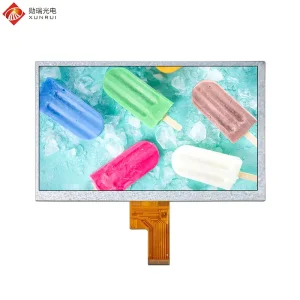
China 7 inch 1024×600 MIPI 30PIN 350nit IPS TFT LCD Display
View Product Specs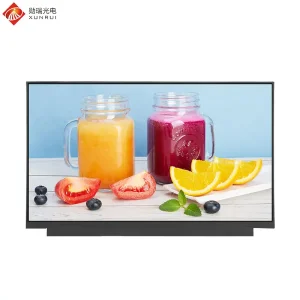
China 13.3 inch 1920×1080 EDP 30PIN 280nit IPS TFT LCD Module
View Product Specs