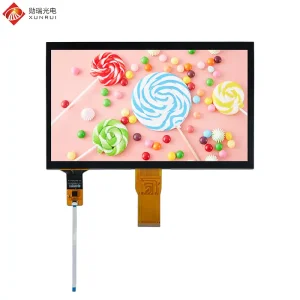
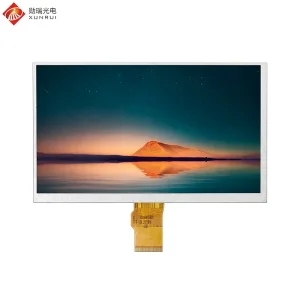
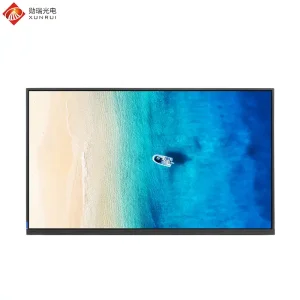
Engineered Display Modules & Integrated Solutions
Explore our top industrial-grade TFT and IPS displays engineered with high thermal resilience, anti-electromagnetic interference, and customizable optical bonding.





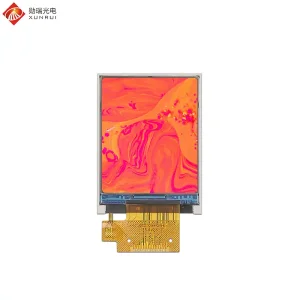


The 6.2-Inch IPS Display: Architectural Paradigm Shift
Understanding why edge-computed systems, handheld field units, and automotive sub-consoles are shifting toward customized 6.2-inch ultra-wide viewing angle modules.
Ultra-Wide In-Plane Switching
Unlike legacy TN screens suffering from severe grayscale inversion at peripheral angles, modern 6.2-inch IPS modules provide true 85/85/85/85 or 89/89/89/89 symmetrical viewing angles. Critical instrumentation metrics remain crystal-clear regardless of operator perspective.
High-Luminance Optical Engineering
Industrial operations demand seamless daylight readability. We configure dedicated LED driver strings delivering 800 to 1,500+ nits luminance alongside anti-reflective (AR) and anti-glare (AG) surface coatings, ensuring pristine readability in direct sunlight.
Full Optical Resin Bonding (OCA/LOCA)
Eliminating the air-gap between touch cover lenses and IPS cells radically reduces internal refraction by over 300%. This structural union also reinforces shatterproof ratings (IK07/IK08) while mitigating internal condensation across severe ambient temperature fluctuations.
Demands of Worldwide Engineering & Procurement Teams
Tier-1 electronics manufacturers evaluate display partners on engineering viability, life-cycle commitment, and total cost of integration.
FPC Customization
Flexible Printed Circuit routing designed to match strict mechanical enclosures, complete with optimized EMI shielding and custom pinouts (MIPI DSI, LVDS, eDP, RGB).
5 to 7-Year Longevity
Industrial and automotive lifecycle stability with guaranteed continuity of critical raw materials, panel cells, and driver ICs, eliminating costly mid-cycle redesigns.
Agile Batch Flexibility
Pilot run support of 5 to 500 units for physical functional verification and field stress trials, followed by seamless transition to full automated mass production above 1,000 pcs.
Glove & Water-Tolerant PCAP
Projected Capacitive touch controllers fine-tuned to ignore water film, oil, and conductive fluids, while maintaining zero latency when operated with industrial safety gloves.
China Factory 4.0: Supply Chain Resilience & Cleanroom Automation
Our facility integrates automated COG, FOG bonding lines, and ISO Class 6 cleanroom environments to deliver defect-free optical assemblies with accelerated turnarounds.
Automated COG & FOG Precision
Chip-on-Glass (COG) and Film-on-Glass (FOG) stations operate at micron-level alignment tolerances, preventing micro-fractures and signal cross-talk in modern compact thin-bezel displays.
5-Stage Quality Assurance Gate
Zero-defect compliance driven by IQC incoming material audits, glass cell polarimetry, FOG high-temperature burn-in, 100% full-load aging tests, and rigorous pre-export OQC protocols.
In-House Driver Board Integration
Beyond bare display cells, we design and populate matching HDMI, LVDS, VGA, and AV controller bridge boards, drastically reducing our clients' firmware debugging cycles.
Localized Application Environments for 6.2" IPS Displays
From handheld industrial diagnostic terminals to outdoor electric vehicle chargers, our displays are designed for demanding deployments worldwide.
Rugged Handheld Terminals & POS
Engineered for warehouse logistics scanners, mobile point-of-sale units, and military field diagnostics requiring lightweight profile, sunlight legibility, and high drop impact resistance.
Automotive & Marine Consoles
Secondary dash instruments, digital rearview mirrors, two-wheeler smart instrument clusters, and boat chart-plotters exposed to direct UV rays and operating across -30°C to +85°C.
Medical Monitors & Smart Home
Bedside patient infusion monitors, defibrillators, lab analyzers, and high-end smart home central wall controllers demanding anti-bacterial cover glass and medical-grade touch precision.
Frequently Asked Questions for 6.2" IPS Display Sourcing
Clear answers to questions regarding MOQ, optical bonding, interface adaptation, and lifecycle guarantees.
Standard, High-Brightness & Custom TFT Modules
Review our extended line of display solutions designed to handle high shock, vibration, and extreme temperature conditions across diverse industrial applications.