
Featured High Brightness TFT Modules for South African Applications
Engineered to counter severe solar irradiance (exceeding 2,200 kWh/m² across the South African Highveld) with customized high-efficiency LED drivers, anti-reflective coatings, and high-temperature liquid crystal fluid.

Custom 10.1" 1024×600 1000nit High Brightness TN TFT LCD Module for African Industrial HMIs
View Module Specifications
7" 1024×600 1000nit High Brightness IPS TFT LCD Module for Solar & Fleet Telematics
View Module Specifications
5" 800×480 1200nit Ultra-Bright TN TFT LCD Display for Karoo Outdoor Metering Terminals
View Module Specifications
4.3" 800×480 1000nit High Brightness IPS TFT LCD Module for Mining Heavy Equipment Control
View Module SpecificationsSouth African Industrial Landscape & Optoelectronic Environmental Demands
An in-depth engineering assessment of optical performance, thermodynamic stability, and environmental ingress compliance required for TFT LCD deployments across Sub-Saharan infrastructure.
Solar Irradiance and Ambient Contrast Ratio (ACR) Challenges in the South African Highveld
The Republic of South Africa possesses one of the highest solar regimes in the world, with daily solar irradiance averaging between 4.5 and 6.5 kWh/m² across regions such as the Highveld, the Northern Cape, and the Karoo basin. Under peak midday ambient illumination exceeding 80,000 to 100,000 lux, conventional industrial displays (typically rated between 250 and 400 nits) suffer total photometric washout. When specular reflection off the top polarizer and air-gap interfaces exceeds the internal luminance of the liquid crystal cell, the display's Ambient Contrast Ratio (ACR) degrades below 2:1, rendering vital operational telemetry completely illegible.
As a specialized custom TFT LCD manufacturing partner, we re-architect standard optical stacks into sunlight-readable, ultra-high-luminance visual displays ranging from 1,000 nits to beyond 2,500 nits. By coupling custom-designed Nichia LED arrays with low-loss optical light guide plates (LGPs), advanced prismatic brightness enhancement films (BEF), and high-efficiency dual brightness enhancement films (DBEF), we achieve target luminance without excessive current injection that could otherwise induce thermal thermal runaway in unventilated IP65/NEMA enclosures.
Core Engineering Methodologies for High-Luminance TFT Design
Delivering sustained performance in harsh operating environments requires balancing photometric output, thermal dissipation, mechanical rigidity, and optical impedance matching.
Full Optical Bonding (OCA & OCR)
Eliminating the internal air gap between the TFT polarizer and the protective cover glass completely halts internal Fresnel reflections. Utilizing high-refractive-index index-matched optical clear adhesives reduces ambient reflectance from 4.5% to under 0.2%, dramatically enhancing sunlight legibility while preventing condensation and dust ingress in coastal ports like Durban and Richards Bay.
Thermal Dissipation & Anti-Blackening Liquid Crystal
Under continuous African sun exposure, display surface temperatures routinely exceed +70°C. Standard commercial LC fluids undergo isotropic transition (black spot formation) at ~60°C. We deploy automotive-grade Hi-Tni liquid crystals possessing isotropic phase points up to +105°C or +115°C, supported by custom aluminum extruded back housings and thermal gap pads.
Advanced Surface Treatments (AR / AG / AF / UV400)
Deploying multi-layer anti-reflective (AR) sputter coatings, micro-etched anti-glare (AG) surfaces (diffusing harsh Highveld specular reflections), and oleophobic anti-fingerprint (AF) finishes. Critical UV400 cut-off films prevent the degradation and yellowing of internal polarizers and touch sensors under high ultraviolet index conditions (UV Index 11+).
| Display Parameter | Standard Commercial TFT | XUNRUI Custom High Brightness TFT | Operational Value for South African Industry |
|---|---|---|---|
| Luminance Intensity | 250 - 350 cd/m² (nits) | 1,000 - 2,500+ cd/m² (Customized) | Guarantees 100% sunlight readability in open-cast mines and agricultural machinery. |
| Liquid Crystal Clearing Point | Tni = ~60°C to 70°C | Hi-Tni = 105°C to 115°C (Automotive-Grade) | Prevents isotropic solar blackening on panels mounted in direct northern sun. |
| Optical Bonding | Air gap (perimeter tape bonding) | Solid Optical Bonding (OCA/OCR silicone) | Eliminates internal fogging in humid coastal zones (Cape Town, Durban) & blocks mine dust. |
| Touch Controller Tuning | Standard mutual capacitive | High-Noise Rejection (Water rejection & 5mm gloves) | Seamless interaction for heavy-duty operators wearing industrial gloves or during torrential rains. |
| LED Backlight Driver | Fixed voltage, low PWM control | Constant-Current Wide Input (9-36V) + Auto-Dimming | Protects against load-shedding voltage spikes and conserves solar battery storage at night. |
Industrial Implementation Scenarios Across South African Sectors
Tailoring display assemblies to survive the unique physical, electrical, and environmental constraints of local mining operations, renewable energy grids, and transport infrastructures.
Mining & Extraction Equipment HMIs
Operated in the Bushveld Complex platinum belts and Witwatersrand gold fields. Our 4.3", 7.0", and 10.1" modules are fortified with 4mm-6mm chemically strengthened IK09/IK10 cover glass, wide-temperature resistive or glove-tuned PCAP touchscreens, and hermetically sealed bezel gaskets to resist fine abrasive silica and coal particulate ingress.
Solar Inverters & Battery Energy Storage (BESS)
Driven by intensive solar power adoption and commercial backup generation across South Africa. Exterior-mounted solar inverters require 1,000 to 1,500 nit bar-type and square TFTs that operate continuously in unshaded desert conditions, integrated with smart ambient light sensors to automatically modulate brightness and minimize parasitical battery draw.
Fleet Management & Heavy Transport Telematics
Long-haul logistical corridors between Johannesburg, Durban, and Cape Town demand rugged in-cab telematics. Featuring wide viewing angles (85/85/85/85 IPS technology) for multi-angle driver glance visibility, high shock/vibration tolerance according to MIL-STD-810H, and LVDS/MIPI/RGB interfaces compatible with leading automotive ARM platforms.
Global Factory Direct Support & South African Regulatory Compliance
Ensuring seamless component integration, rapid freight clearance, and long-term lifecycle stability for domestic equipment manufacturers and systems integrators.
Adherence to SABS, NRCS, and Global Quality Standards
Electronic equipment imported or assembled into the South African market must satisfy stringent regulatory scrutiny overseen by the South African Bureau of Standards (SABS) and the National Regulator for Compulsory Specifications (NRCS). While bare TFT display sub-assemblies typically interface as sub-components, our factories manufacture all modules in full alignment with international RoHS 3, REACH (SVHC), CE, and FCC electromagnetic compatibility directives, simplifying final end-product ICASA (Independent Communications Authority of South Africa) and NRCS Letter of Authority (LOA) certification.
Our Shenzhen manufacturing headquarters operates under rigorous ISO 9001:2015 Quality Management Systems and ISO 14001 Environmental Standards. Each production batch undergoes strict Five-Stage Quality Control: incoming glass and optical material inspection (IQC), automated Fog bonding inspection, active high-temperature thermal cycling and dynamic aging testing, end-of-line optical parameter grading (luminance uniformity, color chromaticity, contrast), and outgoing quality assurance (OQC) packaging validation.
Direct-to-Hub Logistics: Johannesburg, Cape Town, and Durban Ports
Mitigating supply chain volatility is essential for modern South African OEMs facing unpredictable port turnarounds. We offer diversified DDP/DAP freight frameworks connecting our Shenzhen factory directly to O.R. Tambo International Airport (Johannesburg) for rapid 3-to-5-day air-freight prototyping, and sea freight routing via Durban and Cape Town container terminals for large-scale production runs. Furthermore, to guard against project redesign risks, we guarantee long-term form-fit-function product lifecycle roadmaps of 5 to 7+ years on all our industrial-grade TFT LCD platforms.
Future Display Innovations in Extreme-Environment Optoelectronics
Pioneering next-generation display architectures combining high-efficiency Mini-LED local dimming backlights, transflective micro-structures, and intelligent telemetry sensors.
Mini-LED Direct Matrix Local Dimming
Migrating from traditional edge-lit backlights to multi-zone Mini-LED backplane matrixes. By dynamically modulating local zones, we achieve infinite contrast ratios (>100,000:1), peak HDR highlights beyond 3,000 nits, and a dramatic 40% reduction in thermal generation and power consumption—crucial for battery-supported solar installations during national grid load shedding.
Next-Gen Hybrid Transflective Pixels
Integrating micro-reflector layers behind individual subpixels. Under low light, the internal high-brightness LED provides back illumination; under peak sunlight, incident solar rays are reflected back through the liquid crystal cell, utilizing ambient sunlight itself to illuminate the panel. This achieves virtually infinite sunlight legibility with minimal backlight power draw.
Embedded AI Ambient Temperature & Photometric Control
Modern display assemblies incorporate I2C digital light and thermistor sensors directly onto the FPC ribbon. Real-time microcontrollers dynamically regulate LED drive current based on instantaneous internal temperatures and external lux levels, actively preventing thermal throttling while extending LED operating lifetimes beyond 100,000 hours.
Engineering & Sourcing Questions Addressed
Clear, definitive technical clarifications addressing optical bonding, thermal mitigation, touch tuning, and logistics for South African product developers.
Why is 1,000+ nits necessary for outdoor screens in South Africa?
South Africa’s high altitude (Johannesburg is ~1,750m above sea level) results in thinner atmospheric filtration and solar radiation exceeding 100,000 lux. Displays with standard 300-500 nits wash out completely because surface specular reflection overpowers the image. 1,000 to 2,000 nits provides the necessary optical contrast ratio (>5:1 ACR) required for operators to safely read diagnostic telemetry.
How do you resolve solar thermal buildup and isotropic blackening?
We combine high-clearing-point liquid crystal fluid (Hi-Tni > 105°C) with precision thermal dissipation architecture. Heavy-gauge aluminum backing acts as an integrated heatsink, while thermally conductive silicone gap pads channel internal LED thermal energy away from the active liquid crystal layer directly into the host machine enclosure.
What is the practical difference between Optical Bonding and Air Bonding?
Air bonding leaves an air pocket between the display and outer glass, which creates two internal reflective surfaces that cause roughly 9% optical reflection loss, as well as risking condensation in humid coastal climates like Durban. Optical bonding fills this void with index-matched optical adhesive (OCA/OCR), cutting reflectance below 0.5%, increasing shock resistance by 300%, and eliminating internal fogging completely.
Can projected capacitive (PCAP) touchscreens operate with thick work gloves?
Yes. Our engineering team customizes the touch controller firmware (utilizing industrial ICs like Ilitek, EETI, or FocalTech) with customized mutual and self-capacitance scan routines. This permits rapid, accurate tracking through up to 5mm thick leather/rubber industrial work gloves and enables reliable wet-finger water-rejection tracking.
What are the minimum order quantities (MOQ) and sample lead times?
For project verification, we offer rapid trial batches from 5 to 500 units after initial CAD engineering sign-off. Customized mass manufacturing is supported starting from 1,000 units. Standard engineering sample lead times are typically 7 to 14 days, with delivery straight to South African facilities via express air shipping.
How do custom driver boards handle power fluctuations during load-shedding?
Our matching HDMI, LVDS, and AV industrial interface driver boards can be engineered with wide-input DC power stages (9V to 36V DC) featuring built-in overvoltage clamp diodes, reverse polarity protection, and transient voltage suppression (TVS) arrays designed to withstand sudden mains drops and inductive spikes from auxiliary diesel generator transfers.
Full Industrial Range: High Brightness & Wide-Temp TFT LCD Series
Explore our complete portfolio of sunlight-readable displays ranging from compact 3.5-inch handheld displays to 10.1-inch high-resolution widescreen panels ready for mass OEM customization.

Custom 3.5" 1000nit High Brightness IPS TFT LCD Module for Portable Diagnostic Terminals
View Module Specifications
Custom 5" 720×1280 MIPI 40pin 1000nit IPS TFT LCD Display for Handheld Field Computers
View Module Specifications
Custom 5" 480×854 RGB 40pin 1000nit IPS TFT LCD Module for Agricultural Navigation Units
View Module Specifications
7" 800×480 1000nit Wide Operating Temp TN TFT LCD Display for Outdoor Kiosks & Fuel Pumps
View Module Specifications
Custom 8" 1280×720 LVDS 1000nit High Brightness IPS TFT LCD Module for Commercial Fleets
View Module Specifications
Custom 10.1" 1024×600 LVDS 40pin 1000nit IPS TFT Display for Marine & Port Terminals
View Module Specifications
Custom 10.1" 1024×600 1000nit High Brightness TN TFT LCD Module for Factory Automation
View Module Specifications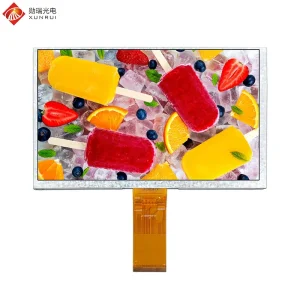
Custom 9" 1024×600 LVDS 60pin 400nit High-Grade IPS Screen for Industrial Instrumentation
View Module SpecificationsNeed a specific resolution, custom FPC shape, or higher luminance for your South African application?
Send Inquiry Now - Request Custom Engineering Proposal