

Standard & Custom Flagship Models
High-Precision Resistive Touch TFT Displays for Japan
Engineered with ITO film-on-glass architectures, anti-glare coatings, and ultra-high noise margin controllers tailored for factory automation lines in Osaka, Nagoya, and Tokyo.

Custom 10.1 inch 1024×600 TN TFT LCD display with resistive touch panel for Japan Machine Systems
View Model Details & Spec
Custom 4.3 inch 480×272 TN TFT LCD display with resistive touch panel for Japan Factory Automation
View Model Details & Spec
Industrial 5 inch 800×480 TN TFT LCD display with resistive touch panel for Japan Automation
View Model Details & SpecIndustrial Engineering Insights
Why Japan’s Industrial & FA Sectors Rely on Resistive TFT Panels
While consumer electronics predominantly embrace projected capacitive (PCAP) glass, Japanese mission-critical automation (Monozukuri) maintains an unwavering demand for specialized resistive touch architectures.
Absolute Noise Immunity (EMI/EMC)
Industrial settings in Japan—featuring high-power servomotors, VFD inverters, and heavy welding equipment—create substantial electromagnetic interference. Projected capacitive panels suffer false triggering under RF noise.
- Pure voltage-gradient operation unaffected by stray capacitance
- Fully compliant with JIS C 61000-4-3 and IEC 61000-6-2 EMC limits
- Eliminates touch jitter in high-frequency switching environments
Strict Heavy Glove & Stylus Interaction
Japanese factory safety mandates require continuous wearing of thick nitrile, silicone, or Kevlar protective gloves. Operators cannot remove safety gear to acknowledge alarm thresholds or input telemetry.
- Physical mechanical pressure actuation (20g to 100g calibration)
- Flawless registration via metal styluses, gloved hands, or pens
- No drift caused by operator sweat or wet outer dielectric layers
Severe Liquid & Chemical Tolerance
CNC machinery lines and food processing plants across Japan utilize aggressive cutting fluids, coolants, mineral oils, and sanitizing solutions that trigger erratic actions on capacitive sensors.
- Zero false touches when covered by standing water, oil, or grease
- Hard-coated PET surface films resistant to alcohols and acetone
- Hermetically sealed IP65/IP67 perimeter gasket bonding
Localization & Compliance Assurance
Dedicated Engineering Alignment for Japanese Tier-1 & Tier-2 OEMs
Procuring custom electronic components for the Japanese market demands uncompromising adherence to supply longevity, trace documentation, and environmental safety standards. Our manufacturing infrastructure is fully aligned with Japan's industrial expectations:
- RoHS & REACH Compliance: Certified chemical analysis documentation verifying total absence of hazardous halogens, lead, and forbidden phthalates.
- Long-Term EOL Stability: Minimum 7 to 10 years continuous availability guarantees to protect capital investment in Japanese rail, medical, and factory controllers.
- Bilingual FAE Engineering: Direct CAD interchange, custom FPC routing matching Omron, Mitsubishi, and Keyence PLCs, and 48-hour RMA turnarounds.
- JIS Standard Vibration Proofing: Fully validated to survive JIS D 1601 vibration spectrums for transport, rail, and heavy machine instrumentation.
Customization Options for Japan Projects
FPC Tail Customization:
Custom lengths, EMI grounding layers, ZIF termination, and gold-plated pin arrangements.
Optical Film Treatments:
Anti-Glare (AG) hard coatings to counter high-bay ceiling lighting; Anti-Reflective (AR) for direct sunlight readability.
Glass-Film-Glass (GFG) Architectures:
Ultra-ruggedized surface options offering vandal resistance and extreme scratch resistance (7H pencil hardness).
Technology Roadmap & Future Outlook
The Evolution of Resistive Touch Technology in High-Precision Displays
Far from a stagnant legacy technology, resistive touch continues to evolve to meet the demanding requirements of Industry 4.0, next-generation AI robotics, and outdoor human-machine interfaces.
Phase 01 · Present
Enhanced 5-Wire ITO Topologies
Moving from traditional 4-wire systems to advanced 5-wire architectures where measurement circuits reside purely on the base glass, elevating touch lifespans beyond 35 million activations.
Phase 02 · Near Term
Optical Bonding with Sunlight Readable IPS
Combining high-transmittance resistive films directly to high-luminance (1000+ nits) IPS displays using specialized index-matched optical resins to minimize internal reflection.
Phase 03 · Maturing
Multi-Touch Resistive (MTR)
Deploying linear resistive matrix sensor arrays that empower genuine two-touch gestures (pinch-to-zoom, dual-handed safety interlocks) while preserving complete glove and liquid immunity.
Phase 04 · Visionary
Haptic Feedback Hybrid Resistive
Integrating localized piezoceramic micro-actuators behind the display stack to provide physical click confirmation to operators working in noisy Japanese industrial plants.
Comprehensive Portfolio
Custom TFT LCD & Touch Module Lineup
Explore our versatile series spanning compact instrumentation, vertical handhelds, high-resolution MIPI panels, and ultra-wide view IPS assemblies for international and Japan-based systems.

China 4.3 inch 800×480 IPS TFT LCD Module with resistive touch panel for Japan Market
View Specifications
Custom 5 inch 480×272 TN TFT LCD Module with resistive touch panel for Japan OEM
View Specifications
Custom 2.8 inch 240×320 TN TFT LCD Module with resistive touch panel for Japan Devices
View Specifications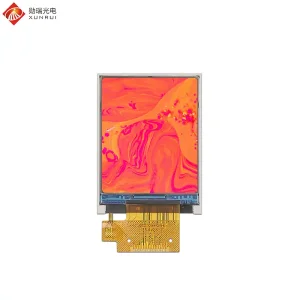
Custom 1.77 inch 128×160 SPI 14pin 250nit TN TFT LCD Module for Japan Electronics
View Specifications
Custom 3.5 inch 320×240 960nit IPS TFT LCD With capacitive touch panel for Japan Precision
View Specifications
Custom 10.1 inch 800×1280 MIPI IPS TFT LCD Display with capacitive touch for Japan HMI
View Specifications
Custom 8 inch 1200×1920 MIPI 40pin 350nit IPS TFT LCD Display Module for Japan Systems
View Specifications
Custom 7 inch TFT LCD module 800×480 RGB 50pin interface 250nit TN screen for Japan Factory
View SpecificationsExpert FAQ
Frequently Asked Questions: Resistive Touch Displays in Japan
Comprehensive engineering clarifications addressing procurement, design-in, reliability validation, and technical adaptation.
Why choose 4-Wire vs. 5-Wire Resistive panels for Japan projects?
4-wire technology is exceptionally cost-effective and compact for small-format screens (up to 7.0 inches) where production runs exceed hundreds of thousands. 5-wire technology routes both X and Y measurement channels across the underlying glass substrate, guaranteeing consistent calibration even if the outer protective film sustains mechanical scratches over decades of factory operation.
How do you satisfy strict Japanese environmental regulations?
Every raw material batch (glass, polarizers, ITO films, adhesive tapes, ICs) undergoes exhaustive third-party laboratory screening. We issue complete SDS, chemSHERPA data, and official RoHS 2.0 / REACH SVHC declaration certificates for Japanese industrial audits.
Can you provide custom driver board integration (HDMI, LVDS, VGA)?
Yes. Beyond standard bare panel assemblies, we design and produce integrated A/D controller boards supporting universal industrial interfaces (RGB, LVDS, HDMI, VGA, MIPI). We also supply USB or RS232 touch controller bridges compatible with Linux, Windows Embedded, and VxWorks real-time operating systems.
What is the typical lead time for engineering prototypes and pilot runs?
Upon formal sign-off of the 2D/3D mechanical drawings, custom resistive touch tooling and FPC layout takes approximately 12–18 business days. We provide initial functional prototypes (5–10 pcs) followed by an optional small-batch pilot validation (50–500 pcs) before mass ramp-up.
Start Your Custom Japanese Industrial Display Project
Consult with our optoelectronic display engineering specialists to lock down display performance, environmental robustness, and production cost structures for your equipment line.