
Resistive Touch TFT LCD Supplier & Suppliers for Italy
Precision-engineered, EMI-immune human-machine interfaces designed for Lombardy's CNC machinery, Emilia-Romagna's packaging automation, and high-precision marine systems.
Primary Industrial TFT Modules Available for Italy
Engineered to operate in high vibration, wet, and heavy electrical noise environments with support for gloved and stylus interaction.
-

Custom 7 inch 800×480 TN TFT LCD display with resistive touch panel Supplier, Factory
-

Custom 10.1 inch 1024×600 TN TFT LCD display with resistive touch panel Supplier, Suppliers
-

Custom 4.3 inch 480×272 TN TFT LCD display with resistive touch panel Supplier, Factory
-

China 5 inch 800×480 TN TFT LCD display with resistive touch panel Manufacturer, Suppliers
Italy's Industrial Reality: Why Resistive Touch Remains Critical
Analyzing the strategic display requirements of the European Union's second-largest manufacturing powerhouse.
Italy’s manufacturing sector, famously concentrated across the northern industrial clusters of Lombardy, Veneto, and Emilia-Romagna (the "Packaging Valley"), represents one of the most sophisticated capital equipment ecosystems globally. Italian Original Equipment Manufacturers (OEMs) excel in the creation of bespoke CNC metalworking centers, high-speed automated packaging machinery, ceramic tile processing gear, pharmaceutical compounding apparatus, and high-performance agricultural harvesters. In these real-world production settings, touchscreen user interfaces face environmental rigors vastly different from consumer electronics.
The Unmatched Utility of Resistive Touch Over Capacitive (PCAP) in Italian Plants
While projected capacitive (PCAP) displays dominate consumer tech, industrial engineers across Milan, Bologna, and Turin continue to engineer high-reliability HMIs using 4-Wire and 5-Wire Resistive Touch TFT LCDs. The mechanical realities of Italian factories explain this preference:
- Operation with Thick Protective Gear: Operators in heavy Italian forging, casting, and mechanical fabrication plants routinely wear heavy cowhide, nitrile, or neoprene safety gloves. Resistive panels operate entirely on physical pressure rather than electrical capacitance, ensuring zero latency or missed inputs regardless of the operator's personal protective equipment (PPE).
- Immunity to High Electrical Noise (EMC/EMI): In robotic welding cells, high-frequency induction furnaces, and heavy motor drive setups common in Italy's heavy industrial zones, electromagnetic interference can wreak havoc on capacitive touch controllers, causing "ghost touches." Resistive touch architecture is intrinsically immune to stray electrical fields and conducted interference.
- Surface Fluid Contamination Tolerance: Machinery in Italy’s food processing (cheeses, wine bottling, cured meats) and pharmaceutical lines undergoes rigorous washdowns and frequently operates under constant splashes of water, cutting oils, lubricants, and sanitizing chemicals. Resistive sensors ignore non-pressurized surface conductive fluids, ensuring 100% operational safety and stopping accidental line halts.
Global Industrial HMI Trends & Engineering Demands
How the worldwide migration toward Industry 4.0 dictates optical and mechanical upgrades in resistive TFT panels.
Optical Transmittance Boost
Historically, resistive touch screens suffered from lower light transmittance (~78-82%). Global industrial tiers now demand circular polarizing films and anti-reflective index matching to elevate overall stack transmission to over 87%, minimizing thermal build-up and conserving backlight driver power.
5-Wire Long-Life ITO Upgrades
For mission-critical installations requiring tens of millions of actuations in a single point, 5-wire resistive systems are replacing traditional 4-wire modules. Because the voltage gradient is retained on the bottom glass substrate, micro-cracks in the upper flexible ITO film do not degrade panel linearity.
Expanded Thermal Operation Range
Global logistics equipment, agricultural dashboards, and naval marine cockpits demand performance between -30°C and +85°C. Advanced liquid crystal chemistries prevent cold freezing and high-temp solar clearing (clearing point >105°C) while maintaining membrane elasticity.
China Industry 4.0: Supply Chain Resilience for European Buyers
Balancing high mix, low-volume European custom engineering with world-class component density and cost structures.
Sourcing display components for the Italian market requires a dual competency: precise, engineering-led customization paired with the agility of high-density production ecosystems. Shenzhen Xunrui Optoelectronic Technology Co., Ltd. resolves this supply chain challenge by operating our advanced automated manufacturing facility in Shenzhen, integrating raw optical glass processing, cleanroom FOG (Film-on-Glass) bonding, touch-sensor alignment, and automated backlighting assembly within a tightly controlled, ISO-certified umbrella.
Direct Advantages for Italian Procurement Teams & Distributorships
- Direct Bill-of-Materials (BOM) Control: By controlling our optical bonding processes and maintaining strategic partnerships with raw glass fabricators (BOE, Innolux, HannStar), we eliminate the broker markup common to European display integrators, delivering a 20% to 35% unit cost reduction to Italian OEMs.
- Custom Tooling Agility for FPC and Pin-Out Mapping: Retrofitting legacy Italian machine control boxes frequently requires custom FPC cable lengths, customized pin-out interfaces (MCU 8080/6800, RGB 24-bit, LVDS, or SPI), and specific mounting bezels. Our engineering staff provides production-grade CAD and sample prototypes within 7 to 10 working days.
- De-risked Procurement Lifecycle (Trial to Volume): We offer an intermediate bridge tier allowing 5 to 500 units for field validation, machine CE/EMC certification, and end-customer acceptance tests prior to initiating custom mass manufacturing runs.
Targeted Field Deployments Across the Italian Peninsula
Reliable resistive touch integration tailored to Italy's benchmark manufacturing and precision engineering disciplines.
Bologna Packaging Machinery
High-speed blistering, carton packaging, and labeling lines require HMIs completely unperturbed by washdown moisture and static electricity generated by plastic films. 7.0" and 10.1" resistive modules provide tactile reliability and fail-safe operation.
Lombardy Metal CNC Consoles
Milling machines, CNC lathes, and press brakes in Brescia and Bergamo demand display assemblies impervious to synthetic coolant sprays and metal shaving abrasion. 4.3" and 5.0" resistive units allow precise tool-offset indexing via stylus or gloved hands.
Adriatic Marine & Navigational Tech
Shipbuilding yards across Genoa, Trieste, and Ancona demand helm display instrumentation that functions flawlessly when completely saturated by saltwater spray. High-nit resistive displays guarantee continuous steering and radar input where capacitive touch fails.
Technical & Procurement FAQ for Italian Engineers
Key architectural and logistics details addressed by our display engineering and international dispatch teams.
Why specify a Resistive Touch TFT LCD instead of PCAP for Italian equipment?
How does Xunrui assist with obsolescence management for long-cycle Italian machinery?
Can resistive touch displays be upgraded for outdoor or high-ambient sunlight readability?
What are the logistics, import customs, and compliance terms for shipments to Italy?
What is the prototyping timeline and minimum order quantity (MOQ) for custom projects?
Extended Industrial & High-Brightness Portfolio
Comprehensive display solutions configured for Italian industrial automation, automotive diagnostic tools, and outdoor telemetry.
-

China 4.3 inch 800×480 IPS TFT LCD Module with resistive touch panel Supplier, Factory
-

Custom 5 inch 480×272 TN TFT LCD Module with resistive touch panel Manufacturers, Factory
-

Custom 2.8 inch 240×320 TN TFT LCD Module with resistive touch panel Manufacturers, Supplier
-
Custom 10.1 inch 1024×600 TN TFT LCD display with resistive touch panel Supplier, Suppliers
-
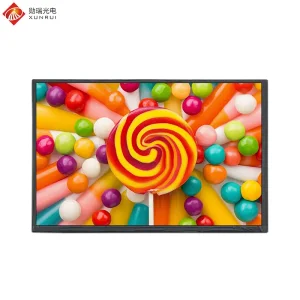
China 10.1 inch 1920×1200 LVDS 45pin 350nit IPS TFT LCD Display Manufacturers, Factories
-

China 4.3 inch 800×480 1000nit High brightness IPS TFT LCD module Supplier, Factory
-

Custom 10.1 inch 1024×600 LVDS 40pin 1000nit IPS TFT LCD Display Manufacturers, Factory
-

China 8 inch 1024×768 LVDS 40pin interface 300nit IPS TFT LCD module Manufacturer, Supplier