Precision Engineering Portfolio
Featured 10.1" & Embedded Industrial Display Modules
Direct factory supply with verified mechanical drawings, custom FPC wiring, high-nit backlight enhancements, and PCAP/RTP integration for immediate prototyping and mass production.
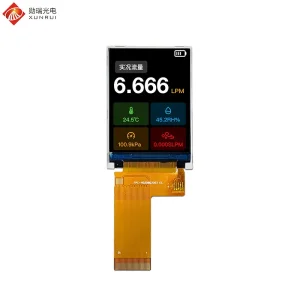




Technical Specification Matrix
10.1-Inch TFT Architecture: Resolving Interface, Contrast & Optical Efficiency
The 10.1-inch form factor serves as the golden ratio for smart edge terminals. Selecting the right hardware pipeline requires balancing pixel density, bus clock speed, EMI mitigation, and thermal dissipation.
| Display Parameter | Standard Commercial Grade | Industrial High-Reliability | Xunrui Enhanced Custom Grade |
|---|---|---|---|
| Resolution Options | 1024×600 (WSVGA) / 1280×800 (WXGA) | 1280×800 IPS / 1920×1200 (WUXGA) | 800×1280, 1024×600, 1280×800, 1920×1200 IPS |
| Luminance (Backlight) | 250 – 350 cd/m² (Standard indoor) | 450 – 800 cd/m² (Semi-outdoor) | Up to 1,500+ nits (Direct Sunlight Readable) |
| Signal Interfaces | TTL / Single-Channel LVDS | Dual LVDS / MIPI-DSI (4-Lane) | MIPI 40-pin, Dual LVDS, eDP 30-pin, HDMI Bridge |
| Operating Temperature | -10°C to +50°C | -20°C to +70°C | -30°C to +85°C (Automotive / Mil-spec rated) |
| Optical Bonding | Air Gap Bonding (Double-sided tape) | LOCA (Liquid Optically Clear Adhesive) | High-Yield OCA / Wet LOCA Cleanroom Bonding |
| Touch Sensor Support | 4-Wire Resistive (Basic) | Standard Projected Capacitive (G+G) | PCAP Glove/Water touch + AG/AR/AF 6H-7H Tempered Cover |
Differential Signal Integrity (MIPI vs. LVDS vs. eDP)
For high-throughput 10.1" panels, signal integrity across FPC traces determines visual stability. Xunrui configures controlled impedance (100Ω differential) on MIPI 4-lane and eDP lines, eliminating electromagnetic interference (EMI) in medical imaging, diagnostics, and high-voltage factory robotics.
Thermal Dispersion & High-Nit Backlight Reliability
Pushing backlight brightness up to 1200–1500 nits causes rapid junction temperature rise in LED dies. Our custom metal chassis engineering incorporates aluminum heat sinks and high-efficiency constant-current driver ICs, ensuring LED half-life spans exceed 50,000 continuous operating hours without optical degradation.
Surface Treatments: AG, AR & AF Layer Bonding
Factory environments and medical suites require optical clarity under glaring lighting. Xunrui applies Anti-Glare (chemical etching), Anti-Reflective coatings (reducing surface reflectance from 4.5% to under 0.5%), and Anti-Fingerprint oleophobic coatings directly onto chemically strengthened cover glass.
China Factory 4.0 Infrastructure
Manufacturing Resilience: Vertical Integration from Shenzhen
Established in 2016, Shenzhen Xunrui Optoelectronics pairs fully automated Class 1,000 cleanrooms with end-to-end component traceability to maintain delivery continuity across volatile international markets.
Automated FOG & COG Bonding
High-precision chip-on-glass (COG) and film-on-glass (FOG) Japanese auto-alignment bonders guarantee micron-level pitch accuracy and zero-void conductive particle distribution.
5-Gate Total Quality Assurance
Every shipment passes IQC incoming raw glass inspection, automated optical inspection (AOI), 72-hour continuous thermal aging, FOG functional validation, and final outgoing OQC audits.
Strategic Silicon Alliances
Deep direct partnerships with major glass cell foundries (BOE, Innolux, AUO, HannStar) insulate our procurement programs from global supply fluctuations and panel allocation cuts.
7–10 Year Longevity Roadmap
Industrial OEM designs require extended lifecycles. Xunrui issues strict longevity guarantees with Form-Fit-Function (FFF) redesign compatibility to protect programs against premature EOL.
Macro-Industry Deployments
Customized 10.1" Architectures Across Global Sectors
Different operational environments place distinct physical demands on LCD screens. We engineer customized module stacks tuned to specific industrial, transport, and clinical constraints.
Smart Factory HMIs & PLC Terminals
Factory floors combine heavy motor vibrations, transient electrical spikes, and airborne solvents. Our 10.1" 1280×800 LVDS panels feature reinforced shielding frames, wide-input DC driver boards, and glove-responsive resistive or capacitive multi-touch layers.
Automotive, EV Charging & Telematics
Unsheltered automotive dashboards and public DC fast-charging kiosks require high optical contrast under harsh afternoon sun. Xunrui utilizes 1000–1500 nit LED backlights, optical OCA bonding to eliminate internal air refraction, and UV-resistant polarizers.
Clinical Medical & Laboratory Instrumentation
Bedside patient monitors and blood gas analyzers demand wide 85/85/85/85 viewing angles and sealed front surfaces resistant to medical cleaning agents like isopropanol. Xunrui provides antibacterial cover glass and full optical wet-bonding compliance.
Technology Roadmap
The Next Era of 10.1" Displays: Mini-LED, Ultra-Low Power & Haptic Edge
Display design is moving beyond basic backlighting toward high dynamic range, lower power budgets, and integrated sensory feedback for human-machine collaboration.
Mini-LED Local Dimming
Next-generation 10.1" industrial modules will transition to Mini-LED array backlights with 512+ local dimming zones. This design delivers 100,000:1 contrast ratios and deep black levels rivaling OLED, while maintaining the burn-in-free stability essential for 24/7 telemetry displays.
Reflective IGZO & Green Power Efficiency
For battery-powered field terminals and agricultural drones, power consumption in conventional silicon is limiting. Xunrui's R&D group is refining Indium Gallium Zinc Oxide (IGZO) backplanes that cut static refresh power draw by up to 60% compared to traditional amorphous silicon (a-Si) panels.
Piezoelectric Haptic Feedback Integration
Replacing mechanical switches with flat capacitive screens can compromise tactile assurance for heavy machinery operators. Our integrated haptic cover glass architecture introduces targeted localized vibrations upon touch input, ensuring accurate physical confirmation even while wearing thick protective work gloves.
Compliance & Export Security
International Certifications, Tariffs & On-Site Support
Procuring direct from Shenzhen requires a clear understanding of international compliance, customs handling, and technical documentation.
RoHS & REACH Compliance
Every component—from raw polarizers and liquid crystal compounds to FPC copper plating and ACF adhesives—is fully certified free of restricted hazardous substances for smooth customs entry across the EU and North America.
CE, FCC & EMI Validation
Our driver boards and 10.1" module assemblies undergo rigorous pre-compliance radiated and conducted emissions testing, ensuring your completed enclosure effortlessly passes CE and FCC Part 15 Class B certifications.
Export Duty & HS Classification
Our trade compliance specialists assist global logistics brokers with proper HS Code declarations (typically under 8528.52 or 9013.80), minimizing cross-border duty exposure and customs transit holds under DDP, CIF, or FOB terms.
Direct Engineering-to-Engineering Support
Bypass non-technical sales agents. Our Shenzhen R&D engineering office provides direct schematic design reviews, sample timing code initialization, and custom touch IC tuning via Teams, WhatsApp, and Zoom.
Technical & Commercial FAQ
Frequently Asked Questions by OEM Procurement Teams
Answers to common technical, validation, and commercial questions asked by hardware engineers and sourcing managers prior to kicking off custom tooling.
What is the typical NRE and lead time for custom FPC and cover glass?
Custom FPC pin-out alterations typically require an initial Non-Recurring Engineering (NRE) charge of $500 to $1,500, with working prototypes delivered in 12 to 18 business days. Custom printed cover glass tooling (silk-screen logo, specialized cutouts, thickness up to 6mm) runs between $1,200 and $3,000, delivering T1 verification samples in 3 to 4 weeks.
How do you resolve EMI interference between the 10.1" PCAP sensor and host boards?
Electromagnetic interference often stems from noisy switching DC-DC regulators. We address this at the hardware level by employing ILITEK or Goodix industrial touch controllers with active frequency-hopping firmware, coupled with complete backside copper foil ground shielding and ferrite core filtering on flexible interconnects.
What is the standard process for pilot sample validation and production ramp-up?
Our systematic validation framework proceeds through three strict milestones: 1) Initial mechanical/optical sample sign-off (3–5 pcs), 2) Engineering pilot trial (5 to 500 pcs) for full enclosure verification and environmental chamber testing, and 3) Mass production release (MOQ 1,000 pcs) with locked BOM and Golden Sample parameter matching.
What is the difference between Air Bonding and Optical (OCA/LOCA) Bonding for 10.1"?
Air bonding attaches the touch layer using border tape, leaving a tiny air gap that reflects roughly 8% of ambient light and is prone to internal condensation under high humidity. Full optical bonding uses clear solid resin (OCA) or liquid optical clear adhesive (LOCA) across the entire active viewing area. This eliminates internal reflection, improves contrast by up to 300%, and significantly enhances structural impact resistance.
Can you supply driver boards with HDMI, DisplayPort, or USB-C inputs?
Yes. In addition to bare panel modules, Shenzhen Xunrui engineers and manufactures matching industrial-grade A/D driver boards. These support HDMI 1.4/2.0, DisplayPort, VGA, and full USB-C video/power delivery with integrated audio amps, wide DC input (9V to 36V), and customizable on-screen display (OSD) menus.
How does Xunrui protect buyers against glass panel obsolescence?
We work directly with major raw glass fabricators (BOE, AUO, Innolux) to select panel cells from dedicated industrial-grade roadmap lines. If an upstream wafer fab announces an unexpected end-of-life (EOL), Xunrui issues a formal Last-Time-Buy (LTB) notification at least 6 to 9 months in advance and provides pin-compatible drop-in replacement solutions.
Comprehensive Catalog Series
Explore More Standard & High-Brightness TFT LCD Modules
Explore our diverse lineup of embedded display configurations ranging from 1.3" ultra-compact round smart-knob modules to 15.6" Full HD industrial-grade operator displays.