
High-Reliability 320x240 & Small-to-Mid TFT Displays
Engineered for industrial control, medical diagnostic panels, and IoT endpoints requiring proven optical stability and extended lifecycle availability.
-
 China 3.5 inch TFT LCD display 320×240 RGB 54pin interface 350nit TN Screen Manufacturer, SuppliersTechnical Datasheet
 -
 China 7 inch 1024×600 LVDS 40pin interface 350nit IPS TFT LCD module Manufacturer, ManufacturersTechnical Datasheet
 -
 Custom 10.4 inch 1024×768 LVDS 30pin 600nit IPS TFT LCD Module Factories, FactoryTechnical Datasheet
 -
 Custom 8 inch TFT LCD module 800×1280 MIPI 31pin interface 480nit IPS screen Suppliers, FactoriesTechnical Datasheet
 -
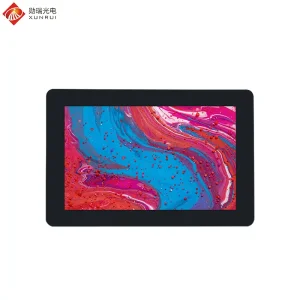 Custom 5 inch HDMI 800×480 IPS TFT LCD Module With driver board and CTP Suppliers, FactoryTechnical Datasheet
 -
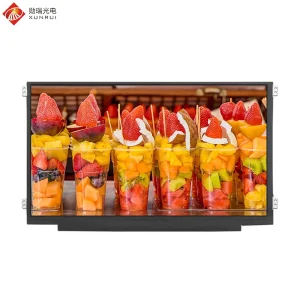 Custom 11.6 inch 1920×1080 EDP 30PIN 220nit IPS TFT LCD module Supplier, SuppliersTechnical Datasheet
 -
 China 4.3 inch 800×480 IPS TFT LCD Module with resistive touch panel Supplier, FactoryTechnical Datasheet
 -
 Custom 5 inch 800×480 RGB 50pin interface 500nit TN TFT LCD Display Suppliers, FactoriesTechnical Datasheet
The Strategic Vitality of 320x240 (QVGA) in Modern Embedded Architectures
Why Tier-1 industrial OEMs, medical equipment designers, and smart infrastructure developers deliberately source 320x240 TFT LCD panels over high-density mobile standards.
Deterministic MCU Bus Efficiency
Unlike resource-heavy high-definition displays that necessitate multi-gigahertz Application Processors running DDR-bound MIPI DSI interfaces, 320x240 TFT panels operate seamlessly on bare-metal or RTOS microcontrollers (ARM Cortex-M0+/M4/M7, ESP32, STM32). Driving an 8/16-bit 8080/6800 MCU bus or SPI interface eliminates display buffer thrashing, reducing power consumption down to milliwatt thresholds.
Severe Environment Electromagnetic Tolerance
High-resolution displays transmit fast clock-rate video signals that radiate high RF noise and succumb to industrial motor-inverter EMI. The lower clock frequencies mandated by 320x240 RGB or MCU interfaces make them resilient against industrial voltage surges, ESD shocks up to ±15kV with surface treatments, and harsh ambient electrical disturbances.
Guaranteed 7-10 Year Product Availability
Consumer displays suffer 12-to-18-month end-of-life (EOL) cycles. Industrial 320x240 glass substrates—specifically in standard 3.5-inch formats—benefit from locked BOMs (Bill of Materials), stable driver ICs (such as ILI9341, ST7789V, HX8238), and long-standing production commitments from Chinese specialized fabs, ensuring minimal redesign overhead.
Enterprise Procurement Criteria: What Global Engineering Teams Mandate
A breakdown of the critical parameters global supply chain directors scrutinize when auditing China 320x240 TFT LCD factories.
Optical Performance Under Direct Sunlight
Global procurement teams targeting field telemetry, marine monitors, and EV charging points require screen readability under >10,000 lux ambient sunlight. Chinese manufacturers now engineer high-efficiency LED arrays yielding 800 to 1,200 nits, coupled with optical bonding (OCA/LOCA) to minimize internal refraction between the polarizer and the protective cover glass.
FPC Tail & Pinout Custom Engineering
Dropping a 320x240 module into a pre-existing enclosure often fails due to rigid vendor FPC shapes. Leading Shenzhen manufacturers offer customized FPC pinouts (matching obsolete legacy displays from Sharp, Kyocera, or Powertip), custom EMI shielding backplates, and specialized zero-insertion-force (ZIF) connectors to support drop-in compatibility without circuit alterations.
Capacitive (PCAP) vs. Resistive (RTP) Integration
Industrial procurement demands modular flexibility. Factories must provide custom cover glass thicknesses up to 4.0mm (IK08-IK10 impact certified) with anti-reflective (AR), anti-glare (AG), and anti-fingerprint (AF) chemical etchings, as well as 4-wire analog resistive touch panels for operators wearing heavy cryogenic or high-voltage gloves.
| Evaluation Parameter | Standard Commercial Grade | China Xunrui Industrial Grade (Whitepaper Spec) | Design Benefit |
|---|---|---|---|
| Operating Temp Range | -10°C to +60°C | -30°C to +85°C (Wide Temperature LC) | Prevents isotropic blackening and fluid freezing |
| Luminance (Brightness) | 250 – 350 nits | 350 to 1200+ nits (Custom Backlight Array) | Full daylight readability; variable PWM dimming |
| Viewing Angle (CR≥10) | TN 6:00 or 12:00 Gray Inversion | All-Direction IPS (85/85/85/85) or Selected TN | No color shift from extreme operator angles |
| Electrostatic Immunity | Contact ±2kV / Air ±4kV | Contact ±8kV / Air ±15kV (System Level) | Protected against severe factory electrostatic discharge |
| Glass Thickness / Bonding | 0.7mm Air Gap Bonding | 0.7mm - 4.0mm Chemically Strengthened OCA Optical | Vibration damping, anti-shatter, IP67 dust/water seal |
China Factory 4.0: Supply Chain Resilience & Shenzhen Efficiency
Inside the automated optoelectronic manufacturing pipelines that drive defect levels down while preserving high agility for low-to-medium volume industrial orders.
Automated COG & FOG Cleanroom Lines
Equipped with class 1,000 cleanrooms and class 100 local work environments, production utilizes precision automatic Chip-on-Glass (COG) and Film-on-Glass (FOG) thermo-compression bonding machines. Micron-level optical alignment cameras ensure zero short-circuiting on high-density gold bumps, eliminating micro-crack risks common in manual bonding setups.
The Shenzhen Supply Chain Cluster Effect
Situated within the Greater Bay Area optoelectronics cluster, Xunrui integrates raw float glass sourcing, precision backlight mold fabrication, polarizing film cutting, and custom PCB engineering within a 50-kilometer radius. This eliminates upstream logistics delays, slashing initial prototype delivery to 10–14 business days.
Rigorous Five-Stage Quality Verification
Every industrial module batch adheres to an uncompromising quality roadmap: IQC raw material screening, automated glass polarity optical scanning, high-temperature FOG pre-aging under stress, 100% full-function final product burn-in testing under thermal load, and comprehensive OQC vibration/drop shock validation prior to anti-static vacuum sealing.
Localized Applications & Field Engineering Scenarios
How 320x240 TFT LCD screens are implemented across mission-critical systems worldwide.
Industrial PLC & Motor Drive HMIs
Mounted onto factory din-rail enclosures and CNC interfaces. 320x240 modules provide crisp diagnostic telemetry, status waveforms, and parameter configuration menus with ultra-fast cold boot response times (<250ms), requiring zero OS kernel initialization time.
Medical Diagnostics & Infusion Control
Utilized in syringe pumps, dialysis monitors, and pulse oximeters. The high contrast ratio and custom viewing angle calibration prevent medical personnel from misreading clinical dosages from steep oblique perspectives, supporting hospital disinfectant wiping.
Rugged Test & Measurement Equipment
Handheld digital multimeters, spectrum sniffers, and cable certifiers deployed in sub-zero or desert environments. Wide-temperature nematic liquid crystals prevent ghosting artifacts, while low-power LED strings optimize battery operation for 12+ continuous field hours.
Smart HVAC, Energy Storage & Building Controls
Smart thermostats, boiler management consoles, and solar inverter units. Sourcing managers benefit from integrated capacitive touch bezels that blend seamlessly into sleek modern housing without industrial aesthetics compromise.
Engineering & Procurement FAQ for 320x240 Displays
Direct answers from Xunrui's Senior Optical and Electrical Engineering Group addressing procurement hurdles, integration nuances, and customization capabilities.
Why choose RGB 54-pin over 8080 MCU 40-pin interface for 320x240?
The 54-pin RGB interface offloads frame storage to host external RAM, offering high frame-rate animations (60Hz) without MCU internal bottlenecks. Conversely, an 8080 MCU bus uses an integrated display GRAM on the driver IC (e.g., ILI9341), requiring fewer pins and freeing the host controller from constant video streaming.
How does Xunrui resolve gray-scale inversion in 3.5" 320x240 TN displays?
Standard TN glass exhibits gray-scale inversion at either 6:00 or 12:00 directions. We counter this by offering precision O-film additions to widen viewing cones, or by seamlessly migrating your project to an all-angle IPS 3.5" glass cell (85°/85°/85°/85°) with identical pinout and mounting footprints.
Can you provide legacy replacement for discontinued Sharp or Kyocera QVGA panels?
Yes. Legacy replacement is one of our specialized engineering services. By matching active display areas, adjusting backlight forward voltage/current specs, and engineering an active FPC adapter board with onboard voltage conversion, we routinely replace discontinued 320x240 panels with zero firmware modification required.
What is the standard NRE (Non-Recurring Engineering) cost and lead time for custom FPC?
For custom FPC pinouts, length extensions, or EMI ground plating, our typical NRE ranges from $600 to $1,500 depending on circuit complexity. Working samples are produced and validated within 12 to 18 working days from CAD engineering sign-off.
What minimum order quantity (MOQ) applies to customized 320x240 TFT production?
Following approved sample evaluations, we offer a specialized pilot batch run of 5 to 500 units to support field testing, pilot clinical runs, and CE/FCC EMC approvals. Serial production orders maintain a low barrier of 1,000 pieces per scheduled batch.
How are high-vibration automotive and heavy equipment standards handled?
We deploy high-elasticity structural silicones, double-sided high-tack tape bonding, and localized resin encasement around critical driver IC bond pads. Modules are verified using multi-axis sine/random vibration chambers simulating 5G to 10G mechanical shocks per IEC 60068 standards.
High-Performance Custom & Extended Form-Factor Portfolio
Explore our complete manufacturing spectrum, from custom capacitive touch squares and panoramic bar screens to industrial wide-aspect displays.
-
 China 4 inch 480×480 RGB Square IPS TFT LCD Module with capacitive touch Manufacturer, SupplierTechnical Datasheet
 -
 Custom 4.3 inch 480×272 IPS TFT LCD display with capacitive touch panel Manufacturer, FactoriesTechnical Datasheet
 -
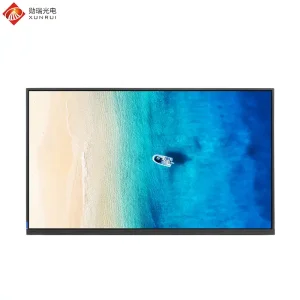 Custom 15 inch 1920×1080 EDP 30pin 300nit IPS TFT LCD Display Manufacturer, FactoriesTechnical Datasheet
 -
 Custom 3.5 inch 1000nit High Brightness IPS TFT LCD Module Manufacturers, SuppliersTechnical Datasheet
 -
 Custom 6.9 inch 280×1424 MIPI 30pin interface long strip IPS TFT LCD module Manufacturer, FactoriesTechnical Datasheet
 -
 China 10.1 inch 800×1280 MIPI 40pin 350nit IPS TFT LCD Display Manufacturers, SuppliersTechnical Datasheet
 -
 Custom 8 inch 1200×1920 MIPI 40pin 350nit IPS TFT LCD Display Module Manufacturer, SupplierTechnical Datasheet
 -
 Custom 4.3 inch TFT LCD 800×480 RGB 40pin interface 300nit IPS module Manufacturer, SupplierTechnical Datasheet