

Factory Direct Catalog
Featured Industrial & Custom TFT LCD Modules (Part I)
Engineered for high thermal tolerance, extended product availability, and custom optical integration across demanding global industrial ecosystems.

China 7 inch 1024×600 1000nit High brightness IPS TFT LCD module Manufacturers, Suppliers
View Specifications
China 1.8 inch 360×360 MIPI 30pin 400nit IPS Circular TFT LCD Module Manufacturer, Suppliers
View Specifications
Custom 4.3 inch TFT LCD 800×480 RGB 40pin interface 300nit IPS module Manufacturer, Supplier
View Specifications
China 12.1 inch 1024×768 LVDS 900nit IPS TFT LCD display with capacitive touch panel Manufacturers, Suppliers
View Specifications
Custom 21.5 inch 1080×1920 LVDS 30pin 250nits IPS TFT LCD Display Manufacturers, Suppliers
View Specifications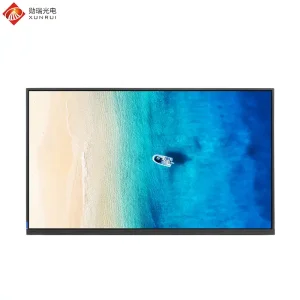
Custom 15 inch 1920×1080 EDP 30pin 300nit IPS TFT LCD Display Manufacturer, Factories
View Specifications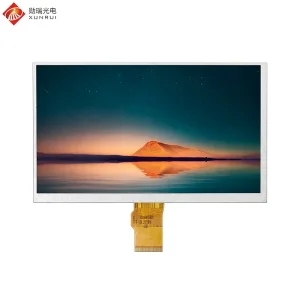
Custom 9 inch 800×480 RGB 50pin interface 500nit TN TFT LCD module Manufacturer, Suppliers
View Specifications
Executive Strategic Brief
The Engineering Evolution of 4-Inch & Compact Industrial TFT LCDs
From low-resolution passive matrix relics to high-density In-Plane Switching (IPS) and quantum-efficient LED backlighting architectures, 4-inch category displays have emerged as the mission-critical human-machine interface for modern edge computing.
In the rapidly changing hardware engineering landscape, the 4 TFT LCD display screen class—encompassing diagonal dimensions from 3.5-inch, 3.97-inch, 4.0-inch square/bar, up to standard 4.3-inch configurations—represents the foundational nexus between physical mechanical compactness and advanced graphical user interaction. Originally dominated by standard Twisted Nematic (TN) panels characterized by color inversion and limited viewing cones, contemporary industrial procurement has decisively shifted toward All-View In-Plane Switching (IPS) architectures, chemically strengthened cover glass assemblies, and low-power driver IC topologies.
In-Plane Switching (IPS) Dominance
Unlike conventional TN glass prone to gray-scale inversion at off-angles, modern 4-inch IPS displays deliver uniform 80°/80°/80°/80° or 85°/85°/85°/85° symmetrical viewing angles. This ensures critical data—such as medical vitals or automotive battery diagnostics—remains completely legible regardless of mounting orientation or operator line-of-sight.
Sub-Pixel Aperture & High DPI
By leveraging advanced amorphous Silicon (a-Si) and low-temperature poly-silicon (LTPS) backplanes, modern Chinese manufacturers produce 4-inch panels with resolutions scaling from standard 480×272 and 800×480 WVGA up to 480×800 or 720×1280 HD portrait densities, yielding razor-sharp pixel densities exceeding 220–300 PPI without exponential thermal runaway.
Ultra-Low Power Backlight Design
Optimized light guide plates (LGPs) integrated with high-efficiency surface-mount LED dies allow 4-inch displays to generate standard 300–500 nit luminance at under 350mW total module consumption, rendering them ideal for battery-operated handheld telemetry, field calibrators, and mobile point-of-sale systems.
1000+
Nits Sunlight Readability
-30~+85°C
Operating Temp Range
50,000 hrs
LED Backlight MTBF
50k+ pcs
Daily Production Capacity
Sourcing Intelligence
Global Enterprise Procurement Dynamics: Addressing the TCO Equation
How Tier-1 industrial buyers, defense contractors, medical device OEMs, and automotive tier suppliers navigate component obsolescence, environmental stress screening, and custom non-recurring engineering (NRE) charges.
Procuring embedded display modules for commercial and mission-critical devices is fundamentally different from purchasing commodity consumer screens. When an international OEM selects a 4 TFT LCD display screen supplier in China, the purchasing decision is governed by Total Cost of Ownership (TCO), bill-of-materials (BOM) longevity, rigorous traceability, and agile engineering responsiveness. Consumer electronics cycles turn over in 9 to 18 months; industrial and medical capital equipment demands reliable, unchanged display form-factors spanning 5, 7, or even 10 years.
5–10 Year Form-Fit-Function Guarantee
Global procurement heads require formal guarantees against premature EOL (End-of-Life). Top Chinese manufacturers maintain close consortiums with front-end glass fabricators to lock glass motherboards and select driver ICs (such as Sitronix, Ilitek, and Solomon Systech) guaranteed for industrial lifespans, eliminating costly PCB re-spins and recertification cycles.
NRE & Tailored Mechanical Customization
Standard off-the-shelf catalog parts rarely fit compact enclosures. Engineering buyers demand rapid custom FPC (Flexible Printed Circuit) layouts, specific pin assignments, EMI shielding with double-sided silver paste or copper foil, integrated LED constant-current drive boards, and customized optical coatings with low NRE thresholds.
Bridge Pilot Batches (5–500 Pcs)
One of the most persistent bottlenecks for hardware startups and enterprise R&D groups is navigating the chasm between functional sample approval and high-volume MOQs. A world-class supplier provides bridge trial runs of 5 to 500 units to allow validation on pilot SMT assembly lines before locking 1,000+ unit mass production orders.
Strategic Sourcing Insight: Over 73% of field failures in harsh outdoor HMI systems stem not from LCD cell pixel defects, but from delamination of optical adhesive, thermal degradation of the reflector sheet under solar UV radiation, or signal attenuation across poorly shielded FPC cables. Specifying environmental durability at the RFQ stage is paramount to long-term operational success.
Manufacturing Architecture
China Factory 4.0: Pearl River Delta Supply Chain Resilience
How the concentration of precision glass scribing, COG/FOG high-precision automated bonding, optical adhesive chemistry, and semiconductor packaging in Shenzhen provides unmatched agility and quality control.
The Chinese optoelectronic manufacturing corridor—centered around Shenzhen, Dongguan, and Huizhou in the Greater Bay Area—operates as the world's most concentrated display ecosystem. Shenzhen Xunrui Optoelectronic Technology Co., Ltd. and allied high-tech enterprises operate within an integrated supply radius where raw open-cell glass, chemical polarizers, backlight molding, and precision driver ICs are co-located. This hyper-local density cuts prototyping iteration times from months to mere business days.
Automated COG / FOG Lines
Micro-pitch Chip-on-Glass (COG) and Film-on-Glass (FOG) bonding executed by high-speed Japanese and German robotics, achieving alignment accuracy within ±3 micrometers under strict Class 1,000 cleanroom environments.
Total Cost Efficiency
Vertical integration across backlight assembly, FPC laser patterning, and customized touch panel bonding yields substantial cost reductions without compromising Tier-1 optical components or AEC-Q100 automotive grade requirements.
5-Stage Gate Verification
Rigorous quality protocols spanning IQC raw glass inspection, automated optical inspection (AOI) after FOG bonding, 72-hour thermal burn-in aging, finished display colorimetric calibration, and OQC pre-shipment auditing.
ISO 9001 / 14001 Standards
Full manufacturing compliance governed by certified Quality and Environmental Management Systems, complete with RoHS, REACH, and UL compliant material certifications for seamless export to North America, Europe, and Japan.
Engineering Matrix
Benchmark: 3.5" to 4.3" Industrial TFT LCD Technical Specifications
A comprehensive side-by-side technical evaluation of standard, high-brightness, and specialty small-format display modules manufactured in China.
| Display Diagonal | Native Resolution | Panel Technology | Luminance (Nits) | Viewing Angle | Electrical Interface | Touch Modality | Primary Industrial Sector |
|---|---|---|---|---|---|---|---|
| 3.5 Inch | 320×240 (QVGA) | IPS All-View | 1000 cd/m² | 85/85/85/85 | RGB 24-bit / MCU | Capacitive / Air or Opt. Bonded | Outdoor Handheld Calibrators, EV Stations |
| 3.5 Inch Portrait | 320×480 (HVGA) | IPS Transmissive | 450 cd/m² | 80/80/80/80 | SPI 4-Wire / MCU 8080 | Resistive (RTP) Glove Touch | Industrial Barcode Scanners, Warehouse PDAs |
| 4.0 Inch Square | 720×720 (HD) | IPS Ultra-Fine | 400 cd/m² | 85/85/85/85 | MIPI-DSI 4-Lane | Projected Capacitive (PCAP) | Smart Thermostats, Luxury Audio Rotary Dials |
| 4.3 Inch Standard | 480×272 (WQVGA) | TN / Wide-View Polarized | 350 cd/m² | 70/70/50/70 | RGB 40-pin Parallel | Resistive 4-Wire or Non-Touch | Cost-Effective PLC Interfaces, Boiler Systems |
| 4.3 Inch High-Res | 800×480 (WVGA) | IPS True-Color | 500–800 cd/m² | 85/85/85/85 | RGB 24-bit / LVDS | Optically Bonded PCAP (I²C) | Medical Infusion Pumps, Vital Sign Monitors |
| 4.3 Inch Sunlight | 800×480 (WVGA) | IPS Ruggedized | 1200 cd/m² | 85/85/85/85 | RGB 40-Pin / Dual-Gate | Anti-Glare/Anti-UV Capacitive | Marine Navigation, Drone Ground Control, Mining |
Application Engineering
Real-World Industrial & Commercial Integration Scenarios
Analyzing the rigorous demands placed upon 4-inch display assemblies across harsh operating environments, electromagnetic interference, and stringent regulatory frameworks.
Medical Diagnostic & Infusion Devices
4.3-inch WVGA screens integrated into bedside infusion pumps and patient telemetry monitors demand consistent optical transmission under sterile hospital lighting. Optical bonding (OCR/LOCA) prevents antibacterial wash fluids from penetrating the optical cavity, while projected capacitive touch controllers are tuned for operation with latex or nitrile gloves.
Industrial Factory Floor HMIs & PLCs
Heavy machinery, CNC equipment, and robotic teach pendants operate in intense electromagnetic noise (EMI) environments with conductive dust. Resistive 4-wire touch screens or industrial PCAP displays featuring specialized EMC-hardened touch ICs (e.g., Ilitek, Microchip) prevent false touch triggers and survive mechanical shocks up to IK08 impact ratings.
EV Charging Terminals & Smart Mobility
Unattended public electric vehicle supply equipment (EVSE) and motorcycle instrument clusters endure 100,000+ lux direct solar glare, freezing winter temperatures, and baking summer dashboards. Integrating 1,000 to 1,200 nit high-luminance backlights paired with wide-temperature fluid liquid crystals (-30°C to +85°C) eliminates solar blackening and maintains operational continuity.
Material Science
Optical Bonding & Touch Architecture: Air Gap vs. Full OCA/LOCA
Deconstructing the optical physics, reflection calculations, and impact resistance differences between conventional perimeter tape bonding and full lamination.
Air Bonding (Tape / Perimeter Gasket)
In traditional tape bonding, an elastomeric double-sided adhesive perimeter creates an internal air gap (refractive index $n \approx 1.0$) between the cover glass ($n \approx 1.51$) and the upper LCD polarizer ($n \approx 1.50$). This index mismatch causes two internal reflective boundaries, generating approximately 8.5% total internal Fresnel reflection.
- Advantage: Lower tooling and processing costs; simple rework of defective cover glass.
- Disadvantage: Significant glare in outdoor environments; prone to internal condensation and dust infiltration under rapid thermal cycling.
Full Optical Bonding (OCA / LOCA Resin)
Full optical bonding fills the cavity with an optically clear adhesive (OCA sheet) or liquid polyurethane/acrylic resin (LOCA) with a refractive index precisely matched to glass ($n \approx 1.49 - 1.51$). By eliminating the internal boundary interfaces, internal reflections drop to under 0.2%, dramatically enhancing ambient contrast ratios.
- Advantage: Exceptional sunlight readability without excessive backlight driving; up to 300% greater mechanical impact and vibration resistance.
- Disadvantage: Requires specialized vacuum autoclaves and high-precision cleanroom lamination equipment; higher initial manufacturing cost.
Factory Direct Catalog
Featured Industrial & Custom TFT LCD Modules (Part II)
Explore standard, vertical orientation, high-contrast IPS, and high-brightness modules crafted for mission-critical integration.

Custom 10.4 inch 1024×768 LVDS 30pin 600nit IPS TFT LCD Module Factories, Factory
View Specifications
Custom 10.1 inch 1280×800 IPS TFT LCD display with capacitive touch panel Supplier, Factory
View Specifications
China 7 inch 1024×600 LVDS 40pin interface 350nit IPS TFT LCD module Manufacturer, Manufacturers
View Specifications
China 4.3 inch 800×480 IPS TFT LCD Module with capacitive touch panel Manufacturer, Suppliers
View Specifications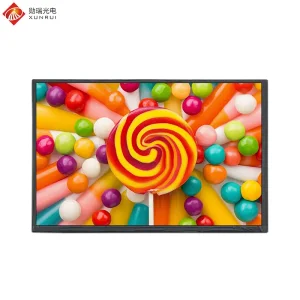
China 10.1 inch 1920×1200 LVDS 45pin 350nit IPS TFT LCD Display Manufacturers, Factories
View Specifications
Custom 3.5 inch 320×240 960nit IPS TFT LCD With capacitive touch panel Supplier, Factories
View Specifications
China 4.3 inch 480×272 RGB 40pin interface 350nit TN TFT LCD module Manufacturer, Factories
View Specifications
China 4.3 inch vertical screen 480×800 RGB 40pin IPS TFT LCD Display Manufacturer, Manufacturers
View Specifications
Technical Knowledgebase
Frequently Asked Engineering & Sourcing Questions
In-depth responses covering driver IC architectures, thermal management, optical bonding certifications, and trial run protocols.
How do Chinese manufacturers achieve 1,000+ nits luminance in a 4.3-inch TFT LCD without overheating?
Achieving ultra-high luminance without thermal runaway requires a multifaceted optical and thermal approach:
- High-Efficacy LED Packaging: Utilizing high-efficiency gallium-nitride (GaN) surface-mount LED dies capable of producing 140–160 lumens per watt.
- Enhanced Optical Film Stacks: Incorporating Dual Brightness Enhancement Films (DBEF) and prismatic brightness enhancement films (BEF) from 3M to recycle off-angle light and redirect it perpendicularly toward the viewer.
- Aluminum Heat-Spreading Chassis: Replacing standard plastic bezel frames with an integrated aluminum alloy backplate that conducts heat directly into the host device's metal chassis, maintaining LED junction temperatures below 65°C to avoid chromatic shift and premature lumen depreciation.
Which hardware interface (RGB, MCU, SPI, or MIPI) is best suited for 4-inch display projects?
The ideal interface depends on your microcontroller's graphical engine, RAM resources, and target frame rate:
- RGB Parallel (24-bit / 16-bit): Standard for processors with built-in LCD controllers (e.g., STM32F4/F7, NXP i.MX). Capable of full 60 FPS video animations, but requires 20–28 GPIO pins and an external frame buffer.
- MCU (8080/6800 8/16-bit): Interfaces directly with low-pin-count microcontrollers. Employs an internal graphics RAM (GRAM) inside the display driver IC (such as ST7789 or ILI9806). Excellent for static HMIs, though bandwidth limits high-resolution full-screen video.
- SPI / QSPI: Uses minimal physical pins (3 to 6 pins), perfect for ultra-compact IoT devices (e.g., ESP32), but refresh rates are typically limited to 15–30 FPS on larger resolutions.
- MIPI-DSI: High-speed differential signaling interface (1 to 4 lanes) suited for Linux/Android system-on-chips (Rockchip, Allwinner, Raspberry Pi CM4). Supports high resolutions (720×720 or 720×1280) with minimal EMI emissions and low pin counts.
What is the standard procedure and cost framework for custom FPC and cover glass tooling?
Customization at Shenzhen Xunrui Optoelectronics is structured through an engineering gate process:
- Feasibility Review & 2D/3D CAD Modeling: Our structural engineers produce initial mechanical 2D drawings and FPC schematics within 48 to 72 hours based on your step model and enclosure drawings.
- Tooling Non-Recurring Engineering (NRE): FPC laser film and lithography tooling typically ranges between $400 and $800 USD. Custom cover glass tooling (chemical tempering, silk-screen borders, anti-glare etching) typically costs $800 to $1,500 USD depending on thickness (0.7mm up to 6.0mm) and dimensions.
- Prototyping Cycle: Custom FPC and cover glass samples are delivered within 15 to 20 working days for client sign-off.
- NRE Rebate Policies: For most customized programs, the initial NRE tooling investment is fully credited back once mass production quantities exceed 5,000 to 10,000 units.
How do you ensure long-term availability for medical and military equipment requiring a 7+ year lifecycle?
Industrial lifecycle stability is maintained through disciplined supply chain partnerships:
- We partner with Tier-1 glass foundries (BOE, Tianma, HannStar) on industrial-tier parent motherboards that are formally committed to long-lifecycle fabrication lines.
- We specify driver ICs from suppliers with published industrial product roadmaps (e.g., Sitronix, Ilitek), avoiding consumer mobile phone chips that face annual phase-outs.
- In the rare event of a wafer fab discontinuation, our Shenzhen facility issues formal PCN (Product Change Notification) alerts a minimum of 6 to 12 months in advance, backed by Last-Time-Buy (LTB) storage agreements and transparent pin-compatible alternative engineering.
What testing methodologies are conducted to guarantee reliability in sub-zero and high-heat environments?
Every mass-production module family undergoes exhaustive Environmental Stress Screening (ESS):
- High-Temperature / High-Humidity Storage: 60°C at 90% Relative Humidity for 240 hours to verify polarizer adhesion and seal integrity.
- Thermal Shock Cycling: -30°C to +80°C rapid transition cycles (100 cycles with a 30-minute dwell time) to detect micro-cracking across ITO traces, COG gold bumps, or FPC soldering joints.
- Vibration & Drop Integrity: 10–55Hz XYZ tri-axial frequency testing and 1-meter multi-angle drop tests to validate backlight clip and optical bonding mechanical robustness.
- Electrostatic Discharge (ESD): Contact discharge up to ±4kV and air discharge up to ±8kV applied directly to active touch surfaces without operational lockup or gate driver latch-up.