
Precision TFT Displays & Industrial Assemblies
Explore engineering-grade micro-to-medium modules manufactured in our Shenzhen cleanrooms, supporting SPI, RGB, MCU, and MIPI standards.

Custom 2 inch 480×240 RGB 40pin 150nit TN TFT LCD Display
View Specifications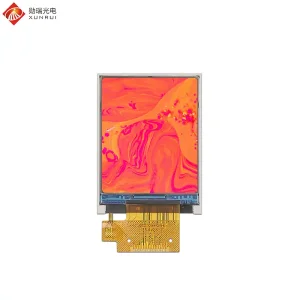
Custom 1.77 inch 128×160 SPI 14pin 250nit TN TFT LCD Module
View Specifications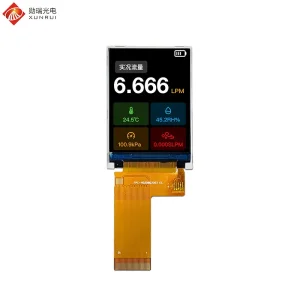
China 2 inch 240×320 SPI 30PIN 250nit IPS TFT LCD Module
View Specifications
Custom 2 inch 176×220 MCU 45pin 220nit TN TFT LCD Module
View Specifications
China 4.3 inch vertical screen 480×800 RGB 40pin IPS Display
View Specifications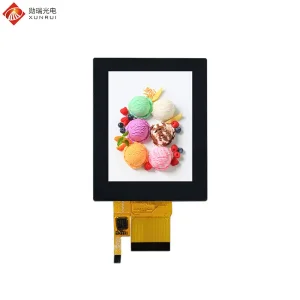
China 2.8 inch 480×640 MIPI/RGB IPS TFT LCD with PCAP Touch
View Specifications
Custom 4.3 inch 480×272 MCU/SPI 40pin 350nit TN TFT LCD Display
View Specifications
Custom 2.8 inch 240×320 SPI 10pin 250nit TN TFT LCD Display
View SpecificationsEngineering Anatomy of the 4" Display Tier
A rigorous examination of optical stacks, crystal orientation modes, and signal topologies dominating modern embedded interfaces.
IPS vs. TN Liquid Crystal Topologies
The 4-inch display sector (encompassing 3.5", 3.97", 4.0", and 4.3" footprints) has transitioned from legacy Twisted Nematic (TN) to In-Plane Switching (IPS). While TN remains cost-efficient for fixed-angle meters, IPS panels eliminate grayscale inversion, maintaining an 80/80/80/80 degree viewing cone critical for off-axis medical and diagnostic monitors.
- TN: Response times ~10-16ms, budget-conscious setups.
- IPS: True chromatic consistency, high color gamut (72% NTSC).
- Anti-Glare Coating: 3H surface hardness standard against industrial abrasions.
Signal Interface Protocols
Microcontroller computational overhead dictates interface selection. China's manufacturing clusters excel in producing standard and hybrid flexible printed circuits (FPC) to match diverse host controller constraints.
- RGB 24-bit: High-refresh applications (60fps) requiring dedicated framebuffers.
- SPI (3/4-wire): Pin-saving interfaces optimized for low-power microcontrollers (ESP32, STM32).
- MIPI DSI: Ultra-compact differential signaling minimizing EMI emissions in handheld IoT systems.
- MCU 8080/6800: Direct parallel memory mapped routing for legacy systems.
Optically Bonded Touch Sensors
Modern 4-inch display integrations require unified Touch Display Module (TDM) packaging. Through advanced cleanroom bonding, factories merge TFT cells with capacitive (PCAP) or resistive (RTP) overlays.
- Optical Clear Resin (LOCA/OCA): Refractive index matching (n=1.49) eliminates internal air gaps.
- Reflectance Suppression: Sunlight readability jumps by 300% without increasing backlight draw.
- Glove & Water Rejection: Tuning specialized touch controller ICs (e.g., FocalTech, Goodix) for extreme wet environments.
Why Tier-1 OEMs Source TFT Panels Direct from China
The concentration of open-cell foundries, FOG automation, and optical testing in the Greater Bay Area provides unprecedented supply chain elasticity.
FOG Cleanroom Automation
Film-On-Glass (FOG) and Chip-On-Glass (COG) bonding lines operate at sub-micron alignment tolerances, achieving over 99.2% line yield on intricate fine-pitch pin-outs.
Raw Glass Allocation
Direct partnerships with global glass foundries (BOE, HannStar, Tianma, IVO) guarantee steady parent-sheet supply, isolating downstream clients from international component panics.
Rapid FPC Prototyping
Custom tail routings, EMI gold foil shielding, and bespoke board-to-board connector designs transition from CAD drawings to fully verifiable samples within 7-10 business days.
Total Cost Optimization
Vertical integration across backlight mold cutting, SMT driver manufacturing, and cover lens silkscreening removes intermediary markups, slashing Bill-of-Materials cost by up to 28%.
Engineering Verification, Quality Systems & Global Compliance
Overseas procurement teams require zero operational risk. We anchor every mass production batch in verifiable international certifications and traceable batch QA.
ISO 9001 & ISO 14001 Control
Our quality lifecycle follows strict closed-loop Deming (PDCA) procedures. We enforce Incoming Quality Control (IQC) on glass substrates and driver ICs, automated optical inspection (AOI) on FOG bonds, high-temperature thermal stress aging, and 100% final testing (OQC) before vacuum containerization.
RoHS, REACH & Conflict Minerals
Global brand integrity demands strict chemical compliance. All polarizers, bonding adhesives, liquid crystal compounds, and solder fluxes comply fully with EU RoHS Directives (EU) 2015/863, REACH SVHC declarations, and Responsible Minerals Initiative (RMI) auditing protocols.
Obsolescence & EOL Roadmapping
Industrial builds face development cycles of 3-5 years and deployment spans over 7 years. We mitigate EOL (End-of-Life) risks by architecting pin-compatible IC drop-ins, providing 6-12 months Last-Time-Buy (LTB) notifications, and maintaining reserve wafer stock for mission-critical contracts.
Next-Gen Use Cases & Market Dynamics
From outdoor high-lumen avionics to smart home rotary encoders, analyze where 4-inch TFT displays deliver core value.
Smart Rotary Thermostats & Knobs
Circular and squircle 2.1"–4.0" displays integrate seamlessly into smart appliance dials. Operating with embedded SPI controllers, these screens provide crisp 480×480 resolution, smooth animation rendering, and capacitive center-touch control for HVAC automation and premium kitchenware.
EV Charging & Vehicle Instrumentation
DC fast-chargers, electric motorcycle dashboards, and golf cart telematics demand sunlight readability. Our 800–1200 nit high-brightness backlights coupled with transflective polarizers and -30°C to +85°C extended temperature crystal fluid withstand baking heat and sub-zero freeze cycles.
Medical Handheld Diagnostics
Ultrasound wands, infusion pumps, and clinical telemetry units require biological fluid immunity and anti-microbial cover glass. Custom cover lenses (0.7mm to 4.0mm chemically strengthened Corning or Asahi glass) endure harsh isopropyl alcohol wipe-downs without optical degradation.
Frequently Addressed Inquiries for 4" TFT Production
Specific, highly technical responses addressing mechanical tolerances, optical tailoring, driver boards, and sourcing constraints.
Q1: What custom tooling parameters are available for a 4.0" / 4.3" display?
Customization spans every layer of the optical stack: FPC routing/pinout reconfiguration, backlight illumination up to 1500 nits via high-efficiency Nichia LEDs, capacitive touch cover glass shape/printing, anti-reflective (AR) and anti-fingerprint (AF) coatings, and custom driver boards supporting HDMI, LVDS, or composite video inputs.
Q2: How do you prevent backlight bleed on high-brightness 4" panels?
We deploy precision CNC-machined metal bezels and light-guide plates (LGP) featuring micro-dot laser engraving. Black light-absorbing tape (0.05mm) seals the boundary between the active area and the frame, preventing stray light egress while maintaining thin module profiles under 3.0mm.
Q3: What is the sample lead time and minimum order quantity (MOQ)?
Standard catalog samples dispatch within 48 hours. Custom FPC or touch sensor prototypes require 2 to 3 weeks. Following sample evaluation, we provide pilot production batches of 5 to 500 units to support customer firmware prototyping. Standard mass-production MOQ starts at 1,000 units.
Q4: Can your 4-inch TFT displays operate in sub-zero outdoor conditions?
Yes. By utilizing specialized wide-temperature liquid crystal fluid, our industrial series reliably functions between -30°C and +80°C. For extreme arctic conditions down to -40°C, transparent ITO heater glass can be laminated directly behind the panel to maintain normal liquid crystal response times without lag.
Q5: What optical bonding technology do you provide for touch assemblies?
We offer both Air-Gap bonding with high-tack 3M double-sided adhesive and full Optical Clear Resin (OCA/LOCA) bonding. Full optical bonding eliminates internal reflection between the cover lens and TFT polarizers, maximizing outdoor readability, mechanical impact resistance (IK08+), and condensation resistance.
Q6: How is intellectual property (IP) and proprietary mechanical design safeguarded?
We routinely sign bilateral Non-Disclosure Agreements (NDAs) subject to international commercial jurisdiction prior to receiving customer STEP or Gerber files. Custom tooling, optical mask designs, and firmware driver codes remain the exclusive proprietary property of the sourcing OEM customer.
High-Performance Industrial TFT LCD Modules
Explore medium-to-large format panels, resistive systems, and daylight-readable industrial displays ready for immediate design-in.

Custom 2.4 inch TFT LCD 240×320 SPI 14pin 250nit IPS Screen
View Specifications
China 4.3 inch 800×480 IPS TFT LCD with Capacitive Touch Panel
View Specifications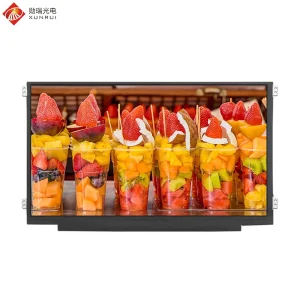
Custom 11.6 inch 1920×1080 EDP 30PIN 220nit IPS LCD Module
View Specifications
Custom 4.3 inch TFT LCD 800×480 RGB 40pin 300nit IPS Module
View Specifications
China 4.3 inch 800×480 IPS TFT LCD with Resistive Touch Panel
View Specifications
China 12.1 inch 1024×768 LVDS 900nit IPS LCD with Touch Panel
View Specifications
Custom 5 inch 720×1280 MIPI 40pin 1000nit IPS TFT LCD Display
View Specifications