

Core Factory Lineup
Precision TFT Displays & Custom Integration Modules
Explore standard, wide-temperature, and ultra-high brightness display panels designed to integrate seamlessly into complex industrial, medical, and edge-computing electronics.

Custom 10.1 inch 1024×600 1000nit High brightness TN TFT LCD module
Request Datasheet & Spec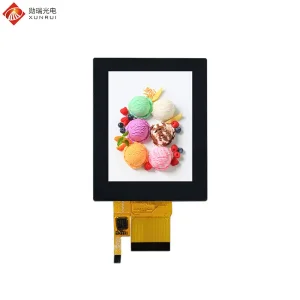
China 2.8 inch 480×640 MIPI/RGB IPS TFT LCD Display with capacitive touch
Request Datasheet & Spec
Custom 4 inch IPS 720×720 MIPI 30pin interface Circular TFT LCD module
Request Datasheet & Spec
China 3.5 inch TFT LCD display 320×240 RGB 54pin interface 350nit Screen
Request Datasheet & Spec
China 12.3 inch 1920×720 EDP 60pin 400nit IPS Strip TFT LCD Display
Request Datasheet & Spec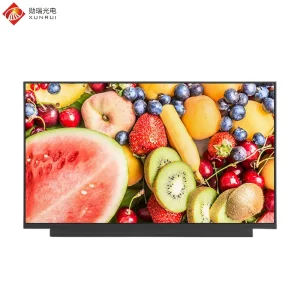
China 15.6 inch 1920×1080 EDP 30PIN 400nit IPS TFT LCD Module
Request Datasheet & Spec
China 5 inch 480×272 TN TFT LCD Module with capacitive touch panel
Request Datasheet & Spec
Technical Architecture
Engineering the Industrial 5.7 Inch Color Screen Standard
The 5.7-inch color display remains an indispensable form factor across rugged computing, industrial automation, and laboratory medical hardware. Originally popularized by legacy 640×480 VGA architectures, modern 5.7" display systems demand ultra-wide viewing angle IPS glass, high thermal tolerance, low electromagnetic radiation, and seamless touch interactivity under challenging operational conditions.
Optical Performance & Transmissive Physics
Custom 5.7" modules employ advanced A-Si TFT substrates and IPS liquid crystal alignment, eliminating color inversion across all quadrants (85°/85°/85°/85° L/R/U/D). Optical enhancements include Anti-Reflective (AR), Anti-Glare (AG), and Anti-Fingerprint (AF) chemical etchings designed to maximize MTF (Modulation Transfer Function) under ambient light saturation.
- True 262K / 16.7M Color Depth via 6-bit/8-bit RGB
- Contrast ratios scaling upwards of 1000:1
- LED Backlight longevity rated at 50,000+ operating hours
Thermal, Mechanical & Ruggedization Physics
Industrial deployment environments subject display hardware to extreme temperature excursions, moisture ingress, and cyclic mechanical shock. Xunrui's 5.7" display modules are manufactured utilizing high-clear-point liquid crystals preventing blackening under prolonged thermal loading.
- Extended operating envelope: -30°C to +85°C
- Shock tolerance compliant with IEC 60068-2-27 (50G/11ms)
- Vibration resistance: IEC 60068-2-6 test certified
Embedded Signal Bus Integration
System architects often struggle with interface transition cycles between older microcontrollers and next-generation SOC processors. We offer native FPC routing catering to diverse bus protocols alongside customized active adapter bridges.
- Direct RGB 24-bit / TTL parallel interfaces
- Single/Dual Channel LVDS for superior EMI immunity
- Integrated MIPI DSI, SPI 4-wire, & RS232 UART controllers
Future Innovations
Technical Roadmap: Next-Gen 5.7" Display Architectures
Optoelectronic engineering continues to evolve rapidly. As legacy CCFL-backlit, low-efficiency 5.7-inch monitors retire, modern designs require high power-efficiency, sunlight readability without thermal runaway, and smart touch interfaces.
| Evaluation Parameter | Legacy 5.7" Display Module | Current Generation Industrial 5.7" | Next-Gen Xunrui Smart 5.7" Roadmap |
|---|---|---|---|
| Resolution & Pixel Density | 320×240 (QVGA) / 70 PPI | 640×480 (VGA) / 140 PPI | 1280×720 (HD) / 257 PPI IPS Substrates |
| Luminance Architecture | 250–350 nits (Standard CCFL/LED) | 800–1200 nits Constant LED Matrix | Mini-LED Local Dimming (1500+ nits, HDR) |
| Touch Sensing Matrix | 4-Wire Resistive (Single Touch) | G+G Projected Capacitive (5-Point) | Wet-Finger, 5mm Thick Cover Lens & Glove Mode |
| Interface Scalability | TTL / Parallel Bus Only | RGB 18/24-bit + LVDS Options | Integrated eDP & MIPI with Embedded Edge ISP |
| Power Consumption | 3.5W - 5.0W (Thermal accumulation) | 1.8W - 2.5W (Optimized drivers) | < 1.2W via Ultra-High Transmittance Cells |
Optical Bonding & Gel Technology
Direct optical lamination (LOCA / OCA) eliminates the air gap between the 5.7" TFT panel and the outer cover glass. This structure removes internal refraction, boosting sunlight readability by 300% without increasing power draw, while dramatically reducing condensation risks in high-humidity offshore and agricultural uses.
Active Noise Immunity (EMC Class B)
By engineering specialized grounding layers on the FPC and choosing touch controllers featuring frequency hopping algorithms (such as Ilitek and EETI chipsets), our displays resist radiated noise and conducted immunity issues (tested up to 10V/m in anechoic chambers).
Circular Polarizer & Sun-Cancelling
For specialized aviation displays, mining instrumentation, and marine navigational equipment, our panels incorporate circular polarizers. This prevents screen blackout when operators wear polarized sunglasses at arbitrary visual angles.
System Implementations
Macro-Industry Display Integration Solutions
A reliable 5.7" display module is never an isolated component. It functions as the critical visual and control interface between the machine logic and the field technician. Discover how Xunrui tailors these screens across core vertical sectors.
Medical Diagnostics & Infusion Devices
Modern clinical infusion pumps, patient telemetry monitors, and benchtop point-of-care analyzers depend on 5.7-inch modules for compact UI clarity. We provide chemically strengthened cover glass that withstands repeated hospital-grade disinfectant wipe-downs (including quaternary ammonium compounds and bleach) while adhering to strict IEC 60601-1-2 EMC medical standards.
- Zero false-touch operation under clinical liquid spills
- Anti-Microbial / Hydrophobic surface treatments
- Strict 5-year bill-of-materials (BOM) lock-in
Heavy Machinery & In-Cabin Marine Displays
Agricultural harvesters, construction backhoes, and nautical vessel helm clusters operate under blistering sun, high vibration, and fluctuating DC system voltages. Xunrui builds 5.7-inch outdoor readable displays utilizing custom thermal dissipation frames and wide-range LED driver boards.
- Luminance: Adjustable from 2 nits (night) to 1200 nits (sunlight)
- Wide power input: 9V-36V integrated DC buck regulation
- Conformal coating on PCB/FPC against salt-spray & humidity
Smart Automation & Industrial PLC Terminals
Within hazardous automated bottling lines, electrical substations, and CNC machining centers, high electrical transients, static electricity (ESD), and mechanical impact can disable delicate consumer screens. Our industrial 5.7-inch panels feature IK08 impact ratings and high ESD immunity (Contact ±8KV, Air ±15KV).
- Support for gloved finger operation (latex, nitrile, leather)
- Immunity against servo-drive inductive field spikes
- Mechanical drop-in compatibility with legacy cutouts
Smart Manufacturing
China Factory 4.0: Supply Chain Resilience & Cost Velocity
Shenzhen Xunrui Optoelectronic Technology Co., Ltd. harnesses a mature optoelectronic supply cluster in Shenzhen's Bao'an district. By combining high-precision automated production with end-to-end quality assurance, we bridge the gap between lean pricing and enterprise reliability.
Automated COG / FOG Lines
Our Class 1,000 cleanrooms employ high-speed Japanese bonding equipment to ensure exact micron-level registration between Driver IC, FPC, and ITO glass electrodes, reducing contact resistance.
Five-Tier Defect Containment
Every single unit undergoes rigorous multi-stage testing: raw material IQC, glass particle inspection, FOG high-temperature bonding verification, completed unit aging (48 hours @ 50°C), and final optical OQC evaluation.
Agile Low-Volume Trial Batches
To reduce risk before mass ramp-up, our production models support pilot batches from 5 to 500 units. This allows your team to test functional firmware and confirm mechanical fit before releasing capital for full volume tooling.
Silicon Supply Alliances
Direct supply agreements with leading glass foundries and IC design houses protect our customers from unpredictable component allocation crunches, guaranteeing uninterrupted supply for ongoing programs.
Procurement Engineering
Enterprise Sourcing Checklist: Qualifying 5.7" Screens
Before issuing requests for quotation (RFQs) or committing to vendor qualification schedules, hardware leads and procurement directors should verify these 5 parameters to avoid unexpected integration delays.
1. Polarizer & Surface Glass Hardness
Determine whether your enclosure relies on the display's own outer glass for protection, or mounts behind an internal chassis window. We tailor cover glass from 0.7mm up to 6.0mm with chemical tempering, achieving surface hardness up to 7H/9H and IK07-IK10 impact thresholds.
2. Thermal Margin vs. Power Dissipation
Over-driving LED backlights to produce 1000+ nits in confined, IP67-sealed enclosures will lead to accelerated color shifting and shortened LED lifespans if heat is not properly dissipated. Our custom mechanical backplanes integrate aluminum heatsinks to pull thermal load directly out to your metal enclosure.
3. Controller Long-Term Availability
Consumer display driver ICs can be deprecated quickly by manufacturers. Xunrui sources industrial-grade, extended-lifecycle driver controllers (such as Sitronix, Solomon Systech, and Himax), backed by minimum 5-to-7 year supply roadmaps and pre-notified PCN (Product Change Notification) policies.
4. Flexible Printed Circuit (FPC) Customization
Standard displays force engineers to twist cables or build expensive intermediate adapter boards. We design the pin pitch (0.5mm, 1.0mm), length, pinout mapping, and EMI shielding foils of the FPC directly around your internal mechanical layout.
5. Touch Controller Protocol Calibration
Capacitive touch panels require fine-tuning for host operating systems. Our engineering staff provides fully tested, plug-and-play drivers and firmware configs for Windows, Linux, Android, and RTOS platforms, supporting I2C, USB, and serial interfaces.
6. Regulatory & Environmental Compliance
Overseas imports require stringent substance and recycling certifications. Xunrui guarantees full documentation compliance with global directives including RoHS 3 (EU 2015/863), REACH (SVHC), CE, and conflict minerals compliance.
OEM Production Line
Expanded Display Solutions for Custom Architectures
Alongside our 5.7-inch color screen line, examine our companion range of small, mid-size, and wide-format display modules available for global volume distribution.
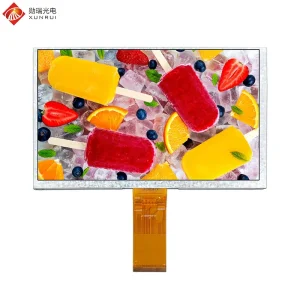
Custom 9 inch TFT LCD Module 1024×600 LVDS 60pin 400nit IPS Screen
Request Datasheet & Spec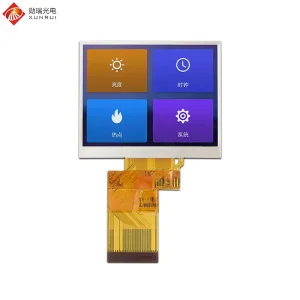
China 3.5 inch 320×240 RGB 54pin interface 350nit TN TFT LCD module
Request Datasheet & Spec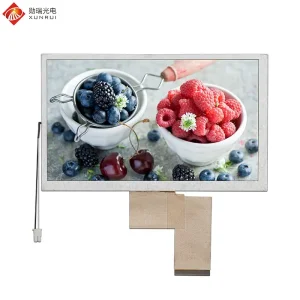
Custom 8 inch 800×480 RGB 60pin 350nit TN TFT LCD Module
Request Datasheet & Spec
Custom 3.5 inch IPS TFT LCD 320×480 MCU 40pin interface 300nit
Request Datasheet & Spec
China 7 inch 1024×600 1000nit High brightness IPS TFT LCD module
Request Datasheet & Spec
Custom 2.4 inch 240×320 MCU 40pin interface 250nit TN TFT LCD module
Request Datasheet & Spec
China 2.8 inch 240×320 MCU 30pin interface 250nit TN TFT LCD display
Request Datasheet & Spec
Custom 4.3 inch 480×272 TN TFT LCD display with resistive touch panel
Request Datasheet & Spec
Technical FAQ
Frequently Asked Questions: Custom 5.7" Display Engineering
Review clear, practical answers regarding manufacturing tolerances, life-cycle policies, interface bridges, and environmental testing protocols.
Can Xunrui replace legacy obsolete 5.7" screens from brands like Kyocera, Sharp, or Ampire?
Yes. Legacy 5.7-inch modules (typically 320×240 or 640×480 with CCFL backlights and 33-pin or 40-pin connectors) are frequently phased out by large foundries. Xunrui specializes in pin-compatible replacements featuring contemporary LED backlights, integrated step-up LED drivers, and matched physical mounting brackets, saving you the expense of re-qualifying an entirely new chassis.
What is the difference between air bonding and full optical bonding on a 5.7-inch screen?
Air bonding uses a perimeter tape gasket to adhere the touch glass to the TFT bezel, leaving a thin air pocket between layers. While cost-effective, this gap creates internal light reflections and can trap condensation. Full optical bonding uses an optical clear resin (OCA or LOCA) to completely fill the space between the panel and glass. This eliminates reflections, boosts contrast under direct sunlight by up to 300%, and improves mechanical shock tolerance.
How do you protect 5.7" capacitive touch screens against false touches in wet conditions?
We use dedicated industrial touch controllers (such as EETI or Ilitek) configured with water-rejection algorithms that distinguish between a grounded human touch and water droplets, mist, or thin conductive cleaning films. The touch screen firmware dynamically monitors mutual and self-capacitance changes to eliminate ghost touches on medical and marine equipment.
What is the typical lead time for custom FPC tooling and initial display samples?
For custom FPC designs, backlight tuning, and cover glass alterations, initial mechanical 2D/3D step files are completed within 3 to 5 business days. Once drawings are approved, physical prototypes are manufactured and delivered within 18 to 22 working days. After prototype evaluation, we offer small trial runs of 5 to 500 units to support field trials before volume production.
How does Xunrui prevent screen burn-in and pixel degradation over years of continuous operation?
Static industrial HMIs showing fixed UI elements can cause image retention in low-grade liquid crystals. We source quality liquid crystal materials from reputable partners and optimize VCOM driving voltages across our driver boards. This maintains stable DC balance and prevents charge accumulation, allowing our screens to operate continuously for years without persistent ghosting.
What certifications and reports accompany volume export shipments?
Every mass production shipment includes a complete Outgoing Quality Control (OQC) inspection report covering optical chromaticity, luminance uniformity, current draw, and dimensional tolerances. Shipments comply with RoHS, REACH, and CE standards, and certificates of conformity (CoC) are issued upon shipment.