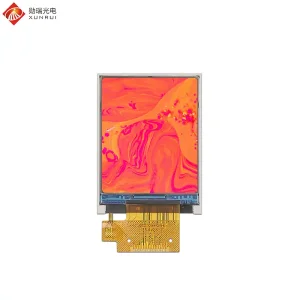
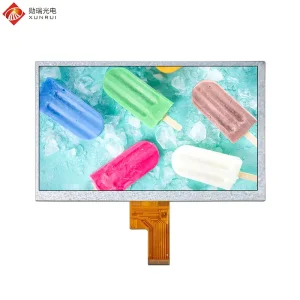
High-Reliability Industrial Display Modules (Featured Series A)
Engineered to rigorous commercial standards: wide temperature tolerance, robust optical performance, and seamless capacitive/resistive touch integration.






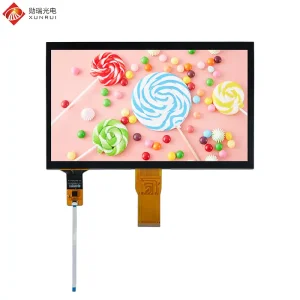

The Evolution & Dynamics of 6.2-Inch Interactive Touch Systems
Why the 6.2-inch ultra-wide and standard form factors are rapidly replacing legacy 5.7" and 7.0" interfaces in next-generation control consoles.
In modern electronic system design, selecting the optimal visual interface is not merely a dimensional choice; it represents a comprehensive engineering balance between ergonomic real estate, thermal dissipation, graphical computing overhead, and enclosure compactness. Over recent years, the custom 6.2-inch touch screen has emerged as the definitive sweet spot for mission-critical applications. Historically constrained by legacy 4:3 aspects or standard 7-inch architectures that consumed prohibitive structural space, engineering teams are transitioning toward custom 6.2" IPS configurations boasting wide aspect ratios, customized capacitive matrix layouts, and advanced driver topologies.
As equipment architectures integrate Edge-AI processing, human-machine interfaces must simultaneously display high-density telemetry, multi-parameter charting, and interactive safety overrides without scrolling lag. The 6.2-inch geometry delivers superior pixel densities (often ranging between 720×1560 and high-definition wide SVGA resolutions), enabling crystal-clear rendering of complex diagnostic typography and intuitive touch targets. Furthermore, contemporary procurement trends demand that suppliers eliminate typical commercial screen defects: parallax errors, internal condensation under humid cycles, and ghost touch phenomena provoked by extreme electromagnetic interference (EMI).
Optical Bonding & Anti-Reflective Stacks
Direct full optical bonding utilizing industrial-grade optical clear resin (LOCA) or optical clear adhesive (OCA) cures micro air-gaps between the touch sensor and IPS TFT. This mitigates internal reflection by 98%, ensures pristine sunlight readability beyond 1000 nits, and prevents internal fogging in marine or high-humidity outdoor field deployments.
Customized PCAP Sensor Architecture
Custom projected capacitive (PCAP) solutions utilize tailored ITO (Indium Tin Oxide) glass or metal mesh sensors with leading touch controller ICs (such as ILITEK, EETI, Goodix). Engineered firmware profiles support glove-touch compliance up to 5mm latex/leather, true water rejection, salt-water immunity, and flawless operation through tempered cover glass up to 6mm thick.
High Ruggedization & Longevity
Unlike transient consumer panels subject to short 6-month lifecycle retirements, our 6.2-inch industrial display roadmaps ensure consistent form-fit-function availability for a guaranteed 5 to 7+ years. Modules feature IK08 to IK10 impact ratings, thermally conductive aluminum frames, and integrated electrostatic discharge (ESD) protection up to ±15kV air discharge.
China Factory 4.0: Supply Chain Resilience & Custom Precision
Operating from Shenzhen's premier optoelectronic clusters, Xunrui combines automated cleanrooms, precision robotics, and rigorous lifecycle verification.
ISO Class 1,000 Cleanroom Automation
Our Shenzhen manufacturing campus implements fully automated COG (Chip-on-Glass) and FOG (Film-on-Glass) lines. Ultrasonic micro-soldering and high-vacuum lamination systems ensure particulate-free optical integrity and zero bubble entrapment across every custom production run.
5-Stage Zero-Defect Inspection Matrix
Quality assurance is systematically embedded: IQC incoming optical substrate validation, ultra-fine microscopic FOG alignment check, active burn-in thermal chamber aging under 85°C/85% RH, finished touch linearity validation, and strict outgoing OQC visual defect audits.
Complete Accessory & Firmware Tuning
Going beyond the raw panel, we engineer and supply matched AV/VGA/HDMI/LVDS/MIPI driver controller boards, custom FPC trace lengths and pin mappings, alongside specialized AG (anti-glare), AR (anti-reflective), and AF (anti-fingerprint) chemically treated cover glass coatings.
Mission-Critical Application Scenarios for 6.2" Touch Panels
Demonstrated operational excellence across North American, European, and Asia-Pacific industrial infrastructure.
Automotive & Special Vehicles
Deployed as off-highway construction telemetry displays, marine navigation terminals, and electronic vehicle charging point (EVSE) user interfaces where direct sunlight immersion and -30°C to +85°C thermal cycling are strict mandates.
Medical Diagnostics & Surgical Tools
Used in portable infusion pumps, clinical ultrasound consoles, and lab diagnostic analyzers requiring high-definition biological signal visualization, antibacterial glass treatments, and strict compliance with medical IEC 60601-1-2 EMC regulations.
Smart Factory & Industrial Edge HMI
Integrated into robotic teach pendants, automated CNC machining control panels, and warehouse picking terminals. Offers robust resistance against oils, aggressive chemical wash-downs, and industrial electromagnetic motors.
Custom Touch Screen Engineering FAQ
Expert answers addressing the critical mechanical, electrical, and optical considerations evaluated by global procurement directors and hardware architects.
How does customized optical bonding differ from conventional air bonding in a 6.2" display?
Air bonding leaves a physical air gap between the touch panel and the TFT module, causing internal light refraction (approximately 4% to 8% surface reflectance) and vulnerability to dust or condensation ingress. Customized full optical bonding fills this perimeter completely with optical clear adhesive (OCA or LOCA), perfectly matching refractive indices. This enhances contrast ratios by over 300%, maximizes structural shock resistance against direct impact, and ensures 100% condensation prevention in outdoor environments.
Can the touch firmware be customized for thick industrial glove operation and water immersion?
Yes. Our internal firmware engineers customize the mutual and self-capacitance sensing algorithms using controllers from Ilitek or EETI. The sensitivity parameters, noise thresholds, and digital filters can be tuned to detect tactile touch through 5mm heavy industrial work gloves or wet, droplet-laden surfaces while rejecting non-deliberate liquid streaks and electrical noise.
What is the typical prototyping timeline and small-batch trial framework for custom projects?
Upon receipt of your mechanical STEP/CAD files and electrical specs, our engineering team delivers formal tooling and FPC layout drawings within 3 to 5 working days. After drawing sign-off, functional engineering prototypes are completed and shipped within 3 to 4 weeks. After sample approval, we offer small-batch trial runs of 5 to 500 units to validate mass production before scaling to volume runs (MOQ 1,000+ units).
How does Xunrui protect global OEM buyers against component obsolescence?
We maintain long-term partnerships with leading glass foundries and silicon IC providers, engineering our custom modules exclusively on dedicated industrial-longevity roadmaps with 5 to 7+ years of guaranteed availability. If an upstream sub-component approaches end-of-life (EOL), we provide minimum 6 to 12 months formal advance notice along with pre-validated drop-in replacement engineering designs.
Precision HMI & High-Brightness Panels (Featured Series B)
Explore our companion collection of custom small-to-midsize industrial TFT and touch display solutions designed for global deployment.