
Featured High-Reliability TFT LCD Modules
Explore our core engineering product line featuring custom high-brightness, broad operating temperatures, tailored FPC geometries, and multiple touch options.
-
Custom 4.3 inch TFT LCD 800×480 RGB 40pin interface 300nit IPS module Manufacturer, Supplier

-
Custom 4 inch IPS 720×720 MIPI 30pin interface Circular TFT LCD module Manufacturer, Factories

-
China 5 inch 480×272 TN TFT LCD Module with capacitive touch panel Manufacturers, Factory

-
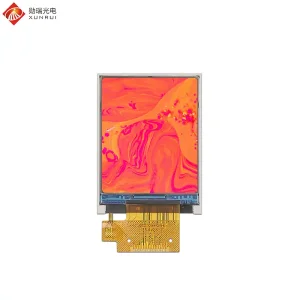
Custom 1.77 inch 128×160 SPI 14pin 250nit TN TFT LCD Module Supplier, Suppliers
-
Custom 8 inch 1280×720 LVDS 1000nit High Brightness IPS TFT LCD Module Manufacturer, Manufacturers

-
Custom 3 inch 240×400 RGB 45pin 400nit IPS TFT LCD Module Manufacturers, Factories

-
China 7 inch HDMI 1024×600 IPS TFT LCD Module With driver board and CTP Supplier, Factory

-
China 1.8 inch 360×360 MIPI 30pin 400nit IPS Circular TFT LCD Module Manufacturer, Suppliers

Global Commercial & Industrial Status of the 6.2" LCD Form Factor
Analyzing the strategic expansion of intermediate display formats across intelligent transport, harsh-environment instrumentation, and next-gen embedded hardware.
Automotive & Smart Cockpits
The 6.2-inch format serves as the gold standard for DIN console upgrades, digital rearview mirrors, and secondary climate-navigation control interfaces due to its ergonomic aspect ratio and optical clarity in fluctuating cabin illumination.
Clinical & Diagnostic Terminals
Medical infusion controllers, bedside monitors, and diagnostic point-of-care (POC) devices increasingly specify 6.2-inch IPS glass for high pixel densities, zero-drift capacitive touch calibration, and resistance to aggressive disinfectant wiping.
Rugged Industrial HMI Devices
Factory automation systems running PLC controllers demand customized 6.2-inch panels with EMI shielding, high electrostatic discharge (ESD) immunity, and high-nit optical bonding to counter severe electromagnetic fields and harsh dust conditions.
Architectural Advantage of the 6.2-inch Display Footprint
Unlike ubiquitous consumer tablet displays (such as 7-inch or 10.1-inch standards), the 6.2-inch form factor bridges the gap between handheld portability and multi-parameter visualization. It provides an optimized active area (AA) capable of displaying real-time telemetry waveforms, PLC ladder logic snippets, and multi-line sensor parameters without necessitating redesigns of standard 2-DIN or hand-held rugged chassis enclosures.
Manufacturing Efficiency & Supply Chain Hegemony
Shenzhen Xunrui Optoelectronic Technology Co., Ltd. (est. 2016) synthesizes vertically integrated supply architectures with agile cleanroom manufacturing to minimize project lead times and NRE friction.
Full In-House FOG & COG Bonding
By executing Film-on-Glass (FOG) and Chip-on-Glass (COG) bonding within ISO 9001 and ISO 14001 controlled environments, Xunrui guarantees micrometer-level alignment of driver ICs (Sitronix, Ilitek, Novatek) directly to parent TFT glass substrates.
5-Gate Quality Verification Architecture
From IQC optical substrate testing, automated polarized film lamination inspection, temperature cycling (-30°C to +85°C), high-humidity aging (60°C/90% RH) to final 100% OQC, our defect rate remains consistently below 150 PPM.
Rapid Prototyping & Agile NRE Cycles
Leveraging Shenzhen's unrivaled optoelectronic ecosystem, tooling turnaround times for customized FPC pinouts, enhanced light-guide plates (LGP), and chemically strengthened cover glass (CSG) occur in 14 working days compared to 8–12 weeks in western markets.
Custom 6.2" LCD Panel Engineering Specifications
Comprehensive engineering parameters available for client customization, hardware retrofit projects, and new industrial device designs.
| Engineering Parameter | Standard Specification | Custom OEM Available Range | Validation / Reliability Standard |
|---|---|---|---|
| Active Diagonal Area | 6.2 Inch (16:9 / Stretched Bar formats) | Tailored active display window cuts & bezel ratios | Mechanical CAD (STEP / DXF) validation |
| Display Technology | IPS (In-Plane Switching) Full View | IPS / Super-TN / Transflective Outdoor Sunlight Option | 85/85/85/85 viewing angle photometer test |
| Native Resolution | 800×480 / 1024×600 / 1280×720 (HD) | Bespoke subpixel pitch & high-DPI scaling configurations | Signal timing & V-by-One / DSI clock matching |
| Backlight Luminance | 350 – 500 cd/m² (Nits) | High-Brightness 800 – 1500+ cd/m² for direct sunlight | 50,000 Hours to Half-Life (MTBF testing) |
| Hardware Interfaces | RGB 24-bit / LVDS (Single/Dual Channel) | MIPI-DSI (4-lane), eDP, SPI, MCU, HDMI Adapter Driver | EMI emission & eye-diagram compliance verified |
| Touch Sensor Technology | Optional 4-Wire Resistive / Projected Capacitive | Multi-Touch PCAP with Optical Bonding (OCA/OCR) | Glove, moisture, and saltwater immersion touch tuning |
| Cover Glass (CG) Treatment | 1.1mm Soda-Lime Glass | Up to 6.0mm Gorilla / Dragontrail, AG/AR/AF Etching | IK07 to IK10 ball-drop impact rating compliance |
| Operating Temperature | -20°C to +70°C | Automotive Grade: -30°C to +85°C (Extended storage to 90°C) | Thermal shock, vibration test IEC 60068-2-6 |
6-Stage Engineering Gate Workflow
Minimizing overseas procurement risk through clear step-by-step technical reviews, precision DFM feedback, and small-batch production validations.
Demand Analysis & Optical Sizing
Our senior optoelectronic architects scrutinize your mechanical dimensions, operating ambient candela, host controller interface, and power consumption ceilings.
Drawing Design & CAD Sign-Off
We produce exact 2D/3D component drawings detailing FPC pin mapping, stiffener placements, lens chamfer radii, and connector models prior to tooling release.
Sample Fabrication & Tuning
Physical prototypes are assembled on our pilot line. Engineers perform gamma calibration, backlight uniformity profiling, and firmware touch sensitivity tuning.
Small-Batch Trial (5–500 Units)
A pilot production lot de-risks mass-assembly tolerances and verifies seamless integration into your final enclosure before full financial capital commitment.
Mass Production (>1,000 Units)
Following qualification sign-off, automated high-throughput lines engage automated optical inspection (AOI), robotic dispensing, and precision optical bonding.
Burn-In, OQC & Global Logistics
100% of finished lots undergo constant high-voltage aging, drop-test verified anti-static vacuum packaging, and seamless customs logistics clearance worldwide.
Industry Trends & International Procurement Demands
Addressing supply chain longevity, interface obsolescence mitigation, and total cost of ownership (TCO) considerations for enterprise sourcing directors.
7 to 10-Year Lifecycle Guarantees
Industrial, rail, and medical OEMs require longevity roadmaps. Xunrui maintains strategic glass cell and driver IC reserves, shielding enterprise customers from consumer display obsolescence cycles and costly recurring recertifications.
Optical Bonding & Anti-Reflective Tech
Standard air-gap lamination results in ~4% ambient light reflectance at each boundary. By executing full optical bonding using high-transmittance optical clear resin (OCR) or OCA film, internal reflections are neutralized for direct sunlight viewing.
Turnkey Embedded Display Sub-Systems
Global procurement teams prioritize vendors offering integrated turn-key assemblies: LCD + CTP + Custom Cover Glass + HDMI/Type-C/LVDS Driver Motherboards. This consolidated BOM model reduces cross-vendor friction and lowers overall logistics overhead.
Frequently Asked Questions on Custom 6.2" LCD Production
Immediate answers covering technical constraints, MOQ policies, touch integration, and warranty assurances directly from Xunrui engineering.
What TFT LCD sizes and aspect ratios does Xunrui manufacture?
We manufacture custom display modules ranging from ultra-compact 0.96-inch formats up to 27.0-inch panels. Popular specialized sizes include 1.77", 1.8", 2.0", 2.8", 3.0", 3.5", 4.0" circular, 4.3", 5.0", 6.2", 7.0", 8.0", 10.1", 12.1", 13.3", and 15.6", with rectangular, stretched bar, circular, and square formats available.
What is the actual MOQ for a customized 6.2-inch panel project?
Following initial technical drawing approval and functional prototype verification, we provide a one-time small-batch engineering trial run of 5 to 500 units to validate production feasibility. Subsequent customized volume production orders require a minimum order quantity (MOQ) of 1,000 units.
Which physical and electrical parameters can be fully customized?
Customization encompasses overall module outline thickness, backlight structure and luminance (up to 2000 nits), custom FPC shapes and pinouts, hardware interfaces (RGB, LVDS, MIPI, SPI, MCU), touch panel integration (PCAP or 4-wire RTP), custom cover glass printing, and driver board firmware.
How does Xunrui maintain strict quality standards on custom lots?
Every single batch passes five mandatory inspection gates: IQC incoming inspection for raw glass and components, glass pattern defect checking, FOG inspection with preliminary burn-in aging, finished-product optical analysis under multi-angle colorimeters, and outgoing OQC packaging validation under ISO 9001 and ISO 14001 guidelines.
Should my project use Capacitive (PCAP) or Resistive (RTP) touch?
Projected Capacitive (PCAP) is optimal for modern multi-touch, gesture control, tempered cover glass integration, and smooth aesthetic surfaces common in medical and IoT hardware. Resistive touch (RTP) is selected when operation requires thick work gloves, passive styluses, or complete EMI and water-droplet immunity on harsh factory floors.
Can Xunrui provide drop-in replacement panels for obsolete models?
Yes. Our engineering division routinely develops reverse-engineered FPC layouts and driver bridging boards that replicate obsolete panels from prior generations, restoring supply chain continuity without forcing clients to redesign their main processor PCBs.
Extended TFT LCD Product Line & Driver Assemblies
Explore additional high-performance industrial display modules from 2.0" to 12.1" with built-in capacitive touch and matched driver electronics.
-
China 12.1 inch 1024×768 LVDS 900nit IPS TFT LCD display with capacitive touch panel Manufacturers, Suppliers

-
China 2.8 inch 240×320 MCU 30pin interface 250nit TN TFT LCD display Manufacturers, Factories

-
China 7 inch 1024×600 1000nit RGB IPS TFT LCD Display with CTP Manufacturer, Suppliers

-
Custom 7 inch TFT LCD module 800×480 RGB 50pin interface 250nit TN screen Supplier, Suppliers

-
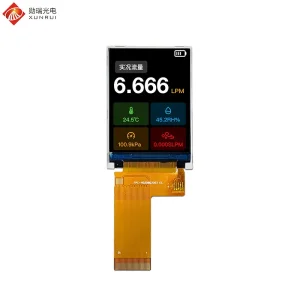
China 2 inch 240×320 SPI 30PIN 250nit IPS TFT LCD Module Manufacturer, Suppliers
-
Custom 10.1 inch 1280×800 IPS TFT LCD display with capacitive touch panel Supplier, Factory

-
Custom 3.5 inch IPS TFT LCD 320×480 MCU 40pin interface 300nit Manufacturer, Factories

-
Custom 5 inch 800×480 TN TFT LCD display with capacitive touch panel Manufacturers, Suppliers
