
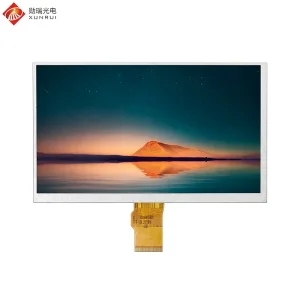
Custom 9 inch 800×480 RGB 50pin interface 500nit TN TFT LCD module Manufacturer, Suppliers
View Specifications
Explore our core product lineup engineered for industrial, medical, automotive, and smart interactive human-machine interfaces (HMI).





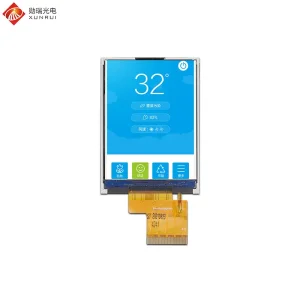

Why the 6.2" Form Factor Represents the Optimal Geometric Compromise for Modern Industrial Ergonomics, Automotive In-Dash Enclosures, and Heavy-Duty Handheld Diagnostics.
The 6.2-inch liquid crystal display occupies a uniquely advantageous tier in human-machine interfacing. Bridging the gap between ultra-compact 3.5"–5.0" handheld screens and bulkier 7.0"–10.1" stationary panels, the 6.2" diagonal offers an active display area typically configured in widescreen ratios (such as 18:9, 19:9, or specialized automotive 16:9). This enables high information density—ideal for dual-gauge virtual instruments, multi-parameter medical telemetry, and complex edge-AI automation menus without expanding overall enclosure dimensions.
Deploying standard consumer panels outdoors results in optical washout and thermal latch-up. Xunrui's custom 6.2-inch industrial architecture integrates high-efficacy side-lit LED matrix backlights exceeding 1,000 to 1,500 nits luminance. Combined with optical bonding (OCA/LOCA) using refractive index-matched polymers (n ≈ 1.51), internal Fresnel reflections are attenuated from >4.5% to <0.2%, maintaining an ambient contrast ratio (ACR) over 10:1 even under 50,000 lux direct solar irradiation.
Unlike commercial smartphone-derived panels subject to 12-month component obsolescence, Xunrui's industrial-grade 6.2" TFT displays utilize automotive-certified gate-in-panel (GIP) liquid crystal glass formulations and driver ICs (such as Sitronix, Ilitek, and Novatek) backed by locked BoMs (Bill of Materials). We provide a minimum 5-to-7-year guaranteed production longevity, shielding OEM engineering roadmaps from costly requalification cycles.
| Performance Parameter | Consumer-Grade 6.2" Panel | Xunrui Custom Industrial 6.2" TFT | Technical Significance for B2B OEMs |
|---|---|---|---|
| Optical Technology | Standard TN / Commercial IPS | True Industrial Super-IPS (All-Viewing 85/85/85/85) | Zero gray-scale inversion; uncompromised off-axis visibility in mission-critical applications. |
| Surface Luminance | 300 – 450 cd/m² (nits) | 800 – 1,500 cd/m² (Adjustable PWM Drive) | Legible under direct midday sunlight without display dimming or thermal saturation. |
| Operating Temperature | -10°C to +50°C | -30°C to +85°C (Extended Fluid Chemistry) | Prevents isotropic transition (clearing point failure) and low-temperature LC freezing. |
| Touch Screen Architecture | On-Cell Thin Touch (Fragile) | Industrial G+G (Cover Glass up to 3.0mm, IK08-IK10) | Resists mechanical impacts, vandals, glove actuation, saline water spray, and electrical EMI. |
| Drive Interfaces Supported | Fixed MIPI DSI Only | MIPI DSI 4-Lane / RGB 24-bit / LVDS / eDP / SPI Bridge | Plug-and-play compatibility with low-cost MCUs, Linux SoCs, and industrial x86 hardware. |
| Backlight Half-Life (MTBF) | 15,000 to 20,000 Hours | 50,000 Hours (L70 at 25°C Continuous Run) | Eliminates field replacements in 24/7 industrial infrastructure, kiosks, and utility fleets. |
Engineered specifically for demanding edge environments across transportation, industrial field compute, medical electronics, and hazardous zones.
Modern electric motorcycles and high-end e-scooters require wide-aspect instrumentation capable of displaying navigation maps, CAN-bus battery telematics, speed, and real-time regenerative braking states. The custom 6.2-inch widescreen form factor fits cleanly into streamlined aero-handlebars. Xunrui configures these displays with optical bonding to IP67-rated cover glass, incorporating anti-reflective (AR) and anti-fingerprint (AF) coatings. This ensures zero internal condensation under sudden tropical downpours and instant readability through polarized rider visors.
From 2-DIN aftermarket audio navigation head units to heavy transport fleet data terminals (ELDs), the 6.2" display is an established international industry standard. Xunrui provides AEC-Q100 compliant driver components, low electromagnetic interference (EMI) spread-spectrum clocks, and tailored FPC flex cables. Our panels withstand continuous engine vibration profiles according to ISO 16750-3 and feature reverse battery/load dump electrical protection circuitry on our custom driver motherboards.
Utility inspectors, oil & gas pipeline surveyors, and logistics professionals operate in unpredictable environments involving rain, dirt, and drop hazards. Xunrui’s 6.2" custom touch display stacks feature chemically strengthened aluminosilicate cover glass (Corning Gorilla or equivalent AGC Dragontrail) with 7H–9H surface hardness. Projected Capacitive (PCAP) controllers are calibrated with proprietary firmware to distinguish deliberate touches from heavy water droplet pooling and support operation with 5mm industrial safety gloves.
Xunrui does not simply sell catalog glass. We engineer, customize, and validate every layer of the 6.2" display assembly to meet your precise enclosure and electro-optical goals.
Enclosure constraints frequently conflict with off-the-shelf flex ribbon exits. Our layout engineers redesign Flexible Printed Circuits (FPC) with custom trace routing, differential pair impedance matching, gold plating (ENIG), and integrated EMI grounding shields (silver foil/copper mesh). We can map pinouts to match legacy systems, eliminating motherboard respins.
We tailor light efficiency using dual Brightness Enhancement Films (BEF) and Dual Brightness Enhancement Film (DBEF) reflective polarizers. Backlight rails are thermal-mechanically sinked directly into aluminum chassis plates. This guarantees uniform light extraction (>85% uniformity) without creating concentrated hot spots that induce liquid crystal clouding.
From rounded 2.5D/3D curved borders to specialized CNC cutouts for physical encoders and waterproof membrane keys, our cover lens capabilities include customized ceramic silk-screen logos, anti-glare (AG) chemical etching, anti-reflective (AR) magnetron sputtering coatings, and anti-smudge oleophobic (AF) vapor depositions.
Situated at the epicenter of global optoelectronics in Bao'an District, Shenzhen Xunrui delivers distinct supply chain agility and technical depth to international procurement teams.
Our facility in Hualun Science and Technology Park operates within a 30-minute logistics radius of top-tier glass cutting, ITO sensor etching, polarizer slitting, and precision SMT operations. Direct strategic relationships with leading panel fabs (BOE, Innolux, CSOT, and HannStar) ensure prioritized access to high-yield mother glass substrates, even during global semiconductor and glass allocation cycles.
Particulate contamination during the optical assembly of 6.2" screens causes unacceptable optical defects and touch sensor delamination. Xunrui maintains high-level dust-free production environments equipped with fully automated Chip-on-Glass (COG) and Film-on-Glass (FOG) hot-press bonding lines. Vision-guided robotic aligners achieve high-precision placement repeatability of ±3 microns.
Standard multinational panel vendors enforce massive Minimum Order Quantities (MOQs) of 10,000 to 50,000 units, stifling industrial hardware innovation. Xunrui bridges this gap: after sample approval, we facilitate small-batch pilot validation runs from 5 to 500 units. Once verified on your assembly line, our scalable infrastructure comfortably expands to volume orders exceeding 1,000 to 500,000 units annually.
| Inspection Gate | Quality Procedure & Equipment | Pass/Fail Criteria & Standards |
|---|---|---|
| Gate 1: IQC (Incoming QC) | Spectrophotometric testing of glass lots, microscopic FPC gold-finger inspection, LED color bin sorting. | Strict AQL 0.4 standard; zero tolerance for glass micro-cracks or color coordinate deviation (Δx, Δy ≤ 0.01). |
| Gate 2: COG / FOG Bond QC | Automated vision-guided ACF alignment check, shear-force mechanical peel testing of bonded flex cables. | Bonding alignment offset < 3μm; electrical resistance variance across pins < 2%. |
| Gate 3: Optical Bonding QC | Vacuum chamber lamination inspection, autoclave de-bubbling verification, laser displacement scanning. | Zero visual air bubbles (>0.05mm); complete edge sealant seal integrity; zero optical mura. |
| Gate 4: High-Temp Burn-In Aging | 100% of manufactured modules placed in thermal test chambers running full dynamic video patterns at 50°C for 24–72 hrs. | Zero gate-driver latch-up; zero dead pixels; backlight current draw stability within ±3%. |
| Gate 5: OQC (Outgoing QA) | Final cosmetic verification, ESD anti-static vacuum nitrogen packaging, drop and transit vibration validation. | Conforms to ISO 9001:2015, ISO 14001, and client-specific engineering specifications. |
How our optoelectronics R&D engineering team is redefining display efficiency, contrast, and integration through 2026 and beyond.
To rival OLED contrast ratios without suffering from organic burn-in or high-temperature degradation, Xunrui is pioneering custom 6.2" TFT designs incorporating custom Mini-LED active matrix backlights. Featuring 576 to 1,152 individual local dimming zones, this achieves dynamic contrast ratios over 1,000,000:1 with deep black levels, essential for automotive heads-up instrument safety systems.
Consolidating the capacitive touch sensor controller and the TFT panel display driver into a single silicon chip reduces overall module thickness by 25%, simplifies FPC routing down to a single compact flex connector, and lowers electrical system noise. Xunrui is adapting automotive-grade TDDI architectures into industrial 6.2" widescreen form factors.
Advancing our LC chemical compounds to push the isotropic transition clearing point beyond +110°C, while preserving fast liquid crystal cell response times (<25ms) at -40°C. This eliminates the sluggish response times and ghosting typically experienced when operating heavy industrial screens in Arctic or high-heat desert environments.
Engineered to conform with stringent North American, European, and Asian regulatory standards for seamless OEM export and certification.
All polarizers, bonding adhesives, solder pastes, and LED materials are fully certified lead-free and free from SVHC restricted substances.
Module circuits feature bidirectional TVS diode arrays engineered to survive IEC 61000-4-2 Level 4 electrostatic discharge (±8kV contact, ±15kV air).
Integrated EMI shielding tapes and differential termination resistors prevent radiated emissions from interfering with GPS, 4G/5G, or Bluetooth antennas.
Audited operational management systems guaranteeing traceability down to the raw wafer lot, conductive paste batch, and lamination machine timestamp.
A stage-gate engineering execution framework that identifies and resolves optical, electrical, and mechanical risks before major tooling commitments.
We review your product mechanical files, interface requirements (MIPI/RGB/LVDS), luminance requirements, power constraints, and operating temperature range.
Our CAD engineers deliver detailed 2D/3D integration drawings, connector pinouts, and custom FPC layouts for sign-off within 3 to 5 business days.
Physical functional samples are fabricated in our cleanroom, calibrated for optical performance, and couriered via priority air freight for your firmware integration.
Once prototypes are approved, an optional small-batch pilot build validates surface-mount yield, enclosure fit-up, and field software under real-world conditions.
Seamless transition to volume manufacturing (1,000 to 500,000+ units) utilizing automated COG/FOG bonding lines and scheduled supply chain deliveries.
Dedicated post-launch engineering support with guaranteed BoM component change notifications (PCN) and end-of-life (EOL) management over 5 to 7 years.
Complementary display formats, high-brightness panels, and smart controller boards engineered for specialized industrial demands.







Direct technical responses addressing common integration questions raised by embedded hardware engineers and procurement teams.