
Featured Custom Small-to-Medium TFT LCD Modules
Explore our high-yield display architectures, engineered in China's prime optoelectronic hubs to meet rigorous industrial specifications.
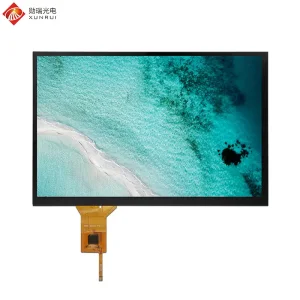
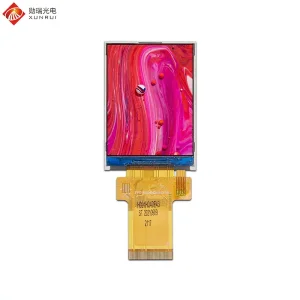
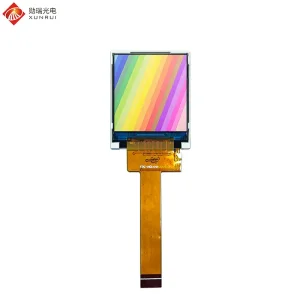
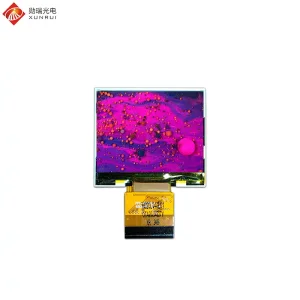
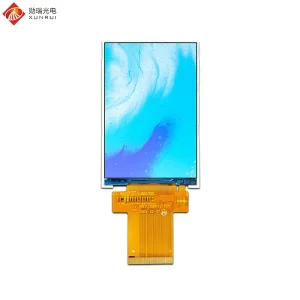
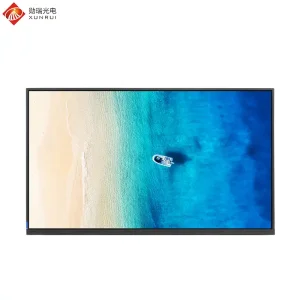
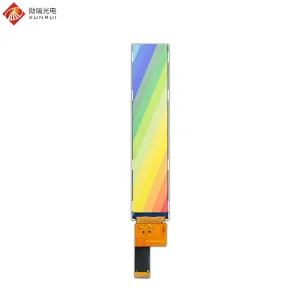
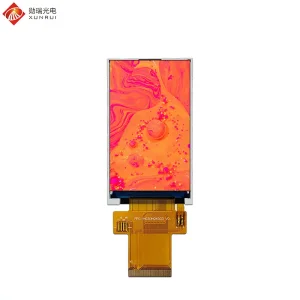
The Global Commercial & Industrial Status of 3.2 Inch Display Panels
The global display panel ecosystem has experienced a profound shift toward specialized, compact Human-Machine Interface (HMI) modules. Among the small-to-medium form factors, the 3.2 inch display panel holds a critical strategic position. Offering an optimal balance between visual real estate, power dissipation, and physical footprint, the 3.2-inch format (typically configured in 240x320 QVGA, 320x480 HVGA, or custom ultra-wide resolutions) is the foundational component for next-generation smart metering, medical diagnostic tools, handheld logistics terminals, and IoT smart control nodes.
Supply Chain Dominance of Chinese Display Clusters
Over 85% of small-size TFT LCD modules are manufactured within specialized industrial parks in Shenzhen, Dongguan, and the broader Greater Bay Area. China's 3.2 inch display panel factories leverage fully integrated supply chains—ranging from raw glass substrate processing and backlight guide plate (LGP) extrusion to automated COG (Chip-on-Glass) / FOG (Flex-on-Glass) bonding. This integration allows OEM/ODM clients to benefit from unprecedented cost efficiencies, shortened NPI (New Product Introduction) cycles, and agile customization flexibility.
Rising Demand for Resilient, Extended-Life Modules
Unlike consumer-grade displays which suffer from rapid obsolescence cycles, industrial buyers of 3.2-inch panels demand product longevity (typically 5 to 10+ years of guaranteed panel availability). China factories specialize in providing drop-in compatible driver IC alternatives (e.g., ST7789V, ILI9341V, HX8357D) and long-lifecycle LED backlights, guaranteeing uninterrupted production for high-value industrial equipment, medical diagnostic tools, and military-grade communication units.
Optoelectronic Architecture & Technical Specifications Benchmark
To evaluate 3.2 inch display panel factory capabilities, engineering teams must look beyond simple diagonal size and pixel count. Deep hardware analysis involves inspecting liquid crystal alignment technology, interface protocol latency, backlighting thermal design, and touch layer integration.
Liquid Crystal Alignment: IPS vs. TN
While Twisted Nematic (TN) glass provides cost-effective basic output for low-complexity meters, In-Plane Switching (IPS) technology has become the industry benchmark. Modern 3.2-inch IPS panels deliver true 89°/89°/89°/89° full viewing angles, zero grayscale inversion, and higher color fidelity—crucial for handheld devices viewed at varying tilt angles.
Interface Protocols: SPI, MCU & RGB
Selecting the optimal electrical interface dictates MCU bandwidth and PCB routing complexity. Factories produce 3.2" panels with 3-wire/4-wire SPI for ultra-low pin counts, 8/16-bit Parallel MCU for microcontrollers lacking native framebuffers, and 18/24-bit RGB interfaces for smooth 60fps video rendering on higher-end processors.
Luminance & Sunlight Readability
Standard indoor displays range from 250 to 350 nits. China factories customize LED backlight arrays with high-efficiency chips, boosting luminance up to 1000–1500 nits. Combined with transflective optical coatings or full optical bonding (OCA/OCR), these panels remain crisp under direct sunlight.
Technical Variation Matrix: China 3.2 Inch Display Panel Offerings
| Panel Technology | Native Resolution | Interface Options | Standard Luminance | Operating Temp | Touch Compatibility |
|---|---|---|---|---|---|
| IPS Full View | 240 × 320 (QVGA) | SPI / 8-bit MCU / RGB | 350 - 1000 nits | -20°C to +70°C | Capacitive (PCAP) / Custom Cover Glass |
| IPS High Resolution | 320 × 480 (HVGA) | 16-bit MCU / RGB 24-bit | 300 - 800 nits | -20°C to +70°C | Custom Projected Capacitive / Air Bonding |
| TN Standard | 240 × 320 (QVGA) | 4-wire SPI / MCU | 250 - 400 nits | -10°C to +60°C | 4-Wire Resistive Touch Panel (RTP) |
| Wide Temp Transflective | 240 × 320 (QVGA) | SPI / RGB | 500 - 1200+ nits | -30°C to +85°C | Optical Bonded PCAP / Anti-Glare Film |
Industry Trends & Technical Roadmap (2026–2030)
As display factories in China modernize production lines, several key technological transformations are shaping the future of 3.2-inch display modules. OEM buyers can leverage these technological developments to future-proof their hardware designs.
1. Shift Toward In-Cell & On-Cell PCAP Integration
Traditional touch architectures require bonding an external touch screen (TP) glass onto the display module. Modern 3.2 inch display factories are migrating toward In-Cell touch technology, where touch sensors are embedded directly into the liquid crystal array. This eliminates an adhesive layer, reduces overall thickness by up to 30%, enhances optical clarity, and decreases power consumption.
2. Ultra-Low Power & Memory-In-Pixel (MIP) Technologies
With the rapid proliferation of battery-powered IoT field sensors, display modules must operate within micro-ampere power budgets. Future 3.2 inch roadmap releases feature internal memory cells per pixel, allowing static graphics to display without constant frame refreshes from the main host driver, expanding battery life tenfold in handheld meters.
3. Advanced Surface Coatings (AG, AR, AF)
Factory optical bonding facilities now offer advanced cover lens surface coatings directly from production lines. Anti-Glare (AG) reduces atmospheric reflection, Anti-Reflective (AR) film increases light transmission, and Anti-Fingerprint (AF) oleophobic vacuum plating preserves surface cleanliness on interactive touchscreens.
Localized Application Scenarios for 3.2 Inch Displays
The compact dimensions and robust specs of the 3.2 inch TFT LCD panel make it the display choice across diverse industries. Below is how leading global OEMs deploy these screens:
Industrial Handheld Terminals & POS Devices
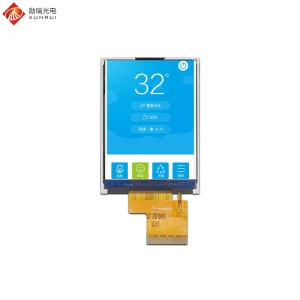
Mobile barcode scanners, logistics handhelds, and portable payment POS terminals rely heavily on 3.2-inch vertical portrait panels (240x320 / 320x480). Key requirement: Drop resistance (IK ratings) achieved through custom chemically strengthened cover glass (Gorilla/Dragontrail) combined with high-brightness LED backlights for outdoor warehouse usage.
Medical Diagnostic Equipment & Monitors
Compact medical tools—such as blood glucose analyzers, portable ECG monitors, and infusion pump control units—demand crystal-clear IPS panels with wide viewing angles. Cleanability is essential; factories build custom sealed bezels paired with PCAP touch panels that withstand frequent medical-grade alcohol and chemical cleaning.
Smart Home Automation & HVAC Controllers
Next-generation thermostats, rotary knob screens, and wall-mounted smart switches utilize customized 3.2" IPS panels. With elegant black-mask bezel graphics, custom curved lens cutouts, and SPI interfaces, these panels seamlessly integrate into minimalist interior decor while serving as smart home nodes.
Automotive Sub-Displays & EV Charging Stations
In automotive environments, 3.2-inch screens function as digital rear-view mirror status displays, gear selector indicators, or user interface screens on outdoor EV charging stations. Extended temperature tolerance (-30°C to +85°C) and anti-vibration FPC structural design ensure continuous operation.
Macro Industry Solutions: Custom OEM/ODM Engineering Workflow
Direct collaboration with a specialized 3.2 inch display panel factory in China unlocks full-stack mechanical and electrical customization. Below is the standard engineering protocol for customized OEM project execution:
FPC Pinout Tailoring
Custom flexible printed circuit length, shape, component placement, and connector type (ZIF/STK).
Backlight Engineering
LED quantity adjustment, optical diffuser selection, and high-brightness configurations up to 1500 nits.
Cover Lens Styling
Custom cover glass dimensions, silkscreen color printing, logo placement, cutout holes, and surface treatments.
Optical Lamination
Choice of cost-effective Frame/Air Bonding or high-reliability Full OCA Optical Bonding for extreme environments.
Rigorous Quality Control & Reliability Standards
Top-tier display factories in China maintain strict quality verification pipelines. Each 3.2-inch panel undergoes systematic testing before leaving the ISO 9001 / ISO 14001 certified cleanroom facility:
- High/Low Temperature Operating Test: -30°C to +80°C continuous stress testing for 240+ hours.
- Thermal Shock Test: Rapid temperature cycle transitions (-40°C to +85°C) to prevent delamination.
- Electrostatic Discharge (ESD) Immunity: Contact ±4kV / Air ±8kV threshold verification.
- Optical Aging & Chroma Consistency: Automated colorimeter inspections ensuring uniform color delta (ΔE < 3).
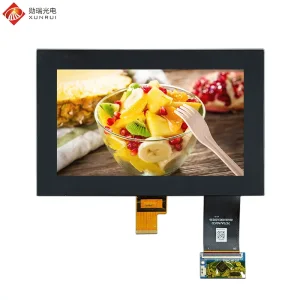
Additional Industrial Display Modules & Touch Assemblies
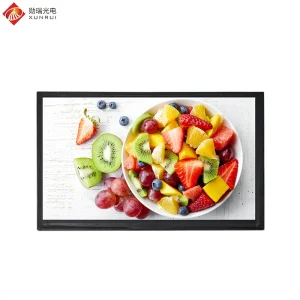
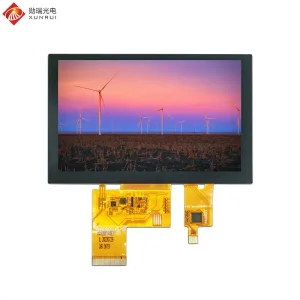
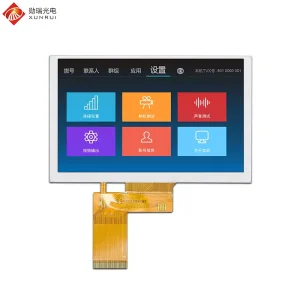
Discover our comprehensive selection of small-to-large TFT displays tailored for global B2B procurement.
Exhaustive Technical & Sourcing FAQ for Procurement Teams
Clear, authoritative answers directly from factory engineering specialists to streamline your display sourcing process.