
Featured Industrial TFT Display Modules (Part I)
Engineered for mission-critical reliability across harsh thermal ranges, direct sunlight readability, and specialized form-factors.







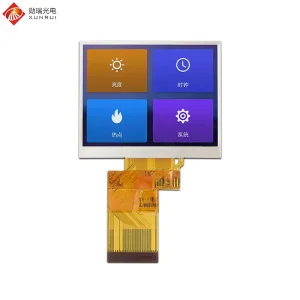
Evolutionary Trajectory of China's 4-Inch & Small-to-Mid LCD Manufacturing
Global embedded architectures require a delicate balance of physical footprint, power budget, optical legibility, and supply continuity. China has evolved from a downstream module assembler into the global epicenter of specialized flat-panel display fabs.
Substrate Dicing & Gen 4.5/5 Fab Economics
Small-to-medium displays (such as 2.4", 3.5", 4.0", 4.3", and 5.0") benefit immensely from the optimization of Generation 4.5 and Generation 5 glass substrate dicing patterns in mainland fabs. By pairing amorphous silicon (a-Si) and Low-Temperature Poly-Silicon (LTPS) with automated laser scribing, factories achieve unmatched yield rates exceeding 98.6%, drastically reducing unit costs for OEM tier-1 integrators while maintaining tight dimensional tolerances.
Optical Transmissivity & High-Nit Backlights
Industrial operations have shifted definitively toward high-ambient visibility. Modern 4-inch to 10.1-inch LCD modules leverage localized LED matrix arrays and ultra-efficient light guide plates (LGP), pushing surface brightness from traditional 250 nits up to 1000–1500 nits. Combined with advanced transflective polarizing films, these panels eliminate washout under direct, unfiltered solar radiation without triggering thermal overruns.
IPS All-Viewing Angle vs TN Cost Optimization
While Twisted Nematic (TN) architectures remain the gold standard for strictly cost-sensitive, fixed-orientation smart meters and handhelds, In-Plane Switching (IPS) has become the dominant technology for multidimensional HMIs. IPS panel structures eliminate the grayscale inversion inherent in 6 o'clock or 12 o'clock TN designs, providing true 80/80/80/80 symmetrical viewing cones essential for modern industrial safety instrumentation.
Global OEM Procurement Matrix: Choosing the Right Panel Stack
When procuring 4-inch and small-to-mid TFT LCD modules from Chinese manufacturers, hardware architects must evaluate interface bandwidth, optical bonding techniques, and touch stack integration.
| Interface Standard | Pin Density & Wiring | Bandwidth / Refresh Rate | Electromagnetic Immunity (EMC) | Typical Application Fit |
|---|---|---|---|---|
| RGB (16/18/24-bit Parallel) | 40-pin to 54-pin FPC | Up to 60 Hz at WVGA/SVGA | Moderate; requires ground shielding | Embedded Linux HMIs, Instruments (3.5" ~ 7.0") |
| MIPI DSI (2-lane / 4-lane) | Compact 20-pin to 30-pin FPC | High Bandwidth (Full HD at 60fps) | Superior; low-voltage differential signaling | Handheld Medical Terminals, Bar-Type Auto Displays |
| LVDS (Low-Voltage Differential) | 30-pin to 40-pin connector | Robust long-trace signal integrity | Exceptional; ideal for high-noise environments | Heavy Machinery HMIs, Rugged Marine 8.0" ~ 15.6" |
| SPI / MCU 8080 8/16-bit | Ultra-compact 10-pin to 24-pin | Low bandwidth; internal frame buffer | High; localized display RAM prevents flicker | Smart Appliance Dials, Battery-Powered Scanners |
Critical Optical Engineering Distinction: Optical Clear Adhesive (OCA) vs. Air Bonding
In outdoor or medical deployments, air bonding creates a secondary reflective boundary between the cover glass and the LCD polarizer, reflecting up to 4.5% of incident ambient light and accelerating internal condensation under sudden humidity swings. Chinese 4.0 automated cleanroom facilities deploy vacuum Liquid Optical Clear Resin (LOCA) or dry sheet Optical Clear Adhesive (OCA) bonding. This matches the refractive index (n ≈ 1.49) of glass, completely eliminating internal reflection, dramatically elevating the effective contrast ratio, and multiplying mechanical shock resistance by up to 300% (IK08/IK10 compliant).
Custom Flexible Printed Circuit (FPC)
Tailoring FPC pin assignments, routing length, gold finger pitch (0.5mm vs 0.3mm), and integrating ferrite EMI shielding layers to fit tight cast-aluminum or injection-molded chassis without ground bounce or signal degradation.
Cover Glass & Surface Treatments
Precision CNC-milled chemically strengthened aluminosilicate glass (Corning Gorilla / Panda Glass) up to 6mm thick, combined with Anti-Reflective (AR), Anti-Glare (AG), and oleophobic Anti-Fingerprint (AF) vacuum sputtering.
Touch IC & Firmware Tuning
Integration of projected capacitive (PCAP) ICs (Ilitek, FocalTech, Goodix) engineered with specialized noise-filtering algorithms to permit seamless glove operation, thick water-droplet rejection, and saltwater surface resistance.
China Factory 4.0: Supply Chain Resilience, Automation & Speed-to-Market
Shenzhen Xunrui Optoelectronic Technology Co., Ltd. (established in 2016) exemplifies the transformation of Chinese display production into a hyper-automated, traceable Industry 4.0 ecosystem.
Sub-Micron COG/FOG Automated Bonding
Fully automated Chip-on-Glass (COG) and Film-on-Glass (FOG) cleanroom production lines achieve alignment precision within ±3 μm. High-resolution CCD vision systems eliminate human error, ensuring consistent conductive ACF electrical interconnection and zero pad damage across high-density pitch arrays.
AI Automated Optical Inspection (AOI)
Every display module undergoes algorithmic machine-vision screening. AI-driven AOI dynamically detects point defects, line defects, color nonuniformity (Mura), polarizer micro-scratches, and particle inclusions under multi-spectrum lighting at cycle times under 4 seconds per module.
Tier-1 Silicon & Glass Upstream Clustering
Located in Shenzhen's advanced optoelectronics corridor, Xunrui leverages raw glass supply from world-class foundries paired with driver ICs from Novatek, Sitronix, and Himax. This tight geographic clustering condenses component procurement cycles from months into single days.
Agile Scaling: 5-500 Trial to Volume MOQ
Bridging the gap between R&D and commercialization, Xunrui supports pre-production pilot batches from 5 to 500 units for engineering validation. Once validated, automated lines scale smoothly to 1,000+ custom units up to a combined 2,000,000 monthly output without requalification delays.
Localized Application Scenarios: Where Reliability Counts
Small-to-medium TFT LCD modules power intuitive operator interactions across demanding industrial sectors. Discover how our custom display stacks address environmental stress points.
Industrial HMIs, PLCs & Smart Metering
Industrial environments subject displays to intense mechanical vibration, electromagnetic noise from heavy motors, and oil mist. Our 2.8", 3.5", and 4.3" modules utilize 4-wire resistive touch panels or thick polycarbonate capacitive sensors that prevent erratic phantom touches, operating reliably across continuous 24/7 runtimes with MTBF values surpassing 50,000 hours.
Automotive Clusters & Long-Strip Cockpits
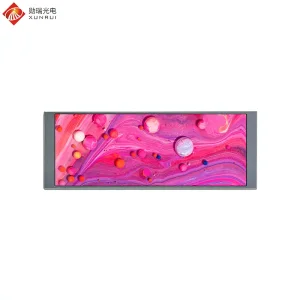
Modern automotive dashboards and passenger console strips require ultra-wide aspect ratios such as 6.86" (480×1280) and 6.9" (280×1424). These bar-type displays integrate wide-temperature liquid crystal formulations capable of instantaneous cold-starts at -30°C and thermal survival at +85°C without visual sluggishness or polarizer yellowing.
Medical Diagnostic & Patient Telemetry
From portable ultrasound scanners to surgical infusion pumps, medical displays demand flawless color accuracy, wide viewing angles without gamma shifts, and hygienic sealed front faces. Xunrui supplies IPS panels optically bonded to antimicrobial cover glass capable of withstanding daily sanitization with harsh hospital-grade chemical disinfectants.
Outdoor EV Chargers & Smart Grid Kiosks
Direct sunlight renders conventional displays illegible. Our 7-inch, 8-inch, and 10.1-inch sunlight-readable screens feature dedicated 1000–1300 nit LED drivers paired with anti-ultraviolet polarizing films that prevent liquid crystal degradation, photochemical black spot formation, and extreme internal solar heat loading.
Smart Home Knobs & IoT Rotary Dials
Circular and square TFT modules (from 1.3" to 4.0") transform conventional rotary switches into dynamic smart interfaces for premium thermostats, kitchen ovens, and home automation hubs. Featuring custom round cover glass and SPI/MCU interfaces, these modules integrate directly with cost-effective microcontrollers.
Aerospace, Marine & Rugged Handhelds
Handheld telemetry tools, marine GPS sounders, and rugged field tablets face drops, saltwater spray, and high solar UV. Xunrui integrates anti-salt-corrosion FPC layouts, specialized optical films for polarized sunglasses readability, and impact-resistant tempered cover plates passing stringent drop-ball tests.
Five-Stage Auditable Quality Architecture
Shenzhen Xunrui Optoelectronic operates under strict ISO 9001 and ISO 14001 certifications. Every display batch is subjected to comprehensive thermal and electrical gate checks before export release.
| Inspection Stage | Gate Verification Focus | Test Methodology & Equipment | Acceptance Threshold (AQL) |
|---|---|---|---|
| Stage 01: IQC (Incoming QC) | Raw glass, driver ICs, FPCs, polarizers, backlight LEDs | Spectrophotometer color check, microscopic dimension check | AQL 0.4 Critical / 0.65 Major |
| Stage 02: Glass & Polarizer | Micro-scratches, bubble inclusion, particle contamination | Cleanroom monochromatic sodium lamp inspection | Zero toleration for conductive particles |
| Stage 03: FOG High-Stress Aging | ACF conductive particle indentation, bonding adhesion | 72-Hour continuous thermal cycling at 60°C / 90% RH | 100% electrical continuity verified |
| Stage 04: Finished Module Aging | Sub-pixel dead spots, color drift, Mura nonuniformity | Full-screen RGBW dynamic video test pattern burn-in | 0 Dead pixel policy on custom medical builds |
| Stage 05: OQC (Outgoing QC) | Packaging seal, ESD antistatic protection, FPC drop-test | Vibration table simulation, drop test, anti-humidity seal | Full lot verification with batch test reports |
Frequently Asked Technical & Sourcing Questions
Direct answers to the most common questions raised by procurement managers, systems engineers, and quality assurance leads.
Mainland China has achieved vertical integration across the entire optoelectronics supply chain. From raw glass substrate processing and color filter fabrication to automated driver IC bonding and backlight assembly, China’s Pearl River Delta cluster minimizes component lead times. Furthermore, state-of-the-art cleanroom automation enables competitive pricing even on high-reliability, low-to-medium volume industrial configurations that legacy Japanese or Korean fabs can no longer service cost-effectively.
Unlike consumer displays that face annual obsolescence, our industrial TFT product lines utilize strictly roadmapped glass substrates and industrial-grade driver ICs (from manufacturers with guaranteed long-term production commitments). In the event of a planned silicon transition, Xunrui provides a formal Last Time Buy (LTB) notification at least 6 to 12 months in advance, along with seamless pin-compatible and software-compatible drop-in replacement modules developed by our internal engineering team.
We support fast-track R&D with sample fabrication within 10 to 18 business days from mechanical drawing sign-off. Following sample approval, we offer a specialized pilot batch run of 5 to 500 units to allow mechanical fit and field firmware testing. For fully customized volume production (tailored FPC, custom backlight rails, or shaped cover glass), our standard production MOQ begins at 1,000 units, while standard catalog models are available with lower volume thresholds.
Select Projected Capacitive (PCAP) touch when designing modern multi-touch, gesture-enabled interfaces requiring an all-glass aesthetic, high optical clarity, and resistance to scratches. Select Resistive Touch (4-wire or 5-wire) for ultra-demanding industrial environments where operators wear thick heavy-duty gloves, where the display is exposed to heavy electrical interference (EMI), or where equipment operates under continuous water spray or conductive oil deposits that might trigger false capacitive actuation.
Yes. High-brightness displays achieve longevity through efficient optical design rather than brute-force power overdrive. Xunrui implements high-lumen, high-efficiency Nichia or Epistar LED chips, optimized Light Guide Plates (LGP), and multi-layer optical brightness enhancement films (BEF/DBEF). This maximizes photonic throughput while minimizing forward current, keeping backlight surface heat below 45°C under normal ambient operation to preserve the standard 50,000-hour LED half-life.
Featured Industrial TFT Display Modules (Part II)
High-definition, high-contrast, and sunlight-readable panels tailored for advanced instrumentation, automotive strips, and intelligent controls.







Accelerate Your Embedded Display Project
Direct engagement with Xunrui Optoelectronics display engineers. Send your mechanical DXF/STP files, interface requirements, and optical target specs for a comprehensive DFM (Design for Manufacturability) review within 24 hours.