
Featured Small-to-Mid TFT Display Modules
Engineered for demanding embedded platforms, automotive clusters, and medical diagnostics. Explore our high-volume production models below.
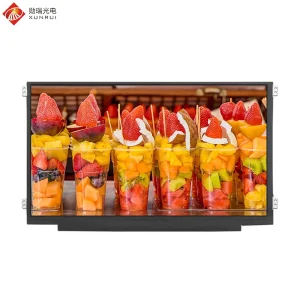




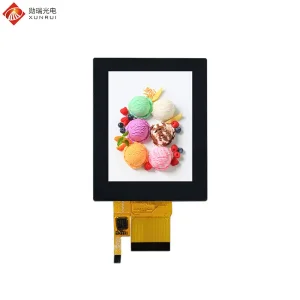


Industrial 4-Inch & Small TFT LCD Engineering Excellence
Bridging the gap between raw liquid crystal panel fabrication and customized turnkey HMI modules for global electronic device manufacturers.
As an established China 4 TFT LCD display supplier & factory, Shenzhen Xunrui Optoelectronic Technology Co., Ltd. (XUNRUI) has dedicated nearly a decade to solving the most persistent mechanical, optical, and electrical integration hurdles encountered by hardware procurement directors. Operating out of our advanced 5,000-square-meter precision facility in Bao'an District, Shenzhen, we specialize in high-reliability flat panel modules, specifically custom 4-inch square (720×720), 4-inch circular, and industry-standard 4.3-inch (480×272, 800×480) form factors.
Unlike consumer-grade display brokers, our manufacturing infrastructure is built directly on ISO 9001 and ISO 14001 certified workflows. We control every phase of production in-house: automated COG (Chip-on-Glass) and FOG (Flex-on-Glass) bonding, precision SMT driver fabrication, Class 1,000 cleanroom optical bonding (OCA/LOCA), and custom backlight matrix assembly. Whether your bill of materials demands sunlight readability exceeding 1,000 cd/m², an ultra-wide industrial temperature operating bracket of -30°C to +85°C, or specialized EMC/EMI noise suppression for high-voltage industrial automation, XUNRUI provides the technical foundation necessary for sustained commercial success.
IPS All-Perspective Technology
Standardizing on true 80°/80°/80°/80° symmetrical viewing cones, our 4.0″ and 4.3″ IPS modules eliminate the grayscale inversion and chromatic shift endemic to older TN panels. Ideal for medical vitals monitors and automotive gauge clusters.
High-Luminance Optical Engineering
From indoor 300-nit displays up to 1,000+ nit sunlight-readable modules, our proprietary constant-current LED backlights maximize lumen output while controlling junction temperatures, ensuring an MTBF exceeding 50,000 hours without thermal degradation.
PCAP & RTP Touch Integration
In-house custom cover glass shaping (up to 6mm thickness), anti-reflective (AR), anti-glare (AG), and anti-fingerprint (AF) coatings. Tunable capacitive controllers (FocalTech, Goodix, Ilitek) guarantee reliable wet-finger and gloved operation in dirty field conditions.
Global Sourcing Dynamics for 4-Inch & Embedded TFT Panels
Navigating component lifecycle management, interface transitions, and mechanical customization for mission-critical electronic assemblies.
Procuring small-form-factor displays (particularly the 3.5″, 4.0″ circular/square, and 4.3″ rectangular segments) presents unique challenges for global Original Equipment Manufacturers (OEMs) and Electronics Manufacturing Services (EMS) providers. While mass consumer electronics prioritize the lowest possible unit cost with rapid 12-to-18-month product obsolescence cycles, industrial, automotive, and medical developers operate on 5-to-10-year production roadmaps. A sudden End-of-Life (EOL) notification from an upstream glass vendor can trigger catastrophic redesign costs, requalification delays, and regulatory penalties.
1. Component Obsolescence & Supply Chain Longevity
At XUNRUI, our product architecture leverages mature, tier-one liquid crystal glass substrates (such as BOE, HannStar, and Innolux) paired with long-lifecycle display driver ICs (ST7701S, ST7262, HX8369, and ILI9806E). When glass generations evolve, our engineering team manages internal pinout adaptation and FPC redesigns, ensuring form-fit-function mechanical backward compatibility. Our supply contracts offer written longevity commitments of 5 to 7 years, shielding our clients from unplanned component obsolescence.
2. Interface Migration: RGB vs. MIPI-DSI vs. SPI/MCU
System architects must constantly balance pin availability, processor capabilities, frame rates, and EMI radiation:
- Parallel RGB (16/18/24-bit): The classic choice for 4.3-inch 480×272 and 800×480 panels. It offers direct video RAM addressing and zero latency, though it consumes up to 28 microcontroller GPIO pins and requires careful high-frequency PCB trace matching to avoid EMI emission.
- MIPI-DSI (1 to 2 Data Lanes): Essential for higher-resolution displays, such as our 4.0-inch 720×720 circular and square screens. MIPI reduces pin count down to 4–6 high-speed differential signal lines, dramatically minimizing PCB routing real estate and electromagnetic emissions in compact handhelds.
- SPI / 8080 MCU 8/16-Bit Interfaces: Perfect for cost-sensitive low-power microcontrollers (STM32, ESP32, NXP LPC). Integrated framebuffers within the driver IC (e.g., ST7789V or ST7701S) allow smooth GUI rendering without requiring the host MCU to sustain continuous high-bandwidth video refresh clocks.
3. Optical Bonding (OCA/LOCA) vs. Air Bonding
When specifying a 4-inch or 4.3-inch display module with integrated touch, the mechanical bonding method determines optical clarity and environmental survivability. Traditional tape air-bonding leaves an air gap between the cover glass and the polarizer, generating approximately 8.5% total internal surface reflection. In contrast, XUNRUI’s Class 1,000 cleanroom utilizes Optical Clear Resin (LOCA) or dry Optical Clear Adhesive (OCA) films with an optical refractive index matching glass (n ≈ 1.51). Optical bonding eliminates internal reflections, prevents internal condensation under high humidity, and increases mechanical impact shock resistance by up to 300%.
| Display Model / Dimension | Resolution (Pixels) | Viewing Angle (Typ.) | Brightness (cd/m²) | Native Interface | Touchscreen Architecture | Operating Temp Range |
|---|---|---|---|---|---|---|
| 4.0″ Circular TFT | 720 × 720 (Square/Round) | IPS (85/85/85/85) | 350 – 800 Nits | MIPI-DSI (2-Lane) | Custom Circular PCAP (I²C) | -20°C to +70°C |
| 4.3″ Industrial IPS | 800 × 480 (WVGA) | IPS (80/80/80/80) | 300 – 500 Nits | RGB 24-bit / 40-Pin | Capacitive (Goodix GT911) | -30°C to +80°C |
| 4.3″ Ultra-Sunlight | 800 × 480 (WVGA) | IPS Full Angle | 1000 – 1200 Nits | RGB 24-bit / LVDS | Optical Bonded PCAP / RTP | -30°C to +85°C |
| 4.3″ Legacy Cost-Opt | 480 × 272 (WQVGA) | TN (60/60/50/55) | 250 – 400 Nits | RGB 24-bit / 40-Pin | 4-Wire Resistive (RTP) | -20°C to +70°C |
| 3.5″ Industrial MCU | 320 × 480 (HVGA) | IPS Full Angle | 300 – 800 Nits | MCU 8080 / SPI 4-wire | Capacitive / Resistive | -20°C to +70°C |
| 5.0″ High-Definition | 800 × 480 / 720 × 1280 | IPS Full Angle | 500 – 1000 Nits | RGB / MIPI-DSI | Tempered PCAP (IK08) | -30°C to +80°C |
Macro-Industry Technical Solutions
How XUNRUI’s 4-inch and specialized display modules solve mission-critical hardware demands across leading enterprise verticals.
Industrial Automation & Robotics
Factory Programmable Logic Controllers (PLCs), handheld test equipment, and robotic teaching pendants demand relentless uptime under mechanical vibration and electrical noise. We provide 4.3″ WVGA modules featuring 4-wire resistive touch overlays impervious to EMI or 1.8mm chemically strengthened cover glass with firmware-tuned projected capacitive controllers that operate smoothly under water spray and thick chemical gloves.
Automotive & Telematics Clusters
Fleet management terminals, EV charging kiosks, and motorcycle digital dashboards encounter extreme solar exposure and thermal cycling. Our 1000+ nit 4.3-inch high-brightness displays integrate wide-temperature liquid crystal fluid (-30°C to +85°C) to prevent panel blackening under direct desert sunlight, augmented by optical anti-reflective (AR) treatments that cut ambient reflectance to below 1.5%.
Medical Patient Monitoring
Diagnostic infusion pumps, automated external defibrillators (AEDs), and blood analysis instruments require crystal-clear color fidelity and strict bio-compatibility. Our IPS panels offer ultra-consistent gamma curves across extreme angles, paired with flush, edge-to-edge sealed antimicrobial glass cover plates that survive hospital-grade isopropyl alcohol and bleach sterilization wipes.
Smart Appliances & IoT Rotary Knobs
Modern premium appliances (ovens, thermostats, espresso machines) increasingly utilize our 4.0-inch 720×720 circular IPS TFT displays. Integrated into mechanical rotary encoders, these modules provide a smartphone-like graphical user interface. Low-EMI MIPI-DSI or compact SPI interfaces simplify internal wiring through rotary slip-rings while keeping enclosure depths minimal.
Smart Access & Biometric Terminals
Facial recognition door entry, time-attendance systems, and outdoor payment kiosks require robust 24/7 continuous operation. We pair 4-inch to 5-inch portrait and landscape modules with anti-vandal IK08-rated glass cover lenses, integrated ambient light sensors for dynamic backlight power throttling, and zero-retention liquid crystal formulation to prevent image sticking.
Energy Management & Smart Metering
Solar inverters, commercial sub-meters, and battery energy storage system (BESS) cabinets operate in unconditioned outdoor shelters. XUNRUI’s wide-temperature 4.3-inch TFTs feature low-power LED rails operating under 1.2W total system draw, minimizing internal cabinet heat load while ensuring high contrast readability across decades of operation.
Engineering Customization & 5-Gate Quality Architecture
From preliminary mechanical CAD modeling to high-volume automated testing, discover how XUNRUI ensures sample reliability is replicated across millions of production units.
IQC Component Verification
Every incoming batch of raw TFT glass, driver ICs, FPC circuits, and LED dice undergoes rigorous MIL-STD-105E sampling inspection. Optical spectrometry checks chromaticity, and solderability tests verify pad metallization.
Substrate & FOG Bonding Testing
Automated visual inspection (AOI) identifies microscopic particle defects on raw glass substrates. Precision hot-bar thermal compression bonds FPC connectors with anisotropic conductive film (ACF), followed by peel-strength verification.
High-Temperature Chamber Aging
100% of bonded liquid crystal cells undergo dynamic electrical burn-in at +50°C to +60°C under continuous display pattern stress. This accelerates latent infant mortality failures before final module assembly.
Finished Assembly Optical Audit
Final integration of backlight frames, optical diffusers, and touch panels is audited using colorimeter arrays. Luminance uniformity is held to ≥85% across 9 test points, with zero tolerance for dead pixels or bright sub-pixel shorts.
OQC Outgoing Environmental Stress
Random production lots undergo destructive environmental screening: thermal shock (-40°C to +85°C, 100 cycles), constant temperature/humidity testing (60°C/90% RH for 240 hrs), and 3-axis vibration/drop testing.
Rapid Prototyping to Volume
To assist R&D validation, XUNRUI provides pilot batch runs of 5 to 500 units immediately following tooling approval. Full customized mass-production contracts begin at a manageable 1,000+ unit MOQ, reducing financial risk.
Tailored Engineering Parameters Available for 4-Inch TFT LCD Assemblies:
Ultra-thin overall thickness (< 2.2mm), customized bezel cutouts, circular or polygon glass shapes, and custom CNC-machined aluminum mounting brackets.
Custom trace routing, tailored cable lengths, customized pinout assignments, ZIF or board-to-board (B2B) connectors, and integrated EMI silver/copper shielding foils.
Anti-Glare (AG) etching, Anti-Reflective (AR) sputtering, Anti-Fingerprint (AF) oleophobic plasma coating, privacy polarizers, and brightness scaling up to 1,500 nits.
Chemical strengthening (7H to 9H surface hardness), decorative ceramic border printing (any RAL/Pantone color), physical button holes, and custom logo silkscreening.
Technology Roadmap & The Future of Embedded Displays
Anticipating industry transformations: Mini-LED zonal dimming, TDDI touch integration, and ultra-efficient daylight reflection optics.
The small-to-medium TFT LCD landscape is experiencing accelerated evolution. While organic light-emitting diodes (OLED) dominate consumer smartphones, their vulnerability to blue-subpixel differential degradation (burn-in), narrow operating temperature ceilings, and shorter operational half-lives make them suboptimal for industrial equipment operating 24 hours a day, 365 days a year. As a forward-thinking China 4 TFT LCD display factory, XUNRUI is actively investing in next-generation solid-state TFT enhancements that blend the durability of inorganic crystals with the visual performance of self-emissive architectures.
Mini-LED Matrix Backlighting
Integrating microscopic LED matrices with multi-zone local dimming into 4.3″ to 10.1″ displays. By extinguishing backlights behind black image sectors, contrast ratios skyrocket from standard 1,000:1 to over 100,000:1, eliminating backlight bleed and drastically reducing overall power consumption in battery-powered devices.
TDDI Architecture
Touch and Display Driver Integration (TDDI) consolidates the LCD driver and capacitive touch microcontroller onto a single silicon die. This eliminates the secondary touch FPC cable, reduces module profile thickness by 0.5mm, simplifies system assembly, and improves signal-to-noise ratio against electrical motor hum.
Transflective Hybrid Optics
For critical aerospace and maritime hand-helds, we engineer hybrid transflective polarizers. Ambient solar energy is reflected back through the liquid crystal layer to reinforce image luminance, ensuring that the brighter the direct outdoor sunlight is, the clearer the screen reads—all while operating the LED backlight at minimal current.
Shenzhen Ecosystem Synergies & Regulatory Adherence
Leveraging the world’s most concentrated electronics supply cluster to deliver stable pricing, certified compliance, and rapid worldwide logistics.
Shenzhen, China stands as the undisputed heart of the global optoelectronics display sector. Being situated directly within the Bao'an / Fuyong industrial cluster provides XUNRUI with unparalleled strategic supply chain advantages. Within a 30-kilometer radius, our manufacturing operations interface seamlessly with high-purity ITO glass coaters, specialized optical film slitters (polarizers, brightness enhancement films, diffusers), precision laser glass-cutting centers, and automated SMT packaging facilities. This geographical concentration compresses prototype turnaround times from months to days and provides absolute supply elasticity during global component allocations.
For overseas purchasing directors in North America, the European Union, and the Asia-Pacific region, technical capability must be matched with unimpeachable regulatory compliance and export documentation. All XUNRUI TFT LCD display modules are manufactured in strict conformance with international environmental and electrical directives:
Complete elimination of lead, cadmium, mercury, hexavalent chromium, and phthalates across all glass substrates, solder pastes, and plastic resins.
Comprehensive chemical audit documentation verifying zero substances of very high concern (SVHC) exceeding 0.1% w/w in any delivered components.
Driver boards and high-frequency FPC cables are designed with differential impedance matching (100Ω ±10% for LVDS/MIPI) to ensure passing Class B radiated emission standards.
All module PCB substrates, backlight housing plastics, and insulating tapes carry verified UL yellow-card ratings for self-extinguishing flame retardancy.
Whether your project requires DDP air freight shipments directly to your assembly facility in Germany, consolidated maritime containers landed in Long Beach, or bonded warehouse warehousing in Hong Kong, our international trade team provides transparent HS-code classification (typically 8528.59 or 9013.80), Certificates of Origin (CO), and seamless customs clearance support.
Explore Additional Industrial TFT LCD Modules
From 2.8-inch compact instrumentation screens to 10.1-inch high-definition touch monitors. Choose the exact specification for your upcoming device build.





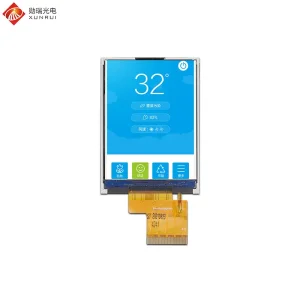


Frequently Asked Technical & Procurement Questions
Direct answers from our senior optoelectronic engineering team regarding customization, interface compatibility, optical tuning, and volume production terms.
Initiate Your Custom TFT LCD Engineering Evaluation
Connect directly with our Shenzhen display hardware engineers. Submit your target mechanical envelope, interface parameters, and luminance targets for a comprehensive feasibility review within 24 hours.