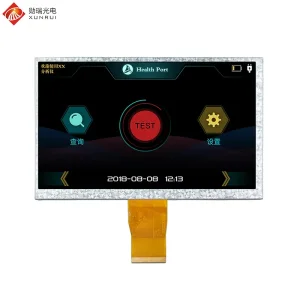
Small & Medium Industrial TFT LCD Modules (Part I)
Engineered for high-durability HMI, automotive dashboards, smart metering, and handheld medical devices. Direct-from-factory production with custom FPC, backlight, and touch integration.
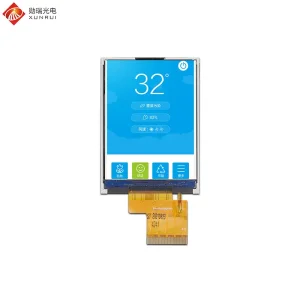
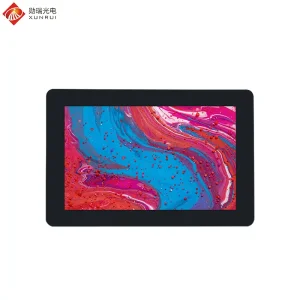






The Global Ecosystem of 4-Inch TFT LCD Manufacturing
Why Tier-1 industrial OEMs, medical equipment designers, and automotive tier suppliers partner directly with Shenzhen display manufacturing clusters for custom form factors.
Supply Chain Density & Proximity
China, specifically the Greater Bay Area (Shenzhen-Dongguan-Huizhou), concentrates more than 75% of global upstream components for small-to-medium TFT modules. This encompasses raw ITO mother-glass, high-yield polarizer films, liquid crystal fluid polymers, Driver IC packaging (Chip-On-Glass COG and Chip-On-Film COF), and flexible printed circuit (FPC) laser etching.
For a standard or customized 4" TFT LCD module (such as 480×480 square, 480×800 portrait, or 480×272 landscape), this dense local supply chain cuts engineering iteration lead times down to 10-15 working days, compared to 8-12 weeks in other geographical territories.
Cost Engineering & Tooling Flexibility
Unlike large-screen consumer fabs (Gen 8.5 to Gen 10.5) tuned strictly for rigid TV panel runs, China’s Gen 4.5 and Gen 5 TFT-LCD fabrication lines are highly optimized for agile, mixed-model industrial production. This setup empowers engineers to specify custom-tailored FPC pinouts, wide-voltage LED backlights, and customized cover-lens geometry.
Non-Recurring Engineering (NRE) charges for customized tooling remain remarkably cost-effective, allowing mid-tier OEMs with annual volumes of 2,000 to 50,000 units to obtain bespoke, mission-tailored display stacks without unsustainable capital expenditures.
Long-Term Continuity & Industrial Longevity
Consumer electronics cycle through panels in 12 to 18 months, leading to premature End-Of-Life (EOL) crises. Certified Chinese industrial TFT manufacturers maintain guaranteed supply roadmaps of 5, 7, and up to 10 years for dedicated glass panels and timing controller (T-Con) driver chips (e.g., Sitronix ST7701S, Ilitek ILI9806E).
Whenever sub-component revisions are forced by silicon fab migrations, factory engineering teams implement form-fit-function (FFF) drop-in replacements with matching firmware initialization strings, insulating OEM firmware stacks from disruption.
High-speed automated FOG/COG bonding lines delivering sustained monthly throughput across all sizes.
Class 1,000 & Class 10,000 dust-free production environments ensuring zero particle defect optical bonding.
Pre-series batches (5 to 500 pcs) after engineering sample approval to de-risk volume assembly lines.
Industrial grade wide-temperature fluid formulations preventing sluggish response in freezing environments.
Engineering Architecture: 4" TFT LCD Structural Specifications
Selecting the optimal backplane technology, driving interface, and bonding process for mid-compact display subsystems.
The 4.0-inch to 4.3-inch form factor occupies a pivotal sweet spot in embedded engineering. It offers sufficient active area (typically 480×800, 480×480, or 800×480 pixels) to render rich graphical user interfaces (GUIs), charts, and multi-state telemetry, while maintaining a compact physical envelope suitable for single-hand portable terminals, DIN-rail automation housings, and rotary smart switches.
| Evaluation Parameter | Twisted Nematic (TN) Architecture | In-Plane Switching (IPS) Architecture | Custom Transflective / Sunlight IPS |
|---|---|---|---|
| Viewing Angle (CR≥10) | 6 o'clock or 12 o'clock dependent; gray inversion at steep angles (typ. 65/65/50/60) | Full symmetrical viewing: 80/80/80/80 or 85/85/85/85 (All Direction) | Ultra-wide 85/85/85/85 symmetrical; zero color phase shift |
| Typical Luminance | 250 – 400 cd/m² (Indoor standard) | 350 – 600 cd/m² (Enhanced indoor/ambient) | 800 – 1,200+ cd/m² (Full direct sunlight readable) |
| Interface Options | MCU 8080 8/16-bit, Parallel RGB 16/24-bit | RGB 24-bit, MIPI DSI (1/2/4-lane), 3/4-wire SPI | MIPI DSI, LVDS, or Parallel RGB with custom backlight driver |
| Operating Temperature | Standard: -20°C to +70°C | Industrial Wide: -30°C to +80°C | Automotive Grade: -30°C to +85°C |
| Touch Integration Mode | Air bonding with 4-wire resistive touch (RTP) | Air or Optical Bonding (OCA/LOCA) with PCAP | Full Optical Bonding with Anti-Glare / Anti-Fingerprint Cover Glass |
| Primary Target Application | Cost-sensitive utility meters, consumer toys, basic thermostats | Medical diagnostics, smart home rotary controllers, test equipment | EV charging stations, marine navigation, outdoor fleet telematics |
Backlight & Thermal Management
Achieving 1,000+ nits on a 4-inch display requires driving high-efficiency white LEDs with 80-120mA forward currents. Without calculated thermal heat sinking, high junction temperatures accelerate phosphor decay and cause color temperature drift towards harsh blue tints.
Factory engineering solutions incorporate dedicated aluminum back-chassis brackets and thermally conductive adhesive interface pads (TIM). This setup channels thermal energy away from the liquid crystal layer, eliminating black-spot thermal isotropic transitions under direct solar radiation.
FPC Circuitry & EMI Hardening
In industrial automation environments subjected to IEC 61000-4-2 electrostatic discharge (ESD) and high electromagnetic interference from nearby variable frequency drives (VFDs), standard FPC cables often act as antennas, introducing jitter or panel reset lockups.
OEM customization includes multi-layer copper FPC design with integrated ground shielding planes, silver foil wrappings, and board-level TVS diode arrays on differential MIPI/RGB traces. This delivers robust immunity against ±8kV contact and ±15kV air discharge events.
Optical Bonding (OCR/OCA) vs. Air Gap
Standard displays use double-sided perimeter tape to attach touch sensors, leaving a 0.2mm air gap. In outdoor lighting, the refractive index mismatch between glass (n=1.52) and air (n=1.0) causes severe Fresnel surface reflections (~8% total light loss), washing out contrast.
Full optical bonding fills this boundary with optically clear resin (OCR) or sheet adhesive (OCA), matching refractive indices. This boosts outdoor contrast ratios by over 300%, eliminates internal condensation/fogging, and elevates physical impact resistance to IK08 standards.
Macro Applications: Where 4-Inch TFT LCDs Excel
Real-world deployments across medical, charging infrastructure, automation, and smart home human-machine interfaces.
EV Charging Stations & Wallboxes
Electric vehicle supply equipment (EVSE) demands displays readable under unobstructed desert sun while surviving sub-zero Nordic winters. 4.0-inch and 4.3-inch sunlight-readable IPS displays (1,000 to 1,200 nits) equipped with anti-ultraviolet (UV400) cover glass prevent polarizer yellowing over years of outdoor solar exposure.
Integrated projected capacitive touch (PCAP) with custom tuning allows seamless operation with wet fingers and heavy work gloves, satisfying IEC 61851 safety and ease-of-use guidelines.
Patient Infusion & Diagnostic Terminals
Compact medical appliances require high PPI resolution to render vital sign curves, dosage indicators, and alarms without jagged pixelation. 4-inch IPS modules provide 178° viewing angles so nurses and doctors can read data accurately from any bedside perspective.
Touch overlays engineered with antimicrobial glass treatments withstand repeated sterilization wipes with aggressive chemical agents like isopropyl alcohol, glutaraldehyde, and sodium hypochlorite without surface delamination.
Rotary Knobs & Smart Thermostats
Modern smart HVAC and luxury home appliances are transitioning from rudimentary segment LCDs to circular, square, and bar-cut 4-inch TFT panels. High-density IPS screens combined with circular cover lenses and rotary encoder mechanisms create fluid, tactile interfaces.
Fast SPI or MCU interfaces minimize driver complexity, allowing cost-effective 32-bit Cortex-M4/M33 microcontrollers to render 60 FPS transitions without expensive external frame buffers or complex application processors.
5-Gate Quality Assurance & Cleanroom Production
Every industrial display module undergoes rigorous optical, electrical, and environmental screening across five critical production gates before international dispatch.
Spectrophotometer verification of incoming color filters, ITO glass transmittance, polarizers, and driver IC wafer lots.
Automated Optical Inspection (AOI) checking cell gap uniformity, micro-rubbing scratches, and liquid crystal alignment.
Micro-pitch anisotropic conductive film (ACF) bonding of IC and FPC, followed by 72-hour elevated-temperature burn-in cycles.
Optical bonding verification, 100% white/black field dead-pixel checks, response-time checks, and drop/vibration testing.
Environmental Screening to Mil-STD Standards
Industrial-tier 4" LCD modules undergo extensive validation inside programmable environmental chambers. Tests include 500 hours of high-temperature high-humidity exposure (60°C / 90% RH), rapid thermal shock cycling (-40°C to +85°C with 5-minute transition times), and three-axis sweep vibration (10 to 55 Hz, 1.5mm amplitude) per ASTM D4169.
Global Sourcing, Localized Support & Compliance
Seamless international trade assurance backed by full environmental compliance, customs expediting, and global technical support.
RoHS, REACH & Conflict Minerals
All display modules are manufactured from raw materials verified under RoHS Directive 2011/65/EU and REACH (EC 1907/2006) candidate list of Substances of Very High Concern (SVHC).
Full documentation suites, including third-party SGS chemical lab test reports, Material Safety Data Sheets (MSDS), and Conflict Minerals Reporting Templates (CMRT), are readily available for OEM regulatory dossiers.
Export Logistics & Packaging
Precision glass assemblies are vulnerable to triboelectric static generation and transit shock. Factory export crating uses custom conductive anti-static blister trays (ESD trays), sealed in vacuumized moisture-barrier foil bags with desiccant packs.
Drop-tested corrugated master cartons ensure zero transit damage whether shipped via expedited express (DHL/FedEx/UPS), air cargo consolidation, or sea freight to North America, Europe, or the Asia-Pacific region.
Engineering Support & Field Support
Direct access to senior firmware and hardware engineers bridges timezone gaps. Our teams assist with initialization C-code, Linux/Android Device Tree source (DTS) driver configuration, and timing diagram alignment.
Factory engineering reviews customer enclosure step models (.STEP) prior to sample fabrication to identify potential mechanical interference, FPC bend radius violations, or thermal choke points before cutting metal tooling.
Technology Roadmap: The Next Era in Embedded Displays
Anticipating structural shifts in active-matrix technology, in-cell touch integration, and ultra-low power displays for the upcoming decade.
In-Cell & On-Cell Touch Migration
Traditional touch integration bonds a discrete projected-capacitive glass sensor onto the TFT panel, adding thickness and weight. Next-generation 4" displays integrate touch sensor electrodes directly inside the TFT liquid crystal cell (In-Cell) or onto the color filter glass (On-Cell).
This eliminates an entire glass substrate layer, trims total module thickness down by up to 35%, improves optical transmission to >92%, and streamlines mechanical integration inside ultra-compact smart handheld housings.
Mini-LED Local Dimming Backlights
Edge-lit LED backlights provide uniform brightness but suffer from light leakage in dark scenes, resulting in contrast ratios limited to 1,000:1. Next-generation industrial backlights incorporate matrix-array Mini-LEDs with hundreds of localized dimming zones.
This delivers high dynamic range (HDR) rendering with deep true blacks, contrast ratios exceeding 100,000:1, and peak brightness reaching 1,500 nits, all while reducing active power draw by dimming unlit screen regions.
Oxide TFT (IGZO) & Low-Power Drive
Standard amorphous Silicon (a-Si) TFT exhibits low electron mobility, necessitating relatively large thin-film transistors that restrict pixel aperture ratios and mandate stronger backlights.
Indium Gallium Zinc Oxide (IGZO) backplanes yield 20-50x higher electron mobility. This unlocks ultra-high resolution (e.g., 720×1280 in a compact 4-inch footprint), ultra-low leakage current, and dynamic refresh rate scaling down to 1Hz for static readouts, dramatically extending battery life in field instruments.
Frequently Asked Questions by OEM Engineers & Buyers
Practical answers covering customization scope, minimum order thresholds, interface migration, and ruggedization.
Small & Medium Industrial TFT LCD Modules (Part II)
Explore round, wide-temperature, and ultra-high brightness display panels tailored for specialized embedded, marine, and IoT applications.