
Featured Displays
High-Precision TFT LCD Module Portfolio
Engineered for mission-critical visibility, extreme operating environments, and low-latency graphical rendering.

Custom 5 inch 480×854 RGB 40pin 1000nit IPS TFT LCD Module Manufacturer, Manufacturers
View Specifications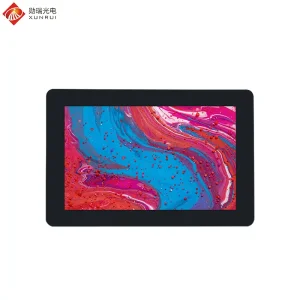
Custom 5 inch HDMI 800×480 IPS TFT LCD Module With driver board and CTP Suppliers, Factory
View Specifications
Custom 8 inch 1280×720 LVDS 1000nit High Brightness IPS TFT LCD Module Manufacturer, Manufacturers
View Specifications
China 5 inch 480×272 TN TFT LCD Module with capacitive touch panel Manufacturers, Factory
View Specifications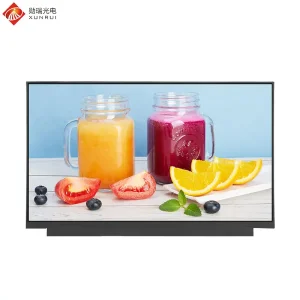
China 13.3 inch 1920×1080 EDP 30PIN 280nit IPS TFT LCD Module Suppliers, Factories
View Specifications
China 7 inch 1024×600 1000nit High brightness IPS TFT LCD module Manufacturers, Suppliers
View Specifications
Custom 4.3 inch 480×272 TN TFT LCD display with resistive touch panel Supplier, Factory
View Specifications Market Evolution
The 4" TFT LCD Display Landscape: Global Industrial Trends
Analyzing key structural shifts from legacy monochrome to dynamic, ultra-wide view, daylight-readable embedded visual terminals.
Migration to IPS Full-Viewing Technology
Traditional TN (Twisted Nematic) 4-inch panels are increasingly transitioning to IPS (In-Plane Switching) arrays. Modern industrial terminals demand symmetrical 80/80/80/80 viewing cones, mitigating grayscale inversion when operators view interfaces off-axis on manufacturing floors.
High-Luminance Optical Bonding
Outdoor field instruments, EV charging stations, and marine handhelds now establish 800 to 1,200+ nits luminance as standard procurement criteria. Optical bonding with OCA/LOCA resins eliminates internal air gap reflections, guaranteeing direct sunlight readability.
High-Density Serial Bus Adoption
As microcontrollers like STM32, ESP32, and NXP i.MX RT dominate embedded IoT nodes, the demand for SPI, QSPI, and 2-lane MIPI-DSI interfaces in 4-inch form factors has surged, drastically slashing connector trace overhead while maintaining 60 FPS refresh rates.
Technical Benchmarks
Global OEM Procurement Standards for 4" TFT Modules
How Tier-1 system architects assess display module integrity, electrical interfaces, and optical endurance during vendor qualifications.
| Evaluation Parameter | Commercial Grade Baseline | Industrial Grade (China Xunrui Std.) | Automotive / Severe Environment |
|---|---|---|---|
| Operating Temperature | -10°C to +60°C | -20°C to +70°C | -30°C to +85°C (Extended Liquid Crystal) |
| Luminance (Nits / cd/m²) | 200 – 350 nits | 450 – 1,000 nits (Custom PWM Driver) | 1,000 – 1,500+ nits (Optical Bonded) |
| Touch Interaction Architecture | Bare Resistive Film | PCAP (Projected Capacitive), I2C / USB | Thick Cover Glass (Up to 6mm), Glove/Water Reject |
| ESD Protection Threshold | Contact ±2KV / Air ±4KV | Contact ±4KV / Air ±8KV (Level 3) | Contact ±8KV / Air ±15KV (Transient Voltage Diode Array) |
| Interface Adaptability | Standard RGB 40-Pin | MCU 8080, SPI, QSPI, RGB, MIPI DSI | LVDS / eDP with Differential Shielding |
| Product Availability Cycle | 1 to 2 Years | 5 to 7 Years Guaranteed EOL Notice | 7 to 10+ Years Fixed BOM Locking |
Applied Engineering
Integrated Solutions: 4" Form Factors in Mission-Critical Systems
Combining custom FPC routings, cover glass treatments, and controller board architectures for tailored industrial deployment.
Industrial HMI & PLC Terminals
Configured with heavy-duty 4-wire resistive panels or noise-immune PCAP controllers that prevent false triggers caused by electromagnetic interference from VFDs and servo drives.
EV Charging & Smart Metering
UV-resistant surface coatings (Anti-Glare, Anti-Reflective) paired with 1,000 nit sunlight readability prevent solar degradation, thermal yellowing, and condensation over 10-year lifespans.
Medical Diagnostics & Infusion
Optically bonded chemically tempered cover glass with antibacterial, oleophobic coatings supports strict chemical sterilization routines (alcohol/bleach) without capacitive sensor drift.
Smart Building & Rotary Knobs
Custom square and circular 4" display cuts with circular touch sensors integrated into mechanical rotary encoders for high-end thermostat, audio console, and HVAC automation nodes.
Compliance & Support
Enterprise Reliability: From Shenzhen Fab to Global Lines
A gate-controlled manufacturing ecosystem designed to insulate international procurement from quality deviations and lifecycle volatility.
5-Stage Quality Gate Assurance
We execute strict inspection protocols: Incoming QC (IQC), raw glass polarimeter checks, automated FOG (Film-on-Glass) bonding verification with thermal stress aging, 100% active panel burn-in, and Outgoing QC (OQC) packaging validation.
Global Engineering & RMA Protocol
Hardware and driver integration issues are backed by dedicated Field Application Engineers (FAEs). From initialization driver strings (C/C++ code) to timing register debugging, overseas clients receive turnaround within 24 hours.
Supply Chain Continuity & BOM Lock
Avoid mid-project redesigns. We enforce strict Bill of Materials (BOM) locking on timing controller ICs, LED backlight dies, and polarizing filters, issuing a minimum 6-month PCN (Product Change Notification) before any necessary component update.
Technical Trajectory
Display Technology Roadmap: 2026–2030
Strategic advancements shaping our compact display manufacturing and precision optoelectronic integration lines.
Mini-LED Backlight Arrays
Replacing traditional edge-lit LED strips with dense localized dimming zones (100–500 zones in compact 4–5" displays), boosting static contrast ratios past 100,000:1 while reducing power draw for battery-powered handheld tools.
Integrated Smart Embedded Controllers
Merging the LCD driver IC with hardware acceleration modules capable of parsing vector UI assets directly through lightweight SPI/CAN FD commands, freeing main microcontrollers from frame buffer allocation bottlenecks.
Extreme Environment Ruggedization
Development of specialized wide-temperature liquid crystal fluid chemistries expanding operational boundaries down to -40°C without requiring internal glass pre-heaters, critical for Arctic monitoring and aerospace equipment.
Specialized Modules
Versatile 2" to 8" Custom Form Factor Solutions
Explore customized display modules featuring diverse touch options, interface adapters, and high-nit configurations.

Custom 4.3 inch 480×272 MCU/SPI 40pin 350nit TN TFT LCD Display Manufacturer, Factory
View Specifications
Custom 5 inch TFT LCD module 800×480 RGB 40pin interface 350nit IPS screen Supplier, Factories
View Specifications
Custom 8 inch TFT LCD module 800×1280 MIPI 31pin interface 480nit IPS screen Suppliers, Factories
View Specifications
China 2.8 inch 240×320 MCU 30pin interface 250nit TN TFT LCD display Manufacturers, Factories
View Specifications
Custom 3 inch 240×400 RGB 45pin 400nit IPS TFT LCD Module Manufacturers, Factories
View Specifications
China 4.3 inch 800×480 1000nit High brightness IPS TFT LCD module Supplier, Factory
View Specifications
Custom 2 inch 176×220 MCU 45pin interface 220nit TN TFT LCD Module Supplier, Suppliers
View Specifications
China 5 inch 480×272 RGB 40pin interface 350nit TN TFT LCD module Manufacturer, Factory
View Specifications Technical Inquiry
Frequently Asked Questions: 4" TFT LCD Procurement & Engineering
In-depth responses covering pinout mapping, optical bonding, thermal boundaries, and low-volume pilot runs.
What TFT LCD dimensions and formats does Xunrui manufacture?
Our cleanrooms produce standard and custom TFT LCD modules spanning from 0.96 inches to 27 inches. In compact formats, our core runs cover 1.8", 2.0", 2.1" round, 2.8", 3.0", 3.5", 4.0", 4.3", 5.0", 7.0", up to 15.6" and 27" screens. These modules are delivered in rectangular, bar-type, circular, and square aspect ratios engineered for handhelds, DIN-rail instrumentation, and vehicle consoles.
What is the minimum order quantity (MOQ) for custom 4-inch display projects?
To support OEM prototyping and early design validation, we offer small-batch engineering trial runs of 5 to 500 units once initial technical drawing signs off. Following pilot field verification, customized mass production batches maintain an accessible threshold of 1,000 units. Standard, non-customized off-the-shelf modules have zero MOQ constraints.
How can custom FPC, backlight, and touch parameters be tailored for 4" modules?
We offer full-stack hardware customization: FPC ribbon cable length, grounding shields, and connector pinouts can be redesigned for tight enclosure constraints; backlight LED arrays can be boosted up to 1,500 nits with custom constant-current drivers; and touch sensors (capacitive or resistive) can be tuned for 6mm glove operation, water rejection, and custom cover glass printing with anti-fingerprint (AF), anti-reflective (AR), or anti-glare (AG) finishes.
What interface protocols are supported on 4-inch and compact TFT modules?
Depending on your processor and graphics buffer limitations, we configure displays with 8080 MCU (8/16-bit) parallel, 3-wire/4-wire SPI, Quad-SPI (QSPI), 16/18/24-bit RGB, MIPI-DSI (1 to 4 lanes), and LVDS. For industrial PC and Raspberry Pi platforms, we supply turnkey adapter boards accepting direct HDMI, VGA, or composite AV video inputs.
What quality verification standards prevent premature LCD field failure?
Every shipment adheres to ISO 9001 and ISO 14001 quality workflows. Panels undergo 100% incoming glass inspection, automated hot-bar FOG bonding, high-temperature/high-humidity endurance testing (60°C / 90% RH for 240 hours), thermal cycling (-30°C to +80°C), and 48-hour continuous active picture burn-in before outgoing optical spectrometry and packing.
Should our engineering team specify Capacitive (PCAP) or Resistive (RTP) touch?
Capacitive touch (PCAP) is optimal for modern multi-touch, gesture-based interfaces, medical equipment requiring seamless sealed glass surfaces for sanitation, and consumer-grade clarity. Resistive touch (RTP) is ideal for heavy industrial plants, CNC operations, sub-zero outdoor stations, and marine cockpits where operators wear thick insulated gloves or where severe electrical noise could cause capacitive false activations.