

Precision Engineering Solutions
Featured Industrial TFT LCD Touch Modules (Batch I)
Direct-from-factory optoelectronic modules configured for mission-critical HMIs, medical monitors, and ruggedized vehicle interfaces.

Custom 3.5 inch IPS TFT LCD 320×480 MCU 40pin interface 300nit
Explore Specifications
Custom 4.3 inch 480×272 TN TFT LCD display with resistive touch panel
Explore Specifications
China 4.3 inch 800×480 IPS TFT LCD Module with resistive touch panel
Explore Specifications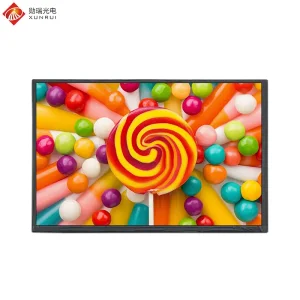
China 10.1 inch 1920×1200 LVDS 45pin 350nit IPS TFT LCD Display
Explore Specifications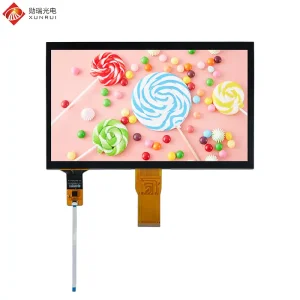
China 10.1 inch 1024×600 RGB IPS TFT LCD Module with capacitive touch
Explore Specifications
China 4.3 inch 800×480 1000nit High brightness IPS TFT LCD module
Explore Specifications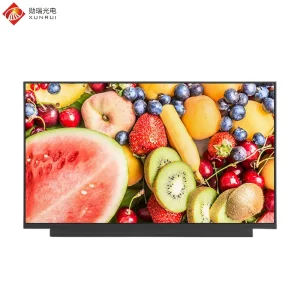
China 15.6 inch 1920×1080 EDP 30PIN 400nit IPS TFT LCD Module
Explore Specifications
Industry Strategic Analysis
Engineering Superiority: 5.7 Inch Touch TFT LCD in Modern Embedded HMIs
The 5.7-inch diagonal active matrix liquid crystal display (TFT LCD) with an aspect ratio of 4:3 holds an irreplaceable architectural position across industrial, medical, and process automation hardware. While consumer electronics have aggressively pivoted to ultra-wide aspect ratios, industrial automation platforms, legacy CNC controllers, laboratory spectrometers, and field telemetry equipment remain firmly anchored to the 4:3 5.7" envelope.
5,000 m²
Shenzhen Cleanroom Facility
2,000,000
Monthly Module Capacity (PCS)
5 - 500
Low-Risk Pilot Run Batch (PCS)
10+ Yrs
Component Life Cycle Longevity
Standard Industrial VGA (640×480) & QVGA (320×240)
The standard 5.7-inch form factor typically features active display dimensions around 115.20(W) × 86.40(H) mm. Xunrui provides native 640×480 RGB VGA configurations with high pixel density (140 PPI) for crisp font rendering, as well as classic 320×240 QVGA matrices designed for direct plug-and-play retrofit of older machine-to-machine consoles without requiring software rewrites.
- Active Area: 115.20 × 86.40 mm (4:3 Classic)
- Dot Pitch: 0.060 × 0.180 mm (High legibility)
- Direct retrofit for Kyocera, Sharp, and Ampire drops
IPS All-Perspective Viewing vs. Enhanced TN Optics
Traditional TN (Twisted Nematic) displays suffer from grayscale inversion when viewed from below or sharp angles. Xunrui’s 5.7" IPS (In-Plane Switching) panels deliver symmetric 80°/80°/80°/80° or 85°/85°/85°/85° symmetrical viewing cones, ensuring zero color shifting or contrast decay whether an operator stands above, below, or to the side of a mounted cabinet.
- True 16.7M full-color rendering (8-bit depth)
- Contrast ratios reaching 800:1 to 1000:1
- Stable optical state under mechanical pressure
Custom High-Luminance LED Backlights (1000+ Nits)
Standard indoor displays (250–350 nits) wash out completely under direct sunlight or intense surgical/industrial overhead lamps. Xunrui replaces commercial light guides with high-efficiency solid-state LED arrays coupled with enhanced optical diffusers and ESR (Enhanced Specular Reflector) films, delivering 800 to 1200+ nits luminance with over 50,000 hours MTBF.
- Sunlight-readable optical performance
- Low thermal dissipation LED strip designs
- Integrated PWM dimming driver boards (1%-100%)
Direct Factory Ecosystem
China Factory Direct: The Shenzhen Optoelectronic Supply Chain Advantage
Situated in Bao'an District, Shenzhen, Shenzhen Xunrui Optoelectronic Technology Co., Ltd. operates at the epicenter of global flat panel manufacturing. By eliminating distributor markups and fragmented subcontractors, we deliver unmatched vertical integration.
Tier-1 Mother Glass Access
Long-term strategic cell procurement from BOE, HannStar, Tianma, and IVO ensures our 5.7" glass cuts use Grade-A wafers with zero bright-dot defects and consistent electrical characteristics across high-volume production cycles.
Full In-House Bonding (COG/FOG)
Our Class 1,000 cleanroom lines feature automated high-precision Chip-On-Glass (COG) and Flex-On-Glass (FOG) hot-bar bonding machines, guaranteeing micron-level pitch accuracy and zero delamination during thermal cycling.
Optical & OCA Bonding
Unlike third-party assembly shops reliant on double-sided perimeter tape (air bonding), Xunrui houses in-house vacuum Optical Bonding lines utilizing Liquid Optical Clear Adhesive (LOCA) and OCA sheets to eliminate internal reflection.
Custom Mechanical Tooling
Direct CNC processing for customized cover lenses, silk-screened logos, chemically strengthened Corning Gorilla / Dragontrail glass, and anti-glare etching with lead times measured in days rather than quarters.
HMI Interaction Engineering
Touch Sensor Architectures: Projected Capacitive (PCAP) vs. Resistive (RTP)
Selecting the appropriate touch architecture for a 5.7" industrial screen dictates field reliability, noise immunity, and operator usability. Xunrui manufactures both projected capacitive (PCAP) and 4-wire/5-wire analog resistive touch panels in-house.
| Evaluation Parameter | 5.7" Projected Capacitive (PCAP) Touch | 5.7" 4-Wire / 5-Wire Resistive (RTP) Touch | OEM Engineering Recommendation |
|---|---|---|---|
| Touch Sensing Mechanism | Electrostatic field perturbation across ITO sensor grid (Mutual/Self Capacitance) | Mechanical contact deformation between conductive ITO PET film and glass layer | PCAP for modern multi-touch; RTP for strict physical pressure sensing |
| Multi-Touch Capability | True 5 to 10 simultaneous touch points with gesture support (zoom, pinch, swipe) | Single point input only (continuous pressure coordinate reporting) | PCAP delivers modern smartphone-like user experience |
| Glove Operation Usability | Firmware tuned for nitrile, heavy leather, and rubber industrial gloves (up to 5mm) | 100% functional with any glove material, stylus, or blunt instrument | RTP is foolproof in heavy welding, petrochemical, and foundry environments |
| Liquid & Moisture Immunity | Requires tuned water-rejection algorithms (FocalTech / Goodix / Ilitek ICs) | Immune to water drops, puddles, chemical splatters, and surface grease | RTP excels in washdown areas; PCAP requires firmware waterproof tuning |
| Optical Clarity & Hardness | ≥88% light transmission; 7H–9H tempered cover glass (vandal-proof IK08/IK10) | ~78%–82% light transmission; 3H hard-coated PET film (scratch-susceptible) | PCAP offers superior optical fidelity and scratch resistance |
| Operating Life Expectancy | Over 50,000,000 touches per localized point without electrical drift | 1,000,000 to 10,000,000 actuations before ITO micro-cracking occurs | PCAP provides virtually unlimited operational life |
| Interface Protocol | I2C or USB interface via onboard touch controller FPC | Analog 4-pin or 5-pin FPC (X+, X-, Y+, Y-) direct to ADC host or USB controller | PCAP integrates smoothly into Linux/Android/Windows OS |
Optical Bonding vs. Perimeter Air Gap: Why Direct Lamination Matters
In standard air-gap bonding, a 0.5mm–1.5mm air cavity exists between the 5.7" TFT polarizer and the touch sensor. This creates two distinct refractive index mismatches (Glass n≈1.52 to Air n≈1.00), generating approximately 4.5% optical reflection at each boundary. Total ambient internal reflection exceeds 9%, severely washing out images under daylight.
Xunrui Full Optical Bonding injects optical silicone or solid OCA (Optical Clear Adhesive) matching the refractive index (n≈1.49) directly between the TFT cell and touch glass. This eliminates all internal reflection boundaries, increases contrast by up to 300% in bright sunlight, prevents internal moisture condensation (fogging) in tropical maritime applications, and boosts shock/impact resistance by 3x against IK08 hammer impact strikes.
Procurement Risk Mitigation
Global Enterprise Procurement Requirements: Life Cycle, Compliance & Validation
Tier-1 global OEMs cannot afford unexpected redesigns caused by premature component obsolescence. Xunrui aligns manufacturing schedules with rigorous B2B procurement roadmaps.
5 to 10-Year Active Product Roadmap
We guarantee form-fit-function availability for a minimum of 5 to 7 years, with roadmap commitments extending past 10 years for core industrial 5.7" models. When glass fabricators discontinue raw wafers, we issue formal PCN (Product Change Notification) and EOL (End of Life) warnings at least 6 to 12 months in advance, backed by Last-Time-Buy (LTB) storage agreements.
Strict 5-Gate Quality Assurance Checkpoints
Every single production batch undergoes five mandatory verification gates prior to dispatch: 1. IQC (Incoming Raw Glass & IC Inspection), 2. Precision Glass Optical Testing, 3. FOG Bonding Verification + High-Temp Aging, 4. Finished Module 72-Hour Continuous Burn-in Aging, and 5. OQC (Outgoing Electrical, Touch Linearity & Drop Impact Check).
Low-Risk Pilot Run: 5 to 500 Pcs MOQ
Overcome the rigid, prohibitive barrier of 5,000+ pcs minimum orders typical of monolithic glass makers. After sample sign-off, Xunrui supports engineering pilot validation with flexible batches of 5 to 500 units to prove out mass-production DFM (Design for Manufacturing) before committing to 1,000+ unit custom production runs.
Mission-Critical Deployments
Industrial Application Scenarios & Field Implementations
Engineered to withstand mechanical vibration, airborne conductive dust, corrosive chemical cleaning, and broad thermal swings.
1. Factory Automation & CNC Machine HMIs
In high-vibration manufacturing floors with hydraulic presses, milling machines, and PLC panels, electrical noise from variable frequency drives (VFDs) causes phantom touches on unshielded displays. Xunrui builds 5.7" resistive or EMI-shielded PCAP modules with anti-vibration rubber gaskets and wide-temp components operating reliably between -20°C and +70°C.
- Immune to high-voltage industrial transients
- Full support for glove and stylus actuation
- Resistant to airborne cutting oils and coolants
2. Medical Diagnostics & Patient Infusion Pumps
Medical monitors, bedside infusion stations, and blood chemistry analyzers demand uncompromising color accuracy and sanitization resilience. Our 5.7" IPS touch solutions feature optically bonded 1.1mm to 2.0mm chemically hardened cover glass that resists bleach, alcohol, and hydrogen peroxide wipe-downs without hazing, certified to medical safety standards.
- Symmetrical viewing angles for multi-angle monitoring
- Custom flush true-flat bezel designs for easy disinfection
- Zero false-touch sensitivity to saline droplets
3. Heavy Machinery Cockpits & Agricultural Telemetry
Harvester cockpits, mining excavators, and marine chart plotters are exposed to unrelenting UV exposure and high solar ambient illumination. We equip our 5.7" displays with 1,000+ nit high-efficiency backlights, Circular Polarizers (to enable readability through polarized sunglasses), and Anti-Reflective (AR) + Anti-Glare (AG) vacuum coatings.
- Sunlight readability up to 100,000 lux ambient light
- Anti-UV coating prevents polarizer yellowing
- Extended thermal operating range: -30°C to +85°C
Electrical Architecture
Signal Interface Flexibility: RGB, MCU, LVDS, and Integrated Driver Boards
A key challenge in embedded display integration is interfacing the display matrix with your host processor without adding unnecessary bridge chips or PCB complexity. Xunrui offers turnkey electrical matching.
18/24-Bit Parallel RGB
Classic 40-pin or 50-pin FPC configurations providing direct, low-latency pixel clock (DCLK), data enable (DE), HSYNC, and VSYNC drive, supported natively by STM32, NXP i.MX, and TI Sitara microprocessors.
LVDS (Low Voltage Differential)
Ideal for long-distance board-to-display routing (up to 3 meters) through noisy environments. Differential signaling significantly minimizes radiated EMI and cross-talk while maintaining high 60Hz frame rates.
8/16-Bit MCU 8080/6800
For resource-constrained microcontroller systems lacking an integrated frame buffer. Onboard SSD1963 or RA8875 controllers handle graphic rendering, text engines, and touchscreen scanning directly.
HDMI / VGA / USB Plug & Play
Xunrui supplies matched industrial driver boards with integrated 12V/24V power supplies, converting standard HDMI/VGA video directly into panel signals, with capacitive touch operating via standard HID USB.
International Certification
Global Regulatory Compliance & Engineering Quality Assurance
Entering North American and European industrial markets requires full compliance verification. Shenzhen Xunrui Optoelectronic Technology operates under certified ISO 9001 and ISO 14001 frameworks.
RoHS 2.0 & REACH Compliance
All materials—including liquid crystals, polarizers, ITO films, sealants, FPC solder alloys, and driver IC packaging—are 100% compliant with EU RoHS Directive 2011/65/EU and REACH (EC 1907/2006) regulations, free of lead, cadmium, mercury, and PBDEs.
EMC & Immunity Certification (CE & FCC)
Our 5.7" display modules are engineered with multi-layer PCB ground shielding and conductive ITO back-plane coating, passing rigorous radiated emission (EN 55032 Class B) and electrostatic discharge (ESD: Contact ±8kV, Air ±15kV per IEC 61000-4-2) tests.
Local Warehouse & VMI Buffer Agreements
To shield international clients from global maritime logistics bottlenecks, Xunrui establishes customized safety inventory buffers (Vendor-Managed Inventory) in Shenzhen and partner bonded warehouses, providing 24-hour JIT replenishment for confirmed release orders.
Procurement Knowledge Base
Frequently Asked Questions: 5.7" Touch TFT LCD Sourcing & Engineering
Direct answers to technical, mechanical, and supply chain queries encountered by electrical engineers and procurement specialists.
Q Can Xunrui customize the FPC pinout and length for our existing enclosure?
Yes. Fully customizable Flexible Printed Circuits (FPCs) are one of our core competencies. We can modify FPC length, bend geometry, pinout mapping, onboard component placement, and connector type (ZIF, solder-pad, or board-to-board) to match legacy motherboard headers without requiring mechanical enclosure redesigns.
Q How does capacitive touch perform when operated with wet hands or heavy gloves?
Standard consumer PCAP chips will glitch or produce false touches when covered in water droplets. Xunrui employs industrial-grade touch controller ICs (Ilitek, Goodix, FocalTech) with proprietary firmware algorithms featuring frequency hopping, mutual-capacitance baseline tracking, and water-rejection modes that guarantee accurate operation with up to 5mm thick industrial work gloves and surface moisture.
Q What is the typical lead time for custom tooling and initial engineering samples?
For custom FPC designs, glass cover plate silk-screening, or modified backlight structures, our tooling engineering phase requires approximately 7 to 10 working days. First-article functional working samples (5–10 units) are typically fabricated, internally aged, and dispatched via express air courier within 15 to 20 business days following drawing sign-off.
Q What optical enhancements are recommended for direct outdoor sunlight applications?
For outdoor equipment, we recommend a three-fold optimization stack: 1. Upgraded high-efficiency LED backlight delivering at least 800 to 1,000+ nits; 2. Vacuum Optical Bonding to eliminate internal air reflections; and 3. Surface treatment on the cover glass featuring Anti-Reflective (AR) coating to drop specular reflectivity below 1.5% and Anti-Glare (AG) etching to disperse sharp reflections.
Q Can you retrofit legacy 5.7" CCFL-backlit displays with modern LED equivalents?
Yes. Many legacy machines originally utilized power-hungry, high-voltage CCFL (Cold Cathode Fluorescent Lamp) backlights requiring an external inverter. Xunrui manufactures modern drop-in replacements with low-power, solid-state LED backlights and integrated 3.3V/5V DC-to-DC boost drivers, matching original physical mounting brackets and electrical interfaces.
Q What are the Minimum Order Quantities (MOQs) for standard vs. customized displays?
For catalog standard 5.7" modules, we maintain ongoing buffer stocks with flexible minimum quantities supporting pilot runs. For custom projects involving bespoke cover glass CNC machining or custom FPC tooling, after your sample evaluation approval, we support an initial pilot trial batch of 5 to 500 units before progressing to volume mass production (MOQ 1,000+ pcs).
Q How does Xunrui guarantee optical consistency and color temperature over multiple years?
We enforce strict LED die binning protocols for our backlight assemblies, locking down specific chromaticity coordinates (x,y tolerances within 3-step MacAdam ellipses) and forward voltage bins. This prevents noticeable color temperature mismatches or luminance variations between production lots delivered years apart.
Q What operating temperature extremes can your 5.7" display modules endure?
Our standard commercial-industrial grade modules operate from -20°C to +70°C. For harsh automotive, mining, and outdoor defense deployments, we integrate wide-temperature liquid crystal fluid, specialized wide-temp polarizers, and automotive-grade driver ICs capable of continuous operation from -30°C to +85°C with rapid response times and no image ghosting.
Comprehensive Product Matrix
Precision Display Modules & Controller Solutions (Batch II)
Broadening design flexibility from ultra-compact wearable formats to high-definition industrial HMI and widescreen bar displays.

Custom 2.4 inch TFT LCD module 240×320 SPI 14pin interface 250nit IPS screen
Explore Specifications
Custom 3 inch 240×400 RGB 45pin 400nit IPS TFT LCD Module
Explore Specifications
China 4.3 inch 480×272 RGB 40pin interface 350nit TN TFT LCD module
Explore Specifications
China 7 inch HDMI 1024×600 IPS TFT LCD Module With driver board & CTP
Explore Specifications
Custom 6.9 inch 280×1424 MIPI 30pin interface long strip IPS TFT LCD module
Explore Specifications
China 10.1 inch 800×1280 MIPI 40pin 350nit IPS TFT LCD Display
Explore Specifications
Custom 2.8 inch 240×320 TN TFT LCD Module with resistive touch panel
Explore Specifications
China 3.5 inch 320×480 RGB 50pin 300nit IPS TFT LCD Display
Explore SpecificationsAccelerate Your 5.7" Display Project Today
Connect directly with our Shenzhen engineering lab. Submit your mechanical constraints, interface requirements, and target luminance for an immediate DFM feasibility review and formal sample proposal.