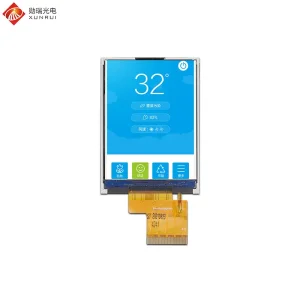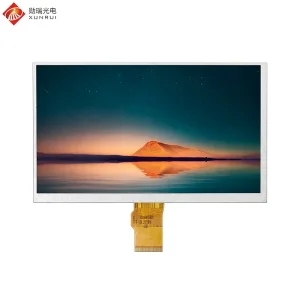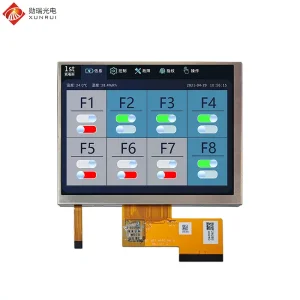







ISO 9001 / ISO 14001 Audited Bare Glass Foundry

China 6.2 Inch Bare Screen Supplier & Factories

Precision Industrial Open-Cell Glass, Custom FOG Packaging, and Wide-Operating Temperature LCD Matrices Engineered for Global OEM/ODM Architecture

Primary Catalog Matrix

Precision Display Modules & Optical Subassemblies

Explore standard, wide-temperature, and ultra-high-luminance modules optimized for harsh industrial control, specialized automotive telematics, and human-machine interfaces.

China 5.7 inch 640x480 RGB LVDS MIPI Interface IPS TFT LCD Module

China 5.7 inch 640×480 RGB LVDS MIPI Interface IPS TFT LCD Module

View Product Specs
China 12.3 inch 1920x720 EDP 60pin 400nit IPS Strip TFT LCD Display

China 12.3 inch 1920×720 EDP 60pin 400nit IPS Strip TFT LCD Display

View Product Specs
Custom 2 inch 480x240 RGB 40pin 150nit TN TFT LCD Display

Custom 2 inch 480×240 RGB 40pin 150nit TN TFT LCD Display

View Product Specs
China 7 inch 1024x600 1000nit RGB IPS TFT LCD Display with CTP

China 7 inch 1024×600 1000nit RGB IPS TFT LCD Display with CTP

View Product Specs
China 12.1 inch 1024x768 LVDS 900nit IPS TFT LCD Display Capacitive

China 12.1 inch 1024×768 LVDS 900nit IPS TFT LCD display with CTP

View Product Specs
China 7 inch 1024x600 LVDS 40pin interface 350nit IPS TFT LCD module

China 7 inch 1024×600 LVDS 40pin 350nit IPS TFT LCD Module

View Product Specs
Custom 2.8 inch 240x320 SPI 10pin 250nit TN TFT LCD Display

Custom 2.8 inch 240×320 SPI 10pin 250nit TN TFT LCD Display

View Product Specs
Custom 4.3 inch 480x272 TN TFT LCD display with resistive touch panel

Custom 4.3 inch 480×272 TN TFT LCD Display with Resistive Touch Panel

View Product Specs
Technical Whitepaper & Industrial Blueprint

Engineering Insights: China 6.2 Inch Bare Screen Manufacturing & Global Supply Dynamics

A comprehensive analysis of open-cell TFT-LCD substrates, FOG (Film-on-Glass) packaging parameters, driver IC interconnects, and photolithography advances across modern OEM ecosystems.

What Defines an Industrial 6.2" Bare Screen (Open-Cell)?

In flat-panel manufacturing, a 6.2 inch bare screen refers strictly to the pure glass matrix subassembly consisting of the active thin-film transistor (TFT) backplane, liquid crystal layer, color filter (CF), and integrated source/gate driver ICs (COG/COP configuration). Unlike complete display modules that incorporate an LED light guide plate, metallic frame, and AD converter, bare screens allow system integrators to engineer proprietary slim-profile backlights, custom multi-zone thermal diffusers, and specialized electromagnetic shielding.

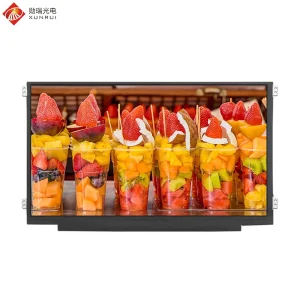
Global Procurement Landscape & Supply Resilience

The global procurement shift toward China-based bare screen suppliers is driven by raw component integration. With over 75% of worldwide Gen 8.5 and Gen 10.5 fab capacity operating in mainland hubs (Shenzhen, Wuhan, Hefei), tier-one factories provide direct access to mother-glass cutting. Sourcing unmounted 6.2" cell panels reduces international freight volume by up to 68% compared to pre-assembled display chassis, mitigating ocean cargo tariff burdens and localized mechanical dimension obsolescence.

Optical Performance: In-Plane Switching (IPS) vs. TN

For automotive instrumentation and industrial consoles, color inversion at extreme sightlines presents critical operator safety hazards. Modern 6.2-inch bare screen configurations produced by specialized Shenzhen factories prioritize true all-direction IPS (In-Plane Switching) matrices offering 85/85/85/85 viewing cones, symmetric contrast ratios exceeding 1000:1, and zero hue shifting when viewed off-axis or behind ruggedized circular polarizers and polycarbonates.

Engineering Matrix: Standard Module vs. Semi-Finished vs. 6.2" Bare Glass (Open Cell)

Evaluation Parameter Standard Pre-Packaged LCM Semi-Finished Open Frame 6.2" Industrial Bare Screen (Cell)
Mechanical Envelope Freedom Fixed bezel, rigid zinc/aluminum frame Limited by existing chassis studs Infinite: custom gasket & custom housing
Luminance Adaptability Factory fixed (typically 300–450 nits) Semi-adjustable LED drive boards Extreme (1,000–3,500 nits via custom LGP)
Interface Pinout Flexibility Static FPC connector pinout Standardized mezzanine connectors Custom bonded ACF FPC (MIPI / LVDS / SPI)
Thermal Dissipation Profiling Trapped heat between backplate & panel Moderate convective airflow Direct heat-sink contact to glass backplane
International Freight Volume High (air transport volume penalty) Medium-High Ultra-dense packaging (up to 200 pcs / tray)
Foundry Infrastructure & Rigorous QA

Automated COG Bonding & 5-Stage Zero-Defect Inspection

Shenzhen Xunrui Optoelectronic Technology operates class 1,000 cleanrooms equipped with high-precision ultrasonic cleaners, automated anisotropic conductive film (ACF) attachers, and comprehensive high-temperature burn-in chambers.

Micron-Scale COG & COF Micro-Soldering

Bare glass requires infallible connection to controller logic. Our automated lines execute Chip-On-Glass (COG) and Chip-On-Film (COF) bonding under ±1.5µm positional precision, preventing microscopic conductive ball displacement and guaranteeing signal integrity across MIPI DSI 4-lane data channels clocking at up to 1.5 Gbps per lane.

Wide-Temperature LC Formulations (-30°C to +85°C)

Cold start and thermal load failure represent common failure points in commodity screens. We utilize high-clearing-point nematic liquid crystal mixtures paired with chemically reinforced glass. This preserves response times under 25ms even at -20°C, eliminating image smear in telematics and avionics instrument clusters.

5-Gate Quality Verification Checkpoints

Zero-dead-pixel standards are enforced via automated optical inspection (AOI). Every production run completes: 1) Raw Glass IQC, 2) Polarizer Laminate Integrity, 3) FOG Electrical Aging at 60°C/90% RH, 4) Active Matrix Drive Sweep, and 5) Outgoing Static/Electromigration OQC.

2016
Established in Shenzhen Hub
5,000 m²
Class 1,000 Cleanroom Area
2,000,000+
Monthly Screen Module Capacity
5 to 500 pcs
Engineering Trial Batching
System-Level Implementations

Where 6.2 Inch Bare Screens Create Strategic Value

The 6.2-inch form factor provides an optimal aspect ratio balance between pocket portability and dense graphical data presentation.

Next-Gen Handheld POS & Rugged Payment Terminals

Payment terminals require ultra-slim integration accommodating magnetic card tracks and EMV contactless coils. Deploying a bare screen permits direct bonding against specialized anti-tamper security meshes and high-transmittance Gorilla Glass, minimizing total terminal thickness without forfeiting impact durability.

Automotive Digital Mirrors & Auxiliary Cockpits

With modern vehicle architectures shifting to virtual side-view mirrors (CMS) and secondary climate/HVAC control nodes, a 6.2" IPS bare glass matrix fits into tight pillar spaces and center console bezels where oversized modular frames cannot clear structural steel constraints.

Portable Medical Infusion Pumps & Vital Monitors

Medical equipment demands continuous chemical wiping with isopropyl alcohol and bleach solutions. By sourcing bare screens and executing hermetic optical bonding to custom chemically-strengthened antimicrobial cover glass, OEMs achieve full IP67 ingress seals with zero fluid entry around screen margins.

Future-Ready Engineering Roadmaps

Micro-LED Backplanes, Mini-LED CoBs & Supply Chain Resilience

Strategic hardware evolution across China's optoelectronic corridors is transforming raw glass backplanes from passive matrix cells into intelligent edge subassemblies.

IGZO Backplanes for Ultra-Low Power Draw

Transitioning from conventional a-Si (amorphous silicon) to Indium Gallium Zinc Oxide (IGZO) backplanes increases electron mobility by 20 to 50 times. This allows smaller transistor designs within the 6.2" aperture, yielding dramatic transmissive efficiency gains and cutting required backlight wattage by up to 35% on battery-operated field gear.

Mini-LED Local Dimming (FALD) Compatibility

High Dynamic Range (HDR) performance is achieved by coupling open-cell glass directly with Chip-on-Board (COB) Mini-LED arrays featuring 512+ independent local dimming zones. This architecture delivers 100,000:1 dynamic contrast ratios while retaining the long operating lifetimes and anti-burn-in advantages of inorganic liquid crystal displays.

Turnkey Sourcing: Driver Boards & Integrated CTP

Beyond bare glass, Xunrui delivers end-to-end macroeconomic solutions. We engineer matched bridge boards (converting eDP or MIPI into standard HDMI/Type-C), develop custom projected-capacitive (PCAP) multi-touch sensors with water-rejection firmware, and provide complete optical bonding (OCA/OCR) to eliminate internal reflections.

Extended Factory Inventory

Specialized Form Factors & High-Reliability Displays

Review additional field-proven configurations produced at our Bao'an district facilities, ready for immediate pilot sampling and mass OEM supply chain deployment.

China 4.3 inch 800x480 IPS TFT LCD Module with resistive touch panel

China 4.3 inch 800×480 IPS TFT LCD Module with Resistive Touch Panel

View Product Specs
Custom 11.6 inch 1920x1080 EDP 30PIN 220nit IPS TFT LCD module

Custom 11.6 inch 1920×1080 EDP 30PIN 220nit IPS TFT LCD Module

View Product Specs
Custom 4.3 inch TFT LCD 800x480 RGB 40pin interface 300nit IPS module

Custom 4.3 inch TFT LCD 800×480 RGB 40pin 300nit IPS Module

View Product Specs
Custom 8 inch 1200x1920 MIPI 40pin 350nit IPS TFT LCD Display Module

Custom 8 inch 1200×1920 MIPI 40pin 350nit IPS TFT LCD Display Module

View Product Specs
China 2.8 inch TN TFT LCD module 240x320 RGB 40pin interface 250nit

China 2.8 inch TN TFT LCD Module 240×320 RGB 40pin 250nit

View Product Specs
Custom 9 inch 800x480 RGB 50pin interface 500nit TN TFT LCD module

Custom 9 inch 800×480 RGB 50pin 500nit TN TFT LCD Module

View Product Specs
China 3.5 inch 320x480 RGB 50pin 300nit IPS TFT LCD Display

China 3.5 inch 320×480 RGB 50pin 300nit IPS TFT LCD Display

View Product Specs
Custom 5 inch 720x1280 MIPI 40pin 1000nit IPS TFT LCD Display

Custom 5 inch 720×1280 MIPI 40pin 1000nit IPS TFT LCD Display

View Product Specs
Procurement Engineering Q&A

Frequently Asked Questions on Bare Glass Sourcing

Essential guidance for display hardware engineers, procurement specialists, and global ODM project managers.

What is the principal difference between ordering a 6.2" bare screen vs. a complete module?
A 6.2" bare screen (open-cell) arrives purely as thin-film transistor glass with polarizers and bonded source/gate driver ICs (COG). It omits the backlight assembly, metallic outer housing, and driving circuit board. Sourcing bare screens allows advanced engineering teams to integrate proprietary backlights (e.g., reaching 2,500+ nits for outdoor avionics), save critical fractions of a millimeter in chassis thickness, and substantially lower international air shipping volume costs.
How does Xunrui package bare screen glass to prevent micro-fractures during export transit?
Because open-cell glass lacks a protective metal frame, fragile edges are subject to stress fracture. We use anti-static conductive cleanroom vacuum trays (ESD safe) engineered precisely to the 6.2" perimeter. Each shipping crate incorporates high-density expanded polyethylene (EPE) shock absorbers, desiccant packs, and real-time impact/humidity indicators to guarantee zero mechanical stress during global air and ocean freight.
What is the minimum order quantity (MOQ) and sample lead time for custom glass cuts?
For initial engineering verification, Xunrui provides pilot sample batches of 5 to 500 units following design and FPC Gerber approval. Standard non-tooled cell evaluation samples typically ship in 7 to 10 working days. Full mass-production runs for customized pinouts or tailored glass contours maintain an MOQ threshold of 1,000 units, backed by guaranteed multi-year component lifecycle supply agreements.
Can Xunrui supply matched high-performance driver boards for bare panels?
Yes. We design and assemble complete driver subassemblies in-house supporting MIPI DSI, LVDS, eDP, SPI, and standard HDMI inputs. Our hardware engineers provide pre-flashed driver boards tuned with custom timing profiles, EDID initialization code, and matched pulse-width modulation (PWM) constant-current LED backlighting drivers, drastically reducing software bring-up time.
How are touch panel layers integrated onto a 6.2-inch bare screen?
We provide both Air Bonding (using double-sided engineered gaskets) and Full Optical Bonding (utilizing Optically Clear Adhesive [OCA] or liquid silicone OCR). Optical bonding fills the air gap between the bare LCD polarizer and the cover glass, eliminating internal refractions, enhancing sunlight readability by over 400%, and preventing condensation fogging in high-humidity operating environments.