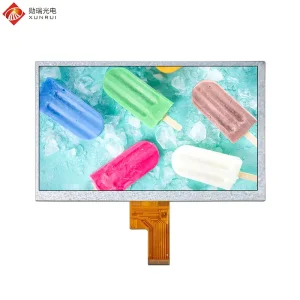
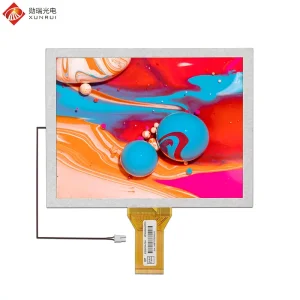
Precision 7-Inch & Compact Industrial Display Modules
Direct manufacturer supply spanning 1.77" to 10.1" form factors, certified for medical instrumentation, HMIs, and rugged outdoor integration.







Commercial Status of 7-Inch Display Manufacturing
The 7.0-inch diagonal format remains the dominant Sweet Spot in industrial human-machine interaction, edge compute consoles, and smart automotive sub-assemblies.
Global Standard Form Factor
Among visual human-machine interfaces, the 7-inch display footprint commands over 34% of mid-size industrial automation volume. Balancing physical enclosure space, aspect ratio ergonomics (primarily 16:9 and 16:10), and GPU drive overhead, 7-inch displays serve as the universal tier between compact handheld terminals and fixed large-cabinet displays.
Shenzhen Supply Integration
China's Pearl River Delta, spearheaded by specialized high-tech hubs in Bao'an and Fuyong, concentrates over 78% of the global supply chain for 7-inch TFT glass cutting, polarizers, flexible printed circuit (FPC) bonding, and integrated driver electronics. Sourcing directly from modern Shenzhen cleanrooms eliminates multiple distributor tiers, optimizing delivery schedules.
Economies of Scale & Yield
Due to high production volume at Gen-5.5 to Gen-8.5 fab lines, 7-inch mother glass yields achieve panel conversion metrics above 94%. This mass efficiency translates directly into lower Bill-of-Materials (BOM) costs for OEM developers, offering price performance alongside extended lifecycle guarantees exceeding 5 to 7 years.
Emerging Trends in 7-Inch Display Engineering
Industrial specifications are moving rapidly beyond standard consumer-grade panels toward wide-temperature IPS matrices, hardened optical coatings, and EMI-shielded interconnects.
Transition to Full-Angle IPS
Traditional TN (Twisted Nematic) 7-inch displays suffer from grayscale inversion when viewed from off-axis perspectives. Modern factories are standardizing on In-Plane Switching (IPS) matrices, securing an 85/85/85/85 symmetrical viewing angle. This ensures clinical diagnostic readability and multi-operator visibility in factory automation.
High-Efficiency Backlight Arrays
Outdoor IoT infrastructure and maritime navigational instruments require active luminance between 800 and 1500 nits. China's top factories integrate high-CRI Nichia/Osram LED dies coupled with micro-prism light guide plates (LGPs), achieving direct sunlight readability while curbing power dissipation under 4.2 Watts.
Optical Bonding & Hardened Glass
Eliminating the internal air gap between the TFT polarizer and the projected capacitive touch panel (PCAP) via UV-curable optical clear resin (LOCA/OCA) prevents internal condensation. This process simultaneously eliminates specular reflection by 87% and elevates impact resistance to IK08 / IK10 ratings.
Localized Application Scenarios for 7" Hardware
Engineered to resolve real-world environmental challenges across mission-critical equipment categories worldwide.
Industrial PLC & HMI
Operates continuously within severe harmonic distortion, vibration, and thermal shifts from -30°C to +80°C. Configured with 40-pin LVDS or TTL interfaces for seamless connectivity to Siemens, Schneider, or Advantech control boards.
Automotive & Fleet Telematics
Tailored for electric vehicle telemetry, bus smart validators, and heavy machinery cabins. Integrated with wide input voltage drivers and anti-glare (AG) surface etching for high road visibility.
Medical Diagnostics & Infusion
High-contrast IPS architecture provides uniform rendering of physiological curves, oxygen saturations, and waveforms. Calibrated for capacitive touch input with medical surgical gloves and disinfectant tolerance.
Smart Access & Building Automation
Integrated with MIPI-DSI high-bandwidth interconnects and integrated camera cutouts for bidirectional VoIP video intercoms, smart facial recognition turnstiles, and home central consoles.
7.0-Inch Module Technical Comparison & Interface Roadmap
A reference architecture guide for hardware systems architects comparing legacy RGB signaling against contemporary differential protocols.
| Display Specification | Standard Industrial 7" | High-Brightness Outdoor 7" | Next-Gen MIPI 7" Display |
|---|---|---|---|
| Native Resolution | 1024×600 (WSVGA) | 1024×600 / 1280×800 (WXGA) | 1280×800 / 1920×1200 (WUXGA) |
| Panel Topology | IPS / Wide Viewing TN | Full IPS (All-O'clock Viewing) | IPS LTPS (Low-Power Silicon) |
| Luminance Rating | 350 – 500 nits (cd/m²) | 1000 – 1500 nits (cd/m²) | 450 – 850 nits (cd/m²) |
| Signaling Interface | TTL RGB 40/50-Pin or LVDS | Single-Channel LVDS 40-Pin | MIPI DSI 4-Lane / eDP |
| Operating Temperature | -20°C to +70°C | -30°C to +85°C (Extended) | -20°C to +70°C |
| Touch Sensor Technology | 4-Wire Resistive / PCAP | PCAP (3mm Tempered IK08) | In-Cell PCAP / Optical Bonded |
| Backlight Lifespan (MTBF) | 30,000 Hours | 50,000 Hours to Half-Life | 50,000 Hours |
Macro Manufacturing Solutions & Factory Quality Control
Sourcing directly from Shenzhen Xunrui Optoelectronics means accessing a certified production chain where every module undergoes strict five-stage gate control.
5-Stage Gate Quality System
Our ISO 9001 and ISO 14001 quality framework is structured around five gates: IQC Incoming Inspection, Microscopic Mother Glass Inspection, FOG (Film-on-Glass) ACF bonding check with active aging, 100% finished module thermal/optical aging, and OQC final outbound inspection.
Custom Mechanical Tailoring
OEM projects rarely fit off-the-shelf brackets. We design and tool customized flexible printed circuit (FPC) routing with customized pin-outs, integrate customized ferrite EMI shielding films, apply Anti-Fingerprint (AF) and Anti-Reflective (AR) optical coatings, and build custom CNC glass cover plates.
Turnkey Embedded Solutions
Beyond the raw TFT glass, Xunrui delivers matched drive circuitry. We provide production-ready AV, VGA, and full HDMI receiver controller boards, alongside dedicated constant-current LED backlight booster drivers, helping engineering teams reduce bring-up times from months to weeks.
Frequently Asked Questions by OEM & Systems Engineers
Essential guidance on choosing, customizing, and scaling production for 7-inch TFT displays from China.
What is the standard lead time for customized 7-inch samples versus volume orders?
Standard off-the-shelf samples ship within 3 to 5 business days. For customized FPC design, custom cover glass printing, or custom backlights, engineering drawings require 3-5 days, sample tooling takes 12-15 days, and prototype delivery takes 7 days. Following client sign-off, volume mass production runs typically ship within 4 to 6 weeks.
Should I select LVDS, RGB TTL, or MIPI-DSI for my embedded processor?
RGB TTL suits cost-sensitive microcontrollers (MCUs) running at resolutions up to 800×480, but requires up to 40 data lines which can cause EMI challenges. LVDS is the industrial standard for 1024×600 and 1280×800 due to its strong noise immunity over distances up to 3 meters. MIPI-DSI is recommended for modern ARM SoC Linux/Android systems requiring ultra-fast frame rates and compact board routing.
How does Xunrui protect against panel obsolescence in long-term programs?
Industrial programs demand continuity. Xunrui maintains close ties with glass foundries (BOE, Innolux, HannStar) to ensure product lifecycles of 5 to 7 years. When a specific raw glass component reaches end-of-life, we deliver pin-compatible FPC modifications and driver board drops with at least 6 months advance notice for Last Time Buys (LTB).
What minimum order quantity (MOQ) structure is offered for trial batches?
To reduce risk for innovative hardware projects, once prototype samples are approved, we support a one-time pilot run of 5 to 500 units to validate tooling and enclosure integration. Standard volume manufacturing requires an MOQ of 1,000 units per order batch.
High-Performance Custom Industrial LCD Panels
Explore our additional customized modules, spanning vertical handheld formats, capacitive touch integration, and specialty high-contrast IPS displays.