
Featured Industrial & Custom TFT Display Solutions
Direct OEM manufacturing from our Shenzhen ISO 9001:2015 certified production lines. Explore standard and high-performance modules engineered for harsh operating environments.

China 5 inch 800×480 1200nit High brightness TN TFT LCD module
Product Details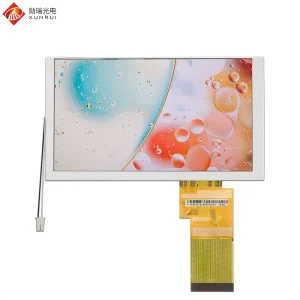
China 6.2 inch 800×480 RGB 60pin 500nit TN TFT LCD Module
Product Details
Custom 4.3 inch 480×272 MCU/SPI 40pin 350nit TN TFT LCD Display
Product Details
Custom 2.4 inch TFT LCD module 240×320 SPI 14pin 250nit IPS screen
Product Details
China 4.3 inch 480×272 RGB 40pin interface 350nit TN TFT LCD module
Product Details
China 3.5 inch TFT LCD display 320×240 RGB 54pin 350nit TN Screen
Product Details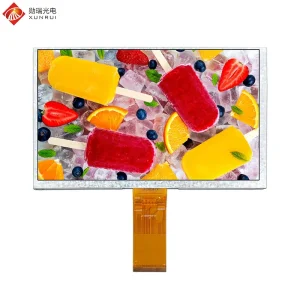
Custom 9 inch TFT LCD Module 1024×600 LVDS 60pin 400nit IPS Screen
Product Details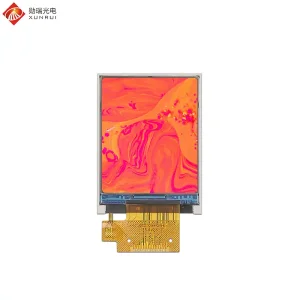
Custom 1.77 inch 128×160 SPI 14pin 250nit TN TFT LCD Module
Product DetailsEngineering Leadership in China 8.8 Inch Bar LCD Manufacturing
Modern industrial instrumentation, automotive smart cockpits, and rackmount computing architectures have outgrown traditional 4:3 and 16:9 aspect ratios. The 8.8-inch ultra-wide bar-type TFT LCD (typically 1920×480 resolution with a 24:6 or 4:1 panoramic profile) is the quintessential standard for high-density, space-constrained visual data transmission.
Native Ultrawide Optical Stacks
Unlike secondary cutting workshops that cut down larger glass and cause liquid crystal micro-leakage, XUNRUI leverages primary mother-glass strip photomasks from BOE, Innolux, and AUO. This maintains pristine seal integrity, preventing bubble formation, moisture ingress, and corner discolouration across multi-year field lifecycles.
High-Luminance Backlight Engineering
Standard consumer displays fade under ambient lighting. Our Shenzhen cleanrooms design and assemble custom lateral and matrix LED light bars providing up to 1,200 nits of pure sunlight-readable luminance. Incorporating Nichia/Cree automotive-grade emitters ensures a 50,000-hour MTBF to half-brightness.
Custom Optical Bonding & Touch (PCAP)
We offer full in-house LOCA (Liquid Optical Clear Adhesive) and OCA dry-lamination under Class 1,000 laminar flow hoods. We integrate projected capacitive multi-touch (I2C/USB) with chemically strengthened Corning Gorilla or AGC Dragontrail cover lenses tailored to custom bezels, complete with anti-reflective (AR) and anti-glare (AG) etching.
Mission-Critical Deployment Scenarios for 8.8" Bar Displays
From automotive cockpits to edge computing server racks, the elongated 8.8-inch form factor bridges the gap between mechanical compactness and rich visual data telemetry.
1U / 2U Server Chassis & Edge NAS Monitoring
High-performance AI inference servers and 19-inch rack-mounted industrial computers utilize the 8.8-inch strip display on front access panels. Running via internal USB/HDMI or eDP bridges, it renders real-time CPU/GPU thermal dissipation, network bandwidth, RAID array health, and IP addressing without occupying external rack workspace.
Automotive Secondary Gauges & Digital Mirrors
Modern automotive cockpit architectures demand ultrawide visual strips embedded beneath the primary windshield cowl or integrated into electronic rear-view streaming mirrors (e-Mirrors). Our 8.8-inch modules support automotive-grade operating temperatures (-30°C to +85°C) and split-screen viewing angles with 178° IPS all-direction clarity.
Medical Infusion Pumps & Diagnostic Strips
Dialysis systems, specialized anesthesia carts, and patient monitoring consoles leverage the 8.8-inch display to present real-time physiological waveform data alongside numerical readouts. Paired with anti-microbial chemically strengthened front glass, it withstands daily medical-grade disinfectant washdowns without degrading touch sensitivity.
Industrial CNC Rails & Factory Automation HMIs
In multi-axis robotics and robotic arm programming consoles, standard displays take up excessive vertical clearance. The 8.8-inch stretched display mounts flush along horizontal machine girders or handheld teach pendants, presenting emergency telemetry, axis coordinates, and alarm indicators with zero parallax.
Smart Shelf-Edge Digital Signage & High-End Retail
Tier-1 retail brands and luxury cosmetics vendors use the 8.8-inch bar LCD for animated electronic shelf labeling (ESL) and point-of-sale dynamic price updates. Its compact vertical height fits standard retail shelf grooves, delivering high-contrast video promotions without blocking underlying product stocks.
Enthusiast PC Hardware Modding & AIDA64 Sub-Screens
In enthusiast computer hardware, custom water-cooling loops and custom PC case manufacturers embed the 8.8-inch 1920×480 screen behind front tempered glass panels. Driven by internal USB-C/HDMI driver boards, it serves as a live hardware monitor, displaying clock speeds, GPU memory loads, and coolant flow rates.
Standard 8.8-Inch TFT LCD Module Engineering Matrix
Review core electrical, mechanical, and optical parameters for our baseline 8.8-inch stretched display series. Full custom pin-mapping and FPC redesigns are available on demand.
| Parameter | Standard Commercial Grade | High-Brightness Industrial Grade | Automotive / Outdoor Spec |
|---|---|---|---|
| Diagonal Size | 8.8 inch (Stretched Bar Matrix) | 8.8 inch (Stretched Bar Matrix) | 8.8 inch (Stretched Bar Matrix) |
| Active Resolution | 1920 × 480 pixels | 1920 × 480 pixels | 1920 × 480 pixels |
| Pixel Pitch / PPI | 0.114 × 0.114 mm (222 PPI) | 0.114 × 0.114 mm (222 PPI) | 0.114 × 0.114 mm (222 PPI) |
| Display Technology | TFT Active Matrix IPS (Normally Black) | Super-IPS Wide Gamut (72% NTSC) | Automotive Fast-Response IPS |
| Viewing Angle | 85/85/85/85 (Typ.) (L/R/U/D) | 89/89/89/89 (All Viewing Angles) | 89/89/89/89 (Zero Color Shift) |
| Luminance (Brightness) | 350 – 500 cd/m² (nits) | 800 – 1,000 cd/m² (nits) | 1,200 – 1,500 cd/m² (Sunlight Readable) |
| Contrast Ratio | 800:1 | 1000:1 | 1200:1 |
| Signal Interfaces | 4-lane MIPI-DSI / LVDS | 4-lane MIPI / eDP / LVDS | Dual-LVDS / Automotive SerDes / HDMI |
| Operating Temperature | -20°C to +70°C | -30°C to +80°C | -30°C to +85°C (AEC-Q100 Tier) |
| Storage Temperature | -30°C to +80°C | -40°C to +85°C | -40°C to +90°C |
| Touch Sensor Technology | Optional 5-point PCAP (I2C) | Optical Bonded PCAP (USB / I2C) | Glove & Water Resistant PCAP (ILITEK/EETI) |
China Manufacturing Resilience & The Shenzhen Optoelectronics Cluster
How sourcing directly from Xunrui Optoelectronics in Shenzhen mitigates supply chain risks, compresses BOM costs, and accelerates time-to-market for international procurement managers.
Sub-30-Minute Supply Cluster
Our Bao'an facility operates within minutes of leading driver IC packaging houses, FPC substrate chemical etching plants, and custom optical silicone formulators. Component procurement cycle times are reduced from months to days.
In-House FOG & COG Bonding
We maintain automated high-precision Chip-On-Glass (COG) and Film-On-Glass (FOG) bonding lines. By controlling anisotropic conductive film (ACF) thermal compression in-house, we eliminate outsourcing defects and guarantee fine-pitch micro-trace alignments.
Zero MOQ Barrier on Pilot Runs
Global electronics projects often fail when factories demand 10,000-unit minimum orders before physical prototyping. XUNRUI offers engineering pilot runs of 5 to 500 units to validate tooling, enclosure fit, and software firmware compatibility.
Guaranteed Lifecycle Longevity
Industrial machinery demands 5 to 7 years of uninterrupted panel availability. We maintain long-term supply agreements with primary LCD glass fabs, offering form-fit-function form replacement guarantees and advanced EOL (End-of-Life) notices.
Technology Roadmap: Next-Generation Innovations for Bar Displays
As artificial intelligence expands edge visual computing, XUNRUI's engineering laboratories are integrating advanced electro-optical technologies into our 8.8-inch product lineup.
Mini-LED Local Dimming Backlights
Transitioning from edge-lit LED configurations to full-array local dimming (FALD) Mini-LED architectures. With over 512 independent dimming zones tailored for the 1920×480 aspect matrix, contrast ratios exceed 100,000:1, delivering deep OLED blacks without organic burn-in risks.
Low-Power IGZO Backplane Integration
Integrating Indium Gallium Zinc Oxide (IGZO) thin-film transistors significantly reduces electron mobility resistance compared to standard amorphous silicon (a-Si). This slashes driving power by up to 35% while enabling refresh rates up to 120Hz for zero-latency vehicular telemetry displays.
Haptic-Feedback Cover Glass Integration
Combining projected capacitive touch sensors with piezoelectric ceramic micro-actuators embedded beneath the perimeter frame. Industrial and automotive operators receive real-time tactile vibration pulses when pressing on-screen buttons, allowing confident blind operation in demanding environments.
Five-Stage Gate Quality System & International Standards
Shenzhen Xunrui Optoelectronic Technology operates strictly according to ISO 9001:2015 and ISO 14001:2015 frameworks. Every single 8.8-inch panel undergoes comprehensive stress-testing prior to shipment packaging.
IQC & Mother-Glass Polarizer Inspection
Incoming raw glass, LED chips, FPC flex cables, and driver ICs undergo 100% incoming inspection. Optical polarization films are inspected via automated optical inspection (AOI) for micron-level inclusions, scratches, or phase retarding deviations.
Continuous 72-Hour High-Temp Aging
Post FOG bonding and BLU assembly, 100% of production units are routed to environmental burn-in chambers. Displays run dynamic color-cycling patterns under +60°C ambient temperatures for 72 hours to eliminate early component failure.
Export Compliance: CE, RoHS & REACH
All XUNRUI products comply with the European Union RoHS 2.0 directive (2011/65/EU) and REACH (EC 1907/2006) chemical safety frameworks. We provide full Material Declaration Data Sheets (MDDS) to ensure effortless customs clearance into North America, Europe, and APAC ports.
Frequently Asked Questions: 8.8 Inch LCD Engineering & Sourcing
Direct answers to the questions global procurement directors, hardware architects, and system integrators ask during project evaluation.
The industry standard resolution for the 8.8-inch bar-type LCD is 1920×480 pixels with an ultrawide aspect ratio of ~24:6 (4:1). The native panel interface is typically 4-lane MIPI-DSI or dual-channel LVDS. For desktop, PC chassis, or digital signage applications, XUNRUI provides matched bridge controller boards converting signals directly to HDMI, USB Type-C, or DisplayPort.
Yes. While standard indoor panels offer 350 to 500 nits, XUNRUI specializes in outdoor sunlight-readable modifications. By upgrading the LED light bar with high-efficiency Nichia emitters, optimizing light guide plates (LGP), and applying optical bonding with Anti-Reflective (AR) and Anti-Glare (AG) cover glass coatings, luminance reaches 1,000 to 1,500 nits, retaining full legibility even under direct midday sun.
Air bonding attaches the touch glass to the LCD perimeter bezel using double-sided adhesive tape, leaving an air gap. This causes internal light refraction, reduces sunlight legibility, and risks internal condensation. Optical bonding injects an optical-grade silicone gel (OCA/LOCA) that fills the gap completely, eliminating internal reflections, increasing impact resistance by up to 300%, and preventing dust ingress entirely.
To support international product development, XUNRUI offers an engineering small-batch pilot validation service of 5 to 500 units after initial 2D/3D drawing sign-off. Once mechanical fit and software stability are verified, mass production requires a batch order of 1,000 units. Standard in-stock modules can be ordered in smaller volumes without custom NRE tooling charges.
We understand that medical and industrial certifications take years to complete. We collaborate directly with primary glass foundries to guarantee stable glass cuts for 5 to 7 years. In the event of an upstream component EOL notice, our engineering team manages redesign replacements for driver ICs and FPC pinouts, maintaining form-fit-function mechanical compatibility.
Yes. We utilize industrial-grade touch controller ICs from ILITEK and EETI equipped with specialized firmware algorithms for water rejection and mutual-capacitance frequency scanning. This allows accurate single and multi-touch operation under salt-spray conditions, water droplets, and while wearing surgical, leather, or heavy industrial nitrile work gloves.
Explore Additional Specialized Display Form Factors
From compact wearable displays to high-resolution widescreen panels, explore our fully certified display assemblies engineered for high-reliability OEM integration.

China 7 inch HDMI 1024×600 IPS TFT LCD Module with Driver Board & CTP
Product Details
Custom 4.3 inch 480×272 TN TFT LCD display with Resistive Touch Panel
Product Details
China 7 inch 1024×600 1000nit RGB IPS TFT LCD Display with CTP
Product Details
Custom 2.8 inch 240×320 SPI 10pin 250nit TN TFT LCD Display
Product Details
Custom 10.1 inch 1024×600 1000nit High brightness TN TFT LCD module
Product Details
Custom 5 inch 480×854 RGB 40pin 1000nit IPS TFT LCD Module
Product Details
Custom 8 inch 1200×1920 MIPI 40pin 350nit IPS TFT LCD Display Module
Product Details