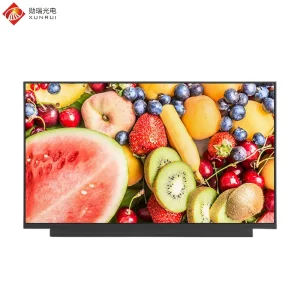
Featured Industrial IPS Displays & Custom Modules
Explore our foundational range of customizable, high-reliability displays built for medical, industrial, and harsh operating environments.



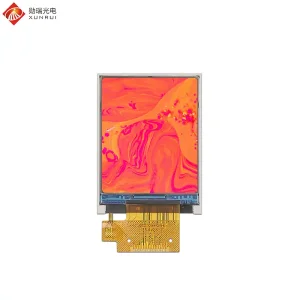




Why 1280×800 IPS Serves as the Golden Industry Standard
The 16:10 aspect ratio at WXGA resolution delivers the optimum balance between processing power consumption, pixel density, and visual ergonomics across 7-inch to 12.1-inch form factors.
True 85°/85°/85°/85° All-Directional IPS
Unlike legacy Twisted Nematic (TN) panels that suffer from grayscale inversion and washouts at off-angles, In-Plane Switching (IPS) aligns liquid crystal molecules parallel to the glass substrates. This guarantees stable color coordinates (ΔE < 2.5) across an 178° viewing cone, critical for bedside medical monitors and multi-operator HMI consoles.
Optimized UI Pixel Density & GPU Overhead
At 1280×800 resolution, typical pixel density ranges from 149 PPI (10.1") to 216 PPI (7.0"). This exact envelope ensures text readability and graphical vector sharpness without requiring resource-heavy dual-channel LVDS or quad-lane MIPI processing, drastically simplifying Embedded Linux and RTOS hardware stacks.
Sunlight Readability & High-Transmittance FOG
By pairing wide-aperture IPS cell designs with optical-grade dual-brightness enhancement films (DBEF), our customized factory solutions scale from normal 350-nit indoor operation up to 1,500 nits. This unlocks uncompromised daylight readability while curbing thermal dissipation at the LED backlight bar.
Global Mission-Critical Industrial Use Cases
Across Europe, North America, and the Asia-Pacific region, the 1280x800 IPS panel is deployed in challenging industrial and outdoor environments where zero-fail uptime is non-negotiable.
Smart Medical Infrastructure
Installed in hemodialysis machines, infusion pumps, and portable ultrasound scanners. High contrast and calibrated white balance ensure blood-gas charts and imaging telemetry are rendered with diagnostic precision.
Industrial Automation & Edge HMI
Factory SCADA controls, robotic teach pendants, and food packaging machinery operating continuously with high electromagnetic immunity (EMC Level 3/4) and resistance to chemical wipe-downs.
Automotive & Fleet Telematics
Ag-tech tractors, construction excavators, and marine chart plotters requiring operating temperatures ranging from -30°C to +85°C with anti-reflective (AR) and anti-fingerprint (AF) chemically strengthened cover glass.
Energy Metering & EV Charging
Outdoor Level 3 DC fast chargers and solar inverter monitoring stations. Integrated automatic ambient brightness dimming avoids nighttime glare and reduces thermal stress during midday sun exposure.
Shenzhen Manufacturing Ecosystem: Engineering Agility & Resilience
Direct Tier-1 supply chain integration, automated cleanrooms, and flexible batch engineering designed to de-risk OEM development.
Deep Cluster Supply Chain Efficiency
Located in Bao'an District, Shenzhen, our facility operates in direct proximity to leading panel mother glass fabricators, driver IC foundries (Novatek, Himax, Ilitek), and LED diode packagers. Sourcing cycles for modified FPC layouts, specialized backlight housings, and precision touch sensors are measured in days rather than months.
Fully Integrated Optical Bonding
We provide in-house Optical Clear Resin (OCR) and Optical Clear Adhesive (OCA) full-lamination processes in high-grade cleanrooms. Liquid optical bonding eliminates the air gap between the LCD and cover lens, increasing impact resistance (up to IK10), terminating internal reflection, and preventing moisture condensation.
Five Strict Quality Validation Gates
Quality assurance follows an uncompromising chain: IQC inbound inspection, automated glass polar inspection, FOG (Film-on-Glass) bonding verification with burn-in aging, completed module thermal chamber testing (-40°C to +85°C), and final OQC optical inspection with computerized colorimetric probes.
Comprehensive Customization Matrix: Mechanical to Electrical
We tailor every layer of the optical stack to match exact form, fit, and operational parameters within your enclosure blueprints.
Backlight & Optical Tuning
Precision constant-current LED lightbars engineered for 50,000+ hour MTBF. Backlight lumens configured from 300 nits to 2,000 nits. Optical films customized with Anti-Glare (AG), Anti-Reflective (AR, <0.5% surface reflectance), and Anti-Fingerprint/Oleophobic (AF) vapor depositions.
Cover Glass & Ruggedization
Aluminosilicate and soda-lime tempered glass from 0.7mm to 6.0mm thickness. Custom silk-screened ceramic borders, drilled physical holes for rotary encoders, rounded edge chamfers, and specialized surface coatings to satisfy IK08 through IK10 industrial drop-ball certifications.
Interface & Driver Architecture
Single-lane and dual-lane LVDS, high-speed 4-lane MIPI DSI, and eDP (Embedded DisplayPort) custom pinout mappings. Matching turnkey driver boards supporting direct HDMI, VGA, and composite AV inputs with onboard PWM backlight dimming circuitry.
Technology Roadmap: The Future of Industrial IPS Displays
Continuous innovation addressing power budgets, environmental durability, and user interface density.
Quantum Dot & Mini-LED Backlighting
Transitioning from traditional edge-lit systems to multi-zone local dimming Mini-LED backlights. This evolution drives contrast ratios beyond 100,000:1, slashes power consumption by up to 35% on dark UI palettes, and enables true HDR rendering in harsh ambient light.
In-Cell Touch & Haptic Integration
Integration of touch sensing electrodes directly onto the TFT array substrate. In-Cell reduces overall panel thickness by 1.2mm, drops total module weight, and maximizes light transmission while maintaining glove-touch and water-rejection reliability.
Ultra-Low Power Reflective / Transflective Hybrid
Development of transreflective micro-structures inside the IPS sub-pixel matrix. These cells harvest intense solar rays to light the screen rather than fighting it, reducing backlight power draw to near zero in bright daylight outdoor deployments.
Global Regulatory Compliance & Supply Continuity
Built to satisfy the stringent compliance frameworks of global tier-1 industrial, automotive, and medical device manufacturers.
Environmental & Safety Compliance
Every component in our display assemblies is fully compliant with EU RoHS 3 (Directive 2015/863/EU), REACH (EC 1907/2006) substances of very high concern, and conflict mineral regulations. Certified halogen-free flame retardant resins (UL 94V-0) utilized across all FPC substrates.
ISO 9001 & ISO 14001 Audited Systems
Manufacturing operations operate under certified Quality and Environmental Management Systems. All lot files, traceability barcodes, raw material certifications, and SPC yield charts are maintained in automated ERP/MES archives for a minimum of 7 years.
5 to 7+ Year Supply Longevity
We understand that recertifying medical and industrial equipment is cost-prohibitive. We enforce strict product roadmap stability, providing guaranteed 5 to 7-year form-fit-function life cycles with formal EOL/PCN (Product Change Notification) lead times of at least 6 to 12 months.
Technical & Procurement FAQ: Custom 1280x800 IPS
Clear, engineering-backed answers to critical sourcing, environmental, and mechanical questions.
Additional Industrial, Bar-Type & High-Brightness Panels
Discover specialized square, circular, ultra-bright, and compact form factor display units for custom device integrations.