
Direct-From-Factory Portfolio
Precision Display Modules: Featured Industrial Solutions
Explore our foundational range of customized small-to-medium TFT LCD panels engineered with flexible pinouts, industrial-grade IPS wide viewing angles, and hardened touch integration.

Custom 4.3 inch 480×272 TN TFT LCD display with resistive touch panel Supplier, Factory
Explore Specifications
China 7 inch 800×480 RGB 40pin 450nit TN TFT LCD Display Manufacturers, Suppliers
Explore Specifications
China 7 inch HDMI 1024×600 IPS TFT LCD Module With driver board and CTP Supplier, Factory
Explore Specifications
China 10.1 inch 800×1280 MIPI 40pin 350nit IPS TFT LCD Display Manufacturers, Suppliers
Explore Specifications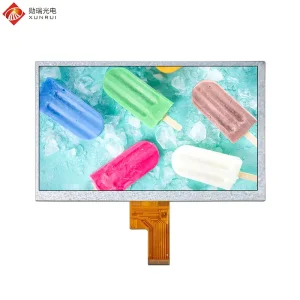
China 7 inch 1024×600 MIPI 30PIN 350nit IPS TFT LCD Display Manufacturer, Suppliers
Explore Specifications
Custom 2.4 inch 240×320 MCU 40pin interface 250nit TN TFT LCD module Manufacturers, Factory
Explore Specifications
Custom 4.3 inch TFT LCD 800×480 RGB 40pin interface 300nit IPS module Manufacturer, Supplier
Explore Specifications3.5″
Golden HMI Form Factor
1500+
Max Nit Sunlight Luminance
-30°C ~ +85°C
Wide Thermal Range
50,000 Hrs
LED Backlight Half-Life MTBF
Industry Engineering Framework
Macro Industry Solutions: The Engineering Physics of Custom 3.5 Inch Displays
Why the 3.5-inch active matrix liquid crystal module remains the indisputable global benchmark for mission-critical embedded control, intelligent handheld instrumentation, and harsh-environment telemetry.
Optoelectronic & Pixel Matrix Architecture
The standard 3.5-inch display format occupies an essential sweet spot in human-machine interface (HMI) physics. Offering aspect ratios of classic 4:3 (320×240 QVGA or 640×480 VGA) or modern 16:9 / 3:4 portrait configurations (320×480 HVGA), it maximizes data visualization density within ergonomic handheld boundaries.
- IPS All-Angle Alignment: Symmetrical 80/80/80/80 or 85/85/85/85 viewing cones that eliminate color-inversion and contrast wash-out.
- High Aperture Liquid Crystal Glass: Low power consumption combined with high transmittance thin-film transistors for extended battery duty cycles.
- Optimized Pixel Densities: Ranging from 160 PPI to over 330 PPI for crisp alphanumeric rendering and real-time medical oscillograms.
Luminance, Thermals & Optical Bonding
Standard commercial displays fail quickly under direct solar irradiation and broad ambient swings. Our custom factory engineering incorporates advanced optoelectronic thermal mitigation directly onto the LED backlight matrix.
- High-Brightness Scaling: Standard indoor 250–350 nits up to ultra-high outdoor sunlight-readable 1,000–1,500 nits.
- Optical Bonding (LOCA / OCA): Full refraction-matched bonding eliminating internal air gaps, reducing ambient reflection below 1.5%.
- Thermal Dissipation Substrates: Copper-core heat distribution tabs preventing localized LED hotspotting and polariser degradation.
Controller ICs & Multi-Bus Compatibility
A true OEM customization manufacturer solves complex electrical bridging challenges. We implement custom FPC routing with integrated timing controllers and multi-interface driver ICs.
- Embedded Driver IC Ecosystem: Native support for ST7789V, ST7796S, ILI9488, HX8357, and SSD1963 controllers.
- Universal Bus Topologies: 3-wire/4-wire SPI + RGB, 8080/6800 MCU parallel (8/16-bit), high-speed MIPI-DSI, or LVDS conversion boards.
- EMI/ESD Hardening: Custom multi-layer ground shields on flexible printed circuits achieving class-A electromagnetic immunity.
Market Dynamics & Sourcing Strategy
Global Commercial & Industrial Landscape
Strategic analysis for enterprise procurement teams navigating supply stability, long-tail product lifecycles, and China-direct manufacturing partnerships.
Industrial Lifecycle vs Consumer Volatility
Consumer mobile displays suffer from rapid obsolescence cycles averaging 12 to 18 months. In contrast, industrial instrumentation, grid telemetry, and medical diagnostics demand sustained supply lifecycles of 5 to 10+ years. Our factory architecture protects clients with guaranteed form-fit-function product longevity, pinout consistency, and proactive EOL (End-of-Life) component alerts backed by second-source glass supply agreements.
Direct Tier-1 Factory Supply Chain Advantages
Bypassing fragmented brokers and distributors provides hardware development teams direct access to optical engineers and cleanroom technicians. Shenzhen Xunrui Optoelectronic Technology operates advanced ISO-certified cleanrooms, delivering full mechanical and optoelectronic co-engineering directly from Shenzhen’s advanced display manufacturing cluster. This guarantees transparent raw-material traceability and reduced NRE tooling costs.
Touch Subsystem Convergence: PCAP vs RTP
The transition toward capacitive Projected Capacitive (PCAP) multi-touch has accelerated across rugged domains. However, factory automation lines, foundry environments, and offshore maritime equipment continue to rely heavily on durable 4-wire and 5-wire resistive touch panels (RTP). As a specialized manufacturer, we configure both paradigms with chemical antimicrobial, anti-fingerprint, and IK08 impact cover lenses.
Applied Engineering
High-Reliability Localized Application Scenarios
From extreme sub-zero field environments to sterile clinical diagnostics, see how custom 3.5-inch displays deliver mission-critical visual fidelity.
| Application Vertical | Operating Challenges | Recommended Custom Specifications | Primary Touch & Optical Treatment |
|---|---|---|---|
| Industrial Field Scanners & Fluke Meters | Heavy drop shock, outdoor direct sunlight, dust, thick oil contamination | 3.5″ Portrait 320×480 IPS, 1000 nits, wide temp (-30°C to +80°C), reinforced FPC with bend radius relief | 4-Wire Resistive Touch (operable with heavy work gloves), Anti-Glare (AG) coating |
| Point-of-Care Handheld Medical Devices | Medical chemical sanitization (bleach/alcohol), continuous viewing angle shifts, bio-signal fidelity | 3.5″ 640×480 VGA IPS, high color gamut (>72% NTSC), low electrical noise floor driver IC | Custom PCAP with sealed flush 1.1mm Corning Gorilla Glass, Anti-Fingerprint (AF) surface |
| EV Charging Points & Smart Fuel Dispensers | Unattended 24/7 solar exposure, vandalism threats, thermal cycling from -30°C to +85°C | 3.5″ Landscape 320×240 or 480×320, 1200+ nits with integrated auto-dimming ambient sensor circuit | IK08/IK10 rated 3.0mm chemically strengthened tempered cover lens, UV-blocking polarizing film |
| Smart Building Gateways & Thermostats | Sleek minimalist industrial aesthetic, narrow bezels, ultra-low standby power consumption | 3.5″ 320×480 IPS with custom black-mask silk-screen border, low-power SPI+RGB interface | Ultra-thin G+F+F Capacitive Touch with support for smooth gestures and water-rejection firmware |
| Marine Telemetry & Avionics Auxiliary HMIs | Salt-fog corrosion, condensation risk, night-vision lighting compatibility, extreme vibration | 3.5″ Transflective or high-nit IPS, conformal coated PCB/FPC, EMI conductive mesh shielding | Full optical wet bonding (LOCA), Anti-Reflective (AR) + Anti-Smudge coatings |
Quality & Compliance Assurance
Localization Support, Quality Protocols & Regulatory Compliance
Institutional reliability engineering that guarantees frictionless importation, safety compliance, and uninterrupted zero-defect mass production runs.
International Environmental & Safety Compliance
Every custom 3.5-inch module leaving our factory floor is certified for global compliance, simplifying export to North America, the European Union, Japan, and the United Kingdom:
- RoHS 3 (EU Directive 2015/863): Zero hazardous substances including lead, mercury, cadmium, and phthalates.
- REACH (EC 1907/2006): Strict SVHC declaration guaranteeing full compliance across chemical formulation chains.
- CE & FCC Class B Radiated Emissions: FPC circuit architectures optimized to pass stringent electromagnetic compatibility (EMC) testing without auxiliary shielding.
Five-Gate Stringent Factory Quality Control
Reliability is built into the assembly process through five rigorous quality assurance gates:
- Gate 1 (IQC): 100% incoming inspection of raw glass substrates, driver ICs, polarizers, and LED dies.
- Gate 2 (Glass & ITO Inspection): Microscopic automated optical inspection (AOI) for particle contamination and micro-cracks.
- Gate 3 (FOG Bonding & Thermal Aging): High-precision ACF bonding of FPC to glass followed by thermal burn-in under dynamic test patterns.
- Gate 4 (Finished Module Functional Aging): 100% high-temperature/high-humidity endurance testing (60°C / 90% RH).
- Gate 5 (OQC Pre-Shipment Audit): Strict MIL-STD-105E AQL inspection for optical performance, chromaticity, and touch linearity.
Localized Engineering Support & Technical Consultation
Cross-border collaboration is streamlined through our specialized OEM support model:
- Rapid Drawing Iteration: Complete 2D/3D CAD STEP files and FPC mechanical blueprints issued within 24–48 hours.
- Reference Firmware & Initialization Code: Ready-to-compile C/C++ driver code for STM32, ESP32, NXP i.MX RT, Raspberry Pi, and Arduino platforms.
- Pre-Production Small Batch Runs: 5 to 500 unit pilot trials to validate mechanical enclosures, touch sensitivity, and optical clearance before full-scale tooling.
Future-Ready Engineering
Technology Roadmap & Future Display Outlook
How cutting-edge optoelectronic innovations are transforming 3.5-inch displays for the next generation of intelligent edge computing and connected IoT devices.
Mini-LED Local Dimming Backlights
Traditional edge-lit LED backlights suffer from light leakage in dark industrial control rooms. Our next-generation 3.5-inch modules integrate custom Mini-LED arrays featuring multi-zone local dimming. This delivers contrast ratios exceeding 100,000:1, true deep blacks, and up to 30% power savings when displaying critical dark-mode telemetry graphics.
Hybrid Transflective & Ambient-Adaptive Displays
To eliminate high battery drain in portable surveying tools and marine hand units, our forward roadmap expands transflective TFT cells. By utilizing both ambient light reflection in direct sunlight and an efficient LED backlight in low light, devices achieve round-the-clock legibility while cutting continuous backlight power requirements by up to 75%.
Integrated In-Cell PCAP & Haptic Feedback
Eliminating separate touch sensor glass significantly reduces module thickness by up to 1.0mm while improving optical light transmission beyond 92%. Our advanced R&D pipelines incorporate In-Cell capacitive touch sensing directly within the LCD cell matrix, paired with tactile piezoelectric haptic feedback drivers for confirmed physical operator actuation in high-vibration control cabs.
Phase-Gated Engineering
End-to-End Factory Customization Process
A systematic six-phase methodology designed to mitigate mechanical interference, electrical mismatches, and optical degradation prior to volume mass-production.
Phase 01
Technical Requirements Freeze
In-depth review of viewing angles, luminance targets, host MCU interface (SPI, MCU, RGB, MIPI), enclosure constraints, and target ambient operating temperature.
Phase 02
Mechanical & FPC CAD Sign-Off
Detailed engineering schematics, pinout assignments, FPC bend simulation, and cover glass black-mask silkscreen drawings released for formal customer approval.
Phase 03
Rapid Prototyping & Bench Testing
Cleanroom fabrication of functional engineering samples (5–10 pcs) with complete driver initialization code and optical chromaticity testing reports.
Phase 04
Small-Batch Trial Pilot (50–500 pcs)
Low-risk production pilot to calibrate SMT reflow profiles, verify client assembly tooling, evaluate touch firmware performance, and confirm drop reliability.
Phase 05
Automated Volume Production
High-yield manufacturing under Class 1,000 cleanroom standards with high-speed automated COG/FOG bonding, ultrasonic cleaning, and AOI inspection.
Phase 06
Global Logistics & Lifecycle Auditing
Export-grade anti-static vacuum packaging, barcoded batch tracking, bonded warehousing buffer stock, and guaranteed long-term component availability.
Technical Clarifications
Frequently Asked Questions: Custom 3.5 Inch Display Engineering
Comprehensive engineering and procurement answers based on hundreds of custom display deployments worldwide.
Q1 What are the standard vs customized resolution options available for 3.5-inch TFT displays?
The most established industrial standards are 320×240 (QVGA, 4:3 aspect ratio) and 320×480 (HVGA, 3:2 portrait/landscape). For higher pixel density applications, our factory manufactures 640×480 (Full VGA) IPS modules with over 228 PPI. Custom glass sizing, high-resolution MIPI cuts, and custom aspect ratios can be developed through specialized photolithography tooling depending on project volume.
Q2 How does your factory achieve 1,000 to 1,500 nits high brightness without thermal runaway?
Achieving ultra-high luminance in compact 3.5-inch footprints requires high-efficiency Nichia or Epistar LED dies driven at optimal forward current points, combined with high-transmittance optical light-guide plates (LGP) and dual enhanced specular brightness-enhancement films (BEF/DBEF). Furthermore, we utilize thermally conductive copper-clad FPC backplanes to draw heat away from the LCD polarizers, preventing premature yellowing or liquid crystal bubbling.
Q3 Which host interface should I select for my embedded hardware: SPI, MCU Parallel, RGB, or MIPI?
Selection depends directly on host processor capabilities and refresh rate targets. For resource-constrained microcontrollers (e.g., STM32 Cortex-M4 or ESP32), 3-wire/4-wire SPI or 8/16-bit 8080 MCU parallel buses minimize PCB routing complexity. For complex GUIs (e.g., TouchGFX, LVGL) running at 60 FPS without tearing, 18/24-bit RGB or 1/2-lane MIPI-DSI provide the necessary bandwidth by writing directly to host frame buffers.
Q4 What is the fundamental difference between Air Bonding and Full Optical Bonding (LOCA/OCA)?
Air bonding joins the touch panel or protective cover lens to the LCD using double-sided perimeter tape, leaving an air gap. This causes two reflective refractive index mismatches (Glass 1.51 vs Air 1.0), leading to ~8.5% total internal reflection and vulnerability to internal condensation. Full optical bonding fills this gap with optical-grade silicone or acrylic adhesive (refractive index ~1.49), eliminating internal reflections, improving sunlight contrast by up to 300%, and boosting physical impact resistance.
Q5 Can a custom 3.5-inch capacitive touch screen operate reliably with water droplets or heavy gloves?
Yes. We configure specialized industrial touch controllers (such as FocalTech, Goodix, or Ilitek) with custom firmware tuning. Mutual-capacitance sensing algorithms are balanced with self-capacitance routines to reject false triggers caused by standing water films, while driving sensitivity thresholds high enough to detect glove contact up to 5mm thick.
Q6 What is the typical tooling cost (NRE) and lead time for a customized 3.5-inch display module?
Custom FPC pinout and routing modifications typically require an accessible NRE tooling cost between $600 and $1,500, with sample turnaround in 15 to 20 business days. Custom cover glass designs (with silk-screen printing, shapes, and surface coatings) average $800 to $2,000. Complete customized LCD glass cutting requires higher tooling commitments. We provide transparent upfront quotes with complete DFM (Design for Manufacturing) reports.
Q7 How do you guarantee display availability over 5 to 10 year project lifecycles?
We source our mother glass cells exclusively from stable industrial fabricators and establish rolling safety-stock agreements for critical driver ICs. If a raw component faces obsolescence, we issue formal PCN (Product Change Notifications) at least 6 to 12 months in advance, providing drop-in replacement engineering, pin-compatible alternative FPC layouts, and Last Time Buy (LTB) batch manufacturing options.
Q8 What environmental tests are performed to validate operation in harsh outdoor deployments?
Our qualification regimen includes: High Temperature Operating Life (HTOL) at +80°C for 500 hours; Low Temperature Operating Life (LTOL) at -30°C for 500 hours; Thermal Shock Cycling (-30°C to +80°C, 100 cycles, 30 min dwell); High Temp/High Humidity (+60°C / 90% RH); 1.2m drop packaging tests; and Contact ±4kV / Air ±8kV Electrostatic Discharge (ESD) evaluations.
Industrial Specification Gallery
Extended Industrial Modules: Touch & High-Brightness Panels
Complete your hardware evaluation with our complementary line of wide-temperature, high-brightness, and multi-format display solutions designed for rugged deployments.

China 1.44 inch 128×128 SPI 15pin 250nit TN TFT LCD Module Supplier, Factories
Explore Specifications
Custom 3.5 inch 1000nit High Brightness IPS TFT LCD Module Manufacturers, Suppliers
Explore Specifications
Custom 3 inch 240×400 RGB 45pin 400nit IPS TFT LCD Module Manufacturers, Factories
Explore Specifications
China 7 inch 800×480 1000nit Wide Operating Temperature Range TN TFT LCD Display Manufacturer, Manufacturers
Explore Specifications
China 7 inch 1024×600 LVDS 40pin interface 350nit IPS TFT LCD module Manufacturer, Manufacturers
Explore Specifications
Custom 7 inch 1024×600 IPS TFT LCD display with capacitive touch panel Manufacturers, Suppliers
Explore Specifications
China 8 inch 1024×600 1300nit TN TFT LCD with capacitive touch panel Manufacturers, Factory
Explore Specifications