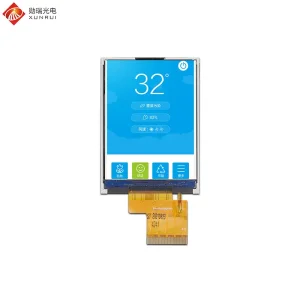
Featured Industrial & Commercial LCD Display Modules
Explore standard, wide-aspect, and custom small-to-medium form factors integrated with industry-certified glass, responsive driver interfaces, and optical bonding options.







The Global Commercial & Industrial Status of 4-Inch LCD Panels
Analyzing procurement cycles, form-factor standardization, and the growing demand for smart edge Human-Machine Interfaces across modern vertical sectors.
Precision Ergonomic Demand
The 4-inch display profile occupies the golden ratio of portable instrumentation and compact industrial terminals. Neither too small for intuitive graphical touch navigation nor too bulky for handheld housings, custom 4-inch panels represent an essential nexus in industrial IoT automation.
- Optimal balance between power budget and active viewing area
- Direct replacement viability for legacy monochrome displays
- Suited for single-hand tactical & field operations
Ruggedization Standards
Unlike consumer-grade display panels that face replacement every 2 to 3 years, custom 4-inch industrial displays demand continuous operation over 5 to 10 years under severe environmental stressors such as high humidity, chemical solvents, and broad thermal swings.
- Operating temperature ratings ranging from -30°C to +85°C
- Anti-vibration bonding resistant to mechanical stress (IK07–IK10)
- Electro-Magnetic Compatibility (EMC) engineering
Supply Chain Consolidation
Tier-1 system integrators increasingly bypass middle distributors in favor of source factory partnerships. Engaging directly with certified Chinese optoelectronic manufacturers eliminates margin stacks and allows low-level physical alterations such as specialized FPC pinouts, backlight boost arrays, and custom cover-lens silkscreens.
- Direct engineering interaction reducing NPI cycles by 40%
- Transparent bill-of-materials with guaranteed longevity roads
- High flexibility in small-batch initial pilot runs (5 to 500 pcs)
OEM/ODM Engineering & Factory Scalability
A rigorous five-checkpoint inspection framework governed by ISO 9001 and ISO 14001, safeguarding display yields from bare wafer bonding to finished rugged assembly.
FOG High-Density Bonding
Film-on-Glass (FOG) automation leverages conductive anisotropic films (ACF) to guarantee microscopic lead alignment even down to fine-pitch contact traces. High precision prevents contact open/short hazards under severe thermal shock cycles.
Optical Bonding & Treatments
Eliminate internal reflections and double-image artifacts by utilizing full optical OCA/LOCA resin bonding between the 4-inch TFT cell and cover lens. Optional anti-fingerprint (AF), anti-glare (AG), and anti-reflective (AR) surface treatments guarantee sunlight readability.
Driver IC & Board Integration
Customization covers native controller selection (ST7701S, ILI9806E, or equivalent) along with standalone convertor bridges supporting RGB, MCU 8080/6800, 3/4-Wire SPI, MIPI DSI, and differential LVDS communication frameworks.
Localized Application Scenarios for 4-Inch Display Modules
Engineered to resolve real-world deployment challenges in extreme, precision-centric commercial and industrial environments.
Smart Home Automation & Rotary Knobs
High-resolution square or circular 4-inch TFTs fit flush into high-end smart thermostat hubs, smart switch plates, and rotary control dials. Their IPS wide viewing angles maintain color fidelity from steep line-of-sight perspectives.
- 720×720 or 480×480 square geometry integrations
- Low standby power modes suited for 24/7 continuous operations
- Customized circular glass cover plates with peripheral touch dials
Portable Medical Diagnostic Gear
Handheld infusion pumps, blood glucose analyzers, and point-of-care ultrasound displays rely on 4-inch IPS panels to render high-contrast medical waveforms without grayscale inversions.
- Medical-grade chemical-resistant cover glass (CIP solvent tolerant)
- Water-rejection projected capacitive (PCAP) firmware tuning
- Low electro-magnetic emissions preventing device interference
Automotive Sub-Displays & EV Chargers
Electric vehicle (EV) charging stations and instrument sub-clusters require ultra-high brightness up to 1000–1200 nits. High-luminance LED matrices ensure information remains legible in open-air sunlight environments.
- Extended operating range: -30°C to +85°C
- Automotive ESD protection up to ±8kV Contact, ±15kV Air
- Sunlight readable transflective or high-nit BLU structures
4-Inch LCD Technology Roadmap: Next-Gen Evolution
Navigating trends in display manufacturing: Mini-LED backlighting, integrated touch architectures, and AI-driven optical correction.
Mini-LED Local Dimming
By migrating from traditional edge-lit arrays to full-array local dimming Mini-LED backlights, upcoming 4-inch modules achieve contrast ratios exceeding 100,000:1 without the burn-in vulnerabilities typical of standard OLED panels.
In-Cell & On-Cell Integration
Touch sensors fabricated directly inside the liquid crystal cell eliminate separate external sensor substrates. This reduces display profile thickness by up to 0.8mm, increases light transmittance by 15%, and lowers structural bill-of-materials costs.
Ultra-Wide Temperature Fluids
Formulations of advanced negative dielectric anisotropy liquid crystal mixtures maintain fast millisecond switching responses even at sub-zero temperatures (-40°C), eliminating the ghosting and sluggish refresh common in conventional displays.
End-to-End Enterprise Customization Pathways
A structured engagement model for procurement and R&D departments designed to minimize NPI risks and accelerate product rollouts.
Stage 1: Mechanical & Optical Scoping
Direct communication with optoelectronic field engineers. Mechanical dimensions, active area constraints, resolution (e.g., 480×800, 720×720), backlight brightness (300 to 1200+ nits), and electrical protocols are locked down before generating master tooling schematics.
Stage 2: Validation Prototyping
Rapid physical prototyping with working samples manufactured and dispatched for initial electrical debugging and enclosure fit checks. Revisions to FPC routing, glass shaping, or drive timings continue until client sign-off.
Stage 3: Scaled Mass Production
Following initial small-batch trial runs (5 to 500 pcs) to validate automated assembly yields, production transitions to full manufacturing volume with dedicated SMT lines, automated FOG bonding, and environmental aging chambers.
Frequently Asked Questions (FAQ)
Straightforward answers addressing customization scopes, touch technology trade-offs, and mass production qualifications.
What parameters can be customized for a 4-inch LCD panel?
What is the standard MOQ for customized vs. standard 4-inch display modules?
How do I choose between Capacitive (PCAP) and Resistive (RTP) touch sensors?
How is reliability verified across high-volume factory production?
What interface is recommended for low-power microcontroller integrations?
Additional Custom TFT Modules & Interface Configurations
Review additional standard and custom screen variations tailored for medical, vehicle, and embedded control instrumentation.