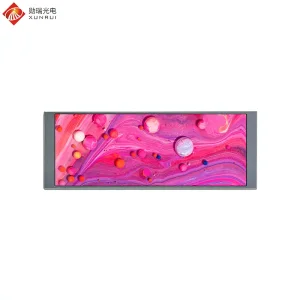
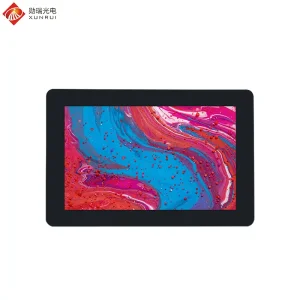
High-Precision TFT LCD Modules & Sub-Assemblies
Explore standard, wide-temperature, and custom touch display configurations engineered by Xunrui Optoelectronics for global device integration.

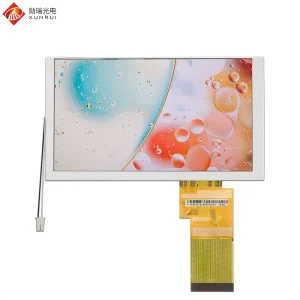
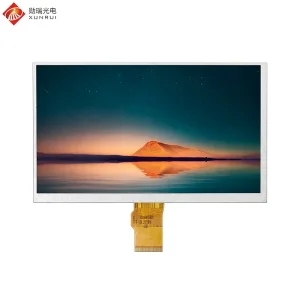





The 4-Inch Display Architecture: Strategic Technical Insights
A comprehensive examination of why 4-inch square (480×480) and portrait (480×800) TFT LCD modules represent the pivotal interface dimension in modern embedded systems.
The 1:1 Aspect Ratio Paradigm
The industrial emergence of the 4.0-inch 480×480 square resolution has revolutionized smart thermostats, centralized smart home hubs, and rotary dial encoders. By decoupling GUI designs from rectangular constraints, engineers leverage balanced mechanical symmetry, optimizing enclosure footprint while delivering high pixel density (up to 160+ PPI).
Total Cost of Ownership (TCO)
Custom 4-inch displays offer the optimal balance of silicon efficiency and bill-of-materials cost. Sourcing direct from Shenzhen Xunrui Optoelectronics eliminates broker markups, grants full control over the glass substrate (Tianma, BOE, Innolux), and guarantees a committed 5- to 7-year component lifecycle, mitigating expensive PCB redesigns.
Advanced Optoelectronics
Modern field terminals demand sunlight readability exceeding 1,000 cd/m² (nits). Xunrui's proprietary optical stack integrates high-efficiency LED arrays, anti-reflective (AR) surface sputtering, and optical bonding (OCA/OCR), completely eliminating internal reflections and ambient refraction under direct solar exposure.
Global Enterprise Procurement: Sourcing & Risk Mitigation
Procuring custom small-format display modules requires precision evaluation of tier-one supplier stability, cleanroom automation, and component longevity.
Direct-from-Manufacturer vs. Broker Pitfalls
Global original equipment manufacturers (OEMs) frequently suffer from uncontrolled component revisions when purchasing via secondary distributors. At Xunrui Optoelectronics, every 4-inch display project is assigned a dedicated Project Quality Engineer (PQE). Flex Printed Circuit (FPC) routings, driver IC silicon iterations (e.g., ST7701S, ST7796S, ILI9806E), and backlight LED binning are locked under strict Engineering Change Notice (ECN) and Product Change Notification (PCN) governance.
Bespoke Glass Cutting & Assembly Tolerance
Our Shenzhen manufacturing facility maintains advanced Computerized Numerical Control (CNC) glass contour profiling and automated Chip-on-Glass (COG) / Film-on-Glass (FOG) precision placement systems. Positioning errors are constrained within ±0.03mm, ensuring tight mechanical integration into IP65, IP67, and IP69K sealed industrial enclosures without risk of micro-fissuring or pressure-induced liquid crystal leakage.
| Specification Dimension | Standard Commercial Grade | Xunrui Industrial OEM Custom Specification | Engineering Benefit |
|---|---|---|---|
| Operating Temperature | -10°C to +60°C | -30°C to +85°C (Extended Grade) | Guarantees zero fluid crystallization or sluggish response in outdoor environments |
| Luminance Rating | 250 – 350 Nits | 500 – 1,500 Nits (Configurable LED Array) | Complete legibility under direct sunlight exposure without thermal degradation |
| Touch Sensor Technology | Out-cell / Air Bonded | Full OCA Optical Bonding (PCAP) | Eliminates internal air gap, condensation fogging, and Newton rings; IK08 impact resistant |
| Interface Versatility | SPI Only (Slow frame rates) | RGB 24-bit / MIPI DSI 2/4-Lane / MCU 8080 / SPI | Allows smooth 60fps dynamic UI rendering with microcontrollers (ESP32) or SoCs (NXP, STM32) |
| ESD & Noise Tolerance | Air ±4kV / Contact ±2kV | Air ±15kV / Contact ±8kV (IEC 61000-4-2 Level 4) | Prevents touch controller latch-up and image distortion in factory HMI settings |
Engineering Customization Matrix
End-to-end mechanical, electrical, and optical adaptations tailored specifically to your project requirements.
Cover Glass Customization
Reinforce front-panel durability with Chemically Strengthened Glass, Corning Gorilla Glass, or Dragontrail substrate. We supply thicknesses ranging from 0.7mm to 6.0mm with custom CNC decorative shapes, edge chamfering (2.5D), camera pinholes, and ceramic-ink perimeter silk screening in bespoke RAL/Pantone colors.
Capacitive & Resistive Integration
Integrate projected capacitive touch (PCAP) with high-noise immunity controllers (FocalTech, Goodix, ILITEK). Tuned firmware enables seamless operation with 5mm industrial rubber/leather gloves, multi-touch gesture mapping, and continuous water-rejection algorithms. Resistive 4-wire options are available for ultra-high EMI environments.
FPC Tail & Interface Engineering
Avoid internal chassis routing collisions with tailored Flexible Printed Circuit (FPC) geometry. Our engineering lab accommodates custom component layouts on flex tails, including onboard EMI shielding film, zero-insertion-force (ZIF) or board-to-board (B2B) connectors, and integrated ESD diodes directly on the signal traces.
Sector-Specific Engineering Architectures
Examining field-proven deployment cases where custom 4-inch TFT displays serve as the critical human-machine interface.
Smart Home HVAC & Building Automation
High-end smart thermostat and environmental sensor interfaces increasingly demand the 4.0-inch 480×480 square form factor. Xunrui provides an all-in-one optical bonding stack utilizing OCA (Optically Clear Adhesive) paired with an ultra-wide viewing angle IPS panel (85°/85°/85°/85°). This ensures zero color-shift regardless of wall mounting height or approaching angles. By configuring low-power backlights and dynamic PWM dimming, OEMs drastically reduce idle power consumption to meet stringent Energy Star requirements.
Medical Diagnostic & Infusion Equipment
Bedside patient monitoring terminals, portable blood analyzers, and automated infusion pumps require strict adherence to medical safety standards. Xunrui incorporates antimicrobial surface treatments and chemical-resistant cover glass capable of withstanding harsh hospital-grade disinfectant wipe-downs (including 70% IPA and bleach formulations). Touch screen firmware is tuned specifically to eliminate false actuation caused by saline drips or accidental liquid spills while preserving touch response with surgical gloves.
Automotive Telematics & Electric Vehicle (EV) Chargers
Level 2 and DC Fast Charging (EVSE) user interfaces demand uncompromised performance under extreme thermal and optical stress. Xunrui's sunlight-readable 4-inch panels utilize automotive-grade LED arrays delivering up to 1,200 nits of calibrated luminance with an operating temperature profile extending from -30°C to +85°C. With integrated UV-blocking polarizing films, the display stack eliminates long-term solar yellowing, delamination, and isotropic liquid crystal black spots.
Industrial Handheld Terminals & Mobile Scanners
Handheld barcode scanners, RFID readers, and warehouse inventory terminals are subject to repeated drops and rough vibration. Our 4-inch 480×800 portrait modules feature reinforced frame assemblies and 1.1mm tempered cover glass passing stringent IK07 to IK08 ball-drop impact tests. The high pixel density ensures sharp rendering of complex dynamic 2D barcodes, schematics, and logistics telemetry.
Gate-Controlled Manufacturing & Reliability Assurance
Xunrui's ISO 9001:2015 and ISO 14001:2015 certified production methodology eliminates latent defect rates before mass delivery.
Gate 01: IQC Inbound Inspection
100% verification of raw glass substrate, backlight LED arrays, driver ICs, and flex circuits. Polarizer sheets undergo surface defect testing via automated optical inspection (AOI) to eliminate particle contamination.
Gate 02: FOG Precision Bonding
Automated conductive ACF (Anisotropic Conductive Film) bonding connects driver ICs and FPC tails to the ITO glass electrodes. Microscopic alignment lasers maintain positioning within a tight ±3μm threshold.
Gate 03: Optical Cleanroom Lamination
Class 1,000 cleanroom environments host OCA/OCR optical bonding machines. Autoclave pressure degassing cycles permanently eliminate residual micro-bubbles between the touch sensor, cover glass, and TFT panel.
Gate 04: 100% Thermal Burn-In Aging
Every customized production batch undergoes continuous 72-hour operational burn-in screening under elevated temperatures (+50°C to +60°C). This forces early failure of marginal components, guaranteeing infant mortality is weeded out.
Gate 05: OQC Final Optical & Electrical Auditing
Final outgoing quality control assesses display luminance uniformity across 9 inspection points (guaranteed >85% uniformity), CIE chromaticity coordinate tolerances, touch response latency under 10ms, and electrical insulation resistance.
Comprehensive Environmental Stress Testing
Engineering verification builds are subjected to rigorous reliability validation: Thermal Shock (-40°C to +85°C, 100 cycles), High Temp/High Humidity (60°C, 90% RH for 240 hrs), and Electrostatic Discharge testing (Air ±15kV, Contact ±8kV).
Technology Roadmap: Next-Gen Small-Format Displays (2026–2030)
Pioneering advancements in low-power backplanes, integrated haptics, and quantum-dot backlight technology.
Mini-LED Local Dimming
Transitioning from edge-lit LED configurations to full-array local dimming (FALD) Mini-LED architectures. This technology brings contrast ratios exceeding 100,000:1 to 4-inch industrial displays, providing deep OLED-level black levels while entirely eliminating burn-in risks.
In-Cell Touch (TDDI) Integration
Touch and Display Driver Integration (TDDI) consolidates the display driver and capacitive touch sensor into a single IC silicon package. This reduces total module thickness by 25%, lowers overall bill-of-materials cost, and significantly enhances signal-to-noise ratio (SNR).
Ultra-Low Power IGZO Backplanes
Integrating Indium Gallium Zinc Oxide (IGZO) semiconductor thin-film transistors provides 20-50 times higher electron mobility than standard amorphous silicon (a-Si). This drastically lowers parasitic capacitance, enabling refresh rates to throttle down to 1Hz for ultra-low power standby in portable medical devices.
Regulatory Compliance & Multi-Year Supply Commitment
Ensuring compliance with international environmental directives and protecting OEMs against abrupt component obsolescence.
Strict Regulatory Compliance
Every module manufactured by Xunrui adheres to global chemical and environmental standards. We supply full documentation for RoHS 2.0 (Directive 2011/65/EU and amendment 2015/863), REACH (EC Regulation 1907/2006 concerning SVHC), and halogen-free standards. Our assemblies meet UL 94V-0 flammability ratings.
Obsolescence Protection (5-7+ Years)
Industrial product lifecycles require sustained component continuity. Xunrui commits to long-term manufacturing lifecycles. In the rare event of raw wafer discontinuation by a foundry, we provide a minimum of 6 to 12 months formal Last-Time-Buy (LTB) notification and engineer drop-in pin-compatible replacements.
Agile Trial Batches (5–500 pcs)
De-risk your engineering development. Following golden sample drawing sign-off, Xunrui supports small-scale pilot trial runs between 5 and 500 units. This allows your team to thoroughly validate firmware, enclosure tolerances, and user experience prior to authorizing capital-intensive mass production runs.
Frequently Asked Engineering Questions
Direct technical answers addressing integration hurdles, controller selection, and customization policies.
Extended Custom Display & Interface Solutions
Complementary bar-type, square, high-brightness, and driver board-integrated display units for comprehensive OEM requirements.