
High-Precision Standard & Custom Display Modules
Explore our proven lineup of small-to-medium TFT LCD modules engineered with custom FPC, multi-touch integration, and high optical performance for rapid prototyping and serial manufacturing.

China 1.3 inch 240×240 SPI 16PIN IPS TFT LCD Module With Capacitive touch Supplier, Factory
Configure Panel
China 7 inch 1024×600 1000nit High brightness IPS TFT LCD module Manufacturers, Suppliers
Configure Panel
Custom 4.3 inch 480×272 IPS TFT LCD display with capacitive touch panel Manufacturer, Factories
Configure Panel
Custom 4 inch IPS 720×720 MIPI 30pin interface Circular TFT LCD module Manufacturer, Factories
Configure Panel
China 5 inch 480×272 RGB 40pin interface 350nit TN TFT LCD module Manufacturer, Factory
Configure Panel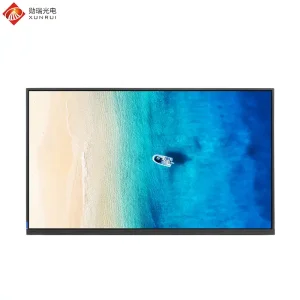
Custom 15 inch 1920×1080 EDP 30pin 300nit IPS TFT LCD Display Manufacturer, Factories
Configure Panel
Custom 2.8 inch 240×320 TN TFT LCD Module with resistive touch panel Manufacturers, Supplier
Configure Panel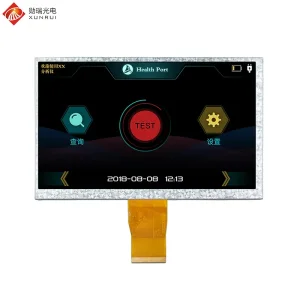
Evolution & Strategic Value of the 5.7-Inch IPS Architecture
Why the 5.7" diagonal remains the international benchmark form-factor for ergonomic industrial interfaces, migrating from legacy 4:3 TN screens to all-angle In-Plane Switching (IPS) technology.
The Legacy TN to IPS Paradigm Shift
For more than two decades, the 5.7-inch panel was dominated by legacy Twisted Nematic (TN) liquid crystal cells operating at standard 320×240 (QVGA) or 640×480 (VGA) resolutions. While economical, legacy panels suffer from severe grayscale inversion, narrow viewing cones (typically 6 o'clock or 12 o'clock preference), and chromatic distortion when viewed off-axis.
Modern industrial and military architectures demand universal 85°/85°/85°/85° symmetrical viewing cones. Switching to In-Plane Switching (IPS) liquid crystal alignment eliminates inversion artifacts completely, delivering stable chromatic saturation regardless of mounting tilt or operator stature.
Drop-In Retrofit for Legacy Enclosures
A primary friction point for international OEMs is the cost of re-tooling cast aluminum, magnesium-alloy, or injection-molded chassis. When older panel lines face end-of-life (EOL), redesigning an approved medical or rail transit enclosure can require millions in recertification expenses.
As a specialized custom factory, Shenzhen Xunrui Optoelectronic Technology Co., Ltd. (XUNRUI) provides drop-in optical replacement modules. We engineer custom active area alignments, tailor mechanical bezel offsets, and configure custom FPC pin-out adapters to mirror discontinued modules with modern high-resolution IPS glass.
Ergonomics in Handheld & DIN-Rail Systems
The 5.7-inch format occupies the exact physical sweet spot between ultra-compact 3.5"–4.3" diagnostic displays and larger 7.0"–10.1" stationary touchscreens. It provides sufficient UI real estate to render complex telemetry graphs, numerical keypads, and high-density soft keys without exceeding single-hand portable weight boundaries.
Additionally, 5.7" displays conform neatly to standard 144×144 mm DIN instrument cutouts and 4U rackmount sub-chassis, rendering them the industry-standard choice for modular measurement infrastructure.
Procurement Criteria: Custom 5.7" IPS Panel Specifications
A comprehensive engineering review of electro-optical parameters, electrical interfaces, and mechanical stress metrics required during global supply chain qualification.
| Critical Parameter | Commercial Grade (Standard) | Industrial Grade (Custom XUNRUI) | Military & Avionics Grade |
|---|---|---|---|
| Resolution & Aspect Ratio | 320×240 (QVGA) / 4:3 | 640×480 (VGA) / 800×600 (SVGA) / 1920×1080 Custom | 640×480 / Customized Native Pixel Formats |
| Liquid Crystal Mode | TN (Normally White) | IPS / True All-Viewing (Normally Black) | Super-IPS / Fast Response Switching |
| Viewing Angle (U/D/L/R) | 65 / 65 / 50 / 60 (Contrast ≥ 10) | 85 / 85 / 85 / 85 (Contrast ≥ 1000:1) | 89 / 89 / 89 / 89 Symmetrical Free Cone |
| Luminance Rating | 250 – 350 cd/m² (Indoor only) | 600 – 1,200 cd/m² (Sunlight Readable) | 1,500+ cd/m² with NVIS Class-A/B Filter |
| Operating Temperature | -10°C to +60°C | -30°C to +85°C (Extended Thermal Core) | -40°C to +90°C with Transparent ITO Heaters |
| Signaling Interface | Parallel RGB (18/24-bit) | LVDS (Single Channel 6/8-bit), MIPI DSI, SPI+RGB | Differential LVDS with Shielded Ground Gaskets |
| Touch Sensor Technology | 4-Wire Resistive (PET Film) | Optical Bonded PCAP (I²C/USB) / 5-Wire RTP | IK10 Multi-touch PCAP with EMP Shielding Mesh |
| Backlight Lifespan (MTBF) | 20,000 Hours (25°C) | 50,000 Hours (Constant Current Driven) | 70,000+ Hours with Dual-Loop Redundancy |
Direct Sourcing Advantage: Engineering-Led Customization
At Shenzhen Xunrui Optoelectronics, we bridge the gap between Tier-1 glass foundries and custom equipment makers. Unlike catalog distributors who force fixed specifications, our engineers fine-tune optical film polarizers, integrate anti-reflective (AR) etched glass, adjust backlight constant-current rails, and route custom FPC pinouts directly from our 5,000 m² Shenzhen facility.
Deep Modular Customization Vectors
Our OEM manufacturing lines are structured around five fundamental pillars of modular display engineering, ensuring total alignment with your firmware and mechanical shell.
High-Luminance Optical Engineering
For outdoor marine chartplotters, drone ground control stations, and mining terminals, ambient lux often exceeds 10,000 to 50,000. Standard screens wash out completely due to surface reflection.
We deploy high-efficiency side-lit or direct-array LED light engines delivering up to 1,500 nits. Coupled with Optical Double Brightness Enhancement Films (DBEF) and Enhanced Specular Reflectors (ESR), we maximize photon transfer through the IPS cell while reducing overall thermal dissipation.
- Luminance Range: 350 to 1,500 cd/m²
- Backlight Thermal Design: Aluminum Heat Sink PCB
- Uniformity Index: ≥ 85% (9-point audit)
Full Optical Bonding & Cover Lens
Air-bonding creates an internal air gap of 0.2–0.5 mm that produces refractive index mismatches (Glass n≈1.52, Air n≈1.00), triggering internal surface reflection and parallax. It also introduces vulnerability to internal moisture condensation.
We execute optical bonding using high-clarity Optically Clear Resin (LOCA) or Optically Clear Adhesive (OCA) sheets. This eliminates internal reflection, reinforces impact resistance to IK08 / IK10 levels, and stops dust or humidity infiltration.
- Surface Treatments: AG (Anti-Glare), AR, AF
- Cover Glass Thickness: 0.7 mm – 6.0 mm Tempered
- Bonding Material: High-Reliability UV Silicone / OCA
Custom FPC Pinouts & Controller ICs
Mismatched signal timing or incorrect pin configurations can delay product release cycles by quarters. Our engineering team modifies Flexible Printed Circuit (FPC) geometry, length, and routing directly to match your carrier board.
We incorporate onboard controller ICs such as ST7701S, ILI9881C, or HX8369, along with integrated boost converters and ESD shielding layers, protecting against high-voltage transients on industrial equipment lines.
- Interfaces: RGB 24-bit, LVDS, MIPI, MCU, SPI
- FPC Shielding: Silver Foil / EMI Carbon Film
- Connector Style: ZIF, Board-to-Board, Solder-Direct
Macro Industry Solutions: Where 5.7" IPS Excels
Real-world integration patterns across regulated sectors where optical clarity, long operational cycles, and extreme durability are non-negotiable.
Industrial HMI & CNC Controllers
Automated manufacturing cells operate under heavy electrical noise, hydraulic oil vapor, and mechanical vibration. Our 5.7" IPS modules are paired with either 4/5-wire resistive touch sensors for gloved machine operators or ruggedized PCAP supporting noise-immune frequency hopping algorithms.
Medical Diagnostic & Infusion Systems
Bedside patient monitors, blood gas analyzers, and dialysis equipment require clean, wipeable surfaces resistant to hospital-grade germicides (such as isopropyl alcohol and sodium hypochlorite). Our optically bonded cover glass structures provide an IP65/IP67 seamless planar surface with wide off-axis viewing.
Marine & Commercial Avionics
Cabin instruments and bridge navigation screens face salt spray, rapid temperature changes, and direct solar exposure. Custom 5.7" IPS configurations feature optical anti-reflective polarizers (reflectance < 0.5%), conformal coated driver electronics, and extended -30°C to +85°C thermal envelopes.
Smart Grid & EV Charging Terminals
Substation monitoring terminals, switchgear automation, and outdoor DC fast chargers run 24 hours a day, 365 days a year. We supply continuous-duty LED light bars engineered with constant-current drivers to avoid premature phosphor burnout and retain luminance over decade-long deployments.
End-to-End Quality Gates & Cleanroom Production
Operating under certified ISO 9001 and ISO 14001 systems, our Shenzhen facility enforces an uncompromising 5-checkpoint verification pipeline for zero defect rates.
Stage 1 & 2: IQC & Glass Micro-Inspection
Raw materials—including mother glass substrates from certified foundries, LED emitter dies, and flexible circuit substrates—undergo rigorous Incoming Quality Control (IQC). High-magnification Automated Optical Inspection (AOI) identifies microscopic ITO trace fissures, particle contamination, and polaroid scratches prior to assembly.
Stage 3 & 4: FOG Auto-Bonding & Thermal Aging
Film-on-Glass (FOG) anisotropic conductive film (ACF) bonding is conducted in Class 1,000 / Class 100 cleanroom environments using high-precision auto-alignment presses. Following assembly, modules are placed into thermal soak chambers under continuous operational signal input to flush out early-life component failures.
Stage 5: Final Aging & OQC Outgoing Metrology
Every customized 5.7" IPS batch completes a 100% final testing battery prior to export crating: CA-310 color analyzer chromatic evaluation, optical luminance uniformity tests, touch coordinate linearity audits, and high-voltage dielectric isolation checks to meet global standards.
Compliance, Warranty & Long-Term Product Availability
Sustaining industrial device production over 5 to 10 years without forced redesigns caused by upstream component obsolescence.
Strict RoHS, REACH & Conflict Mineral Rules
All materials incorporated into our custom 5.7-inch IPS panel assemblies fully conform to European Union RoHS Directive (EU) 2015/863 and REACH Regulation (EC) No 1907/2006. We provide complete chemical substance declarations and full trace documentation for enterprise customers.
5 to 7+ Year Lifecycle Commitment
Industrial product development runs on long cycles. We guarantee stable supply continuity for customized 5.7" display models for a minimum of 5 to 7 years. In the rare event of upstream raw glass discontinuation, our engineering team manages form-fit-function redesigns and issues 6-month Last-Time-Buy (LTB) notifications.
Agile Pilot Batches (5–500 pcs) to Scale (1,000+)
We solve the common industry conflict between design engineers and procurement teams. After sample approval, XUNRUI supports small-batch pilot validation runs from 5 to 500 units, allowing full mechanical fit-checks and field trials before committing to volume mass-production orders of 1,000+ units.
Technology Roadmap: Next-Generation 5.7" Architectures
Continuous investment in optoelectronic technologies to support the next era of industrial automation, edge computing terminals, and low-power IoT displays.
Phase 1: Mini-LED Local Dimming Backlights
Integrating 500+ localized dimming zones beneath the 5.7" IPS matrix. This achieves dynamic contrast ratios approaching 100,000:1, true blacks, reduced backlight halo artifacts, and up to 35% power savings on dark HMI operator themes.
Phase 2: Ultra-Low-Power Oxide TFT Backplanes
Transitioning from traditional a-Si (Amorphous Silicon) backplanes to IGZO (Indium Gallium Zinc Oxide). Oxide backplanes provide higher electron mobility, enabling high-definition resolutions with minimal leakage currents and lower frame-rate idling modes down to 10 Hz for battery-operated field meters.
Phase 3: Integrated Haptic Feedback & Force Sensing
Embedding piezoelectric actuators and piezo-resistive force sensors directly behind the optical bonding stack. This supplies tactile confirmation on flat glass screens, critical for blind-touch control in automotive dashboards and industrial machinery.
Frequently Asked Questions by OEM Procurement & Engineers
Clear, direct answers regarding custom tooling costs, sample lead times, touch tuning, and environmental qualification.
What is the typical tooling fee (NRE) and lead time for a custom 5.7" IPS display?
How does XUNRUI solve sunlight readability without excessive heat generation?
Can capacitive touch panels be tuned to operate through heavy rubber gloves and water droplets?
What is the difference between TN and IPS in 5.7-inch industrial panels?
What support do you provide for EMI / EMC compliance?
Complementary TFT Display Modules & Assemblies
Explore additional size configurations, touch integration types, and interface board solutions manufactured under ISO quality systems at our Shenzhen facility.

China 8 inch 1024×768 LVDS 40pin interface 300nit IPS TFT LCD module Manufacturer, Supplier
Configure Panel
Custom 8 inch 1280×720 LVDS 1000nit High Brightness IPS TFT LCD Module Manufacturer, Manufacturers
Configure Panel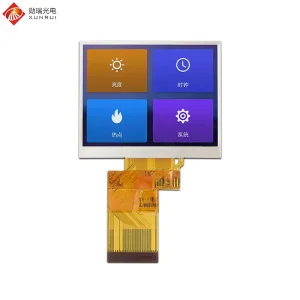
China 3.5 inch 320×240 RGB 54pin interface 350nit TN TFT LCD module Supplier, Factories
Configure Panel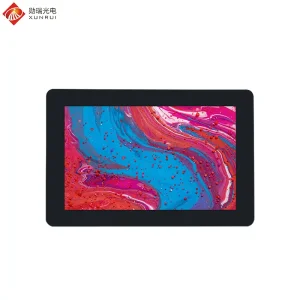
Custom 5 inch HDMI 800×480 IPS TFT LCD Module With driver board and CTP Suppliers, Factory
Configure Panel
China 4.3 inch 480×272 RGB 40pin interface 350nit TN TFT LCD module Manufacturer, Factories
Configure Panel
China 4.3 inch vertical screen 480×800 RGB 40pin IPS TFT LCD Display Manufacturer, Manufacturers
Configure Panel
China 5 inch 480×272 TN TFT LCD Module with capacitive touch panel Manufacturers, Factory
Configure Panel
Custom 3.5 inch 640×480 MIPI 30pin interface 800nit IPS TFT LCD module Manufacturer, Suppliers
Configure PanelRequest Your Custom 5.7" IPS Engineering Evaluation
Submit your mechanical enclosure drawings, target resolution, luminance targets, and pin-out parameters. Our optoelectronic engineering team in Shenzhen will deliver a comprehensive DFM (Design for Manufacturability) feasibility report and optical stack proposal within 24 hours.