
Direct OEM/ODM Industrial Display Modules
Explore our top-tier precision-engineered display and touch assemblies, fully customized with tailored pinouts, reinforced backlights, and proven controller drivers for demanding industrial instrumentation.
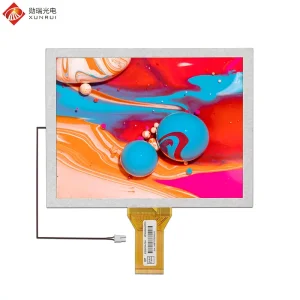






The Global Commercial Landscape of 5.7-Inch Resistive Displays
Analyzing why the 5.7" 4:3 aspect ratio remains an indispensable global standard across harsh environments where capacitive alternatives fail due to EMI, fluid contact, and structural limits.
Across the landscape of modern Human-Machine Interfaces (HMIs), an overwhelming market narrative centers on Projected Capacitive (PCAP) multi-touch panels. Yet, in tier-one industrial engineering, aerospace instrumentation, medical diagnostic systems, and specialized petrochemical control panels, the 5.7-inch resistive touch screen retains an unbreakable stronghold. The 5.7-inch diagonal format—predominantly manufactured in classic 4:3 aspect ratios featuring QVGA (320×240) or VGA (640×480) resolution—represents one of the most mature, reliable, and electrically stable interaction form factors in global automation history.
Why has the 5.7-inch resistive display defied obsolescence? The core driver lies in fundamental physics: pressure-actuated contact vs. capacitive electrical field coupling. In heavy manufacturing facilities, agricultural machinery, and pharmaceutical compounding cleanrooms, operators regularly wear thick nitrile, leather, or thermally insulated gauntlets. They operate in environments beset by severe electromagnetic interference (EMI) originating from variable-frequency motor drives (VFDs), welding arc discharges, and high-voltage inductive loads. Projected capacitive screens interpret fluid films, conductive mineral oils, and airborne saline mists as "ghost touches" or freeze their input matrix entirely. A precision-engineered 4-wire or 5-wire resistive sensor operates entirely immune to RF noise, stray voltage, and liquid pooling, registering actuation strictly upon mechanical deflection.
Furthermore, thousands of global OEMs operate legacy mission-critical equipment whose life cycles span 15 to 25 years. These systems—ranging from injection molding controllers to medical dialysis consoles—were architected around legacy graphic controller chips (such as the Solomon Systech or Epson controllers) and rigid mechanical chassis cutouts. For procurement teams and design engineers, sourcing custom 5.7-inch resistive touch screen modules from vertically integrated Shenzhen manufacturers like Xunrui provides the dual advantage of exact form-fit-function drop-in backward compatibility coupled with modern display enhancements like high-efficiency LED backlighting, wide-temperature liquid crystal fluid, and chemically tempered outer sensor layers.
Technical Anatomy: 4-Wire vs. 5-Wire vs. GFG Constructions
Deep dive into substrate deposition, transparent conductive Indium Tin Oxide (ITO) layers, micro-spacer dot geometry, and surface hardening techniques.
4-Wire Resistive Architecture
Constructed using an upper conductive polyester (PET) film layer and a bottom glass substrate, each coated with a transparent thin-film of Indium Tin Oxide (ITO). Voltage is alternately applied across the X and Y layers. Best suited for cost-sensitive handheld terminals, battery-powered multimeters, and low-frequency input consoles delivering roughly 1 to 3 million single-point actuations before calibration drift occurs.
5-Wire Heavy-Duty Architecture
In 5-wire configurations, all driving voltage electrodes (X+, X-, Y+, Y-) reside exclusively on the robust lower glass substrate. The upper PET film functions strictly as a passive voltage-sensing wiper. Because the flexible cover film does not carry the coordinate reference grid, surface scratches, minor flex fatigue, or micro-cracks do not degrade touch accuracy, yielding over 35 million touches in intensive CNC and POS setups.
Armored Glass-Film-Glass (GFG)
Replaces the vulnerable outer plastic PET film with an ultra-thin (0.1mm - 0.2mm) chemically strengthened borosilicate glass layer. This hybrid architecture achieves a surface hardness rating of 7H, rendering the 5.7" display impervious to metal stylus scraping, sparks from industrial cutting operations, flying grit, and aggressive chemical sterilization solutions such as IPA, MEK, and bleach.
| Performance Vector | 4-Wire Standard Resistive | 5-Wire Industrial Grade | Armored GFG Resistive | Projected Capacitive (PCAP) |
|---|---|---|---|---|
| Actuation Medium | Finger, Stylus, Any Object | Finger, Stylus, Heavy Glove | Any Mechanical Pressure | Conductive Finger / Active Pen |
| Touch Life (Touches/Point) | 1.0 - 3.0 Million | 35.0 Million+ | 35.0 Million+ | 100 Million+ |
| Surface Hardness (Mohs/Pencil) | 3H Hardcoated PET | 3H Hardcoated PET | 7H Chemically Tempered Glass | 6H - 7H Tempered Glass |
| Conductive Liquid Immunity | 100% Fully Immune | 100% Fully Immune | 100% Fully Immune | Prone to False Ghost Touches |
| EMI / RFI Tolerance | Complete Immunity | Complete Immunity | Complete Immunity | Requires Complex Digital Tuning |
| Optical Transmittance | ~80% - 82% | ~80% - 83% | ~82% - 85% | ~88% - 92% |
| Linear Accuracy Error | < 1.5% | < 1.0% | < 1.0% | < 0.5% |
| Unit Production Cost | Ultra-Low / Economical | Moderate / High ROI | Specialized Industrial Tier | High / Complex Tooling |
Comprehensive OEM / ODM Customization Parameters
From mechanical dimensional re-engineering to custom optical stacks, explore our vertical factory capabilities for prototyping and mass manufacturing.
Flexible Printed Circuit (FPC) Tails
We fabricate customized polyimide FPC tails with arbitrary trace lengths, right-angle routing, integrated gold-plated pins (0.5mm, 1.0mm ZIF or AMP connectors), ground shielding foils to suppress radiated noise, and onboard ferrite components tailored to existing client enclosures.
Sunlight Readability & High-Nits
To conquer the inherent optical reflectivity of resistive air-gap layers, Xunrui pairs custom 5.7" resistive touch sensors with ultra-high brightness LED backlights reaching up to 1,200 nits (cd/m²). We apply optical index-matching fluid and Anti-Reflective (AR) / Anti-Glare (AG) chemical etching.
Full LCM Optical Bonding
Eliminate internal condensation, dust ingress, and optical Newton rings. We deploy advanced Optically Clear Adhesive (OCA) and Optically Clear Resin (OCR) lamination in our Class 1000 cleanrooms to unite the 5.7" TFT panel with the touch sensor into an unshakeable solid-state block.
Driver IC & Protocol Conversion
Our engineering division provides matched touch controller boards driven by industry standard silicon (including PenMount and EETI eGalax chipsets). Interfaces encompass classic RS-232, UART, USB HID, and direct analog 4-pin/5-pin headers with multi-OS support for Linux, QNX, and legacy Windows CE.
Custom Bezel & Gasket Integration
Waterproofing industrial terminals requires precise mechanical tolerances. We apply custom 3M die-cut closed-cell foam gaskets, anti-migration rubber seals, and custom screen-printed cosmetic borders directly onto the sensor assembly to achieve turnkey IP65 / NEMA 4 front-panel ingress protection.
Mission-Critical Application Scenarios
Where environmental hostility meets operational necessity: real-world deployments of custom 5.7" resistive touch solutions across four major global industries.
CNC Machine Tools & Automation
Machining centers expose HMIs to constant oil atomization, cutting coolant splashes, and vibrating chips. The 5.7" resistive sensor guarantees positive tactile confirmation without misregistration caused by oily gloved hands or coolant film pooling across the interface edges.
Medical Dialysis & Infusion Pumps
Critical patient-care monitors require absolute fail-safe input verification. A nurse adjusting dosage parameters while wearing powdered sterile latex gloves needs predictable linear actuation. Our GFG armored touchscreens resist recurring hospital disinfectant wiping without plastic clouding.
ATEX / Class I Div 2 Petrochemical
In explosive gas or grain-dust processing zones, capacitive electronics can present low-voltage electrostatic discharge (ESD) spark hazards under fault conditions. Low-impedance resistive circuits coupled with intrinsic safety barrier boards comply smoothly with explosion-proof HMI design criteria.
Off-Highway Agricultural Consoles
Tractors and combines operate under open sun with severe temperature oscillations (-20°C winter frost to +65°C greenhouse solar heat). Our wide-temp liquid crystal fluid combined with anti-reflective 5.7" resistive glass ensures seamless stylus tracking of GPS field boundary grids.
Quality Gates & 10-Year Lifecycle Longevity
How Shenzhen Xunrui Optoelectronic insulates global tier-1 equipment builders from premature component obsolescence and catastrophic field line-stoppages.
IQC Substrate Verification
Every incoming ITO PET sheet and float glass substrate undergoes four-point optical transmission testing, surface resistivity mapping (300 - 600 Ω/sq), and micro-scratch laser profiling.
Micro-Spacer Dot Printing
Automated silk-screen deposition of transparent acrylic spacer dots with microscopic pitch control (2.5mm to 3.5mm spacing) ensures perfectly uniform actuation force and eliminates internal shorting.
FOG Ultrasonic Bonding
Film-On-Glass (FOG) precision thermocompression bonding with Anisotropic Conductive Film (ACF) guarantees gold-finger peel strength exceeding 8N/cm, verified via pull-force testing.
Thermal & Humidity Burn-In
100% of custom industrial sample batches complete a rigorous 72-hour chamber cycling test across -40°C to +85°C at 90% relative humidity, measuring linear drift and insulation resistance.
10+ Year Longevity Commitment
We provide contractually backed continuity of supply, holding glass master molds and ITO mask tooling in archival stasis to protect our clients against unexpected mid-program redesigns.
Technical & Commercial Direct Inquiries
Comprehensive answers to the most common architectural, electrical, and commercial inquiries submitted by hardware designers and sourcing directors.
Can Xunrui supply a drop-in replacement for discontinued 5.7" Kyocera or Ampire panels?
What is the practical difference between 4-wire and 5-wire resistive touch panels in a 5.7" size?
How do you overcome the low optical clarity of resistive touch screens for outdoor direct sunlight use?
What are the minimum order quantities (MOQ) and lead times for custom 5.7" resistive tooling?
Can the 5.7" resistive touch panel withstand aggressive hospital chemical sterilizations?
What touch controller boards and communication interfaces are available?
Complementary Industrial Display & Touch Systems
Explore our broader selection of high-reliability compact and mid-sized display modules built for factory automation, handheld instrumentation, and embedded terminals.







Launch Your Custom 5.7" Display Project
Accelerate your design cycle with direct access to Xunrui’s senior display architects. Share your CAD envelope, electrical schematic, or competitor part number for a comprehensive DFM review within 24 hours.