
Precision Engineered TFT Modules & Touch Assemblies
Explore our core modular lineup featuring rapid prototyping, robust driver controller support, and comprehensive optical enhancements.



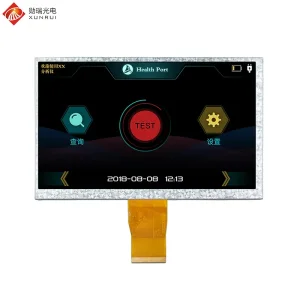

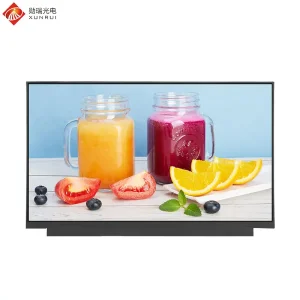
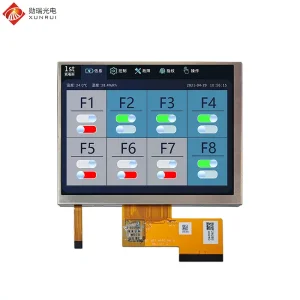

Engineering Anatomy of Custom 6.2-Inch Color Screens
A comprehensive examination of why the 6.2" form-factor has emerged as the sweet spot for modern embedded computing, smart cockpits, and rugged industrial instrumentation.
Aspect Ratio & Optical Physics
The 6.2-inch display geometry bridges the gap between conventional handheld screens and larger 7.0-inch tablet formats. Standardized primarily around elongated modern ratios (such as 18:9, 19:9, or custom ultrawide bar-cut formats), it offers maximized vertical information density without compromising single-hand ergonomical clearance or dashboard DIN envelope standards.
- Pixel Pitch & Density: Typically 720×1520 (HD+) to 1080×2340 (FHD+), yielding 270–410 PPI for crisp vector typography.
- Liquid Crystal Alignment: Fast-switching In-Plane Switching (IPS) and Advanced Super View (ASV) architectures providing true 85°/85°/85°/85° symmetrical viewing without grayscale inversion.
- Polarizer Tuning: Anti-glare (AG) hard-coated polarizers with low-haze reflection suppression optimized for outdoor contrast index >10:1 under 10,000 lux ambient illumination.
Substrate & Driver Topologies
Modern 6.2-inch modules transition away from bulky external flex connections toward integrated Driver-on-Glass (COG) and Chip-on-Film (COF) packaging. By leveraging high-efficiency driver silicon (such as ST7703, ILI9881C, or Novatek platforms), power dissipation is kept under 1.2W at standard luminance.
- High-Speed Signal Transmission: Dual-gate and 4-Lane MIPI DSI interfaces supporting up to 1.0 Gbps/lane, significantly curtailing EMI radiation.
- Substrate Metallurgy: Thin-Film Transistor array constructed on a-Si (Amorphous Silicon) or low-temperature poly-silicon (LTPS), balancing cost with fast liquid crystal response (Tr+Tf < 25ms).
- LED Backlight Matrix: Edge-lit rail configured with 18 to 28 high-CRI white LEDs arranged in parallel-series strings with integrated NTC thermal sensors.
Thermal & Environmental Envelopes
Unlike commercial smartphone grade displays that undergo isotropic transition and black-out above 60°C, industrial and automotive-grade 6.2-inch screens from Shenzhen Xunrui Optoelectronics are built to endure broad thermal shocks from Arctic freezing up to desert operating enclosures.
- Operating Temperature Spectrum: -30°C to +85°C standard industrial, extendable to -40°C to +90°C for custom mil-spec projects.
- Clearing Point Chemistry: High-clearing-point liquid crystal mixtures (Tni > 105°C) preventing sunlight-induced solar clearing (black spots).
- Chamber Aging Protocols: Continuous high-temperature/high-humidity endurance testing (60°C / 90% RH) up to 500 hours without bubbling or FPC delamination.
Deep-Level Customization Matrix for Enterprise Sourcing
No two embedded architectures are identical. We offer comprehensive engineering adaptations across electrical, mechanical, and optical parameters for custom 6.2" projects.
| Subsystem | Standard Catalog Spec | Factory Custom Engineering Options | Impact on Reliability / System Design |
|---|---|---|---|
| Luminance & Backlight | 250 – 350 nits (Indoor) | 500 to 1,500+ nits sunlight readable, high-efficiency Nichia LEDs, PWM/Analog dimming down to 1% | Ensures full legibility in open-cockpit aviation, marine, and direct solar EV charging stations without thermal runaway. |
| Touch Sensor (PCAP / RTP) | Bare LCD or standard 4-wire resistive | Custom Projected Capacitive (G+G / G+F+F), ILITEK / Goodix / EETI controllers, multi-touch up to 10 points | Supports 5mm vandal-proof tempered glass, water rejection algorithms, and operation with heavy industrial gloves. |
| Cover Glass (Lens) | 0.7mm chemically strengthened glass | 1.1mm to 6.0mm Gorilla Glass / Dragontrail, custom silkscreen printing, shaped step-drilling, IK08-IK10 impact rating | Protects internal liquid crystal matrix against severe impacts in kiosk, military, and mining instrumentation. |
| Surface Treatments | Standard Glossy / Semi-glare | AG (Anti-Glare chemical etch), AR (Anti-Reflective vacuum sputtering), AF (Anti-Fingerprint oleophobic coating) | Lowers surface reflectivity from 4.5% down to under 0.5%, minimizing eye fatigue and smudge contamination. |
| FPC Interface & Pinout | Generic 40-pin or 45-pin standard flex | Custom FPC length/bend geometries, EMI gold/copper shielding layers, pin-to-pin drop-in legacy motherboard mapping | Eliminates costly motherboard redesigns; guarantees compliance with strict CISPR 25 radiated emissions limits. |
| Optical Bonding | Double-sided foam tape gasket (Air-gap) | Full Optical Liquid Lamination (LOCA) or Optical Clear Adhesive (OCA) sheet bonding in ISO Class 6 cleanrooms | Eliminates internal fogging/condensation under humidity, enhances structural rigidity against shock by 300%. |
Touch Layer Fine-Tuning: Noise Rejection & Wet Finger Tracking
For custom 6.2-inch screens deployed on industrial CNC equipment or medical infusion pumps, electrical motor noise (EMI) and moisture condensation on the glass surface cause catastrophic false-touch events. Our Shenzhen engineering facility calibrates custom sensor firmware featuring:
- Frequency Hopping: Dynamic noise mitigation scanning between 50kHz and 400kHz to avoid switcher noise from high-voltage inverters.
- Water-Immunity Algorithms: Differential mutual capacitance sensing that isolates uniform water layers from localized human skin impedance.
- Glove-Touch Sensitivity: Amplified gain tracking allowing flawless multi-touch navigation with up to 4mm heavy rubber or leather work gloves.
Carrier Board & Bridge Hardware Integration
Many overseas procurement clients face processing bottlenecks driving raw MIPI DSI display interfaces from x86 or ARM industrial gateways lacking high-density D-PHY lanes. Xunrui Optoelectronics solves this hardware barrier through integrated display engine boards:
- HDMI / VGA / Type-C Direct Input: Plug-and-play controller boards equipped with Realtek or MStar scaler chipsets converting consumer video into low-latency LVDS/MIPI outputs.
- Integrated LED Backlight Driver: Constant current boost circuits with wide 9V–36V DC input, reverse polarity protection, and thermal throttling.
- Audio & Haptic Feedback: Auxiliary headers facilitating piezoceramic tactile feedback vibration motors behind the 6.2" cover glass.
Why Direct Sourcing from Shenzhen Xunrui Yields Competitive Superiority
Shenzhen represents the epicenter of global optoelectronics. Our Bao'an manufacturing campus fuses foundational silicon panel allocations with agile rapid prototyping, delivering an unmatched economic and speed-to-market advantage.
Tier-1 Mother-Glass Allotments
By establishing long-term, direct procurement relationships with primary glass foundries (BOE, Innolux, HannStar, AUO, and Tianma), we maintain direct access to first-grade Open Cell mother sheets, bypassing intermediaries to avoid unverified secondary inventory.
NPI Prototyping Velocity
Time-to-market decides project viability. Our in-house tooling workshop, precision laser cutting, and automated COG/FOG hot-bar bonding lines allow us to complete custom FPC engineering drawings in 48 hours and deliver functional test samples in 10 to 15 business days.
BOM Cost Control
Manufacturing in the Bao'an / Fuyong electronics corridor gives us an immediate component ecosystem. Backlight injection moldings, LED chips, ITO glass sensors, custom IC packaging, and CNC aluminum enclosures are sourced locally, eliminating international logistics markups.
5-Gate Rigorous QC Gateways
We execute strict MIL-STD-105E inspection criteria across five operational gates: IQC incoming inspection, Open Cell laser line inspection, FOG hot-bar bonding inspection with high-temp aging, final finished-module thermal testing, and outbound OQC verification.
Global Enterprise Procurement Standards & Product Lifecycle Longevity
Enterprise procurement professionals in North America, Europe, and Japan require more than low initial quotes—they require sustained supply stability, clear obsolescence roadmaps, and documented production part approvals.
5 to 7+ Year Availability Guarantees
Consumer displays sunset in 12 to 18 months, rendering medical and industrial equipment unsupportable. We address this vulnerability by curating industrial-roadmap raw glass panels backed by explicit 5-to-7-year longevity commitments. In instances of component retirement, we supply formal PCN (Product Change Notification) documents a minimum of 6 to 12 months ahead of last-time-buy windows.
Form-Fit-Function Drop-in Backward Compatibility
When driver IC wafers inevitably transition to smaller lithography nodes, our in-house optical engineering division reconfigures the FPC routing and internal initialization firmware registers. The replacement display unit retains 100% mechanical outline parity, interface connector compatibility, and optical chromaticity alignment without requiring software revisions on the client host board.
PPAP Documentation & Audit Readiness
For Tier-1 automotive and clinical medical applications, Shenzhen Xunrui provides comprehensive Production Part Approval Process (PPAP Level 1 through 3) documentation packages, including DFMEA/PFMEA risk matrices, Process Flow Diagrams, Dimensional Inspection Reports, Material Certifications, and Initial Process Capability Studies (Cpk > 1.67).
The Xunrui Gate-Controlled Customization Workflow
Engineering Demand Audit
Comprehensive evaluation of optical luminance requirements, mechanical enclosure constraints, thermal dissipation parameters, and host processor bus topology.
2D/3D Drawing Approval
Issuing detailed mechanical tolerance drawings, FPC bend radius profiles, connector pin-outs, and cover lens silkscreen coordinates for client sign-off.
Precision Prototype Builds
Cleanroom fabrication of physical evaluation samples within 10–15 business days, accompanied by complete optical spectrophotometer test reports.
Pilot Batch Validation
Execution of a 5 to 500 unit pilot run to stress-test assembly jigs, verify line yield, and enable client environmental and field durability validation.
Mass Production Launch
Automated high-speed COG/FOG bonding transition backed by SPC (Statistical Process Control), high-temp burn-in rooms, and automated optical inspection.
Quality Release & Global Logistics
Comprehensive outgoing OQC verification, anti-static shock packaging, vacuum moisture-barrier sealing, and scheduled door-to-door global air freight dispatch.
Localization Support, Regulatory Compliance & Quality Systems
Global distribution necessitates unconditional conformity with environmental, electro-magnetic, and workplace safety mandates across North American and European regulatory bodies.
ISO 9001 & ISO 14001 Certified
Shenzhen Xunrui Optoelectronic Technology operates under certified ISO 9001 quality management and ISO 14001 environmental frameworks. Our operations are fully audited for waste-gas handling, deionized water filtration, cleanroom particulate monitoring, and statistical traceability of raw silicone and chemical adhesives down to individual lot numbers.
RoHS 3, REACH SVHC & UL 94V-0
All display sub-assemblies—including FPC flex cables, backplanes, polarizers, and driver bonding adhesives—comply with the European Union's RoHS Directive 2015/863 (RoHS 3) and REACH (Substances of Very High Concern). Structural plastic bezels and diffusers meet UL 94V-0 self-extinguishing flame resistance criteria.
EMC & Radiated Emission Mitigation
Fast-switching display clock signals can induce radiated noise failures during client CE and FCC Class B testing. We offer dedicated FPC ground plane stitching, ITO shielding mesh layers embedded inside the touch sensor, and ferrite bead filtering on high-speed differential signal pairs to ensure trouble-free electromagnetic compliance.
Where Custom 6.2-Inch Displays Excel in the Field
The compact 6.2" form-factor solves structural packaging limitations across dynamic, demanding deployment environments across multiple industries.
Automotive Cockpits & Secondary Consoles
Modern luxury vehicles and electric commercial trucks increasingly utilize 6.2-inch ultra-wide auxiliary screens for climate management, seat articulation, or digital side-mirror viewing systems. We tune the optical stack for instant sub-zero cold start (<100ms at -30°C) with 1,000-nit daylight readability.
- Elimination of internal condensation via automated vacuum optical bonding.
- Custom black-mask printing matching surrounding dashboard aesthetics.
- High dynamic range (HDR) backlight driving for night-driving anti-blinding.
Rugged Industrial POS & Handheld Scanners
Field logistics terminals, warehouse barcode scanners, and mobile point-of-sale systems require a tall 18:9 aspect ratio display providing maximum application vertical scroll space while remaining compact enough for one-handed operation.
- Drop-test reinforced glass structures rated to withstand 1.8-meter drops onto concrete.
- Integrated chemically toughened cover glass with anti-shatter film safety layers.
- Low-power LTPS backplane modes extending handheld battery shifts beyond 14 hours.
Medical Diagnostics & Portable Infusion Systems
Hospital bedside monitors, handheld ultrasound scanners, and precision fluid-infusion pumps demand accurate color rendition and strict disinfectant durability against hospital-grade isopropyl alcohol and bleach wipes.
- True IPS 178° viewing angles ensuring clinicians read telemetry from any vantage.
- Seamless, flat cover lens geometries preventing bacterial ingress in crevices.
- Optical compliance preventing touch interference when contaminated with saline solutions.
Smart Home Wall Controllers & IoT Stations
Replacing traditional multi-gang mechanical wall light switches, custom 6.2-inch in-wall panels provide intuitive, multi-zone control of HVAC, lighting, and video intercoms inside luxury residential and hospitality developments.
- Anti-Fingerprint (AF) oleophobic nanocoatings maintaining a clean, smudge-free appearance.
- Deep sleep standby consumption (<20mW) compliant with international Eco-design standards.
- Proximity sensor wake-up circuit integration through custom FPC routing.
EV Fast-Charging Piles & Outdoor Fuel Dispensers
Commercial outdoor infrastructure faces thermal punishment, UV ray exposure, and constant solar glare. Our 6.2" high-brightness modules provide the exact interface footprint required for payment gateway processing and charging status readouts.
- UV-blocking optical filters shielding polarizer layers from ultraviolet yellowing.
- 1,200 to 1,500 nits high-luminance backlights readable under direct noontime sunlight.
- Wide-temperature industrial silicone gaskets preventing high-pressure jet water penetration (IP65/IP67).
Precision Laboratory & CNC Industrial Instruments
High-vibration factory production lines and precision oscilloscopes rely on custom 6.2-inch displays configured with shielded low-voltage differential signaling (LVDS) interfaces to safeguard against electromagnetic interference from high-frequency inverter drives.
- High mechanical shock tolerance tested to 50G half-sine wave pulses.
- 5-wire resistive or thick cover glass PCAP touch responsive to oil-coated mechanical styluses.
- Zero dead-pixel manufacturing standards compliant with ISO 13406-2 Class I.
Emerging Technology Trends in 6.2-Inch Color Screens
The display engineering landscape is experiencing rapid innovation. Shenzhen Xunrui invests heavily in next-generation optoelectronic research to keep our OEM clients ahead of obsolescence curves.
Mini-LED Local Dimming Arrays
Transitioning from traditional edge-lit lightbars to localized Mini-LED backlights composed of 512 to 1,024 discrete dimming zones. This evolution elevates the dynamic contrast ratio of 6.2-inch TFT panels from 1,000:1 to over 100,000:1, achieving OLED-grade true black levels without the vulnerability of organic pixel burn-in in static industrial HMI layouts.
TDDI (Touch and Display Driver Integration)
Integrating the capacitive touch controller and the liquid crystal column/row driver into a single silicon die. TDDI eradicates external touch FPC tails, thins overall module thickness by up to 0.5mm, improves optical transmittance by 10%, and reduces BOM costs across large-scale mass manufacturing projects.
Embedded Smart Display Architectures
OEM buyers are migrating from "dumb" raw display panels toward integrated smart display engines. Xunrui is expanding custom 6.2-inch offerings with embedded ARM Cortex-M4/M7 microcontrollers running lightweight FreeRTOS and GUI engines, allowing product developers to send high-level UART/CAN command strings directly to the screen.
Frequently Asked Questions by OEM & Sourcing Engineers
Direct answers from our senior engineering division addressing common design, procurement, and manufacturing inquiries.
High-Performance Custom Display Modules
Browse our extensive selection of circular, wide-temperature, sunlight-readable, and capacitive touch TFT panels ready for integration into your next generation device.








Request a Custom 6.2-Inch Display Design Feasibility Review
Send us your mechanical DXF/STP enclosure files, interface target, and operating environment constraints. Our Shenzhen optical engineering team will provide a comprehensive DFM (Design for Manufacturing) review and quotation within 24 hours.