
Featured Standard & Custom Display Modules
Explore our core engineering catalog across multiple physical formats, viewing technologies, and custom-tailored controller integrations backed by 5 to 500 pcs pilot batch prototyping.





Technical Roadmap & Future Outlook of 6.2 Inch IPS LCD Panels
The 6.2-inch form factor bridges compact handheld mobility and extensive data visualization. Below is an engineering overview of molecular switching, optical stacks, and next-generation driver integrations.
Industrial visual interfaces are transitioning away from standard Twisted Nematic (TN) glass toward specialized wide-aspect and elongated 6.2-inch In-Plane Switching (IPS) platforms. Liquid crystal molecules in an IPS matrix rotate parallel to the substrate plane rather than perpendicular. This orientation fundamentally eliminates color shifting, chromatic inversion, and contrast wash-out across wide angles, maintaining full 8-bit color fidelity whether viewed from crane cabs, vehicle dashboards, or multi-angle surgical tables.
Optical Stacks & Advanced Surface Chemistry
In high ambient light or direct solar glare, raw display brightness alone causes battery drain and thermal throttling. Xunrui’s 6.2 inch IPS engineering architecture integrates multi-layer optical enhancements directly into the glass sandwich:
Direct Optical Bonding (LOCA / OCA)
Eliminates internal air gaps between the polarizing plate and cover glass. Minimizes refractive index mismatch, reducing internal ambient light reflection from 4.5% to under 0.2%, dramatically enhancing sunlight contrast ratios without draining battery power.
AG / AR / AF Surface Treatments
Anti-Glare (AG) chemical etching scatters specular highlights; Anti-Reflective (AR) dielectric vacuum sputtering increases photon transmission; Anti-Fingerprint (AF) oleophobic fluorine coatings ensure oil and water bead up for rapid wipe-down in clinical environments.
Quantum Dot Backlight Infusion
Transitioning beyond standard phosphor White LEDs to narrow-band blue LEDs with QD enhancement film. Reaches 95%+ DCI-P3 color gamut coverage, providing the color accuracy required for endoscopic cameras and thermal imaging systems.
Signal Protocol Evolution: MIPI DSI vs. LVDS vs. eDP
Resolutions for 6.2 inch modules span 720×1560, 1080×2400 (FHD+), and specialized letterbox dimensions. Handling these high pixel densities requires selecting the optimal high-speed physical differential signaling protocol:
| Interface Standard | Differential Lanes / Wiring | Max Bandwidth | EMI Signature | Target Architecture |
|---|---|---|---|---|
| MIPI DSI-2 (4-Lane D-PHY) | 8 signal pins + Clock pair | Up to 4.5 Gbps/lane | Ultra-Low (Slew rate control) | ARM Cortex, NXP i.MX8, Qualcomm, Handheld Smart Terminals |
| OpenLDI / LVDS (Single/Dual) | 4 or 8 data pairs + Clock | Up to 1.4 Gbps total | Moderate (Requires shielding) | Legacy Industrial PC, PLC Controllers, Rugged CNC Racks |
| Embedded DisplayPort (eDP 1.4) | 1 or 2 high-speed main lanes | Up to 5.4 Gbps/lane (HBR2) | Low (Spread Spectrum Clock) | x86 Single Board Computers, Medical Carts, Telematics |
| SPI / MCU 8/16-Bit (w/ Bridge) | Compact 4-wire or parallel bus | Up to 50 MHz clock | Minimal | Low-power microcontrollers (STM32, ESP32) using SSD/ST series |
Application-Specific Display Implementations
How the 6.2" IPS module layout is engineered to withstand extreme temperatures, continuous duty cycles, and demanding physical environments.
Automotive & Smart Mobility
Widely deployed in motorcycle digital clusters, secondary central stack monitors, and EV commercial charging stations. Engineered with high-efficiency LED drivers generating 1,000–1,500 nits luminance for sunlight legibility, paired with automotive thermal dissipation backplates to prevent solar heat buildup.
Medical Diagnostics & Patient Monitors
Critical care infusions, handheld ultrasound terminals, and mobile biometric trackers rely on accurate grayscale curves and 178° viewing angles. Supports DICOM Part 14 calibration and integrates Projected Capacitive (PCAP) sensors tuned for hospital surgical latex gloves.
Industrial HMI & Factory Automation
Programmable logic controller (PLC) terminals, warehouse robotics pendants, and CNC control interfaces. Thick chemical-strengthened cover lenses up to 3.0mm provide IK08/IK09 impact protection, shielding the display against dropped tools and heavy industrial shop-floor vibration.
Rugged POS & Smart Logistics Scanners
Cold chain delivery terminals and outdoor inventory management systems demand quick liquid crystal response times down to -30°C. Xunrui’s integrated ITO heating foils prevent refresh lag and ghosting without draining field-replaceable lithium-ion battery packs.
Smart Home Building Infrastructure
Modern luxury HVAC consoles, wall-mount home automation panels, and biometric access keypads benefit from 6.2-inch aspect ratios, allowing split-screen security camera feeds and home status tiles on an edge-to-edge black border panel.
Aerospace & Marine Navigation Instruments
Auxiliary flight displays, radar repeaters, and fish finders. Deep nighttime dimming capabilities (down to 1 nit via precision PWM duty cycles) prevent operator night-blindness while maintaining color calibration under pitch-black offshore conditions.
China Factory 4.0: Supply Chain Resilience & Production Scale
Shenzhen Xunrui Optoelectronic Technology Co., Ltd. operates a high-precision manufacturing facility in Bao'an District, combining automated assembly lines with strict quality controls.
5-Gate Quality Assurance System
Every customized 6.2 inch panel undergoes five quality checkpoints: IQC raw material screening (polarizer, glass, driver ICs), automated cleanroom glass inspection, FOG bonding inspection with aging, finished unit thermal stress aging, and 100% OQC outgoing functional testing.
2,000,000 Pcs Monthly Scale
With 5,000 square meters of class 1,000 and 10,000 cleanroom workshops, automated high-speed COG (Chip-on-Glass) and FOG (Film-on-Glass) lines, Xunrui balances flexible small-batch custom runs with volume production capacity exceeding 2M units monthly.
7 to 10-Year Availability Guarantee
Industrial programs cannot redesign their PCB every two years due to consumer component obsolescence. We maintain direct partnerships with glass foundries and IC suppliers to guarantee form-fit-function product longevity for up to a decade.
Shenzhen's integrated optoelectronic supply ecosystem provides unmatched development speed. Prototype tooling, custom FPC flex circuit routing, precision backlight fabrication, and cover glass CNC profiling can be designed, sampled, and validated in as little as 15 to 20 working days. This rapid turnaround helps OEM development teams launch products significantly faster than relying on traditional multi-tier distribution networks.
Localized Engineering Support & Compliance Standards
Exporting display sub-assemblies to North American, European, and Asian markets requires rigorous environmental safety and radio-frequency compliance.
Environmental & Chemical Compliance
Every component in our 6.2 inch IPS assemblies—from the ITO glass to driver bonding adhesives and polarizer films—complies with RoHS 3 (Directive 2015/863/EU) and REACH (EC 1907/2006) SVHC candidate lists. Full ICP test certificates are provided for every production lot.
Signal Integrity & EMI Validation
High-speed MIPI differential data traces can radiate electromagnetic interference that disrupts onboard RF antennas (Wi-Fi, LTE, GPS). Xunrui incorporates backplane copper-foil EMI shielding, grounded FPC layouts, and ferrite-loaded bridge systems to pass FCC Part 15 Class B and CE EMC standards.
Dedicated Tier-1 Engineering Support
Direct communication with the factory's design engineers ensures rapid troubleshooting. From providing Linux kernel device tree source (DTS) display timings and initialization code to advising on custom I2C capacitive touch calibrations, we support your engineering team throughout the design process.
Global Enterprise Procurement: Sourcing 6.2" IPS Displays Direct
A structured engagement model designed to mitigate technical, financial, and supply chain risks for international supply chain managers.
Purchasing mission-critical display assemblies requires balancing component price points, upfront tooling (NRE) costs, and production reliability. Shenzhen Xunrui Optoelectronic Technology Co., Ltd. simplifies this selection process through a clear 6-stage development framework:
Phase 1: Engineering Review
We review your CAD models, bezel openings, interface requirements, and target optical environments. Xunrui’s optomechanical engineers refine your design specifications before capital is committed to tooling.
Phase 2: Custom Tooling & Prototyping
FPC fabrication, backlight tool mold release, and optical cover glass profiling. Functional pre-production prototypes are built within 15–20 business days and delivered with comprehensive optical inspection reports.
Phase 3: Pilot Batch (5–500 pcs)
Avoid jumping directly from prototypes to high-volume production. Our low-risk trial batch service lets you assemble 5 to 500 complete devices for field trials, EMC pre-compliance scans, and software validation.
Phase 4: Mass Production (MOQ 1k+)
Automated cleanroom assembly with unified lot tracking, optical calibration, and continuous quality checks. Flexible terms and buffer-stock programs ensure on-time delivery for annual vendor contracts.
Technical & Procurement FAQ: 6.2 Inch IPS Panels
Answers to common questions raised by procurement managers, hardware engineers, and systems integrators.
What are the key technical advantages of a 6.2" IPS panel over legacy TN screens?
Which parameters of a 6.2 inch IPS display module can Xunrui customize?
What is your minimum order quantity (MOQ) for custom development projects?
How do you ensure long-term availability for medical and industrial devices?
Can the capacitive touch panel work when wet or operated with thick industrial gloves?
What is the difference between Optical Bonding (OCA/LOCA) and Air Gap Bonding?
Complementary Display Displays & Solutions
Discover our full portfolio spanning 0.96" to 27" screens, including high-brightness sunlight readable options, round dials, stretched bar monitors, and multi-touch HMI assemblies.






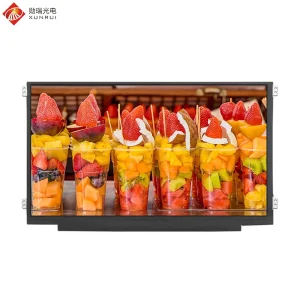
Partner with Shenzhen Xunrui Optoelectronics
Shenzhen Xunrui Optoelectronic Technology Co., Ltd. (est. 2016) operates in Bao'an District, Shenzhen, China. Our facilities run under ISO 9001 and ISO 14001 certified systems, delivering reliable display solutions to international engineering and procurement teams.