
Precision Small & Medium Display Modules
Engineered for mission-critical reliability, wide visual angles, and rugged interface compatibility across commercial and harsh operational environments.

Custom 2.8 inch 240×320 TN TFT LCD Module with resistive touch panel
View Product Details
China 12.3 inch 1920×720 EDP 60pin 400nit IPS Strip TFT LCD Display
View Product Details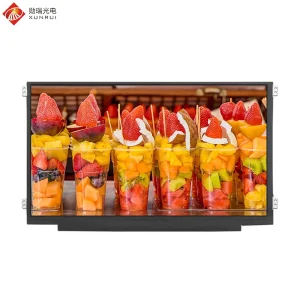
Custom 11.6 inch 1920×1080 EDP 30PIN 220nit IPS TFT LCD module
View Product Details
Custom 2 inch 480×240 RGB 40pin 150nit TN TFT LCD Display
View Product Details
China 4.3 inch vertical screen 480×800 RGB 40pin IPS TFT LCD Display
View Product Details
Custom 10.1 inch 800×1280 MIPI IPS TFT LCD Display with capacitive touch
View Product Details
Custom 23.8 inch 1920×1080 IPS TFT LCD display with capacitive touch panel
View Product Details
China 4.3 inch 800×480 IPS TFT LCD Module with capacitive touch panel
View Product DetailsThe Global 6.2-Inch Display Landscape & Industrial Demand
Analyzing the strategic convergence of aspect ratios, resolution density, and mechanical packaging constraints in next-generation control terminals.
Standardization in 2-DIN Automotive & Marine
The 6.2-inch format occupies a vital standard mechanical envelope within global automotive aftermarket dash installations, agricultural machinery, and commercial marine cockpits. Sized perfectly between standard 5.0-inch compact HMIs and 7.0-inch wide screens, it permits mechanical engineers to incorporate physical rotary encoders, waterproof pushbuttons, and silicon gasket seals within standardized double-DIN footprints without exceeding thermal dissipation limits.
- Fixed chassis envelope compatibility (Double-DIN: 180×100 mm)
- Optimized peripheral button and tactile dial integration
- High mechanical tolerance against chassis vibration loads
Industrial Handhelds & Rugged Field Terminals
Rugged mobile computing devices, diagnostic scan tools, and industrial warehouse handheld terminals increasingly choose 6.2-inch displays over consumer-grade diagonals. With higher physical glass thicknesses (1.1mm to 3.0mm cover lenses) and IP65/IP67 perimeter sealing, the 6.2-inch display maintains single-hand ergonomic usability while offering adequate visual surface area for dense telemetry charts, multi-parameter bar graphs, and SCADA data rendering.
- Ergonomic single-hand grip geometry
- Optimized pixel density for complex process schematics
- Drop-test survivability compliant with MIL-STD-810H standards
Medical Diagnostics & Telehealth Platforms
In medical infusion pumps, portable multiparameter vital sign monitors, and dialysis units, 6.2-inch displays represent an optimal balance between low power consumption and high diagnostic clarity. Global healthcare equipment manufacturers require long life cycles (5 to 8 years minimum without component EOL obsolescence), strict optical stability under antiseptic chemical cleaning solutions, and electromagnetic immunity from adjacent surgical gear.
- Long-term glass substrate availability guarantee (5+ years)
- Chemical wipe resistance against IPA, bleach, and hospital reagents
- Low electrical noise profile to prevent ECG/EMG signal artifacts
Shenzhen Precision Manufacturing & Global Supply Advantages
How our vertically integrated optoelectronic manufacturing base in Bao'an, Shenzhen optimizes lead times, NPI engineering cycles, and total project expenditure.
Year Established in Shenzhen
Cleanroom Production Facility
Monthly Module Capacity (PCS)
Dual Certified Quality System
Full Supply Chain Cluster Proximity
Situated in the heart of the Greater Bay Area electronics industrial cluster, XUNRUI leverages instant raw material access: precision glass slicing from major tier-1 mother-glass suppliers, specialized backlight injection molding, custom FPC copper routing, and dedicated driver IC distribution. This ecosystem cuts rapid tooling turnaround from months to under 15 working days.
Automated COG & FOG Cleanroom Bonding
Our Class 1,000 and Class 10,000 cleanroom bonding facilities feature high-speed automated Chip-on-Glass (COG) and Film-on-Glass (FOG) machines. Laser inspection heads verify anisotropic conductive film (ACF) particle crushing uniformity across 100% of micro-pitch flex lines, virtually eliminating cold solder joints, open circuits, and high-frequency signal interference.
Flexible Pilot-to-Mass NPI Workflow
To eliminate capital risk for global OEM engineering teams, we run structured New Product Introduction (NPI) ramps. Following initial sample qualification, clients can initiate a dedicated pilot validation batch of 5 to 500 units to calibrate production jigs, enclosure tolerances, and firmware routines before commissioning full mass-production scaling (>1,000 units).
Customization Architecture: Building the 6.2" Stack
A comprehensive engineering breakdown of physical, optical, and electrical layers configured at the factory level for targeted client applications.
Optical & Backlight
Custom LED strings deliver standard brightness (250–500 nits) or daylight-readable high-luminance (800–1,500+ nits) with constant-current drivers, dual-die LED chips, and heat-sink aluminum chassis.
Touch Integration
Pairing projected capacitive touch (PCAP) with I2C/USB interfaces, thick glove support, water-rejection firmware, or 4-wire/5-wire analog resistive touch panels (RTP) for ultra-noisy electrical environments.
Interfaces & FPC
Custom tailored FPC routing matching RGB (40-pin/50-pin/60-pin), LVDS, MIPI DSI, or SPI/MCU controllers. ESD shield layering, customized bend geometries, and gold-plated pin alignments to match existing motherboards.
Glass & Surface Treatment
Chemically strengthened soda-lime or aluminosilicate cover glass (0.55mm to 6.0mm thickness). Specialty surface functional coatings: Anti-Glare (AG), Anti-Reflective (AR), and Anti-Fingerprint/Oleophobic (AF).
| Display Parameter | Standard Commercial Grade | XUNRUI Custom Industrial Grade | Automotive / Outdoor Spec |
|---|---|---|---|
| Panel Architecture | TN (Twisted Nematic) | IPS / All-Viewing Angle | IPS Ultra-Wide Viewing (85/85/85/85) |
| Typical Resolution | 800×480 (WVGA) | 800×480 / 720×1560 High-Res | 800×480 / Custom Stretched Formats |
| Surface Brightness | 250 – 350 nits (cd/m²) | 500 – 800 nits (cd/m²) | 1,000 – 1,500+ nits (Sunlight Readable) |
| Operating Temp Range | -10°C to +50°C | -20°C to +70°C | -30°C to +85°C (Extreme Range) |
| Touch Sensor Technology | Standard Air-Gap PCAP | Optical LOCA/OCA Bonded PCAP | Glove-Touch PCAP / 4-Wire Shielded RTP |
| Interface Pinout | Fixed Standard 60-pin RGB | Custom FPC (RGB / LVDS / MIPI) | Custom Differential Signaling + EMI Shield |
| Backlight Half-Life | 20,000 Hours | 30,000 – 50,000 Hours | 50,000+ Hours Continuous Run |
Real-World Deployment & Application Scenarios
Examining field-tested performance requirements across diverse operational sectors utilizing the custom 6.2-inch format.
Automotive Cockpit & Heavy Fleet Telematics
Mounted inside commercial fleet cabins, delivery trucks, and electric agricultural tractors, 6.2-inch LCDs act as CAN-bus connected telemetry consoles. Optical bonding eliminates internal air-gap reflections, keeping driver route information crisp under blinding midday sunlight, while automotive-rated polarizers maintain readability through polarized sunglasses.
- Elimination of optical parallax and sun glare
- ISO 16750 road vehicle electrical load dump compliance
- Instant boot and cold-crank operating reliability down to -30°C
Critical Care & Clinical Laboratory Equipment
For blood gas analyzers, patient transport monitors, and clinical lab centrifuges, visual consistency across angles is vital. When medical staff monitor screens from standing or oblique positions, IPS technology ensures zero color inversion or contrast wash-out. Sealed tempered glass surfaces prevent liquid ingress during intensive sterilization routines.
- True 178°/178° viewing cone with IPS alignment
- Antimicrobial and chemical-resistant glass treatments
- Compatible with nitrile and surgical medical gloves
Industrial Smart Metering & Energy Storage HMIs
Commercial battery energy storage systems (BESS), solar inverter hubs, and industrial charging piles require around-the-clock outdoor operation. By combining a 1,200 nit backlight stack with UV-blocking polarizers, our custom 6.2-inch displays resist solar radiation degradation and yellowing over years of continuous outdoor sun exposure.
- UV-blocking polarizers preventing optical yellowing
- Continuous 24/7/365 thermal dissipation stability
- Anti-condensation optical bonding fills
Emerging Display Trends & Factory Quality Control
How cutting-edge optoelectronic advancements integrate with five rigorous testing checkpoints to secure zero-defect shipments.
Technological Trajectories Shaping 6.2" Modules
The medium-size display segment is shifting rapidly beyond simple TN matrices toward highly specialized optical performance profiles. Key technical innovations actively incorporated into custom runs include:
- Full Optical Lamination (OCA/LOCA): Transitioning away from perimeter frame tape toward full liquid or solid optical clear adhesive bonding, increasing contrast ratio under direct ambient glare by up to 400%.
- Low-Power LED Driver Architectures: High-efficiency phosphor LEDs reducing backlight power drain by 30%, decreasing internal cabinet heat rise in sealed enclosures.
- Integrated UART & HDMI Bridge Boards: Embedding intelligent graphics processors directly onto the display chassis, enabling control via simple serial AT commands or Raspberry Pi-compatible HDMI/USB streams.
- High-Durability IK08/IK10 Cover Plates: Chemically tempered cover glass configurations capable of withstanding steel ball drop impacts for outdoor vandal-prone kiosk designs.
The 5-Gate Quality Assurance Protocol
Every customized display unit built in our Shenzhen facility must validate across five successive quality gates before export packing authorization:
- Gate 1 - IQC Inspection: Stringent spectroscopic verification of mother glass, polarizer purity, driver ICs, and LED luminous uniformity upon factory receipt.
- Gate 2 - Glass Micro-Defect Audit: Automated optical inspection (AOI) checking for sub-micron ITO track flaws, micro-scratches, and particle contamination.
- Gate 3 - FOG / COG Bonding & Thermal Pre-Aging: High-magnification particle indentation check followed by rapid thermal cycling to catch latent bonding faults.
- Gate 4 - 100% Thermal Burn-In Chamber Run: 4 to 24-hour continuous powered thermal cycling (-20°C to +70°C) identifying infant mortality defects.
- Gate 5 - OQC Outgoing Final Inspection: High-precision colorimeter white-balance checks, touch linearity mapping, and drop-proof vacuum export packing.
Structured Customization Roadmap
Requirements Audit
Mechanical drawings, optical requirements, interface pinouts, and environmental targets analysis.
Tooling & Drawing
CAD drawing sign-off, custom FPC trace design, and cover glass silkscreen verification.
Prototype Build
Fabrication of working engineering samples (A-samples) within 15–20 business days.
Client Validation
Bench testing in actual client enclosures, firmware fine-tuning, and optical calibration.
Pilot Batch Run
Small-batch trial run of 5–500 units to calibrate assembly jigs and eliminate mass ramp risks.
Mass Production
Volume assembly (>1,000 pcs) backed by ISO-certified traceability and lifetime component support.
Global Procurement Criteria: Evaluating Custom LCD Partners
Essential checklist for supply chain directors, sourcing specialists, and lead systems architects when qualifying an optoelectronic manufacturing facility.
Obsolescence & EOL Protection
Evaluate whether your LCD partner controls the bill of materials down to the glass cut. For industrial and automotive applications, abrupt component obsolescence causes catastrophic redesign expenses. Ensure your manufacturer offers binding 5- to 7-year availability guarantees with a structured 6-month Last Time Buy (LTB) warning window.
Optical Bonding In-House Capabilities
Many trading brokers outsource optical touch lamination to tertiary subcontractors, introducing air bubble defects, optical delamination, and particulate contamination. Verify whether your chosen manufacturing factory possesses cleanroom OCA/LOCA vacuum autoclaves and automated CCD alignment systems under one audited roof.
Electro-Magnetic Compatibility (EMC)
Industrial terminals operating near frequency inverters, heavy electric motors, or RF transmitters face extreme electromagnetic noise. Ensure your custom FPC design incorporates dedicated ground planes, copper-foil Faraday shielding, and ferrite damping components to guarantee full CE and FCC Class B compliance.
Frequently Asked Questions on Custom 6.2" LCD Solutions
Comprehensive engineering and procurement answers address critical design, integration, and logistics concerns.
What parameters can be customized on a 6.2-inch TFT LCD module?
1. Optical Stack: Backlight brightness from 250 nits up to 1,500+ nits; standard TN or wide-angle IPS glass; custom polarizers for sunglass readability.
2. FPC Ribbon: Length, bend configuration, pinout assignment, interface logic (RGB 24-bit, LVDS, MIPI DSI, MCU), and EMI shielding.
3. Touch Layer: Projected capacitive (PCAP) with I2C/USB interfaces, customized cover glass thickness (0.55mm–6mm), custom shape/cutouts, surface coatings (AG/AR/AF), or 4-wire/5-wire resistive touch panels.
4. Driver & Adapter Boards: AV, VGA, HDMI, and custom timing controller (TCON) bridge modules.
What is the Minimum Order Quantity (MOQ) for custom prototypes vs volume production?
Why choose an IPS display over a TN display for the 6.2-inch format?
What is the difference between Air Bonding and Optical Bonding (OCA/LOCA)?
How does the factory achieve sunlight readability on outdoor 6.2" screens?
1. Luminance Enhancement: We build custom high-efficiency LED backlight arrays producing 1,000 to 1,500 nits of surface brightness, powered by custom-matched constant-current drivers.
2. Optical Reflection Management: High luminance alone is wasted if reflections wash out the screen. We apply Anti-Reflective (AR) coatings (reducing surface reflectivity to under 0.5%) and Anti-Glare (AG) chemical etching, combined with full optical bonding to maintain high contrast even in 10,000+ lux direct midday sun.
Can the capacitive touch panel function properly through thick work gloves or water splashes?
What certifications does the XUNRUI facility hold for global exports?
What is the typical lead time for custom tooling and mass production batches?
• Technical review & CAD engineering drawing sign-off: 2–3 business days.
• FPC tooling, glass cutting, and prototype sample build: 15–20 calendar days.
• Client evaluation & approval window: governed by your internal testing cycles.
• Pilot batch run (5–500 pcs): 10–14 days.
• Volume mass production (1,000+ pcs): 25–35 calendar days following material stocking.
Specialized & High-Reliability Displays
Explore additional standard, bar-type, circular, and high-brightness TFT modules engineered in our Shenzhen optoelectronic facility.

Custom 10.1 inch 1024×600 TN TFT LCD display with resistive touch panel
View Product Details
Custom 10.4 inch 1024×768 LVDS 30pin 600nit IPS TFT LCD Module
View Product Details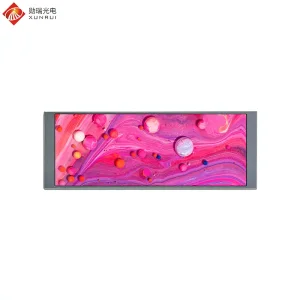
Custom 6.86 inch 480×1280 MIPI 40pin 700nits IPS Strip TFT LCD Module
View Product Details
Custom 3 inch 240×400 RGB 45pin 400nit IPS TFT LCD Module
View Product Details
China 2.8 inch 240×320 MCU 30pin interface 250nit TN TFT LCD display
View Product Details
Custom 5 inch 800×480 RGB 50pin interface 500nit TN TFT LCD Display
View Product Details
Custom 4 inch IPS 720×720 MIPI 30pin interface Circular TFT LCD module
View Product Details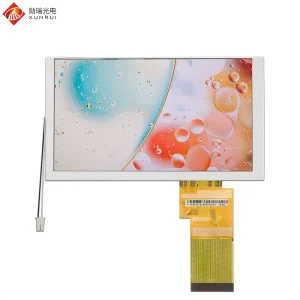
China 6.2 inch 800×480 RGB 60pin 500nit TN TFT LCD Module
View Product Details