

OEM / ODM Matrix 01
Precision Engineering Product Showcase
Explore our top-tier standard and customized TFT liquid crystal display modules ranging from compact micro-displays to wide-aspect vehicle instrumentation panels.

Custom 2.8 inch 240×320 TN TFT LCD Module with resistive touch panel
View Specifications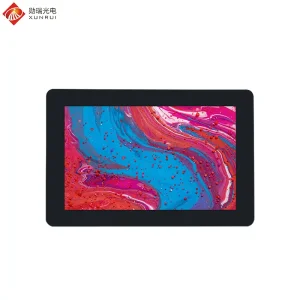
Custom 5 inch HDMI 800×480 IPS TFT LCD Module With driver board and CTP
View Specifications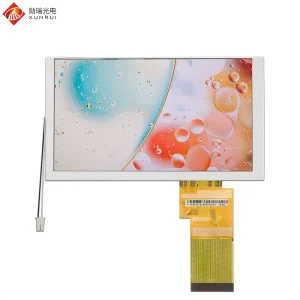
China 6.2 inch 800×480 RGB 60pin 500nit TN TFT LCD Module Manufacturer
View Specifications
China 12.3 inch 1920×720 EDP 60pin 400nit IPS Strip TFT LCD Display
View Specifications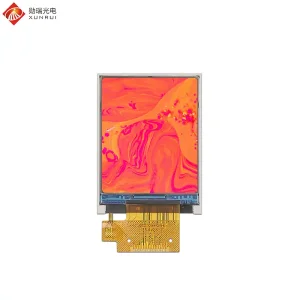
Custom 1.77 inch 128×160 SPI 14pin 250nit TN TFT LCD Module
View Specifications
China 3.5 inch TFT LCD display 320×240 RGB 54pin interface 350nit TN Screen
View Specifications
China 4.3 inch 800×480 IPS TFT LCD Module with capacitive touch panel
View SpecificationsDeep Engineering Analysis
The Engineering Anatomy of the Custom 6.2" TFT LCD
In mission-critical visual interfaces, the 6.2-inch format represents an optimal balance between spatial integration and high information density. Dive into the mechanical, optical, and electrical parameters that define industrial reliability.
Optical Stack & Liquid Crystal Modes
Our custom 6.2-inch panels are engineered in both Twisted Nematic (TN) and In-Plane Switching (IPS) modes. While TN provides sub-5ms response speeds suitable for dynamic readouts at lower BOM costs, our IPS variants provide full 85/85/85/85 all-angle viewing without chromatic shifting or grayscale inversion, essential for human-machine interfaces viewed from non-perpendicular vantage points.
- Resolution: 800×RGB×480 (WVGA native widescreen)
- Contrast Ratio: Up to 800:1 (TN) / 1000:1 (IPS)
- Color Gamut: 50% to 70% NTSC for realistic rendering
Thermal & Luminance Customization
Standard indoor displays (250–350 nits) quickly wash out when deployed in marine or automotive cabins. Xunrui specializes in custom high-density LED light guides coupled with low-forward-voltage driving architectures, escalating luminance from 500 nits to an ultra-bright 1,200 nits while minimizing power consumption and heat build-up behind the dashboard fascia.
- LED Backlight Lifetime: MTBF > 50,000 operational hours
- Operating Temperature: -20°C to +70°C standard, up to -30°C to +85°C
- Integrated Constant-Current LED Driver circuit boards
Signal Pinout & FPC Customization
Standard modules often lock hardware engineers into rigid pinouts that disrupt PCB layouts. Xunrui customizes Flexible Printed Circuits (FPCs), offering tailored length, shape, grounding shields, and connector pitch (0.5mm, 0.3mm). Interface options span RGB 24-bit 60-pin, LVDS for noise immunity across long harnesses, or integrated MIPI-DSI conversion bridges.
- Interface: 24-bit RGB / Single-channel LVDS / MIPI
- Tailored EMI shielding: Copper foil / Silver carbon paste
- Custom FPC bending profiles for tight spatial envelopes
| Design Specification | Standard Commercial Grade | Xunrui Industrial OEM Grade | Custom Automotive / Outdoor Variant |
|---|---|---|---|
| Screen Diagonal & Active Area | 6.2 Inch (137.52 × 77.23 mm) | 6.2 Inch (137.52 × 77.23 mm) | 6.2 Inch (Precision customized active bezel) |
| Luminance (Backlight Output) | 250 – 350 cd/m² (nits) | 500 cd/m² (Standard Sunlight Readable) | 800 – 1200+ cd/m² (Direct Solar Radiation) |
| Operating Temperature | 0°C to +50°C | -20°C to +70°C | -30°C to +85°C (Extreme Ambient) |
| Touch Sensor Technology | Bare LCD or 4-Wire Resistive | 4-Wire Resistive (RTP) / Multi-touch PCAP | Optical Bonded PCAP (G+G, 3mm-6mm IK08 Cover) |
| Interface Architecture | RGB 24-bit, 40-pin or 60-pin | RGB 60-pin / LVDS 20/30-pin | HDMI / Type-C Driver Board / Custom MIPI |
Procurement Certainty
Solving Global OEM Procurement Pain Points
International electronics brands face supply volatility, unexpected End-of-Life (EOL) notices, and inflexible minimum order quantities. Xunrui structures its manufacturing pipeline specifically to de-risk tier-1 and tier-2 procurement.
2016
Established in Shenzhen
5,000m²
Class 1000/10000 Cleanroom
2,000,000
Monthly Module Output (Pcs)
5-7 Yrs
Guaranteed Lifecycle Longevity
Obsolescence Protection & BOM Freezing
Consumer displays cycle out of production every 12 to 18 months, breaking certification cycles for industrial and automotive OEMs. Xunrui establishes long-term wafer agreements with Tier-1 glass foundries, freezing the bill of materials (BOM), timing controllers, and driver ICs for 5 to 7 years. In the event of wafer transitions, we guarantee an 18-month Last-Time-Buy (LTB) notification with drop-in pin-compatible redesigns.
Tiered Production Scalability (5 to 500,000 Units)
Traditional manufacturing conglomerates enforce 10,000+ unit MOQs, stifling early-stage pilot engineering and clinical trials. Our agile Shenzhen production lines accommodate prototype validation batches of 5 to 50 pcs, bridge production of 500 pcs, and ramp seamlessly into mass runs scaling past 500,000 units. You maintain identical automated quality metrics across all phases.
Rapid Engineering Turnaround & Direct DFM
Bypass untechnical distributor intermediaries. At Xunrui, your design files are reviewed within 24 hours directly by our senior display engineers. We provide Design For Manufacturability (DFM) feedback on backlight power efficiency, structural ribbing for bezel integration, and ESD/EMI trace isolation. Custom tooling and FPC samples can be finalized in as few as 15 working days.
Supply Chain Hegemony
The Shenzhen Factory Advantage: Vertical Integration
Located in the heart of China’s optoelectronics manufacturing hub in Fuyong, Bao'an, Shenzhen, Xunrui harnesses hyper-concentrated raw material access to offer unbeatable cost-to-performance efficiency and manufacturing agility.
Direct Wafer Sourcing
We source raw mother glass directly from premier foundries (BOE, HannStar, Innolux). In-house high-precision diamond wheel and laser scribing lines cut mother panels to custom dimensions with sub-micron edge tolerances.
Automated FOG/COF Assembly
Our cleanrooms run multi-head automated Film-On-Glass (FOG) and Chip-On-Glass (COG) bonding systems. Optical alignment cameras verify anisotropic conductive film (ACF) adhesion to ensure 100% pin contact integrity.
Integrated Touch & Optical Bonding
Avoid vendor finger-pointing between the display maker and the touch panel shop. We integrate projected capacitive (PCAP) and resistive touch (RTP) sensors in-house via both silicone air-gap frame bonding and full LOCA/OCA optical lamination.
Unbeatable Bill of Materials
Shenzhen's hyper-dense component ecosystem—polarizers, backlights, driver ICs, and glass substrates located within a 30-minute logistics radius—slashes production lead times by 40% and yields significant direct cost savings for your BOM.
Global Standards Compliance
5-Stage Quality Architecture & Regulatory Certifications
International deployments require unwavering adherence to environmental and electrical safety directives. Every custom 6.2 TFT LCD shipped from Xunrui is tracked through an automated ERP tracing system across five quality gates.
5-Gate Rigorous Inspection Routine
We eliminate out-of-box defects before transit. Our testing sequence enforces:
- IQC: Spectrophotometer and microscope incoming inspections on all raw glass, ICs, and backlight LEDs.
- Glass & Cell Check: Sub-pixel defect screening for zero bright-dot policies.
- FOG Aging: High-temperature and high-humidity bonding endurance aging (60°C / 90% RH).
- Finished Product Burn-in: 100% active display cycling under high dynamic thermal stress for 24–72 hours.
- OQC: Optical colorimeter, luminance uniformity, viewing angle, and packaging drop testing.
International Environmental Directives
Exporting to European, North American, and Asia-Pacific markets requires strict chemical and material safety compliance. All display modules manufactured by Shenzhen Xunrui meet or exceed international regulatory thresholds:
- RoHS 2.0 & REACH: Complete documentation proving zero lead, cadmium, mercury, or SVHC toxic flame retardants.
- Conflict Minerals Free: Certified ethical extraction supply chains for tantalum, tin, tungsten, and gold.
- UL94V-0: Flame-retardant FPC and diffuser film construction for passenger compartment safety.
Localized Engineering Integration Support
Global procurement extends beyond receiving crates of glass. Xunrui provides comprehensive English technical datasheets, 3D STEP files, and driver initialization C-code (covering ST7262, EK79001, and common display/touch controllers). Our field application engineers assist with microcontroller timing parameters, Linux kernel device tree overlays, and EMI mitigation over live video consultations.
Next-Gen Display Tech
Emerging Display Paradigms in the 6.2" Sector
As human-machine interaction shifts toward smartphone-like aesthetics within rugged outdoor and vehicle cockpits, our R&D team implements next-generation optical surface treatments and sensor technologies.
Full Optical Bonding (OCA / LOCA)
Standard displays utilize perimeter tape bonding, leaving an internal air gap between the touch layer and the LCD. This causes internal light refraction, ambient glare, and vulnerability to internal condensation. Xunrui offers full optical bonding using optical clear resin (LOCA) or dry adhesive (OCA). This eliminates internal reflections, boosts contrast by 300% under sunlight, and drastically strengthens impact shock resistance (IK07/IK08 rating).
AG / AR / AF Nano-Coatings
We apply industrial-grade surface treatments directly to the cover glass. Anti-Glare (AG) chemical etching disperses harsh point reflections into diffuse light; Anti-Reflective (AR) dielectric sputtering reduces surface reflectivity down to <1.5%; and hydrophobic Anti-Fingerprint (AF) oleophobic coatings prevent sebum accumulation, maintaining effortless wipe-clean surfaces for medical monitors and public terminals.
Noise-Immune Touch (Water & Heavy Gloves)
Traditional capacitive screens falter when drenched in liquid or operated with thick welder's gloves. By pairing automotive-grade touch controller ICs (e.g., Ilitek, Goodix) with custom firmware tuning, our 6.2-inch capacitive touch modules offer reliable tracking with 5mm thick industrial work gloves and feature dedicated water-rejection algorithms to prevent false touch triggers.
Real-World Case Deployment
Localized Application Scenarios for the 6.2" Form Factor
Engineered for extreme operating envelopes, our custom 6.2-inch modules are currently deployed across five key vertical industries worldwide.
Automotive 2-DIN & Fleet Telematics
The 6.2-inch 800×480 form factor is the classic standard for automotive double-DIN head units, dashboard clusters, and commercial fleet management dispatchers. Our displays provide wide -30°C to +85°C operating parameters, withstand vehicle battery load-dump fluctuations, and deliver 800+ nits luminance for clear navigation visibility under direct overhead sun.
Medical Diagnostic Equipment
Portable defibrillators, patient infusion pumps, and handheld ultrasound monitors require crisp WVGA rendering and consistent wide viewing angles. Our optically bonded IPS 6.2-inch displays prevent viewing parallax and feature antimicrobial cover glass resistant to repeated chemical wipe-downs (alcohol, bleach, and quaternary ammonium solutions).
Industrial PLC & CNC Factory Automation
Factory floors present intense electromagnetic interference (EMI) generated by heavy servo motors and arc-welders. Our custom 6.2-inch resistive touch and high-immunity PCAP displays incorporate isolated ground shielding planes and ESD ratings up to 15kV air discharge, guaranteeing 24/7 uninterrupted operation in noisy industrial environments.
OEM / ODM Matrix 02
Extended OEM Display Solutions Portfolio
From ultra-compact circular wearable displays to large-format 23.8-inch industrial human-machine interfaces, explore our vertically integrated manufacturing lineup.

China 7 inch 1024×600 LVDS 40pin interface 350nit IPS TFT LCD module
View Specifications
China 1.3 inch 240×240 SPI 16PIN IPS TFT LCD Module With Capacitive touch
View Specifications
China 5 inch 480×272 RGB 40pin interface 350nit TN TFT LCD module
View Specifications
China 5 inch 480×272 TN TFT LCD Module with capacitive touch panel
View Specifications
Custom 8 inch 1200×1920 MIPI 40pin 350nit IPS TFT LCD Display Module
View Specifications
Custom 10.1 inch 1024×600 RGB 50pin interface 350nit TN TFT LCD module
View Specifications
China 4.3 inch 800×480 IPS TFT LCD Module with resistive touch panel
View Specifications
Custom 23.8 inch 1920×1080 IPS TFT LCD display with capacitive touch panel
View SpecificationsProcurement & Technical Clarification
Frequently Asked Questions (FAQ)
Direct answers to the most critical technical, commercial, and logistical inquiries submitted by enterprise hardware engineering and supply chain teams.
What are the key technical differences between TN and IPS modes for a 6.2-inch TFT LCD?
Twisted Nematic (TN) panels are cost-effective and provide fast liquid crystal response times, making them popular for high-volume automotive head units where the viewer looks directly at the console. However, TN modules exhibit grayscale inversion and color shifting when viewed from the bottom or acute side angles. In-Plane Switching (IPS) panels align liquid crystals horizontally, delivering ultra-wide 85/85/85/85 viewing angles, uniform color fidelity across wide angles, and higher contrast. Xunrui manufactures both variants, allowing you to prioritize either BOM cost or premium optical clarity.
Can Xunrui modify an existing 6.2-inch standard display’s FPC to fit our enclosure?
Yes. Custom FPC (Flexible Printed Circuit) design is one of our primary core competencies. We can modify FPC length, geometry (L-shapes, offsets), pinout assignments, pitch (0.5mm, 0.3mm), and add custom grounding or EMI shielding (aluminum foil or silver paste). We can also mount active components on the FPC, including LED boost drivers, ESD diodes, or I2C touch bridge ICs, eliminating the need for an external interface adapter PCB.
What is the realistic MOQ and lead time for custom tooling and trial production?
Following initial engineering sign-off on 2D/3D mechanical drawings, custom FPC and backlight tooling requires approximately 15 to 20 working days. We then produce an engineering trial batch of 5 to 500 units to allow your hardware and software teams to complete full validation and environmental stress testing. For sustained mass production of fully customized modules, our standard minimum order quantity (MOQ) is 1,000 units, while standard off-the-shelf configurations carry flexible low-volume MOQ support.
How do you achieve sunlight readability on the 6.2" panel without thermal runaway?
Achieving 1,000 to 1,200 nits luminance in a compact 6.2" format requires more than simply overdriving LED current. Xunrui utilizes high-efficacy Nichia/Osram LED dies with luminous efficacy exceeding 130 lm/W, combined with optical prism enhancement films (BEF) and dual-brightness enhancement films (DBEF). Additionally, we mount the LED string to high-conductivity aluminum or copper MCPCB heat sinks that channel thermal energy directly into the outer chassis, preventing liquid crystal clearing (black spots) in hot outdoor environments.
What cover glass options are available for the capacitive touch panel (PCAP)?
We provide comprehensive cover lens customization. Options include soda-lime chemically strengthened glass or high-alumina Corning Gorilla glass ranging from 0.7mm to 6.0mm in thickness for high-impact IK08/IK10 vandal resistance. We offer custom ceramic silkscreen printing with corporate logos, dead-front button icons, cutouts for mechanical knobs, rounded chamfers (2.5D/3D edges), and specialized coatings including Anti-Reflective (AR), Anti-Glare (AG), and Anti-Fingerprint (AF).
How does Xunrui safeguard customers against component obsolescence?
We understand that medical, industrial, and automotive designs undergo lengthy, expensive regulatory qualification cycles. Xunrui operates on a BOM freeze policy: once a production sample is approved, the LCD glass, timing controller, driver IC, and backlight array remain unchanged for 5 to 7 years. If a component reaches unavoidable End-of-Life, we issue a formal 18-month Last-Time-Buy (LTB) notification and engineer pin-compatible drop-in replacements to prevent enclosure or PCB redesigns.
What quality certifications and compliance documentation can you provide for export?
Our manufacturing facilities are fully certified under ISO 9001 (Quality Management) and ISO 14001 (Environmental Management). All products comply with the European Union RoHS 2.0 Directive (EU 2015/863), REACH Regulation (EC 1907/2006), CE, and FCC electromagnetic directives. For automotive tier-1 suppliers, our display architectures comply with AEC-Q100 reliability test standards and operate under rigorous PPAP Level 3 documentation procedures upon request.
How does optical bonding compare to double-sided tape air-gap bonding for 6.2" units?
Air-gap tape bonding bonds the touch panel to the display only along the outer perimeter, leaving a 0.2mm–0.5mm air gap. This causes roughly 8.5% total light reflection from internal glass-to-air interfaces, washing out colors under bright sunlight. Full optical bonding replaces the air gap with an optical-grade silicone or acrylic adhesive (OCA/LOCA) matched to the refractive index of glass (n≈1.5). This drops internal reflections below 0.2%, increases perceived contrast by 300%, eliminates internal dust or moisture ingress, and dramatically reinforces overall module rigidity against physical impacts.