
Precision TFT Displays: Initial Showcase Selection
Explore proven standard and high-performance panel configurations manufactured under stringent ISO 9001 quality systems, ready for rapid prototyping and scale deployment.
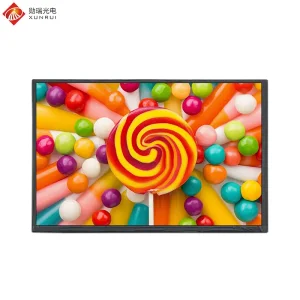
China 10.1 inch 1920×1200 LVDS 45pin 350nit IPS TFT LCD Display Manufacturers, Factories
Configure Product
China 5 inch 480×272 RGB 40pin interface 350nit TN TFT LCD module Manufacturer, Factory
Configure Product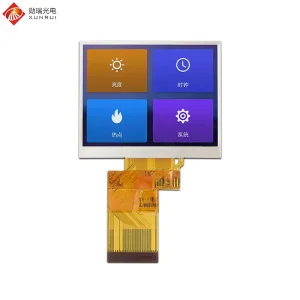
China 3.5 inch 320×240 RGB 54pin interface 350nit TN TFT LCD module Supplier, Factories
Configure Product
Custom 21.5 inch 1080×1920 LVDS 30pin 250nits IPS TFT LCD Display Manufacturers, Suppliers
Configure Product
China 4.3 inch 800×480 IPS TFT LCD Module with capacitive touch panel Manufacturer, Suppliers
Configure Product
China 8 inch 1024×768 LVDS 40pin interface 300nit IPS TFT LCD module Manufacturer, Supplier
Configure Product
Custom 10.1 inch 1024×600 1000nit High brightness TN TFT LCD module Factories, Factory
Configure Product
Custom 2.8 inch 240×320 SPI 10pin 250nit TN TFT LCD Display Supplier, Factories
Configure ProductThe Strategic Evolution of 6.2-Inch TFT Modules in Industrial & Automotive Applications
The human-machine interface (HMI) domain is undergoing an architectural transformation. For over a decade, system integrators relied on standard 5.0-inch or 7.0-inch displays. However, modern embedded hardware designs—constrained by double-DIN enclosures, compact industrial handheld profiles, and streamlined EV center consoles—frequently encounter a spatial mismatch. The 6.2-inch TFT LCD module has arisen as the engineered golden ratio, optimizing information density without increasing product housing envelopes.
With an active display area delivering high-definition widescreen aspect ratios (typically 16:9, 18:9, or specialized wide-bar profiles), the custom 6.2-inch panel resolves interface crowding. It facilitates modern touch UI implementations, side-by-side data dashboards, and automotive instrumentation layouts without forcing OEMs to escalate thermal and power budgets to 8-inch or 10-inch form factors.
Design Consideration: A custom 6.2-inch TFT module delivers up to 34% more active visual surface than a legacy 5.0-inch screen while fitting precisely into mechanical envelopes where 7.0-inch bezels compromise structural chassis rigidity.
Global Procurement Mandates: Overcoming Legacy Display Shortcomings
Global procurement teams across North America, Europe, and East Asia are phasing out off-the-shelf consumer-grade panels in favor of custom-engineered industrial display solutions. The primary operational risks plaguing standard panels include premature backlight obsolescence, optical degradation under persistent solar UV radiation, and severe interface incompatibilities across legacy microcontroller architectures.
When sourcing a custom 6.2 TFT module supplier & factory, enterprise engineering teams evaluate suppliers against three mission-critical metrics: optical customization versatility (sunlight readability and optical bonding), mechanical ruggedization (IK-rated cover glass with anti-shatter coatings), and guaranteed supply continuity spanning 5 to 7+ years.
At Shenzhen Xunrui Optoelectronic Technology Co., Ltd. (XUNRUI), established in 2016, we structure our manufacturing ecosystem specifically around solving these tier-one enterprise engineering challenges.
Full-Stack Customization Capabilities for 6.2" TFT Modules
From glass-level chemical strengthening to custom backlight rails and low-noise high-speed differential signaling, we tailor every layer of the optoelectronic stack.
Optical Stack Engineering
Tuning the optical stack is vital for devices deployed in uncontrolled ambient environments, from desert vehicle cabins to brightly lit operating rooms.
- High-Luminance Backlight: 800 to 1,500+ nits
- Optically Clear Adhesive (OCA) / LOCA Bonding
- Anti-Glare (AG), Anti-Reflective (AR), Anti-Fingerprint (AF)
- Semi-transmissive (transflective) configurations
Electrical & Interface Adaptability
Seamlessly bridge your mainboard processing unit with customized drive electronics without requiring intermediate carrier conversions.
- MIPI DSI (4-lane high-speed data transmission)
- Single/Dual Channel LVDS (20/30/40-pin mapping)
- RGB Parallel, SPI, and 8080 MCU interfaces
- Custom FPC routing, EMI shielding, and custom pin-outs
Touch Panel & Cover Lens Customization
Integrate robust interaction systems calibrated for industrial moisture rejection, thick glove actuation, and harsh vandal resistance.
- Projected Capacitive (PCAP) with Goodix/ILITEK ICs
- 4-Wire / 5-Wire Heavy-Duty Resistive Touch Panels
- Chemically Tempered Glass (0.7mm to 6.0mm / IK08–IK10)
- Precision Screen Printing with Custom Logos and Chamfers
China Factory 4.0: Supply Chain Resilience & Efficiency Advantages
How XUNRUI leverages Shenzhen's concentrated optoelectronic ecosystem and automated assembly technologies to de-risk high-mix, custom OEM production.
Automated COG & FOG
Fully automated Chip-on-Glass (COG) and Flex-on-Glass (FOG) production lines maintain micro-pitch alignment accuracy below ±3μm, preventing intermittent contact flaws.
Agile Prototyping Batches
Bridging the validation valley: we offer one-time small-batch trial runs of 5 to 500 units to certify tooling and electrical performance before committing to 1,000+ unit mass runs.
Ecosystem Cluster Speed
Located in Bao'an, Shenzhen, our proximity to raw glass cutters, driver IC foundries, LED packaging, and precision CNC houses compresses tooling lead times by up to 45%.
ISO 9001 / 14001 Control
Every fabrication run undergoes a rigorous 5-stage verification gateway: incoming IQC, laser glass checks, FOG thermal aging, active visual aging, and final OQC sampling.
| Technical Specification | Standard Commercial 6.2" Module | XUNRUI Custom Industrial 6.2" TFT Module | Engineering Benefit |
|---|---|---|---|
| Luminance Output | 250 – 350 cd/m² (nits) | 800 – 1,500 cd/m² (Custom Array) | Complete sunlight readability under direct solar wash. |
| Operating Temperature | -10°C to +60°C | -30°C to +85°C (Automotive Grade) | Zero liquid crystal sluggishness or clearing point failures. |
| Viewing Angle Technology | TN (6:00 or 12:00 Gray Scale Inversion) | IPS (All View: 85°/85°/85°/85°) | Eliminates color inversion across wide operator viewing angles. |
| Bonding Technology | Perimeter Air-Gap Tape Bonding | Full OCA / LOCA Optical Bonding | Prevents internal condensation, eliminates internal reflections. |
| Touch Controller IC | Standard Consumer I2C Controller | Industrial ILITEK / Goodix (Noise-Immune) | Resists high EMI, conductive water films, and heavy industrial gloves. |
| Supply Continuity | 12 – 18 Months Typical Life Cycle | Guaranteed 5 to 7+ Years Availability | Avoids costly PCB respins and recurring regulatory certifications. |
Mission-Critical Application Scenarios for 6.2-Inch Displays
Custom 6.2-inch TFT LCD configurations bridge space, visibility, and thermal requirements across mission-critical commercial and industrial equipment.
EV Dashboards & Double-DIN Clusters
For electric motorcycles, commercial fleet telematics, and construction vehicle cockpits, our custom 6.2" IPS displays with anti-glare etching provide crisp gauge cluster readouts despite shifting sunlight vectors and high cabin vibration.
Rugged Industrial Handhelds & Test Meters
Field technicians operating thermal imaging scanners, OTDR fiber testers, and explosive atmosphere diagnostics rely on our custom 6.2-inch modules outfitted with thick, shatterproof cover glass and glove-calibrated capacitive touch sensors.
Medical Diagnostics & Infusion Control
Precision fluid delivery pumps, portable defibrillators, and dialysis monitors require accurate grayscale tracking and wide viewing cones. Our optical bonding prevents interior dust ingress while withstanding aggressive chemical disinfectants.
Smart Grid & EV Charging HMI Terminals
Unattended outdoor DC fast chargers and utility power substations operate 24/7/365 under direct ultraviolet exposure and freezing winters. We engineer wide-temperature LED arrays with integrated thermistors for automatic brightness derating.
Security Intercoms & Access Consoles
Modern building access control terminals combine biometric facial scanning with high-definition video feedback. A 6.2-inch custom portrait-oriented TFT module offers optimal aspect geometry for head-and-shoulder video framing.
Point-of-Sale (POS) & Automated Kiosks
Retail and hospitality ticketing machines need intuitive touch responsiveness and scratch-resistant surfaces. We pair 7H surface hardness glass with customized driver boards supporting AV, VGA, HDMI, and direct LVDS signal inputs.
Precision TFT Displays: Extended Showcase Selection
Explore additional standard and specialized display assemblies manufactured in our Shenzhen facility, supporting diverse industrial, medical, and commercial interfaces.

Custom 10.1 inch 1024×600 RGB 50pin interface 350nit TN TFT LCD module Manufacturer, Manufacturers
Configure Product
Custom 10.1 inch 1024×600 TN TFT LCD display with resistive touch panel Supplier, Suppliers
Configure Product
China 4.3 inch 480×272 RGB 40pin interface 350nit TN TFT LCD module Manufacturer, Factories
Configure Product
Custom 4.3 inch 480×272 MCU/SPI 40pin 350nit TN TFT LCD Display Manufacturer, Factory
Configure Product
China 7 inch 800×480 1000nit Wide Operating Temperature Range TN TFT LCD Display Manufacturer, Manufacturers
Configure Product
Custom 2.4 inch TFT LCD module 240×320 SPI 14pin interface 250nit IPS screen Manufacturer, Factory
Configure Product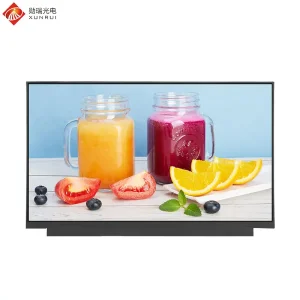
China 13.3 inch 1920×1080 EDP 30PIN 280nit IPS TFT LCD Module Suppliers, Factories
Configure Product
China 4.3 inch 800×480 1000nit High brightness IPS TFT LCD module Supplier, Factory
Configure ProductEnd-to-End Reliability Engineering & Environmental Qualification
Before volume commitment, every custom module prototype undergoes rigorous environmental and electrical stresses inside our Shenzhen testing center.
Thermal Shock & Storage
Modules endure 240+ continuous hours in programmable chambers ranging from -30°C to +85°C with rapid ramp rates (10°C/min) to verify zero ITO film delamination or backlight warping.
ESD & Surge Immunity
Compliant with IEC 61000-4-2 standards, our engineering team applies ±8kV contact discharge and ±15kV air discharge across cover glass and FPC ground rings without latch-up.
Damp Heat & Constant Humidity
Subjected to +60°C at 90% Relative Humidity for 500 hours to ensure complete moisture seal integrity of the polarizers and prevent microscopic silver migration in touch sensor circuits.
Frequently Asked Questions: Technical & Procurement FAQ
Key technical answers directly from our optoelectronic engineering and manufacturing team to streamline project scoping.
What is the typical NRE and tooling timeline for a custom 6.2 TFT module?
Initial counter-drawings for custom FPC routing, backlight framing, and touch cover lenses are delivered within 3 to 5 working days. Once mechanical and electrical CAD files are customer-approved, sample fabrication requires approximately 18 to 25 days. Total NRE tooling charges vary depending on whether glass masks, custom FPC dies, or injection-molded backlight bezels are specified.
What is your Minimum Order Quantity (MOQ) for custom developments?
To lower development risk, XUNRUI offers an agile one-time pilot run of 5 to 500 units following prototype validation. This allows hardware teams to execute field testing, EMI verification, and software calibration. For customized mass production, our baseline MOQ starts at 1,000 units, while standard catalog modules can be sourced in flexible batch sizes.
How do you achieve 1,000+ nits sunlight readability without thermal runaway?
High brightness is attained through high-efficiency Nichia or Osram LED dies packaged into thermally conductive aluminum core PCBs. We optimize the light guide plate (LGP) optical micro-dot patterns and integrate dual brightness enhancement films (DBEF). This doubles light extraction efficiency without multiplying driving current, preserving LED operational lifespan past 50,000 hours.
When should we specify full optical bonding over tape air-gap bonding?
Optical bonding (utilizing liquid LOCA or solid optical silicone OCA) is strongly recommended for outdoor, marine, or medical use cases. By eliminating the internal air gap between the TFT polarizer and cover glass, internal light reflections drop from ~13.5% to under 0.2%, dramatically increasing contrast under direct sunlight while preventing moisture condensation and fogging.
Can you provide matching HDMI, LVDS, or USB-C drive adapter boards?
Yes. In addition to raw TFT panel manufacturing, XUNRUI designs and populates matching driver boards featuring HDMI, VGA, AV, and DisplayPort inputs. We also furnish integrated touch bridge boards converting I2C touch IC outputs directly into plug-and-play USB HID protocols compatible with Windows, Linux, Android, and RTOS environments.
How does XUNRUI guarantee 5-to-7-year component availability?
We maintain direct strategic alignment with primary semiconductor foundries and glass substrate producers. We prioritize driver IC architectures that have committed long-term roadmaps. In the event of an unavoidable upstream silicon obsolescence, our Shenzhen engineering center issues a minimum 6-month Last-Time-Buy (LTB) notice and provides pin-compatible drop-in alternative redesigns.
What cover glass surface treatments are recommended for outdoor terminals?
For outdoor interactive terminals, we recommend chemically strengthened soda-lime or aluminosilicate glass (Gorilla Glass equivalent) with an Anti-Reflective (AR) optical coating to maximize transmittance, an Anti-Glare (AG) chemical etch to diffuse specular glare, and an oleophobic Anti-Fingerprint (AF) vacuum deposition coating with a water contact angle >110°.
Can your capacitive touch panels operate reliably with water on the screen?
Yes. We utilize high-performance projected capacitive (PCAP) touch controllers from ILITEK and Goodix that feature advanced mutual-capacitance algorithms combined with self-capacitance scanning. This dual-sensing architecture successfully differentiates between purposeful finger touches, conductive water droplets, and continuous water films, completely suppressing false actuations.
Initiate Your Custom 6.2 TFT Display Project
Partner directly with Shenzhen Xunrui Optoelectronic Technology Co., Ltd. for engineering reviews, detailed 3D step files, optical simulations, and rapid evaluation units tailored to your project roadmap.
Direct Engineering Contact
Submit your display parameters, interface requirements, and target application drawings directly to our Shenzhen optoelectronic engineering headquarters.
[email protected]Technical Consultation
Direct communication via phone, WeChat, or WhatsApp for rapid mechanical review, CAD sign-off, and sample logistics coordination.
+86-13923457816Factory Facility
Shenzhen Xunrui Optoelectronic Technology Co., Ltd.
Hualun Science Park, Fuyong Sub-district, Bao'an District, Shenzhen, China