
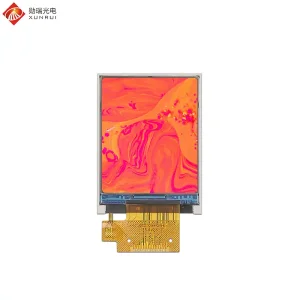
Direct Sourcing Lineup
Precision Engineered LCD Modules & Sub-Assemblies
Explore our top-tier small-to-medium TFT and IPS visual modules configured for industrial HMI, smart terminals, and commercial appliances.



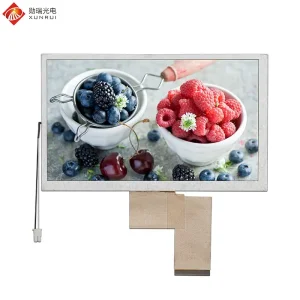

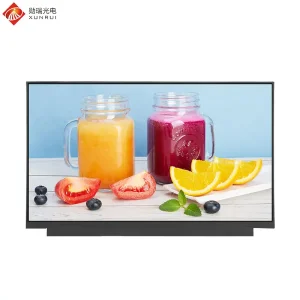

Supply Chain Excellence
Why Global OEMs Partner with China for 3.2 Inch HD IPS Displays
Shenzhen's optoelectronic cluster integrates raw substrate cutting, driver IC integration, high-density FPC fabrication, and automated optical bonding under one ecosystem.
In modern industrial instrumentation, healthcare monitoring, and high-reliability IoT devices, the 3.2 Inch HD IPS Display has achieved status as a golden standard form factor. As the global micro-display landscape evolves away from standard Twisted Nematic (TN) panels toward In-Plane Switching (IPS) matrices, Chinese manufacturing hubs—spearheaded by Shenzhen Xunrui Optoelectronic Technology—have redefined the cost-to-performance matrix. Factory-level integration provides system designers with an uncompromising combination of 178-degree symmetrical viewing angles, ultra-high pixel per inch (PPI) crispness, and deep chromatic stability across hostile operating temperatures.
Choosing an authentic Chinese direct supplier goes beyond cost-down procurement. It provides immediate access to an agile engineering environment capable of modifying driver code registers (ST7789V, ILI9806, or ST7701S), refining backplane heat sink geometries, and tailoring flexible printed circuits (FPC) with rapid-turn sample delivery. With dedicated Class 1,000 cleanrooms and vertically clustered raw component ecosystems, Chinese manufacturing centers turn complex optoelectronic blueprints into mass-production reality in record time.
2M+
Monthly Module Capacity
5,000m²
ISO Cleanroom Facilities
5-Step
Comprehensive QC Gate Plan
500+
Active Custom Global OEMs
Optoelectronic Evolution
Market Trends Transforming 3.2-Inch Visual Displays
Technological innovations reshaping industrial Human-Machine Interfaces (HMIs) and smart edge appliances.
Sunlight Readability & High-Nits BLU
Standard displays fail under ambient solar wash-out. Contemporary 3.2" industrial solutions integrate high-efficiency LED arrays driving luminance from 800 up to 1,500 nits, paired with transflective polarizers for ultra-low power sunlight visibility.
OCA & OCR Optical Bonding Integration
Replacing perimeter air-gap tape with Optically Clear Resin (OCR) eliminates internal air reflections, enhances impact resistance against IK08 physical shock tests, and blocks internal condensation during radical thermal cycling.
EMI/EMC Hardened FPC Architecture
With industrial machinery emitting substantial electrical switching noise, modern 3.2" IPS modules utilize multi-layer grounding copper layers and integrated ferrite damping within the FPC to pass stringent CE and FCC Class-B emission norms.
Implementation Architecture
Localized Deployment Scenarios & Enterprise Solutions
From handheld diagnostic tools to grid automation cabinets, examine how the 3.2" IPS form factor is engineered for mission-critical reliability.
Medical Handhelds & Diagnostics
Compact infusers, portable ECG scanners, and lab centrifuges demand absolute color fidelity and high resolution (up to 480×800 or 320×480) for reading blood metrics. Our IPS screens deliver crisp pixel clarity paired with anti-bacterial, bleach-resistant chemically strengthened cover glass.
Smart Building Control & HVAC Hubs
Installed inside architectural wall boxes, thermostats require full-angle readability for users of varying heights. Our 3.2-inch modules offer custom 2.5D curved glass cover lamination with integrated projected capacitive touch (PCAP) that recognizes wet or gloved hands.
Electric Vehicle EV Chargers & Metering
Exposed to severe sun radiation, rainfall, and thermal shifts from -30°C to +85°C. Xunrui’s wide-temperature IPS solutions prevent black-screen liquid crystal clearing under hot sun while maintaining instantaneous pixel response times for power billing meters.
Procurement & Risk Mitigation
Demystifying Procurement: What Global B2B Buyers Must Demand
Essential criteria to verify supplier credibility, manage long-term component lifecycle, and secure repeatable batch consistency.
5 to 7-Year Panel Longevity Roadmaps
Consumer displays sunset in 12–18 months. Industrial engineering teams cannot bear frequent re-tooling and PCB redesign costs. We maintain strict agreements with leading glass foundries to guarantee Form-Fit-Function (FFF) longevity for up to 7 years, protected by PCN notices.
Multi-Stage Gate Inspection (ISO 9001)
Every module undergoes IQC raw material screening, automated polariser cleaning, high-precision FOG (Film on Glass) alignment, continuous high-temp electrical aging, and stringent OQC outgoing testing. This reduces dead pixel rates to sub-AQL 0.4 standards.
Flexible Bridging Boards & Protocols
Whether your host micro-controller utilizes 3/4-wire SPI, 8/16-bit Parallel MCU, RGB, or MIPI DSI, we supply in-house configured driver boards (HDMI, USB, Type-C, LVDS) to accelerate prototype testing from months to days.
Technical Clarifications
Frequently Asked Questions: 3.2" HD IPS Technology
Authoritative insights straight from our Shenzhen application engineering lab.
What are the key technical differences between 3.2" TN and 3.2" IPS LCD modules?
TN (Twisted Nematic) displays exhibit severe color inversion and contrast degradation when viewed off-axis (especially at 6 o'clock or 12 o'clock angles). Conversely, 3.2" IPS (In-Plane Switching) panels operate by twisting liquid crystal molecules parallel to the glass substrate. This delivers symmetrical 85/85/85/85 viewing angles, uniform chromatic rendition, and crisp contrast, making them the preferred standard for medical instruments and precision HMIs where misreading visual data carries operational risk.
Can a 3.2-inch HD IPS display be paired with custom cover glass and touch sensors?
Yes. We engineer both Projected Capacitive (PCAP) and 4-Wire Resistive Touch Panels (RTP). For PCAP configurations, we offer chemically tempered cover plates up to 3mm-6mm thickness, anti-glare (AG), anti-reflective (AR), and anti-fingerprint (AF) coatings. We calibrate touch IC controllers (e.g., FocalTech, Goodix, or Ilitek) for full glove support and moisture tolerance.
What interface options are standard for 3.2-inch TFT/IPS displays?
Depending on your host controller's bandwidth, we provide 3-wire/4-wire SPI (minimal pin count for MCUs), 8/16-bit 8080 MCU parallel interfaces, high-bandwidth RGB interfaces for smooth frame transitions, and 2-to-4 lane MIPI-DSI for modern microprocessors running Android or Linux. Pin mapping, length, and shape of the connecting FPC can be customized to match your enclosure dimensions.
How does your factory prevent backlight thermal runaway on 1000+ nit displays?
To achieve sunlight readability without reducing LED lifespan, our high-brightness backlights integrate aluminum thermal backplates, high-efficiency Nichia or San'an LED chips, and precision light-guide plates (LGP). Driving LEDs with optimized constant-current step-down regulators keeps junction temperatures under 65°C, ensuring a 50,000-hour operational half-life (MTBF).
What is the prototyping to mass production workflow with Shenzhen Xunrui?
Our gate-controlled workflow spans six stages: (1) Initial mechanical, electrical, and optical design review; (2) Engineering CAD/FPC drawing sign-off; (3) Functional sample prototyping (usually 7–15 working days); (4) Client validation and design iterations until formal sign-off; (5) Pilot batch trial run (5 to 500 units) to verify production tooling; (6) Volume production with an MOQ of 1,000+ units.
Extended Portfolio
Specialty Form Factors, Circular Panels & Touch Systems
From sub-compact rotary knobs to widescreen bar formats, select the ideal hardware configuration for your upcoming platform release.







