
High-Performance Standard & Custom Display Modules
Direct-from-factory optical architectures engineered for rugged environments, rapid sampling, and long-term lifecycle availability.

Custom 10.4 inch 1024×768 LVDS 30pin 600nit IPS TFT LCD Module Factories, Factory
Configure Product
China 4.3 inch vertical screen 480×800 RGB 40pin IPS TFT LCD Display Manufacturer, Manufacturers
Configure Product
Custom 5 inch TFT LCD module 800×480 RGB 40pin interface 350nit IPS screen Supplier, Factories
Configure Product
Custom 2.8 inch 240×320 SPI 10pin 250nit TN TFT LCD Display Supplier, Factories
Configure Product
China 7 inch 1024×600 LVDS 40pin interface 350nit IPS TFT LCD module Manufacturer, Manufacturers
Configure Product
Custom 4.3 inch TFT LCD 800×480 RGB 40pin interface 300nit IPS module Manufacturer, Supplier
Configure Product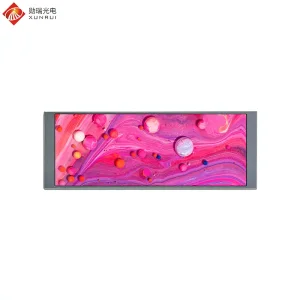
Custom 6.86 inch 480×1280 MIPI 40pin 700nits IPS Strip TFT LCD Module Supplier, Factory
Configure Product
China 10.1 inch TFT LCD module 1280×800 LVDS 40pin interface 350nit IPS screen Manufacturer, Manufacturers
Configure ProductEngineering Architecture of 4-Inch TFT LCDs
Analyzing physical electro-optical parameters, interface protocols, and durability standards that define modern Chinese factory manufacturing.
In-Plane Switching (IPS) Optics
Unlike legacy Twisted Nematic (TN) panels prone to grayscale inversion and color shifts when viewed off-axis, modern 4-inch TFT LCD solutions from Tier-1 Shenzhen suppliers utilize IPS technology. This provides an ultra-wide symmetric viewing angle of 80°/80°/80°/80° (U/D/L/R) with high contrast ratios exceeding 800:1, making them indispensable for medical carts, handheld diagnostics, and critical industrial automation panels.
High-Efficiency Driver ICs
Our 4.0-inch and 4.3-inch modules integrate industry-proven driver ICs, notably the ST7701S, ILI9806E, and NV3052C. These controllers support versatile system interfaces including RGB (16/18/24-bit), 4-wire SPI, MCU 8/16-bit, and high-speed MIPI-DSI (2-lane). Built-in frame memory, programmable gamma curves, and ultra-low sleep current (<15µA) facilitate seamless pairing with microcontrollers from STMicroelectronics, NXP, and ESP32 platforms.
Thermal & Optical Optimization
Outdoor and vehicular environments expose small-format screens to intense solar radiation and extreme thermal cycling. By deploying customized matrix LED light bars driven at high luminous efficiency, optical-grade light guide plates (LGP), and enhanced 3M reflective films, our modules reach luminances up to 1500 nits. Coupled with polarizers treated for Anti-Glare (AG) and Anti-Reflection (AR), total sunlight readability is achieved without overheating.
Key Deployment Scenarios for 4-Inch Displays
From smart building automation to mission-critical industrial test systems, explore how our engineering-first design meets real-world constraints.
Smart Home 86-Box Wall Switches
Standard architectural wall plates (EU/Asian 86mm boxes and US gang boxes) have adopted the 4.0-inch 720×720 square and 480×480 format as the global gold standard for centralized HVAC, lighting, and IoT scene controllers. Integrated with edge-to-edge 2.5D cover glass, capacitive touch (PCAP) with anti-fingerprint (AF) oleophobic coating, and wake-on-touch gesture capability, these displays elevate residential automation aesthetics while maintaining 24/7 continuous operation.
Industrial Handheld Terminals & Scanners
Rugged mobile computers, warehouse barcode terminals, and field multimeters require a compact form factor that withstands frequent 1.5-meter concrete drops and continuous vibration. Our 4.0-inch vertical 480×800 IPS modules feature reinforced FPC bend points, metal bezel chassis reinforcements, and optical bonding with chemically strengthened Corning Gorilla Glass or Dragontrail, delivering high drop resistance and moisture barrier sealing up to IP67.
Portable Medical Diagnostics
Point-of-care (POC) ultrasound, pulse oximetry monitors, and electronic infusion pumps demand pristine optical fidelity, true color rendering, and strict electromagnetic compatibility (EMC). Our 4-inch display assemblies incorporate EMI shielding foil on the back of the FPC and display cavity to pass EN 60601-1-2 clinical emission standards. Capacitive touch controllers are custom-tuned to respond accurately to sterile latex or nitrile surgical gloves.
EV Charging Stations & Fuel Dispensers
Outdoor Electric Vehicle Supply Equipment (EVSE) and automated fuel pumps endure blistering summer sun, sub-zero winters, and driving rain. Utilizing UV-blocking optical adhesives and specialized LED backlight strings delivering upwards of 1200 nits, our 4.0-to-4.3 inch HMI modules prevent solar blackening (clearing point up to +110°C) and provide flawless readability in direct midday sunlight without premature LED degradation.
Commercial POS & Smart Ticketing Terminals
Payment kiosks and handheld POS terminals require compact screens that handle high duty cycles and constant tactile interaction. Our touch-integrated 4-inch solutions offer multi-touch gesture capability, IK07/IK08 surface shatter resistance, and compatibility with privacy filter films to comply with PCI-PTS financial transaction regulations while maintaining responsive touch sampling rates exceeding 100Hz.
Automotive Auxiliary Instruments & Knobs
Modern vehicle interior architectures use smart rotary knobs with integrated displays and digital auxiliary gauges. A 4.0-inch circular or square display provides physical haptic interaction paired with vibrant digital feedback. Our automotive-grade modules withstand harsh vehicle voltage transients, meet stringent vibration tests (AEC-Q100 standards for driver ICs), and support quick-response CAN-bus or serial interfaces.
Shenzhen Supply Chain Agility & Efficiency
How our vertically integrated Bao'an manufacturing cluster delivers cost efficiency, reliable component sourcing, and rapid iteration cycles.
Why Global OEMs Choose Direct China Sourcing
Shenzhen Xunrui Optoelectronic Technology operates from the core of the global optoelectronics manufacturing cluster in Bao'an District, Shenzhen. By tapping directly into high-generation TFT-LCD mother glass fabrication lines (BOE, CSOT, Tianma, HannStar), our cutting-edge FOG (Flex-on-Glass) and COG (Chip-on-Glass) automated lines deliver unmatched component yields and price resilience.
Overseas engineering procurement teams benefit from reduced turnaround times. From initial CAD drawing release to physical prototype delivery, our NPI (New Product Introduction) workflow typically clocks under 15 working days. This rapid prototyping velocity ensures your hardware timeline stays ahead of development schedules without sacrificing ISO-certified QA standards.
- 5,000 m² Class 1000 and Class 10,000 Cleanroom Production Facilities
- Long-term Longevity Guarantee: 5 to 7 Years Minimum Production Life
- Flexible MOQ: 5-500 pcs Small Pilot Batches Before Full Mass Production
| Parameter | Standard Commercial | XUNRUI Industrial Spec |
|---|---|---|
| Operating Temp | -10°C to +60°C | -30°C to +85°C |
| Luminance Options | 250 - 350 Nits | 400 - 1500 Nits (Configurable) |
| Optical Bonding | Air Gap Tape Only | OCA / LOCA Vacuum Optical Bonding |
| Cover Glass | Soda-Lime 0.7mm | Chemically Toughened 1.1 - 4.0mm |
| FPC Customization | Fixed Standard Pinout | Custom Pinout, Length, EMI Shield |
| Quality Gate System | Spot Check Only | 5-Gate 100% Inspection & Burn-In |
Technology Roadmap: The Next Era of 4-Inch Displays
Anticipating next-generation embedded system requirements through active R&D in optical coatings, power efficiency, and haptic integration.
TDDI (Touch and Display Driver Integration)
Traditional architectures utilize separate ICs for display driving and capacitive touch sensing, demanding dual FPC tails and higher BOM complexity. Our next-gen 4-inch product roadmap integrates TDDI chips directly onto the panel glass. This design reduces overall module thickness by up to 25%, eliminates parasitic capacitance between display and sensor layers, and significantly improves touch signal-to-noise ratio (SNR) under noisy industrial conditions.
Mini-LED Local Dimming Backlights
For applications where extreme contrast, deep blacks, and outdoor legibility must coexist without consuming prohibitive power, we are incorporating multi-zone Mini-LED backlighting into compact 4.0" to 4.3" form factors. By selectively extinguishing backlights behind dark pixels, display contrast jumps toward 100,000:1, while overall system power consumption drops by 30-40% during standard UI rendering.
Advanced Surface Treat & Optical Bonding
Optical clarity depends directly on bonding precision. By executing full vacuum OCA (Optically Clear Adhesive) and LOCA (Liquid Optical Clear Adhesive) bonding between the display glass and tempered touch sensor, we eradicate internal air refraction. Coupled with triple-action surface coatings (Anti-Glare, Anti-Reflective, Anti-Fingerprint), specular reflections drop below 1.2%, providing effortless readability in bright field lighting.
Complementary Display Sizes & Specialized Driver Modules
Explore our companion display lineup, from micro-footprint 2.0-inch indicators to integrated HDMI industrial workstation displays.

Custom 2.4 inch 240×320 MCU 40pin interface 250nit TN TFT LCD module Manufacturers, Factory
Configure Product
Custom 5 inch 800×480 TN TFT LCD display with capacitive touch panel Manufacturers, Suppliers
Configure Product
Custom 3 inch 240×400 RGB 45pin 400nit IPS TFT LCD Module Manufacturers, Factories
Configure Product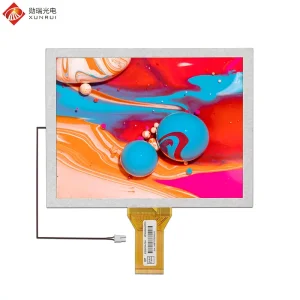
China 8 inch 800×600 RGB 50pin 350nit TN TFT LCD Display Manufacturers, Factories
Configure Product
China 5 inch 800×480 1200nit High brightness TN TFT LCD module Suppliers, Factories
Configure Product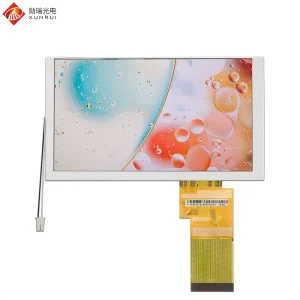
China 6.2 inch 800×480 RGB 60pin 500nit TN TFT LCD Module Manufacturer, Manufacturers
Configure Product
Custom 2 inch 480×240 RGB 40pin 150nit TN TFT LCD Display Supplier, Suppliers
Configure Product
China 7 inch HDMI 1024×600 IPS TFT LCD Module With driver board and CTP Supplier, Factory
Configure Product5-Gate Quality Assurance & Global Compliance
Every customized 4-inch TFT LCD leaving our cleanroom undergoes strict optical, environmental, and mechanical screening.
Stage 1 & 2: Raw Material & FOG Aging
Incoming glass substrates, polarizers, and driver ICs undergo rigorous IQC inspection for micro-cracks, ITO impedance uniformity, and optical purity. Post Chip-on-Glass (COG) and Flex-on-Glass (FOG) bonding, panels undergo an initial 24-hour high-temperature electrical burn-in to eliminate early failure risks before backlight encapsulation.
Stage 3 & 4: Environmental Stress Screening
Modules are tested in high/low-temperature operating chambers cycling from -30°C to +85°C, with damp heat soak tests (60°C / 90% RH for 240 hours). Mechanical verification includes 3-axis harmonic vibration, electrostatic discharge (ESD) testing up to ±8kV contact and ±15kV air discharge, and ball-drop impact tests on cover glass.
Stage 5: Final OQC & Full Traceability
Before nitrogen packaging, our automated optical inspection (AOI) instruments test for chromaticity balance, uniform brightness across 9 inspection zones, response speed, and touch coordinate linearity. Each unit is laser-marked with a unique DataMatrix code tracking bill-of-materials traceability from glass lot to final packaging.
Frequently Asked Questions on 4-Inch Display Sourcing
Essential guidance covering electrical interfaces, optical bonding, driver boards, and tooling customization.
What are the standard resolutions and aspect ratios available for 4-inch TFT LCD screens?
1. Vertical / Portrait Format: 4.0-inch and 4.3-inch 480×800 WVGA screens (16:9 or 5:3 ratio), ideal for handheld barcode scanners, two-way intercom terminals, and medical infusion pumps.
2. Square Format: 4.0-inch 720×720 or 480×480 screens (1:1 ratio), widely preferred for smart home thermostats, EU/US 86-box smart switches, and rotary control dials.
3. Horizontal Format: 4.3-inch 800×480 WVGA and 480×272 landscape panels, the classic standard for industrial HMIs, automotive backup displays, and laboratory instruments.
Which hardware interfaces are supported, and which should I choose for my MCU/MPU?
• SPI / QSPI (3-wire or 4-wire): Best for low-cost, resource-constrained MCUs (such as ESP32, STM32F4). Simplifies routing to 4-10 pins; well-suited for static menus or low-frame-rate UI updates.
• Parallel RGB (16/18/24-bit): Standard interface for mid-tier application processors (NXP i.MX RT, Allwinner, Rockchip). Offers zero frame buffer lag and supports smooth 60fps animations.
• MIPI-DSI (1-lane or 2-lane): Best for Linux/Android processors requiring fast refresh, high color fidelity, and minimal EMI trace counts.
• Custom Turnkey Boards: We provide driver boards supporting direct HDMI, VGA, or USB Type-C video inputs for rapid plug-and-play evaluation.
How do you ensure sunlight readability in outdoor 4-inch screen deployments?
1. High-Brightness Backlight Engineering: High-efficiency white LED arrays boost surface luminance from the standard 300 nits to 1,000–1,500 nits.
2. Full Optical Bonding (OCA/LOCA): By filling the air gap between the touch cover lens and display panel with optical silicone or acrylic resin, internal surface reflections drop from ~13% down to <1.5%.
3. Polarizer Surface Enhancements: Specifying Anti-Glare (AG) matte finishes diffuses specular highlights, while Anti-Reflection (AR) coatings further enhance contrast in open daylight without excessively driving backlight current.
Can XUNRUI customize the FPC cable, cover glass, and touch panel configuration?
• FPC Cables: Custom trace routes, lengths, gold finger pinouts, connector types (ZIF/Hirose), and copper/silver EMI foil shielding.
• Cover Glass: Custom outer dimensions, step-cut shapes, silk-screened logos, camera cutouts, curved chamfers, and thicknesses ranging from 0.55mm up to 6.0mm for IK10 vandal resistance.
• Touch IC Firmware: Sensitivity tuning for wet finger tracking, medical glove operation, water rejection algorithms, and noise immunity against AC power ripples.
What is the minimum order quantity (MOQ) and lead time for custom display projects?
• Sample Evaluation Phase: 5 to 20 custom engineering prototypes built within 15–20 working days following CAD drawing signoff.
• Pilot Production Run: One-time small batch run of 50 to 500 units to validate tooling, assembly tolerances, and pilot customer deployments.
• Mass Production MOQ: Standard mass production minimums start at 1,000 units. For high-complexity industrial, avionics, or medical projects, flexible long-term rolling forecasts are supported.