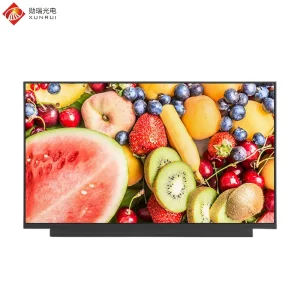
Direct-From-Factory Portfolio
High-Reliability Industrial TFT Displays & Touch Modules
Explore our flagship standard and semi-custom TFT LCD modules engineered for outdoor sunlight readability, vibration resistance, and seamless industrial HMI controller interfacing.



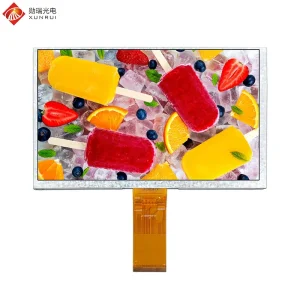



Technical Whitepaper Deep-Dive
Engineering Architecture: 4.0" & 4.3" TFT Display Solutions
A rigorous examination of optical stacks, display drivers, interface bandwidths, and touch sensor integration for embedded systems architects and procurement directors.
2,000,000+
Monthly Module Output Capacity
5,000 m²
ISO Cleanroom Manufacturing Space
50,000 hrs
LED Backlight Half-Life MTBF
5 to 500 pcs
Rapid Prototyping Pilot Batches
In modern industrial automation, smart medical instrumentation, and embedded edge devices, the 4.0-inch to 4.3-inch display envelope represents the definitive ergonomic equilibrium between physical enclosure footprint and high-density graphical visualization. Historically, early human-machine interfaces (HMIs) were constrained to low-information character LCDs or passive matrix STN displays. However, with the rapid acceleration of complex graphical user interfaces (such as Qt, LVGL, TouchGFX, and embedded Android/Linux frameworks), selecting a qualified China 4 TFT touch screen supplier is one of the most critical hardware architecture decisions an OEM development team must execute.
A standard 4.0" to 4.3" TFT display module is not merely a piece of glass; it is a multi-layered optoelectronic assembly comprising a thin-film transistor liquid crystal array, specialized polarizing films, a high-efficiency matrix LED backlight, a custom-engineered flexible printed circuit (FPC) with integrated electrostatic discharge (ESD) suppression, and an optically matched capacitive (PCAP) or 4-wire resistive (RTP) touch sensor. Every micro-millimeter in the stack affects optical clarity, electromagnetic interference (EMI) susceptibility, parasitic capacitance, and structural integrity under prolonged thermal expansion cycles.
IPS Wide-Viewing vs. TN Matrices
For mission-critical monitoring, standard Twisted Nematic (TN) panels suffer from severe grayscale inversion and color shifts when viewed off-axis. Our 4.3-inch and 4.0-inch In-Plane Switching (IPS) panels deliver symmetrical 85°/85°/85°/85° all-round viewing angles with contrast ratios exceeding 800:1, ensuring zero visual misinterpretation in high-stress control rooms or clinical environments.
- Symmetrical 85/85/85/85 viewing cone
- Zero grayscale inversion at oblique angles
- Enhanced color depth (16.7M colors, 24-bit RGB)
Optical Bonding: OCA vs. Air Gap
Standard perimeter tape bonding introduces an internal air gap ($n \approx 1.00$) between the display polarizer and cover glass ($n \approx 1.52$), causing dual Fresnel reflection boundaries and ~8% ambient light scattering. Xunrui applies high-precision Optical Clear Adhesive (OCA) or liquid optical clear resin (LOCA) to unify refractive indices, drastically enhancing outdoor readability and impact resistance.
- Internal reflection reduced by over 65%
- Prevents internal moisture condensation & dust
- Mechanical impact absorption up to IK08 / IK10
Touch Controller Tuning (PCAP & RTP)
We configure and calibrate industrial touch controller ICs (such as Goodix GT911, FocalTech FT5446, and Ilitek ILI2130) directly on the FPC. Firmware is custom-tuned to filter common-mode electrical noise from variable frequency motor drives, reject false touches from standing water droplets, and support multi-touch gestures through thick winter or nitrile gloves.
- Up to 5-10 point simultaneous PCAP detection
- Water droplet & saline mist immunity calibration
- Glove operation support (up to 4.0mm thickness)
Industrial Backbone & Ecosystem
China Factory 4.0: Supply Chain Resilience & Efficiency
How Shenzhen Xunrui Optoelectronics leverages cleanroom automation, glass fab partnerships, and localized component ecosystems to deliver unmatched speed and cost-efficiency.
Shenzhen's Bao'an District stands as the global epicenter of display engineering and microelectronics manufacturing. As an established manufacturer founded in 2016, Shenzhen Xunrui Optoelectronic Technology Co., Ltd. operates at the nexus of this integrated supply chain. Unlike trading intermediaries or fabless brokers who outsource critical assembly steps, Xunrui maintains direct control over cleanroom glass laser cutting, Chip-on-Glass (COG) bonding, Fog (Film-on-Glass) hot-bar soldering, automated backlight integration, and 100% optical inspection.
This vertical consolidation provides global procurement leaders with two definitive advantages: unrivaled prototype agility and complete bill-of-materials (BOM) protection. Our engineering facility can iterate custom FPC pinouts, modify backlight LED current loops, and sample custom cover glass geometries within 15 to 20 business days—a workflow that typically takes 8 to 12 weeks with traditional overseas suppliers.
Automated FOG/COG Cleanroom Cells
Our ISO Class 6 (Class 1,000) and Class 7 cleanrooms feature fully automated high-speed COG and FOG bonding lines. High-precision machine vision systems align anisotropic conductive film (ACF) particles with micron-level accuracy, preventing microscopic micro-bridging or high-resistance opens that compromise long-term thermal reliability.
- Sub-micron alignment tolerance ($\pm 2\ \mu\text{m}$)
- Consistent ACF particle burst rate >85%
- HEPA-filtered laminar flow clean benches
Tier-1 Glass Fab Direct Allocation
To eliminate panel lottery risks and sudden product obsolescence, Xunrui sources parent open-cell glass sheets directly through strategic allocations with Tier-1 glass foundries (including BOE, Innolux, AUO, and HannStar). We guarantee 5 to 7+ year product lifecycle longevity for all core industrial-grade 4.0-inch and 4.3-inch platforms.
- Guaranteed 5-7+ year lifecycle longevity
- A-grade glass cells free of hot or dead pixels
- Direct manufacturer engineering change notices (PCN)
Flexible MOQs for Design De-risking
We solve the critical procurement gap between early development and high-volume rollouts. After initial sample approval, Xunrui provides a one-time trial batch run of 5 to 500 units, enabling OEMs to validate functional field trials, execute EMC/safety certifications, and lock down pilot assembly lines before scaling into 1,000+ unit mass production.
- 5-500 pcs pilot batch validation support
- Low NRE fees for custom cover lens & FPC
- 100% factory pre-shipment aging inspection
Procurement Engineering Matrix
Enterprise Specifications: What Global Hardware Teams Require
A comprehensive engineering comparison of interface buses, physical characteristics, and surface treatments to match your embedded compute host.
When engineering teams draft an HMI specification sheet, common pitfalls include mismatched bus clock frequencies, excessive driver current loads on system PMICs, and incomplete optical calculations for high ambient illumination. A 4.0-inch or 4.3-inch display module must be thoroughly specified across electrical, mechanical, and optical vectors before tool release.
| Display Parameter | 4.3" Standard Industrial (TN/IPS) | 4.3" High-Res Portrait (IPS) | 4.0" Square / Knurled Knob (IPS) | Custom OEM 4.X" Sunlight Readable |
|---|---|---|---|---|
| Native Resolution | 480 × 272 pixels (WQVGA) | 480 × 800 pixels (WVGA) | 480 × 480 / 720 × 720 pixels | 800 × 480 / Custom Strip Formats |
| Active Area (AA) | 95.04 × 53.86 mm | 56.16 × 93.60 mm | 71.86 × 71.86 mm (Square) | Engineered to Enclosure Drawing |
| Viewing Angle (CR ≥ 10) | TN: 70/70/50/70 | IPS: 85/85/85/85 | IPS All-View: 85/85/85/85 | IPS All-View: 85/85/85/85 | IPS All-View: 85/85/85/85 |
| Backlight Brightness | 300 – 450 cd/m² (Indoor Standard) | 350 – 500 cd/m² | 350 – 600 cd/m² | 800 – 1,200+ cd/m² (Sunlight Readable) |
| Host Interface Protocols | RGB 24-bit / 16-bit / MCU 8080 | RGB 24-bit / 2-Lane MIPI-DSI | SPI (3/4-wire) + RGB / MIPI / MCU | LVDS / MIPI-DSI / RGB + SPI combo |
| Touch Sensor Technology | 4-Wire Resistive (RTP) or I²C PCAP | Projected Capacitive (I²C / USB) | Round/Circular PCAP with Rotary Knob | Optical Bonded PCAP (Thick Cover Glass) |
| Operating Temp Range | -20°C to +70°C (Standard) | -20°C to +70°C | -30°C to +80°C (Extended Industrial) | -30°C to +85°C (Automotive-Grade) |
| Cover Glass Treatments | Soda-Lime Chemically Tempered | AG (Anti-Glare) + AF (Oleophobic) | AR (Anti-Reflective) + Custom Silk-Print | Up to 6mm Vandal-Proof Tempered Glass |
| Driver / Touch ICs | ST7282 / HX8257 / GT911 | ST7701S / ILI9806E / FT5446 | ST7701S / NV3052C / CST816D | Ilitek ILI2130 / Goodix GT9271 |
Direct Host Microcontroller (MCU) Interfacing Advice
For low-cost microcontrollers lacking dedicated hardware framebuffers (such as ESP32-S3, STM32F4/G4 series, or Raspberry Pi RP2040), Xunrui supplies 4.0-inch and 4.3-inch panels equipped with integrated GRAM driver ICs via SPI or 8/16-bit MCU 8080 parallel interfaces. For high-performance MPUs (NXP i.MX series, Allwinner, Rockchip, STM32MP1, or TI Sitara), we configure full RGB 24-bit or high-speed MIPI-DSI interfaces running at 60 fps without tearing or jitter.