

Direct Factory Precision Catalog
Featured Industrial Display Modules (Series Part 1)
Engineered for harsh operating environments, featuring ultra-wide operating temperatures, robust EMI shielding, high nit luminance ratings, and custom FPC timing architectures.

Custom 2.4 inch TFT LCD module 240×320 SPI 14pin interface 250nit IPS screen Manufacturer, Factory
View Specifications →
Custom 7 inch 800×480 TN TFT LCD display with resistive touch panel Supplier, Factory
View Specifications →
China 4.3 inch 800×480 1000nit High brightness IPS TFT LCD module Supplier, Factory
View Specifications →
China 4.3 inch 800×480 IPS TFT LCD Module with resistive touch panel Supplier, Factory
View Specifications →
China 7 inch 800×480 1000nit Wide Operating Temperature Range TN TFT LCD Display Manufacturer, Manufacturers
View Specifications →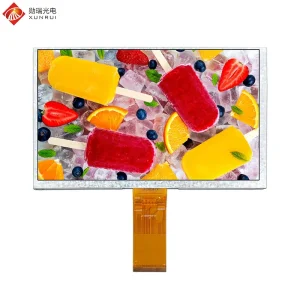
Custom 9 inch TFT LCD Module 1024×600 LVDS 60pin 400nit IPS Screen Suppliers, Factory
View Specifications →
China 8 inch 1024×768 LVDS 40pin interface 300nit IPS TFT LCD module Manufacturer, Supplier
View Specifications →
Industry Intelligence & Procurement Analysis
The Strategic Role of 5.7-Inch TFT LCDs in Global Industrial Infrastructure
Deconstructing the engineering longevity, form-factor legacy, and optical advancements of 4:3 industrial ratio displays in an evolving international electronics supply chain.
2016
Founded In Shenzhen
5,000m²
Class 1000 Cleanroom Area
2,000,000pcs
Monthly Module Capacity
5–500pcs
Agile Pilot Batch Support
Across the landscape of industrial automation, medical diagnostics, energy distribution networks, and mission-critical human-machine interfaces (HMI), the 5.7-inch TFT LCD module occupies an irreplaceable status. Originally standardized around the classical 4:3 aspect ratio with resolutions of 640×480 (VGA) and 320×240 (QVGA), this specific diagonal size represents tens of millions of installed control consoles across North America, the European Union, Japan, and emerging industrial hubs.
However, global procurement managers and hardware engineering teams face an acute crisis: obsolescence. Over the past decade, tier-1 consumer-focused foundries have progressively dismantled or repurposed older Generation 3.5 and Generation 4.5 amorphous silicon (a-Si) fabrication lines to chase high-volume smartphone and automotive widescreen displays. Legacy manufacturers such as Kyocera, Sharp, Mitsubishi, and Tianma phased out numerous 5.7" product series, leaving enterprise equipment manufacturers with an agonizing dilemma: either incur hundreds of thousands of dollars in recertification and mechanical chassis retooling costs or find a dependable, long-term China 5.7 TFT LCD manufacturer capable of engineering genuine pin-compatible drop-in alternatives.
Shenzhen Xunrui Optoelectronic Technology Co., Ltd. (XUNRUI) was established in 2016 specifically to bridge this high-reliability engineering void. Operating out of our 5,000 m² cleanroom facility in Shenzhen's Bao'an District, we develop both standard and customized 5.7-inch industrial display stacks. By integrating modern, high-efficiency white LED (WLED) rails, advanced In-Plane Switching (IPS) wide-angle liquid crystal chemistry, custom-designed flexible printed circuits (FPC), and robust timing controller (T-Con) driver architectures, XUNRUI delivers displays that not only match the mechanical cutouts and electrical timings of legacy panels but vastly exceed their optical performance and energy efficiency.
Form-Fit-Function Compatibility
Exact drop-in structural dimensional parity (outer bezel, active viewing area, screw boss positioning) eliminating expensive sheet metal re-tooling.
Up to 1200+ Nits Luminance
Sunlight-readable LED arrays paired with high-efficiency light-guide plates (LGP), achieving crisp outdoor legibility under direct ambient sun washouts.
TCO & Obsolescence Shield
Guaranteed 7 to 10+ year longevity roadmaps, buffered component warehousing, and fixed BOM freezes to safeguard defense, medical, and rail projects.
Extended Thermal Hardening
Operational thresholds certified across -30°C to +85°C. Specialty polarizers prevent isotropic blackening when panels are exposed to concentrated solar UV.
Engineering Data Matrix
5.7" TFT LCD Optical, Electrical & Mechanical Parametrics
Comprehensive engineering matrix comparing standard twisted nematic (TN) and advanced wide-angle in-plane switching (IPS) 5.7-inch configurations.
| Specification Parameter | Legacy TN Industrial Build | High-Performance IPS Build | Ultra-Bright Rugged Military/Marine |
|---|---|---|---|
| Active Diagonal Screen Size | 5.7 Inch (4:3 Aspect Ratio) | 5.7 Inch (4:3 Aspect Ratio) | 5.7 Inch (4:3 Aspect Ratio) |
| Native Pixel Resolution | 320×240 (QVGA) / 640×480 (VGA) | 640×480 (VGA) / Optional 800×600 | 640×480 (VGA) High PPI |
| Active Display Area (W × H) | 115.20 × 86.40 mm | 115.20 × 86.40 mm | 115.20 × 86.40 mm |
| Outer Module Dimensions (Typ.) | 144.0 × 104.6 × 12.3 mm | 127.0 × 98.5 × 6.8 mm (Slim Bezels) | Customized to Enclosure / Bezel Frame |
| Typical Luminance Output | 250 – 400 cd/m² (nits) | 500 – 800 cd/m² (nits) | 1,000 – 1,400 cd/m² (Sunlight Readable) |
| Contrast Ratio (CR) | 400:1 to 500:1 | 800:1 to 1000:1 | 1000:1 Optical Bonded Zero-Reflection |
| Viewing Angle Symmetry (CR≥10) | 6 o'clock or 12 o'clock Gray Inversion | 85°/85°/85°/85° Free Viewing Cone | 89°/89°/89°/89° Full Spherical IPS |
| Driving Interfaces Supported | Parallel RGB (18/24-bit), 8/16-bit MCU | 18-bit RGB, LVDS (Single Channel 6/8-bit) | LVDS, HDMI Driver Bridge, SPI / MCU |
| Backlight Halflife (MTBF) | 20,000 – 30,000 Hours (LED) | 50,000 Hours Constant Current Rail | 70,000+ Hours with Smart PWM Dimming |
| Touch Sensor Customization | 4-Wire / 5-Wire Resistive (RTP) | Projected Capacitive (PCAP) I²C/USB | PCAP with Thick Glove & Saltwater Reject |
| Operating / Storage Temperature | -20°C to +70°C / -30°C to +80°C | -30°C to +80°C / -30°C to +85°C | -35°C to +85°C / -40°C to +90°C |
Understanding Pin-to-Pin Compatibility & FPC Signal Integrity
A primary failure point when sourcing legacy replacement 5.7" displays from uncertified suppliers is high-frequency timing and impedance mismatch on the Flexible Printed Circuit (FPC). Classic 5.7-inch displays utilized legacy connector configurations such as 33-pin, 40-pin, or 50-pin flat flex connectors. When modernizing these assemblies, our R&D engineering department calculates differential pair impedance (typically 100Ω ± 10% for LVDS signals), propagation delay, and cross-talk mitigation over ground shielding meshes.
Whether your host microprocessor outputs CMOS/TTL levels, parallel 24-bit RGB with separate H-SYNC/V-SYNC/DE lines, or requires converted digital signaling via an on-board HDMI/VGA scaler controller board, XUNRUI fabricates custom internal FPCs and adapter boards in-house. This guarantees that your existing graphics controllers (such as older NXP, STMicroelectronics, or legacy Altera/Xilinx FPGA boards) maintain synchronous pixel clock integrity without timing jitters, line tearing, or electromagnetic interference (EMI) test failures during FCC or CE testing.
System-Level Deployments
Macro-Industry Solutions Powered by 5.7" TFT Displays
Proven hardware stacks deployed globally across safety-critical automation, life support devices, defense electronics, and energy distribution infrastructures.
Factory Automation & CNC Machine HMIs
Factory environments subject front-panel displays to abrasive coolant mists, hydraulic oil splatters, severe motor vibration, and electrical noise spikes. For automated CNC machining centers, programmable logic controller (PLC) terminals, and packaging lines, XUNRUI engineers ruggedized 5.7" TFT LCD modules equipped with reinforced 4-wire or 5-wire resistive touch panels (RTP). Resistive touch is impervious to liquid drips, thick synthetic work gloves, and electrostatic discharges (ESD), ensuring precise zero-latency input in manufacturing bays.
Medical Diagnostic & Infusion Systems
Clinical equipment including patient monitors, hemodialysis pumps, syringe drivers, and surgical ventilators require high-contrast color uniformity and absolute reliability. In medical applications, color inversion when viewed from oblique angles can lead to misinterpretation of vital alarms. Our 5.7" IPS modules eliminate grayscale inversion completely. Furthermore, we laminate chemically toughened, anti-microbial cover glass using direct optical bonding (OCR/OCA), enabling hospital personnel to sterilize screens with harsh isopropyl and bleach cleaners without liquid ingress.
Maritime Navigation & Heavy Fleet Consoles
Vessels, harbor cranes, agricultural combines, and military reconnaissance vehicles operate directly beneath harsh sunlight and torrential rains. Standard commercial displays suffer from internal light refraction, washing out critical navigational depth data and telemetry gauges. XUNRUI configures 5.7" modules with custom high-flux LED backlight matrices generating up to 1,200 nits, combined with anti-reflective (AR) and anti-glare (AG) surface treatments that maintain crystal-clear visibility even through polarized sunglasses.
Smart Grid Substations & EVSE Chargers
High-voltage switchgear cabinets, power distribution protection relays, and public EV charging stations are continuously exposed to exterior climate fluctuations for 10 to 15 years without scheduled maintenance. XUNRUI incorporates wide-temperature liquid crystal fluid, UV-blocking polarizers that prevent photochemical yellowing, and optical bonding resins that seal out humidity condensation, guaranteeing flawless 24/7/365 electrical metering and graphical waveform analysis.
Avionics & Defense Field Equipment
Military communication consoles, portable flight testers, and field calibration units mandate stringent electromagnetic compatibility (EMC) compliance according to standards like MIL-STD-461. Our specialized 5.7" assemblies can be configured with transparent conductive ITO or micro-mesh shielding layers directly bonded to the cover lens, effectively suppressing RF emissions while safeguarding against severe external EMP interference.
Security Access & Biometric Terminals
Commercial building access portals, facial recognition security barriers, and outdoor intercom units require sleek aesthetics combined with vandal-resistant durability. XUNRUI pairs 5.7" high-resolution IPS panels with custom IK08/IK10 rated tempered cover glass, supporting customized silk-screened ceramic borders, multi-touch Projected Capacitive (PCAP) sensors, and water-rejection touch firmware algorithms.
R&D Horizons & Architecture
Engineering Roadmap: Optical Bonding, Mini-LED & Next-Gen 5.7" Panels
Pioneering advancements in liquid crystal technology, micro-structure optical enhancement, and smart display integration for global OEMs.
While the mechanical footprint of the 5.7" display remains fixed to preserve backward compatibility, the underlying optoelectronic technology continues to evolve rapidly inside XUNRUI's advanced R&D laboratories. We are pioneering several core architectural improvements that provide unprecedented performance gains for industrial purchasers:
Full Optical Bonding (OCR & OCA)
Conventional displays utilize perimeter air-gap tape bonding, creating two internal reflective surfaces that bounce ambient light and degrade contrast in outdoor settings. XUNRUI employs automated vacuum optical bonding utilizing optical clear resin (OCR) or solid optical clear adhesive (OCA). By matching the refractive index (n ≈ 1.49) of the glass cover, adhesive, and polarizer, internal light reflection is reduced by over 85%, dramatically boosting readability while preventing internal condensation, dust ingress, and parallax error.
Mini-LED Matrix Local Dimming
Our next-generation 5.7" engineering roadmap integrates high-density Mini-LED backlighting matrices featuring multi-zone local dimming. By dynamically extinguishing backlight zones behind true-black graphics, contrast ratios soar from 800:1 to over 100,000:1. This innovation drastically reduces overall module power consumption by up to 40% in dark-mode diagnostic instruments and night-vision cockpit instrumentation, minimizing thermal dissipation inside sealed IP67 enclosures.
Touch and Display Driver Integration (TDDI)
Traditionally, touch panels require a dedicated external controller board or separate FPC cable routed alongside the display bus. XUNRUI is migrating select 5.7-inch models to advanced TDDI architectures, merging the touch sensing channels directly into the TFT gate-in-panel (GIP) glass circuitry. This results in a noticeably thinner overall display module, simplifies chassis mechanical routing, minimizes electromagnetic cross-talk, and lowers overall assembly bill-of-materials cost.
Procurement Risk Management
Navigating Global Sourcing: Total Cost of Ownership (TCO) & Supply Security
Why Tier-1 multinational OEMs partner directly with Xunrui to mitigate supply disruptions, control lifecycle budgets, and guarantee production continuity.
Procuring industrial components is vastly different from consumer electronics purchasing. When selecting a China 5.7 TFT LCD supplier, strategic procurement executives evaluate the Total Cost of Ownership (TCO) over a multi-year horizon rather than focusing solely on unit price. A display that is $2 cheaper initially can cost tens of thousands in field warranty claims or production line halts if the supplier unexpectedly issues a Product Discontinuation Notice (PDN) after only 18 months.
XUNRUI establishes supply chain security through four fundamental operational pillars:
- Guaranteed Supply Continuity: We maintain long-term agreements with core glass substrate fabricators and driver IC design houses, guaranteeing uninterrupted manufacturing longevity of at least 7 to 10 years for industrial 5.7" display projects.
- Agile Pilot Batch Policy: To lower risk during prototyping, once initial customized samples are formally approved, XUNRUI offers an exclusive one-time trial production run of 5 to 500 units. This enables hardware teams to conduct environmental stress screening (ESS), EMC laboratory verification, and field pilot deployments prior to committing to full mass-production volumes (MOQ 1,000+ units).
- Drop-In Form Parity: We custom-tailor the length, bend radius, and connector pin assignment of our Flexible Printed Circuits (FPCs), as well as the mechanical mounting ears of the metal bezel frame, ensuring 100% mechanical and electrical drop-in capability with discontinued displays from Kyocera, Sharp, or Powertip.
- Dual-Source Strategic Buffer: For critical active-matrix glass components, we maintain pre-qualified second-source engineering routes, shielding your production pipelines from geopolitical shocks, wafer allocations, or raw material shortages.
Xunrui's Six-Stage Gate-Controlled Engineering Workflow
01
Stage 1: Demand Mapping
Exhaustive review of enclosure drawings, thermal dissipation constraints, ambient lux levels, and host controller timing diagrams.
02
Stage 2: CAD & Schematic Sign-off
Issuance of detailed mechanical 2D/3D step files, FPC pinout schematics, and optical stack simulations for buyer engineering sign-off.
03
Stage 3: Functional Prototype Validation
Rapid cleanroom sample fabrication and delivery. Continuous iteration until all optical, electrical, and mechanical criteria pass customer sign-off.
04
Stage 4: Pilot Batch Feasibility (5-500 pcs)
Low-volume pre-series production run to validate yield stability, tool precision, and customer assembly line readiness without large capital lock-in.
05
Stage 5: High-Precision Mass Scale
Scaled manufacturing across automated high-speed COG/FOG bonding lines in our Shenzhen cleanrooms, backed by a 2,000,000 unit monthly capacity.
06
Stage 6: 100% Thermal & Optical QC Aging
Every mass-produced module undergoes full electrical burn-in aging under temperature stress, followed by automated chromaticity and OQC inspections.
Quality Architecture & Regulatory Alignment
Global Compliance & Comprehensive Quality Control System
Certified manufacturing processes adhering to international environmental, electrical safety, and quality management protocols.
Shenzhen Xunrui Optoelectronic Technology Co., Ltd. operates under certified ISO 9001:2015 Quality Management Systems and ISO 14001:2015 Environmental Management Systems. To guarantee zero-defect standards for global high-reliability deployments, our factory implements a strict 5-Gate Quality Verification Checkpoint Protocol on every production run:
Gate 1: IQC
Incoming Quality Control: 100% microscopic inspection of incoming raw glass substrates, polarizers, driver ICs, LED dies, and flex cables against strict AQL limits.
Gate 2: Glass Array
Array Optical Verification: High-resolution automated visual inspection (AOI) to eliminate pixel defects, sub-pixel chromatic shifts, micro-scratches, and particle inclusions.
Gate 3: FOG + Aging
FOG / COG Bonding with Burn-in: Automated chip-on-glass anisotropic conductive film (ACF) bonding, followed by intermediate thermal burn-in aging to screen infant mortality.
Gate 4 & 5: Final & OQC
Final Assembly Aging & OQC: Full-module 100% functional display aging, followed by Outgoing Quality Control checks for luminance uniformity, ESD resilience, and packaging integrity.
International Regulatory Certifications
All Xunrui 5.7-inch and custom TFT LCD modules are fully compliant with the European Union RoHS Directive (EU) 2015/863 amending Annex II to Directive 2011/65/EU, ensuring zero hazardous substances including lead (Pb), mercury (Hg), cadmium (Cd), hexavalent chromium (Cr6+), PBBs, PBDEs, and phthalates. Additionally, all raw materials comply with REACH Regulation (EC) No 1907/2006 concerning Substances of Very High Concern (SVHC). Modules destined for medical consoles are pre-certified for integration into devices governed by IEC 60601-1-2 4th Edition EMC collateral standards.
Technical & Commercial Clarifications
Frequently Asked Questions for Sourcing 5.7" TFT Displays
In-depth engineering and procurement guidance compiled by Xunrui's senior display architecture and global sales team.
Can XUNRUI replace obsolete Kyocera, Sharp, or Mitsubishi 5.7-inch TFT displays?
Yes. Supplying exact form-fit-function replacements for discontinued legacy 5.7" panels is one of XUNRUI's primary engineering specialties. We customize the active matrix panel, backlight mechanical housing, mounting hole tabs, and FPC pinout mapping (e.g., matching older 33-pin, 40-pin, or 50-pin TTL/RGB pin configurations). Our replacement displays allow customers to maintain system production without modifying their host controller firmware or retooling expensive mechanical enclosures.
What is the minimum order quantity (MOQ) for custom 5.7" display projects?
For customized engineering projects, once initial functional prototypes are evaluated and formally approved, XUNRUI supports a one-time small-batch trial production run of 5 to 500 units. This trial batch enables your hardware and quality teams to de-risk mass production feasibility. For long-term ongoing production runs, our standard minimum order quantity is 1,000 units per scheduled batch.
What is the difference between TN and IPS panel technology for 5.7-inch screens?
Twisted Nematic (TN) panels offer an economical solution for fixed-position operator terminals but suffer from optical viewing angle limitations (typically showing grayscale inversion at either the 6 o'clock or 12 o'clock perspective). In-Plane Switching (IPS) displays align liquid crystal molecules horizontally, providing ultra-wide 85°/85°/85°/85° symmetrical viewing cones from all directions without color shifting or grayscale degradation, making IPS the preferred choice for clinical medical devices, avionics, and high-end HMIs.
How does XUNRUI achieve sunlight readability on outdoor 5.7" displays?
Sunlight readability is achieved through a multi-faceted optical engineering approach. We increase backlight luminance output from typical indoor levels (250–350 nits) up to 1,000–1,400 nits utilizing high-efficiency Nichia or Epistar WLED arrays paired with optimized light-guide plates. In addition, we offer full optical bonding (OCR/OCA) to eliminate the internal air gap and apply anti-reflective (AR) and anti-glare (AG) surface treatments, preserving high contrast ratios even under 10,000+ lux direct ambient sunlight.
Should I select a 4-wire resistive (RTP) or projected capacitive (PCAP) touch panel?
Choose resistive touch (RTP) if your equipment operates in heavy industrial, military, or dirty settings where users wear thick leather or synthetic gloves, where water droplets or chemical sprays contact the screen, or where stringent electromagnetic noise immunity is critical. Choose projected capacitive touch (PCAP) if your application requires a modern, smartphone-like multi-touch user experience, gesture navigation, a completely flat edge-to-edge flush front bezel, or chemically strengthened cover glass that withstands harsh disinfectants.
What interface options are available for 5.7" TFT LCD modules?
We support a comprehensive array of driving interfaces. At the panel level, we offer parallel RGB (18-bit / 24-bit), Single-Channel LVDS (6-bit / 8-bit), and parallel 8-bit / 16-bit MCU (8080/6800 series). Furthermore, XUNRUI designs and manufactures matching HDMI, VGA, AV, and composite driver scaler boards that allow direct integration with standard embedded computing boards, Raspberry Pi, industrial IPCs, and x86 single-board systems.
What is the standard lead time for customized prototypes and production batches?
Custom FPC and mechanical drawings are typically completed within 3 to 5 business days for customer sign-off. Once drawings are approved, customized engineering prototype samples are completed and dispatched within 3 to 4 weeks. Following sample approval and pilot testing, standard mass-production manufacturing lead time is approximately 4 to 6 weeks, supported by buffer stocking programs for contracted recurring schedules.
How does XUNRUI prevent solar UV isotropic blackening on outdoor displays?
When standard commercial liquid crystal displays are exposed to sustained outdoor heat and UV radiation, the liquid crystal fluid can exceed its clearing point (Tni), causing the entire panel to turn abruptly black (isotropic failure). XUNRUI utilizes high-clearing-point industrial liquid crystals (Tni > +105°C) paired with specialized UV-blocking front polarizers, preventing isotropic failure even in sealed, fanless outdoor enclosures under midday desert sun conditions.
Direct Factory Precision Catalog
Featured Industrial Display Modules (Series Part 2)
Explore our complementary range of high-definition IPS, compact wearable formats, wide aspect bar-type, and square panels manufactured in Shenzhen.

China 5 inch 480×272 TN TFT LCD Module with capacitive touch panel Manufacturers, Factory
View Specifications →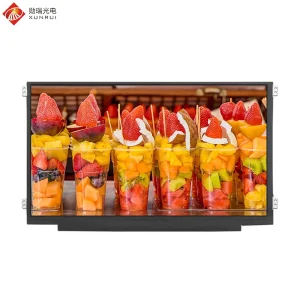
Custom 11.6 inch 1920×1080 EDP 30PIN 220nit IPS TFT LCD module Supplier, Suppliers
View Specifications →
China 4 inch 480×480 RGB Square IPS TFT LCD Module with capacitive touch Manufacturer, Supplier
View Specifications →
Custom 8 inch 1200×1920 MIPI 40pin 350nit IPS TFT LCD Display Module Manufacturer, Supplier
View Specifications →
Custom 4.3 inch TFT LCD 800×480 RGB 40pin interface 300nit IPS module Manufacturer, Supplier
View Specifications →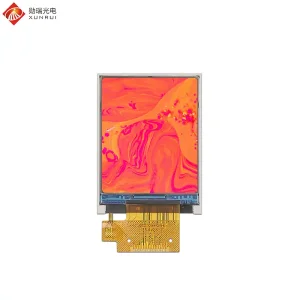
Custom 1.77 inch 128×160 SPI 14pin 250nit TN TFT LCD Module Supplier, Suppliers
View Specifications →
Custom 2.4 inch 240×320 MCU 40pin interface 250nit TN TFT LCD module Manufacturers, Factory
View Specifications →
Custom 10.1 inch 1024×600 LVDS 40pin 1000nit IPS TFT LCD Display Manufacturers, Factory
View Specifications →Direct Engineering Hotline
+86-13923457816Technical Inquiries & RFQ
[email protected]Manufacturing Headquarters
2nd Floor, Bldg 21, Hualun Science Park, Fuyong, Bao'an District, Shenzhen, China