
High-Reliability TFT LCD Display Modules
Engineered for mission-critical electronic environments requiring enhanced sunlight readability, wide viewing angles, robust thermal stability, and integrated touch digitization.

China 5 inch 800×480 TN TFT LCD display with resistive touch panel Manufacturer, Suppliers

Custom 10.4 inch 1024×768 LVDS 30pin 600nit IPS TFT LCD Module Factories, Factory

China 5 inch 480×272 TN TFT LCD Module with capacitive touch panel Manufacturers, Factory

China 4.3 inch vertical screen 480×800 RGB 40pin IPS TFT LCD Display Manufacturer, Manufacturers

China 5 inch 800×480 1200nit High brightness TN TFT LCD module Suppliers, Factories

China 7 inch 800×480 RGB 40pin 450nit TN TFT LCD Display Manufacturers, Suppliers

Custom 7 inch TFT LCD module 800×480 RGB 50pin interface 250nit TN screen Supplier, Suppliers
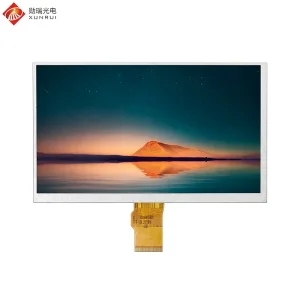
Custom 9 inch 800×480 RGB 50pin interface 500nit TN TFT LCD module Manufacturer, Suppliers
The 5.7-Inch Form Factor: The Industrial Standard That Refuses Obsolescence
Why Tier-1 embedded system architects and hardware procurement teams continue to standardize on the 4:3 aspect ratio 5.7" diagonal TFT LCD platform across global OEM operations.
Native 4:3 Geometric Perfection
Unlike consumer widescreen (16:9 or 19.5:9) displays that induce visual clutter in compact industrial enclosures, the 5.7" 4:3 active display area (typically 115.2 mm × 86.4 mm) perfectly matches standard numerical readouts, oscilloscopic grids, PLC parameter trees, and medical vital signs without dynamic scaling artifacts.
- VGA (640×480) & QVGA (320×240) native resolutions
- Direct mechanical drop-in for legacy CRT and EL displays
- Optimized pixel pitch for industrial operator readability
Mitigating the Legacy EOL Crisis
As tier-1 Japanese and Taiwanese glass foundries have decommissioned legacy Gen 3.5 and Gen 4 lines (discontinuing legacy models from Kyocera, Sharp, AUO, and Powertip), Shenzhen Xunrui Optoelectronics steps in with long-term, form-fit-function pinout replacements engineered with guaranteed 7 to 10-year production lifecycles.
- Re-engineered FPC custom pinouts (33-pin, 40-pin, 50-pin)
- Drop-in electrical matching for legacy timing controllers
- Zero software driver rewriting for existing mainboards
Extreme Environmental Ruggedization
Standard consumer displays deteriorate when exposed to ambient operating temperatures beyond 0°C to 50°C. Xunrui’s 5.7" industrial modules utilize wide-temperature automotive/military grade liquid crystal chemistries ensuring zero pixel transition lag and crystal freezing down to -30°C, and no solar clearing up to +80°C.
- Operating range: -20°C~+70°C to -30°C~+80°C
- High-reliability anti-vibration backframe housings
- 70,000+ hour MTBF continuous LED backlight designs
Architectural Breakdown: 5.7" Industrial Displays
Compare electrical interfaces, optical performance, and environmental thresholds across standard configurations designed by Shenzhen Xunrui Optoelectronics.
| Display Parameters | Legacy Industrial Standard | Xunrui Enhanced TN Module | Xunrui High-End IPS Module |
|---|---|---|---|
| Resolution & Pixel Matrix | 320×240 (QVGA) | 640×480 (VGA) High Pitch | 640×480 (VGA) Full View |
| Viewing Angle (U/D/L/R) | 50°/60°/70°/70° (Gray Inversion) | 60°/70°/70°/70° (Optimized 6:00/12:00) | 85°/85°/85°/85° (Free Viewing IPS) |
| Luminance (Backlight) | 250 - 350 cd/m² (Nits) | 500 - 800 cd/m² (Sunlight Readable) | 1000 - 1200 cd/m² (Full Sunlight) |
| Contrast Ratio | 300:1 to 400:1 | 500:1 to 600:1 | 800:1 to 1000:1 |
| Driver & System Interface | Digital 18-bit TTL / 8-bit MCU | 18/24-bit RGB, MCU 8080/6800 | RGB, LVDS, MCU, SPI Hybrid |
| Touch Digitizer Synergy | Unbonded 4-Wire Resistive | Precision 4/5-Wire RTP or PCAP | Optically Bonded (OCA/LOCA) PCAP |
| Operating Temperature | -10°C to +60°C | -20°C to +70°C | -30°C to +80°C Extended Wide-Temp |
| Backlight Lifespan (MTBF) | 20,000 Hours (CCFL / Old LED) | 50,000 Hours (Industrial White LED) | > 70,000 Hours Continuous 24/7 |
Tailored Solutions for Demanding Global Deployments
Our engineering division tunes optical bonding, cover glass chemical strengthening, touch controller firmware, and EMI shielding for four pivotal industrial verticals.
Smart Factory & CNC HMI
Factory shop floors subject HMI screens to motor electrical noise, lubricant splatters, and heavy glove operations. We integrate 4-wire or 5-wire resistive touch layers with high surface hardness (3H to 7H), robust ESD protection (±8kV contact, ±15kV air), and shielded FPC grounding paths.
- Heavy industrial glove responsiveness
- Immunity to PWM motor inverter noise
- Vibration proof up to 5G acceleration
Medical Diagnostics & Care
Infusion pumps, ventilators, blood gas analyzers, and portable defibrillators require absolute optical fidelity and antibacterial resilience. We deliver IPS-grade 5.7" displays optically bonded to chemically strengthened cover glass that withstands repeated hospital-grade disinfectant wipe-downs.
- Corning Gorilla Glass cover lens integration
- Water droplet and saline rejection firmware
- Zero false-touch algorithm for critical care
EV Charging & Marine Terminals
Outdoor unattended kiosks and marine dashboards face direct solar irradiance and high ambient humidity. We configure 1000+ nit high-efficiency backlights, anti-reflective (AR), anti-glare (AG), and anti-fingerprint (AF) coatings with zero-condensation optical bonding.
- UV-resistant polarizer to prevent blackening
- Sunlight legibility with low power consumption
- IP65 / IP67 front bezel seal customization
Field Test & Measurement
Handheld network analyzers, OTDR testers, oscilloscope units, and mining equipment demand high impact resistance and power-conservative driver electronics. Xunrui implements dynamic LED constant current drivers with ultra-slim mechanical profiles for lightweight ergonomics.
- Low power sleep modes down to <10mA
- IK07 / IK08 mechanical impact compliance
- Fast frame response without ghosting
5-Stage Total Quality Management (TQM) Gate Control
Operating strictly under ISO 9001 and ISO 14001 certifications in Shenzhen, Xunrui ensures every 5.7" display batch delivers zero-defect consistency before leaving our facility.
IQC Material Verification
100% incoming optical microscope inspection of raw glass substrates, LED backlight chips, driver ICs, and flexible printed circuits (FPC) to MIL-STD-105E AQL standards.
Polarizer & Cleanroom Laminating
Class 1000 / Class 100 dust-free cleanrooms host high-precision automatic laminators ensuring bubble-free, particle-free polarizers and optical clear adhesive (OCA) lamination.
FOG Bonding & Thermal Stress
Automatic Film-on-Glass (FOG) thermocompression bonding secures micro-pitch anisotropic conductive film (ACF) connections, verified via pull-force and cross-section microscopy.
Dual-Cycle Burn-In Aging
100% of manufactured units undergo 48 to 72 hours of dynamic pattern burn-in aging inside thermal chambers running from -20°C to +70°C to eliminate infantile IC failure modes.
OQC Optical Calibration & Pack
Colorimetric chromaticity coordinates (CIE 1931), white balance uniformity (min 85%), luminance nits, and touch digitizer accuracy are calibrated with spectral radiometers prior to ESD sealing.
Regulatory Compliance
Full documentation traceability for RoHS 2.0 (EU 2015/863), REACH (SVHC), CE, and FCC Part 15 class B. Engineering Change Notices (ECN) issued 6 months in advance with PCN guarantees.
Year Established in Shenzhen Optoelectronic Hub
State-of-the-Art Dust-Free Manufacturing Facility
Units Comprehensive Monthly Production Capacity
Flexible Pilot Production for Hardware Validation
5.7" Display Technology Roadmap: 2025–2030
How Xunrui bridges legacy form factors with cutting-edge optical innovations to ensure your industrial products remain ahead of design curves for the next decade.
Mini-LED Local Dimming
Transitioning from edge-lit LED strips to 384-zone Mini-LED matrix backlighting for 5.7" form factors. This achieves an astronomical 100,000:1 dynamic contrast ratio, pure true blacks for dark medical radiology rooms, and a 40% reduction in thermal dissipation.
- Zero light bleed for critical night-vision HMIs
- Extended LED half-life beyond 100,000 hours
- Peak HDR brightness exceeding 1500 nits
Direct Smart Interface Integration
Say goodbye to complex peripheral motherboard engineering. Upcoming 5.7" revisions include optional onboard micro-driver boards integrating native HDMI, Type-C DisplayPort, and low-overhead SPI/I2C/UART controllers with integrated flash memory for GUI asset offloading.
- Single-cable USB Type-C video + touch power
- Onboard GUI firmware engine for MCU offloading
- EMI Class B compliant zero-radiation driver layouts
Ultra-Extended Cryogenic Chemistries
Engineered for Arctic environmental monitoring and aerospace installations, next-generation liquid crystal formulations extend instant fluid switching down to -40°C without requiring auxiliary heating resistors or external thermal foil jackets.
- Instantaneous 25ms response time at -40°C
- Zero panel delamination under extreme thermal shock
- UV-hardened adhesive sealing bonds
Frequently Asked Questions: Sourcing 5.7" TFT Displays
Actionable answers to help embedded hardware engineers and procurement executives accelerate qualification, minimize tooling overhead, and maintain supply chain stability.
Can your 5.7" TFT LCD modules directly replace obsolete Kyocera or Ampire panels?
Yes. Legacy panels such as Kyocera’s KCG057QV1DB, TCG057, or Ampire AM-320240 / AM-640480 series frequently trigger supply crises. We customize the FPC pin configuration, mechanical bracket dimensions, timing controller parameters, and backlight driving voltages to match your existing pinout exactly, eliminating motherboard redesigns.
What is the minimum order quantity (MOQ) for custom 5.7" TFT LCD modules?
For custom engineering projects involving custom FPC layouts, custom backlight brightness, or specific touch cover lenses, we facilitate a one-time trial batch of 5 to 500 units after golden sample approval. Once field verification is completed, customized mass production is structured around an MOQ of 1,000 units, while standard catalog models have zero MOQ restrictions.
Should our engineering team specify Resistive Touch (RTP) or Projected Capacitive (PCAP)?
For industrial factory settings, CNC machines, or environments where operators wear heavy leather/rubber gloves, work in rain/condensation, or face intense EMI, 4-wire or 5-wire Resistive touch is more durable and cost-effective. For medical instrumentation, handheld smart terminals, and sleek consumer interfaces requiring multi-touch gesture control, PCAP with optical bonding is recommended.
How do you achieve 1000+ nit sunlight readability without overheating the enclosure?
We do not simply overdrive standard LEDs. Xunrui utilizes high-efficacy Nichia LED dies coupled with ultra-reflective optical films (3M ESR) and high-transmittance liquid crystal glass. This increases luminous efficiency, generating 1000 to 1200 cd/m² of brightness while drawing up to 35% less current, preventing internal enclosure heat buildup.
What parameters can be customized on a 5.7" display order?
We offer full architectural customization: Active area resolution (VGA vs QVGA), viewing technology (TN 6:00/12:00 vs IPS All-View), backlight luminescence (250 to 1200+ nits), FPC length, pinout and routing, operating interfaces (RGB, LVDS, MCU, SPI), cover glass thickness (0.7mm up to 6mm vandal-proof tempered glass), surface treatments (AG/AR/AF), and custom metal bezels.
What is the typical lead time from initial 2D drawing to prototype delivery?
Upon reviewing your mechanical STP files and pinout requirements, our engineers issue a formal 2D engineering drawing within 24 to 48 hours. Following client sign-off, functional engineering samples are manufactured, tested through our 5-stage quality process, and couriered within 15 to 20 working days.
Specialty & Extended Range TFT LCD Solutions
Explore our broader optoelectronic portfolio, encompassing circular dials, ultra-compact SPI displays, high-resolution LVDS panels, and integrated touch screens.

China 1.8 inch 360×360 MIPI 30pin 400nit IPS Circular TFT LCD Module Manufacturer, Suppliers

China 8 inch 1024×768 LVDS 40pin interface 300nit IPS TFT LCD module Manufacturer, Supplier

Custom 2.8 inch 240×320 TN TFT LCD Module with resistive touch panel Manufacturers, Supplier
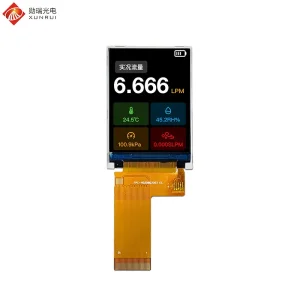
China 2 inch 240320 SPI 30PIN 250nit IPS TFT LCD Module Manufacturer, Suppliers

Custom 5 inch 480×854 RGB 40pin 1000nit IPS TFT LCD Module Manufacturer, Manufacturers
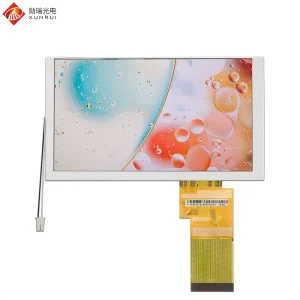
China 6.2 inch 800×480 RGB 60pin 500nit TN TFT LCD Module Manufacturer, Manufacturers

China 4.3 inch 480×272 RGB 40pin interface 350nit TN TFT LCD module Manufacturer, Factories
