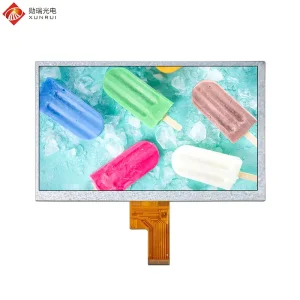
High-Precision Standard & Custom TFT LCD Modules (Part I)
Explore selected industrial modules certified under ISO 9001 and ISO 14001, providing flexible interface configurations and high-performance sunlight visibility.
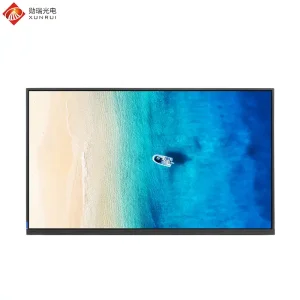
Custom 15 inch 1920×1080 EDP 30pin 300nit IPS TFT LCD Display Manufacturer, Factories
View Specifications
Custom 4.3 inch 480×272 TN TFT LCD display with resistive touch panel Supplier, Factory
View Specifications
China 4.3 inch vertical screen 480×800 RGB 40pin IPS TFT LCD Display Manufacturer, Manufacturers
View Specifications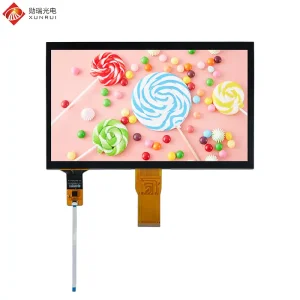
China 10.1 inch 1024×600 RGB IPS TFT LCD Module with capacitive touch Manufacturers, Factories
View Specifications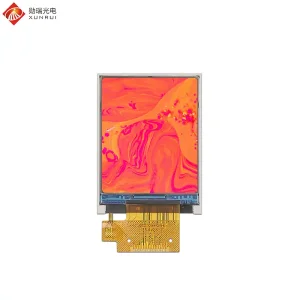

Custom 5 inch TFT LCD module 800×480 RGB 40pin interface 350nit IPS screen Supplier, Factories
View Specifications
China 7 inch 800×480 RGB 40pin 450nit TN TFT LCD Display Manufacturers, Suppliers
View Specifications
Custom 7 inch TFT LCD module 800×480 RGB 50pin interface 250nit TN screen Supplier, Suppliers
View SpecificationsEngineered by Shenzhen Xunrui Optoelectronic Technology Co., Ltd.
A national high-tech manufacturing facility delivering certified optoelectronic engineering, custom driver integrations, and full lifecycle support for international industrial buyers.
5-Gate Quality Assurance System
Every single batch moves through strict checkpoints: IQC incoming inspection, micro-crack glass inspection, FOG bonding inspection with burn-in aging, finished-assembly operational aging, and OQC outgoing validation. Fully compliant with ISO 9001 and ISO 14001 standards.
End-to-End Component Matching
Beyond raw panel delivery, our cleanrooms integrate projected capacitive (PCAP) multi-touch panels, resistive 4-wire sensors, anti-glare tempered chemically strengthened cover glass, and dedicated HDMI, RGB, LVDS, or MIPI DSI driver interface boards engineered in-house.
Prototype to Volume Path (5–500 pcs)
We eliminate prototyping roadblocks for industrial engineering teams. Following drawing sign-off, we provide rapid engineering verification, a low-risk trial production batch of 5 to 500 units, followed by seamless scalability to volume runs exceeding 100,000 units monthly.
The Strategic Value of the 6.2-Inch High-Brightness Form Factor
Bridging the architectural divide between compact handheld instruments and bulky industrial monitors with sunlight readability upwards of 1,000 to 1,500 nits.
The Sunlight Readability Imperative
Traditional indoor TFT panels (250–350 cd/m²) wash out completely under direct ambient sunlight (>10,000 lux). In mission-critical sectors such as outdoor electric vehicle supply equipment (EVSE), marine chart plotters, and precision agronomy terminals, illegibility creates operational safety risks. The China 6.2 Inch High Brightness LCD Module leverages high-efficiency Nichia LED arrays and proprietary dual-brightness enhancement films (DBEF) to sustain 800 to 1,500+ nits luminance while maintaining optimized power dissipation.
Aspect Ratio & Ergonomic Optimization
The 6.2-inch diagonal geometry occupies an ergonomic sweet spot—most notably in 16:9, 18:9, and customized ultra-wide bar aspect ratios. Unlike commoditized 7.0-inch panels that demand wider bezels, the 6.2-inch format minimizes enclosure footprint while delivering ample screen real estate for modern graphical user interfaces (GUIs), multi-parameter wave graphing, and touch-driven soft keys.
Thermal Dissipation & LED Lifespan
Driving high-nit LED backlights creates intense localized thermal flux. Without advanced thermal modeling, junction temperatures exceed 85°C, triggering yellowing polarizers and LED lumen decay. Our Shenzhen factory integrates custom aluminum heat spreaders, high thermal-conductivity graphite back sheets, and constant-current buck LED drivers that ensure a certified LED half-life MTBF exceeding 50,000 hours.
Optical & Mechanical Performance Matrix
A side-by-side engineering evaluation comparing consumer-grade displays with industrial-grade 6.2-inch high-brightness solutions.
| Engineering Parameter | Standard Commercial LCD | China 6.2" High-Brightness Industrial Module | Engineering Benefit |
|---|---|---|---|
| Typical Luminance | 250 – 350 cd/m² (nits) | 800 – 1,500 cd/m² (nits) | Direct sunlight legibility without sun-hood enclosures |
| Optical Bonding Architecture | Perimeter Air-Gap Tape Bonding | Full Optical LOCA / OCA Resin Bonding | Eliminates internal surface reflection; resists moisture condensation |
| Operating Temperature | 0°C to +50°C | -30°C to +85°C (Extreme Industrial) | Zero crystallization in sub-zero climes; no black-out under solar UV |
| Polarizer Technology | Standard Linear Polarizer | Circular Polarizer + Anti-Glare (AG) / AR Coating | Allows 100% visibility when operator wears polarized sunglasses |
| Interface Support | Single-channel RGB or SPI | MIPI DSI 4-Lane / LVDS / eDP / RGB-40Pin | High refresh rates, superior EMI resistance, and broad SoC compatibility |
| Touch Sensor Integration | Generic Consumer G+F PCAP | Industrial G+G (6mm Glass), Water & Glove Support | Immune to false triggering from water drops, rain, and heavy rubber gloves |
| Supply Chain Life Cycle | 12 – 18 Months EOL | 5 to 7+ Years Guaranteed Availability | Protects OEM product lines from costly PCB redesign cycles |
High-Stress Operational Use Cases
Real-world integration scenarios where our 6.2-inch high-brightness liquid crystal displays consistently outperform conventional display assemblies.
Automotive Clusters & Electric 2-Wheelers
Motorcycle digital dashboards, commercial fleet telematics, and heavy equipment clusters require instant optical clarity in blinding daylight. Our 6.2" IPS displays with 1000-nit luminance provide true wide-angle viewing (85/85/85/85) without grayscale inversion, while surviving engine vibrations and harsh solar UV irradiation.
Smart Outdoor EV Charging Piles (EVSE)
Unattended commercial EV charging stations run 24 hours a day, 365 days a year across freezing winters and sweltering summer afternoons. Combined with 4mm IK08-rated vandal-resistant glass covers, optical resin bonding, and integrated auto-dimming ambient light sensors, our 6.2" modules prevent overheating while guaranteeing crisp payment processing.
Mobile Medical & Field Diagnostics
Defibrillators, mobile ultrasound carts, and emergency telemedicine tablets rely on uncompromising color accuracy. Xunrui matches high-CIE-gamut color filters with 800-nit backlights and multi-touch PCAP technology that tolerates saline sprays and surgical glove inputs without lag.
Marine Navigation & Fish Finders
Salt spray corrosion, extreme humidity, and intense direct surface water reflections make standard displays unusable on boats. We apply vacuum conformal coatings to all driver boards, use anti-reflective (AR) surface treatments with <1% reflectance, and hermetically seal modules against moisture ingress.
Rugged Industrial Handheld PDAs & Scanners
Logistics personnel operating in warehousing and open-air cargo hubs need lightweight yet rugged displays. Our thin-profile 6.2" modules deliver ultra-low power consumption when paired with dynamic PWM backlight drivers, extending lithium battery run-times across 12-hour shifts.
Precision Agriculture & Drone Ground Stations
Tractor telemetry consoles and UAV command ground stations operate under unobstructed open skies. Our 6.2" displays provide wide dynamic contrast to render real-time drone telemetry, crop mapping data, and GPS waypoints with pinpoint crispness.
Gate-Controlled Customization Workflow
How Shenzhen Xunrui Optoelectronic Technology transforms mechanical drawings into certified mass production, mitigating electrical and optical risks at every stage.
Stage 1: Demand & Environmental Feasibility
We review your CAD step models, enclosure constraints, target viewing angles, and electrical pinouts. Our engineering team calculates optical performance, viewing direction, and ambient thermal thresholds before any engineering commits are locked in.
Stage 2: CAD Design & Drawing Sign-Off
Our senior optoelectronic draftsmen supply detailed 2D/3D mechanical drawings, FPC connector pin layouts, and touch IC configuration schemes. Nothing moves into tooling until your systems engineer signs off on every micron.
Stage 3: Rapid Tooling & Golden Samples
Dedicated sample cleanrooms build physical golden prototypes according to approved schematics. Samples undergo chromaticity calibration, optical uniformity scans, and ESD testing before being dispatched via express courier for OEM firmware validation.
Stage 4: Pilot Batch Trial (5–500 pcs)
To eliminate high-volume capital risks, we run an initial small-scale production pilot. This step validates automated SMT assembly yields, ultrasonic bonding reliability, and your automated testing fixtures before full volume sign-off.
Stage 5: High-Yield Mass Manufacturing
Upon pilot batch sign-off, mass production kicks off with a MOQ of 1,000 units. Automated COG (Chip-on-Glass) and FOG (Film-on-Glass) lines handle high-throughput manufacturing with strict traceability across every panel serialized via barcode.
Stage 6: Final Aging, OQC & Global Logistics
100% of finished assemblies undergo 48-hour continuous power burn-in aging under temperature stress, final optical colorimetry inspection, anti-static moisture-barrier packaging, and custom palletizing for sea or air logistics worldwide.
Next-Generation Display Innovations (2025–2030)
Anticipating the technological transitions in high-brightness liquid crystal engineering to secure longevity for OEM product architectures.
Mini-LED Local Dimming Backlights
The next frontier for the 6.2-inch format replaces conventional edge-lit or uniform matrix LEDs with thousands of individually addressable Mini-LED diodes organized into hundreds of local dimming zones. This provides true black levels, contrast ratios exceeding 100,000:1, and peak brightness levels reaching 2,500 nits without excessive continuous power draw.
Quantum Dot Enhancement Films (QDEF)
Integrating cadmium-free quantum dot optical films into the backlighting stack broadens the color gamut from typical 72% NTSC to over 100% DCI-P3. For medical and high-end automotive human-machine interfaces, this ensures lifelike color fidelity even under broad daylight conditions.
AI-Driven Embedded Driver Controllers
Emerging smart display modules incorporate dedicated on-glass microcontrollers that process real-time ambient lighting changes, internal temperature readings, and display content histograms. The display dynamically adjusts individual LED drivers to prevent thermal runaway while preserving battery longevity.
Internationally Recognized Quality Framework
Shenzhen Xunrui Optoelectronic Technology operates under certified management standards and collaborates across global tier-1 supply networks.









Frequently Asked Questions by OEM Hardware Engineers
Authoritative insights addressing procurement, thermal boundaries, electrical interfaces, and custom tooling.
What brightness range is required for true outdoor direct-sunlight readability on a 6.2" LCD?
For outdoor industrial equipment, a minimum luminance of 800 cd/m² (nits) is required. However, in applications facing unshielded solar radiation—such as motorcycle displays, marine helm consoles, and outdoor EV charging kiosks—we strongly recommend 1,000 to 1,500 nits paired with optical bonding (OCA/LOCA) and Anti-Reflective (AR) surface treatments. This suppresses ambient glare and internal boundary reflections below 1.5%, maintaining an effective contrast ratio well over 10:1 in 10,000+ lux conditions.
How does Xunrui handle the thermal dissipation challenges of 1000+ nit high-brightness backlights?
High-brightness backlights consume substantial LED driving current, which generates concentrated heat behind the liquid crystal layer. We manage this through a three-tier thermal engineering approach: first, we employ ultra-high-efficacy LEDs with low forward voltage drops; second, we design customized heavy-copper aluminum PCB backplates coupled with graphite thermal conductors that route heat into the device chassis; third, our driver boards support PWM dimming tied to temperature thermistors, automatically tapering brightness if chassis temperatures exceed designated safe operational thresholds.
What is the difference between Optical Resin Bonding and Air-Gap Tape Bonding for 6.2-inch modules?
Air-gap tape bonding leaves a 0.5–1.0mm air layer between the LCD polarizer and the front cover glass. This creates two additional reflective boundaries that bounce roughly 8% to 10% of ambient light back into the viewer's eyes, drastically washing out screen images in daylight. Furthermore, air gaps can suffer from internal moisture condensation under temperature shocks. Full optical bonding uses an optical-grade liquid resin (LOCA) or solid optical adhesive (OCA) with matched refractive index (n ≈ 1.49) to eliminate the internal reflection boundary, boost impact resistance by up to 300%, and permanently prevent internal condensation.
What interfaces are available for the 6.2-inch high-brightness display family?
We provide multiple interface standards depending on your processing architecture. For low-latency video and embedded Linux/Android SoCs, 4-lane MIPI DSI is common due to high data bandwidth and compact FPC routing. For industrial single-board computers (SBCs), we offer single/dual-channel LVDS and eDP (Embedded DisplayPort) configurations. Standard 24-bit RGB 40-pin and 50-pin interfaces are also available for RTOS microcontrollers, alongside HDMI converter board integrations for PC-based architectures.
What are the minimum order quantities (MOQ) and lead times for custom tooling projects?
For custom engineering projects requiring tailored FPC shapes, custom cover glass printing, or modified backlight structures, our process begins with engineering drawings and prototype sample fabrication. Following sample sign-off, we offer a low-risk trial batch of 5 to 500 units to validate mass production assembly. Full customized mass production then typically requires a minimum order quantity (MOQ) of 1,000 units. Prototype tooling lead times are typically 3 to 4 weeks, with volume mass production taking 4 to 6 weeks.
Can the projected capacitive (PCAP) touch panel operate reliably in heavy rain or with thick work gloves?
Yes. Our touch sensor engineering integrates automotive and industrial grade touch controllers (such as Ilitek, Goodix, or EETI). We calibrate firmware algorithms specifically for water rejection (avoiding false ghost touches caused by continuous water sheets or puddles) and enable high-sensitivity mutual-capacitance sensing modes that register intentional touch commands through 5mm thick nitrile, leather, or insulated winter work gloves.
How does Xunrui guarantee long-term availability for medical and industrial customers?
Industrial programs require stability over 5 to 7+ years. We partner with primary glass foundries offering committed long-life roadmaps. In the event of a raw material or driver IC obsolescence notice, we provide a guaranteed minimum 6-month Last-Time-Buy (LTB) notification and engineer drop-in pin-compatible replacements to protect your product lines from costly mechanical re-tooling.
High-Precision Standard & Custom TFT LCD Modules (Part II)
Extended product lines engineered for mission-critical industrial, medical, and specialized touch interface applications.
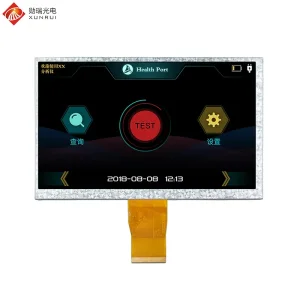
Custom 7 inch 1024×600 RGB 50pin 350nit TN TFT LCD Display Manufacturer, Supplier
View Specifications

Custom 10.4 inch 1024×768 LVDS 30pin 600nit IPS TFT LCD Module Factories, Factory
View Specifications
China 7 inch HDMI 1024×600 IPS TFT LCD Module With driver board and CTP Supplier, Factory
View Specifications
China 4.3 inch 800×480 IPS TFT LCD Module with capacitive touch panel Manufacturer, Suppliers
View Specifications
China 5 inch 480×272 RGB 40pin interface 350nit TN TFT LCD module Manufacturer, Factory
View Specifications
Custom 3.5 inch IPS TFT LCD 320×480 MCU 40pin interface 300nit Manufacturer, Factories
View Specifications