
TN / RGB
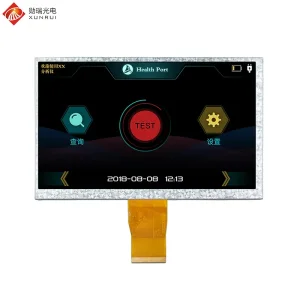
Explore our foundational modules featuring versatile interfaces (RGB, LVDS, MIPI, HDMI) and optical-grade laminations designed to accelerate OEM project prototyping.
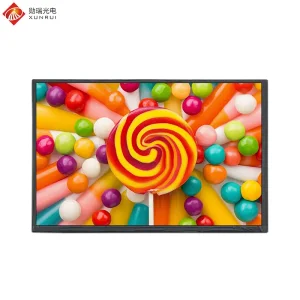



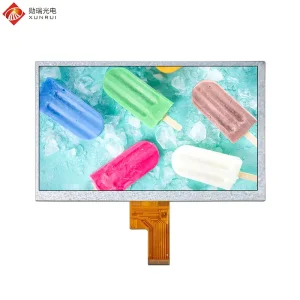

In modern industrial electronics, human-machine interface (HMI) design balances compact ergonomics with detailed visualization. While 7-inch displays were long considered the benchmark for small embedded terminals, the specialized 6.2-inch widescreen ratio (typically 16:9 or custom ultrawide aspect) has emerged as the premier choice for sleek hand-held diagnostic terminals, marine instrumentation, and dual-DIN automotive cockpits.
China's Pearl River Delta hub accounts for over 70% of global industrial TFT-LCD production. By utilizing Gen 5.5 and Gen 6 thin-film transistor fabrication facilities, Chinese manufacturers offer scalable yields, direct source BOM control, and customized glass-cutting methods that reduce the price barrier of specialized 6.2-inch glass compared to non-standard legacy fabs.
While legacy systems relied on Twisted Nematic (TN) panels (such as 800×480 RGB 60-pin modules), industrial procurement is rapidly shifting toward In-Plane Switching (IPS). IPS resolves the gray-scale inversion common in industrial handheld and cockpit orientations, offering full 85/85/85/85 symmetrical viewing angles vital for safety-critical interfaces.
Electromagnetic interference presents challenges in high-voltage industrial automation, medical robotics, and EV telematics. Premier Chinese manufacturing facilities now integrate specialized copper shielding, differential LVDS signaling, and isolated capacitive touch controllers (such as ILITEK and Goodix) to achieve strict EN 61000-6-2/4 compliance.
A deep architectural evaluation of modern 6.2-inch modules comparing classic cost-driven TN solutions with high-reliability IPS modules for mission-critical deployments.
| Evaluation Parameter | Legacy Cost-Optimized Spec (TN) | High-Reliability Industrial Spec (IPS) | Automotive / Outdoor Grade Spec |
|---|---|---|---|
| Typical Resolution | 800 × 480 (WVGA) | 1024 × 600 / 1280 × 720 (HD) | 1280 × 720 / 1920 × 720 (Ultrawide) |
| Viewing Angles (L/R/U/D) | 70 / 70 / 50 / 70 (Greyscale Inversion) | 85 / 85 / 85 / 85 (Free Angle) | 89 / 89 / 89 / 89 (Symmetrical IPS) |
| Luminance Rating | 350 – 500 nits (cd/m²) | 500 – 800 nits | 1000 – 1500 nits (Sunlight Readable) |
| Operating Temperature | -20°C to +70°C | -30°C to +80°C | -40°C to +85°C (AEC-Q100 Components) |
| Interface Supported | RGB 24-bit (50/60 Pin FPC) | LVDS Single-Channel / MIPI DSI | Dual-LVDS / Automotive SerDes |
| Optical Bonding Option | Frame Tape (Air Bonding) | OCA / LOCA Optical Bonding | Anti-Reflective (AR) + Anti-Glare (AG) |
| Product Longevity | 3 to 5 Years | 5 to 7 Years | 7 to 10+ Years (Strict EOL Notice) |
Analyzing structural demands across industries where a standard screen fails, but an engineered 6.2-inch optoelectronic assembly succeeds.

Direct exposure to dashboard sun necessitates wide temperature operation (-30°C to +85°C) and high-brightness LED backlights capable of 1000+ nits. A customized 6.2" widescreen profile fits standard DIN architectures while accommodating side touch-button layouts without blocking climate vents.

From portable barcode vision inspection terminals to fixed factory PLC screens, 6.2-inch displays deliver the visual depth needed for telemetry graphs. Featuring heavy-duty 4-wire resistive touch or high-noise PCAP supporting thick nitrile gloves, oil drops, and electrical noise.
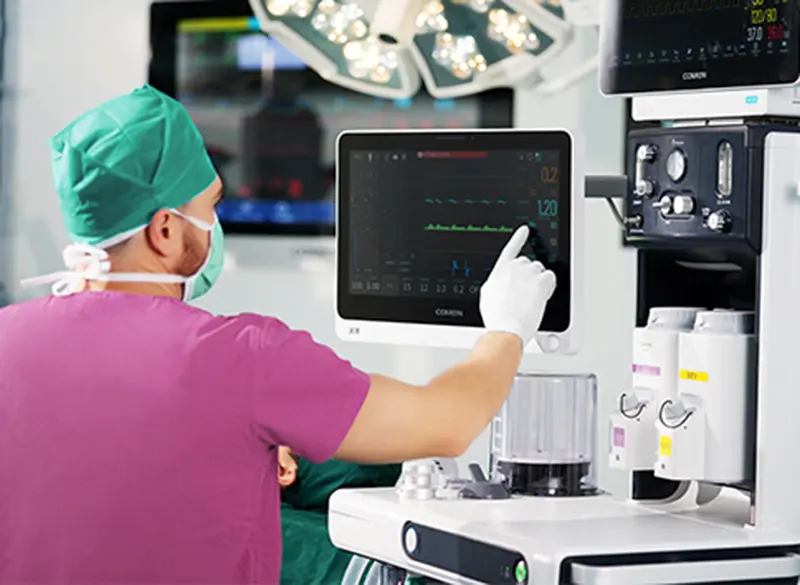
Patient telemetry systems and infusion monitors require pristine optical accuracy and sterilization-resistant antimicrobial surface glass. Using optically bonded IPS displays guarantees accurate readings of electrocardiograms regardless of the clinician's angle.
Overseas OEM sourcing requires more than an unverified low-cost quote. Our manufacturing facilities are anchored in rigorous traceability, global regulatory compliance, and life-cycle guarantees.
Every single glass run conforms to a multi-tiered inspection protocol: incoming optical inspection (IQC), automated glass-matrix verification, FOG bond line aging, full-module burn-in tests under elevated thermal loads, and outgoing (OQC) optical checks.
Full conformance to European and North American environmental directives. Raw glass substrates, polarizers, flexible circuits, and lead-free solders carry official RoHS 3 (EU 2015/863), REACH, and Conflict-Free Mineral declarations.
We solve the risk of unexpected LCD discontinuation. For industrial OEM contracts, we guarantee form-fit-function product lifecycles between 5 to 7 years, paired with contractual minimum 6-month Last-Time-Buy (LTB) notifications.
Don't limit your bill of materials to raw glass. We provide comprehensive peripheral hardware integrations: custom HDMI, VGA, and LVDS bridge boards, resistive and PCAP controller boards, and tempered AR/AF cover glass lamination.
The convergence of industrial automation, smart cockpits, and embedded edge devices requires smarter, thinner, and more power-efficient display modules.
Transitioning from edge-lit LED strips to zoned Mini-LED arrays, achieving local dimming, 100,000:1 contrast ratios, and lower power consumption for battery-powered instruments.
Combining the display driver IC and capacitive touch controller into a single Touch and Display Driver Integration (TDDI) chip, reducing FPC routing space and system thickness.
Engineering localized piezo-electric vibration feedback under thick cover glass, providing tangible confirmation to operators in mission-critical and blind-touch environments.
Direct integration of plasma-deposited durable oleophobic and anti-viral coatings on the surface polarizer, maintaining optical clarity after multiple wipe-downs.
Review additional standard and custom models across circular, square, and high-luminance industrial display panels ready for direct OEM procurement.






In-depth responses resolving engineering questions on customization, longevity, and thermal stability.