

Featured Industrial Display Lineup
Explore high-reliability visual computing modules engineered for embedded edge systems, automotive human-machine interfaces, and precision medical terminals.

China 5 inch 480×272 TN TFT LCD Module with capacitive touch panel Manufacturers, Factory
View Specifications
Custom 4.3 inch TFT LCD 800×480 RGB 40pin interface 300nit IPS module Manufacturer, Supplier
View Specifications
Custom 8 inch 1200×1920 MIPI 40pin 350nit IPS TFT LCD Display Module Manufacturer, Supplier
View Specifications
Custom 2.8 inch 240×320 SPI 10pin 250nit TN TFT LCD Display Supplier, Factories
View Specifications
China 7 inch 800×480 1000nit Wide Operating Temperature Range TN TFT LCD Display Manufacturer, Manufacturers
View Specifications
Custom 10.1 inch 1024×600 TN TFT LCD display with resistive touch panel Supplier, Suppliers
View Specifications
Custom 3.5 inch 320×240 960nit IPS TFT LCD With capacitive touch panel Supplier, Factories
View SpecificationsTechnical Architecture: The 6.2-Inch Form Factor in Global Electronics
A rigorous examination of optical performance, aspect ratio ergonomics, and ruggedization metrics for procurement directors and embedded system designers.
2,000,000+
Monthly Module Output
5,000 m²
Cleanroom Manufacturing
1,000+ Nits
Sunlight Readable Lumens
ISO 9001/14001
Quality Assurance Certified
Golden Aspect Ratios & Ergonomics
The 6.2-inch TFT LCD form factor (commonly deployed in wide formats like 16:9, 18:9, and customized bar configurations) fills the critical operational gap between ultra-compact 4.3"/5.0" displays and standard 7.0" panels. In embedded handheld hardware, this diagonal provides maximal active display area (A.A.) while preserving single-hand grip parameters and minimizing peripheral enclosure mass.
High-Brightness Optical Stacking
To mitigate high ambient wash-out in direct sunlight conditions, our factory integrates advanced light guide plates (LGP), high-efficacy Nichia LED arrays delivering up to 1,200 nits, and transflective polarizers. Optically bonded cover glass with Anti-Reflective (AR) and Anti-Glare (AG) vacuum-sputtered coatings reduces internal refractive interfaces, ensuring a contrast ratio exceeding 800:1 outdoors.
EMI Immunity & Industrial Touch ICs
Operating in environments inundated with electromagnetic interference (EMI) demands robust touch controller configurations. Integrating Ilitek, FocalTech, and Goodix touch chipsets via customized I2C/USB interfaces, our capacitive touch modules deliver continuous water-rejection calibration, palm rejection algorithms, and thick cover lens operation up to 6mm tempered soda-lime or aluminosilicate glass.
Broad Interface Adaptability
System designers face fragmentation across host processors. Xunrui's 6.2-inch platform accommodates multi-lane MIPI-DSI for modern low-power Linux/Android architectures, RGB parallel interfaces for RTOS embedded microcontrollers, and low-voltage differential signaling (LVDS) alongside standalone HDMI/VGA driving daughterboards for legacy industrial PC frameworks.
Thermal Resilience (-30°C to +85°C)
Standard consumer grade liquid crystals fail via clearing point crystallization or elevated viscosity in field extremes. Our wide-temperature industrial TFT formulations operate reliably across -30°C to +85°C storage and operational ranges without isotropic liquid phase transformation, preventing black-screen phenomena across heavy fleet and extreme climate utility monitoring.
Global Commercial Verticals & Macro Solutions
Standardizing mission-critical display assemblies across automotive, medical diagnostic, and automated smart-grid deployments.
| Vertical Market | Deployment Environment | Primary Technical Challenge | Xunrui 6.2" Customized Countermeasure |
|---|---|---|---|
| Automotive & Commercial Fleets | In-cab infotainment, auxiliary digital clusters, dashcam HUDs | High solar luminance, vibration fatigue, AEC-Q100 compliance | Optical bonding (LOCA/OCA), 1,000+ nits backlight, custom high-flex FPC routing |
| Diagnostic Medical Devices | Portable ultrasound, blood gas analyzers, patient monitors | Bleach/chemical wipe erosion, electrical noise from motors | Chemically strengthened AG/AF glass covers, medical PCAP controller firmware, wide viewing angle IPS |
| Smart Grid & Industrial IoT | Substation power monitors, outdoor EV charging stations | Rainfall false-actuation, wide thermal fluctuations, 24/7 duty | Water-droplet immune capacitive touch tuning, transflective polarizers, wide-temperature liquid crystal fluid |
| Defense & Rugged Handhelds | Field terminals, secure communications, barcode scanners | Drop impact shock, extreme cold responsiveness, glove operation | IK08/IK10 rated cover glass lamination, high-sensitivity mutual-capacitive ICs, customized housing gaskets |
Rigorous Five-Stage Quality Assurance Architecture
Certified to ISO 9001 and ISO 14001, our factory operates cleanroom production facilities adhering to stringent military-standard thermal and drop cycles.
1. IQC Incoming Raw Material Inspection
Every batch of raw glass substrates, driver ICs, polarizer sheets, and light bars undergoes rigorous automated optical inspection (AOI) to eliminate particle defects, sub-micron cracks, and chromatic aberrations before assembly.
2. FOG (Film on Glass) & Bonding
High-precision automatic FOG bonding lines affix ACF (Anisotropic Conductive Film) with sub-micron alignment accuracy. Continuous thermocompression profile testing guarantees connection integrity under high vibrational stress.
3. 100% Thermal & High-Voltage Burn-In
Modules are cycled through 48-hour continuous elevated temperature burn-in chambers (+60°C, 90% RH). This process forces infant mortality failures at our Shenzhen plant rather than in critical field devices.
4. ESD & Environmental Verification
Touch panels and modules pass air discharge up to ±15kV and contact discharge ±8kV testing in compliance with IEC 61000-4-2. Drop, salt-mist, and UV-degradation evaluations are conducted on random assembly lots.
5. OQC Export Clearance & Packaging
Every module is sealed in anti-static ESD packaging with custom thermoformed trays. Shipments comply strictly with RoHS, REACH, CE, and FCC regulatory export standards for seamless entry into North American and European supply chains.
R&D Technology Roadmap & Future Outlook
Anticipating next-generation human-machine interfaces through continuous material science and display driver advancements.
Mini-LED Direct Backlighting
Transitioning from traditional edge-lit configurations to local dimming zones, providing ultra-high contrast ratios (>100,000:1) and HDR performance while trimming back unit heat dissipation.
Integrated Haptic Feedback
Embedding localized piezoelectric actuators directly beneath the capacitive touch surface, providing physical tactile verification for safety-critical automotive and industrial dashboard actions.
Ultra-Low Power Bi-Stable TFT
Integrating hybrid reflective memory-in-pixel (MIP) technology within secondary display layers to allow static display states with micro-ampere power draws for remote solar-powered sensor nodes.
Smart Touch Edge AI
Deploying tinyML neural networks directly onto touch controller silicon to run real-time gesture predictive tracking, dynamic palm cancellation, and zero-latency wet-surface trajectory mapping.
Procurement & Engineering FAQ
Crucial commercial, technical, and logistical specifications addressing standard questions from engineering directors and procurement heads.
What is the standard lead time for customized 6.2" prototypes versus mass production?
For custom FPC designs, backlight enhancements, or cover glass silkscreen tailoring, prototype tooling and sample delivery typically require 18 to 25 business days. Once engineering sign-off is finalized and sample approvals are logged, standard mass-production runs require 4 to 6 weeks, bolstered by safety-stock programs for long-term supply agreements.
Can you provide optical bonding (OCA/LOCA) for outdoor rugged environments?
Yes. We offer both air bonding (perimeter tape gasket) and full optical bonding using Optically Clear Resin (LOCA) or Optically Clear Adhesive (OCA) sheets. Full optical bonding eliminates the air gap between the TFT panel and the touch sensor, which mitigates internal light reflections, improves impact absorption by up to 300%, and prevents moisture condensation.
How does Xunrui protect industrial clients against component end-of-life (EOL)?
Industrial applications demand lifecycle stability of 5 to 7+ years. Xunrui maintains close tier-one foundry partnerships and selects industrial-longevity glass and controller chipsets. In the rare event of upstream component discontinuation, we provide a minimum of 6 to 12 months advance notice with pin-compatible dropped-in alternatives, guaranteeing stable revision control.
What minimum order quantities (MOQ) apply to customized display stacks?
To de-risk capital investment for new product introductions (NPI), Xunrui offers initial trial batches of 5 to 500 units for mechanical and software validation. For ongoing mass-production schedules requiring customized glass cutting, FPC tooling, or bespoke cover lens silk-screening, our baseline MOQ is structured at 1,000 units per scheduled release.
Extended Small-to-Mid Form Factor Solutions
Discover complementary modules engineered under identical industrial quality controls, ranging from sub-compact wearable interfaces to high-definition HMI panels.

China 4.3 inch 800×480 IPS TFT LCD Module with capacitive touch panel Manufacturer, Suppliers
View Specifications
China 5 inch 800×480 1200nit High brightness TN TFT LCD module Suppliers, Factories
View Specifications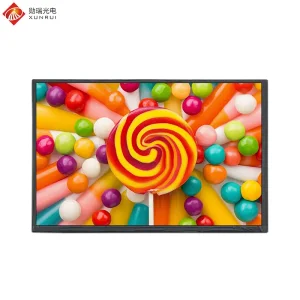
China 10.1 inch 1920×1200 LVDS 45pin 350nit IPS TFT LCD Display Manufacturers, Factories
View Specifications
China 2.8 inch 240×320 MCU 30pin interface 250nit TN TFT LCD display Manufacturers, Factories
View Specifications
Custom 2.8 inch 240×320 TN TFT LCD Module with resistive touch panel Manufacturers, Supplier
View Specifications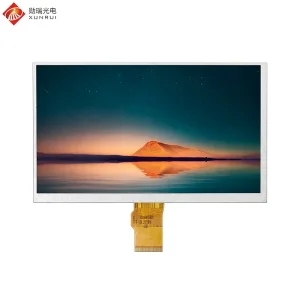
Custom 9 inch 800×480 RGB 50pin interface 500nit TN TFT LCD module Manufacturer, Suppliers
View Specifications
China 1.3 inch 240×240 SPI 16PIN IPS TFT LCD Module With Capacitive touch Supplier, Factory
View Specifications