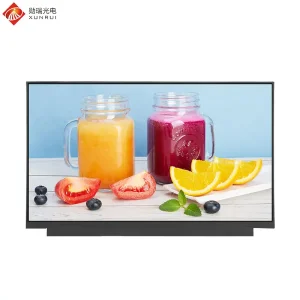
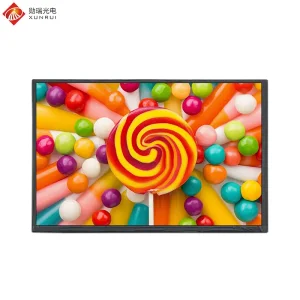
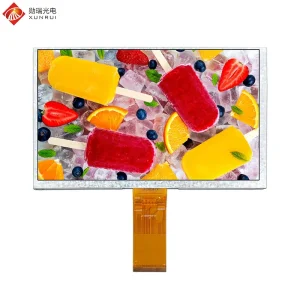
Industrial & Automotive TFT Product Matrix (Part 1)
Explore engineering-grade display modules customized with flexible FPC designs, extended optical enhancements, and full driver board integration.

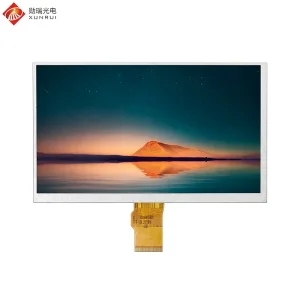



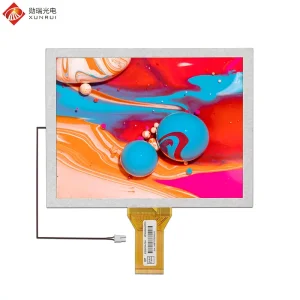

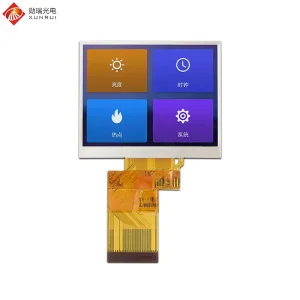
Industry Evolution: The Strategic Rise of 6.2" TFT LCD Panels
An engineering analysis of why the 6.2-inch aspect ratio has rapidly become the prime sweet spot for rugged touch terminals, next-generation double-DIN car head units, and portable diagnostic consoles.
Standardization Meets Flexibility
The 6.2-inch TFT display solves a critical mechanical design paradox: balancing physical panel dimension limitations against user visual accessibility. Initially born from double-DIN automotive dashboard dimensions (where a pure 7-inch setup often encroached on mechanical buttons), the 6.2-inch panel has achieved significant volume economies.
- Native 800×480 WVGA and 1560×720 HD Options
- Preserves Physical Tactile Knobs & Rotary Encoders
- Highly Cost-Effective Glass Substrate Utilization
Optical Bonding & IPS Dominance
Traditional TN (Twisted Nematic) displays suffered from grayscale inversion when viewed from lower steering angles or elevated industrial cranes. Modern Chinese manufacturers have migrated 6.2-inch production lines to All-Viewing-Angle IPS technology coupled with LOCA/OCR full optical lamination.
- Symmetrical 85/85/85/85 Degree Viewing Cones
- Elimination of Internal Boundary Reflections
- Anti-Glare (AG), Anti-Fingerprint (AF) & AR Coating
EMI Suppression & Extended Thermal Durability
Industrial machinery and vehicle alternators introduce substantial electromagnetic noise and extreme temperature variations. Modern 6.2-inch modules feature isolated ground plane layouts and dedicated ESD protection arrays alongside high-reliability polarizers designed to endure punishing environments.
- High Tg (>105°C) Liquid Crystal Fluid Formulations
- Automotive Conductive ITO Shielding Layers
- ISO 16750-4 Climatic Cycle Compliant
China Factory 4.0: Supply Chain Agility & Global Procurement Matrix
Why Tier-1 engineering procurement leads in Europe, North America, and Japan choose Shenzhen manufacturing clusters for 6.2" custom display fabrication.
Automated Cleanroom Line Yields
Shenzhen Xunrui Optoelectronics integrates Class 1,000 cleanroom facilities featuring automated COG (Chip-on-Glass) and FOG (Film-on-Glass) thermal bonding systems. High-precision vision cameras correct sub-micron alignment errors automatically, ensuring zero bubbling, exact silver-paste continuity, and extreme particle rejection.
Vertical Upstream Synergies
By sitting at the epicenter of the Pearl River Delta display ecosystem, component lead times for LED backlight driver rails, chemical strengthened cover plates (Gorilla / Panda / Asahi), and specialty PCAP controller ICs (Goodix, Ilitek, EETI) are reduced from months to days, drastically compressing the NPI (New Product Introduction) schedule.
5-Stage Zero-Defect Inspection Gate
Every single batch passes rigorous checks: IQC incoming inspection, precision microscope glass substrate check, FOG bonding validation with heat-stress burn-in, full-spectrum luminance uniformity testing (measuring chromaticity xy and center nit values), ending with 100% OQC pre-shipment inspection under ISO 9001 and ISO 14001 guidelines.
| Evaluation Metric | Legacy Western / Domestic Brokers | Xunrui Optoelectronic (Direct Factory 4.0) | Strategic Advantage for Global B2B |
|---|---|---|---|
| NPI Engineering Prototyping | 8 to 14 Weeks Standard | 10 to 18 Business Days | Saves months of system go-to-market validation |
| Customization Scope | FPC modification only (rigid limitations) | Custom Cover Glass, FPC, Interface, Backlight & Bonding | Drop-in mechanical alignment with existing enclosure molds |
| Direct Technical Communication | Multi-tiered third-party agent layers | Direct Senior Optical & Firmware Engineer Interaction | Eliminates lost-in-translation signal timing and ESD bugs |
| Small-Batch Production Runs | Requires strict 5K+ MOQ from Day 1 | 5 to 500 pcs pilot run, followed by scalable MOQ | De-risks production ramp-up for custom capital equipment |
| Long-Term Lifecycle Commitment | Frequent EOL (End of Life) disruptions | Guaranteed 5 to 7 Year Form-Fit-Function Continuity | Protects extensive medical and automotive qualification costs |
Target Application Scenarios & Field Implementations
Engineered to operate reliably across harsh industrial environments, vehicle dashboards, medical patient terminals, and outdoor IoT monitors.
Automotive Infotainment & Telematics
Custom 6.2-inch widescreen configurations integrate seamlessly into DIN radio cavities and commercial fleet tracking terminals. The high ambient contrast ratio remains crystal clear whether driving under direct midday sunlight or navigating at night.
- 1000~1500 Nits High Brightness
- CAN-Bus / LVDS / MIPI Compatibility
Industrial PLC & CNC Touch Consoles
Factory automation floors subject displays to heavy physical vibration, oil splashes, and chemical cleansers. Equipped with 4-wire resistive panels or thick 3mm chemically tempered PCAP glass, screens maintain uninterrupted tracking even when used with heavy nitrile work gloves.
- IK08 Impact Resilient Cover Glass
- Complete Industrial EMI Hardening
Medical Diagnostics & Patient Monitors
Infusion pumps, handheld blood analyzers, and bedside monitors demand flawless viewing angles, true-to-life color rendering, and completely sealed bezels to withstand strict clinical disinfection routines.
- True Color IPS Architecture
- Antimicrobial & Hydrophobic Surface Treat
Smart Metering & Smart Grid Infrastructure
Installed across extreme geographical regions from Scandinavian sub-zero environments to Middle Eastern desert heat, these 6.2-inch modules power electric vehicle charging hubs (EVSE) and utility substation status displays without backlight dimming or pixel burn-out.
- Continuous 24/7/365 Runtime Rating
- Optical Clearing to Prevent UV Yellowing
Frequently Asked Questions (Procurement & Technical FAQ)
Detailed insights compiled directly by our hardware engineering team to help you navigate interface protocols, customization variables, and quality assurance criteria.
What are the key technical differences between 6.2" and standard 7.0" TFT displays?
Which interfaces are supported for 6.2 TFT LCD displays (RGB, LVDS, MIPI, SPI)?
- TTL / RGB (24-bit): Highly favored in low-cost microcontroller and RTOS setups (such as STM32, ESP32-P4, and NXP i.MX RT series).
- LVDS (Single / Dual Channel): The industrial workhorse for high noise immunity over moderate cable runs up to several meters.
- MIPI DSI: Ideal for Linux/Android single board computers (Rockchip, Allwinner, Qualcomm, Raspberry Pi CM4) demanding high frame rates and thin FPC wire counts.
- HDMI / Type-C Driver Boards: Plug-and-play complete monitor modules accepting direct video streams from industrial PCs.
Can Xunrui customize the FPC pinout, backlight luminance, and cover glass for a 6.2" module?
1. FPC Geometry: Length, bend radius, EMI shielding tape, component placement, and matching zero-insertion-force (ZIF) pinouts to ensure seamless plug-in compatibility with legacy carrier boards.
2. Backlight Arrays: Adjusting serial/parallel LED counts from standard 350-nit indoor specs up to high-intensity 1500+ nit configurations with constant-current drivers.
3. Cover Glass: Custom silk-screen printing (logos, tinted borders), custom physical cutouts, chemically strengthened Soda Lime or Gorilla Glass, and specialized coatings including Anti-Reflective (AR), Anti-Fingerprint (AF), and Anti-Glare (AG).
What is the typical lead time and MOQ for custom tooling prototypes vs volume orders?
How does the factory prevent optical issues like condensation, glare, and dust ingress?
1. No Internal Condensation: Eliminates moisture ingress and fogging in marine or outdoor climates.
2. Superior Impact Resistance: Distributes shock energy across the entire stack, achieving higher IK impact ratings.
3. Reduced Surface Reflection: Minimizes loss of light by up to 400%, allowing outstanding sunlight readability without excessively overdriving the LED backlight.
Industrial & Automotive TFT Product Matrix (Part 2)
Complete your hardware BOM with our extended portfolio of high-resolution, wide-temperature, and ultra-wide viewing angle displays.