

Featured Product Matrix
Featured Industrial TFT LCD Modules
High-reliability TFT assemblies featuring IPS wide viewing angles, integrated PCAP touch, and ultra-high luminance backlighting calibrated in our ISO 9001 certified facility.

China 5 inch 800×480 1200nit High brightness TN TFT LCD module
View Specifications
Custom 4.3 inch TFT LCD 800×480 RGB 40pin interface 300nit IPS module
View Specifications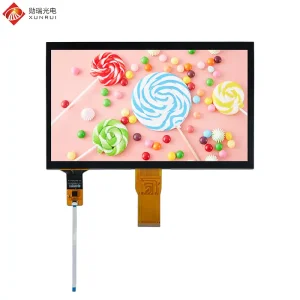
China 10.1 inch 1024×600 RGB IPS TFT LCD Module with capacitive touch
View Specifications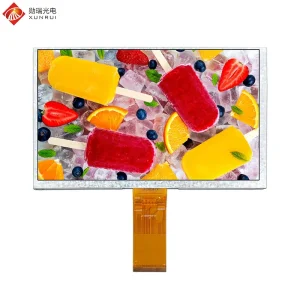
Custom 9 inch TFT LCD Module 1024×600 LVDS 60pin 400nit IPS Screen
View Specifications
Custom 4.3 inch 480×272 IPS TFT LCD display with capacitive touch panel
View Specifications
Custom 2.8 inch 240×320 SPI 10pin 250nit TN TFT LCD Display
View Specifications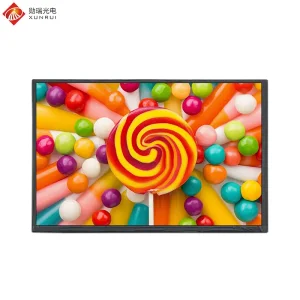
China 10.1 inch 1920×1200 LVDS 45pin 350nit IPS TFT LCD Display
View Specifications
Industry Architecture
Engineering Taxonomy: The 6.2" TFT LCD Sweet Spot in Global HMI
Analyzing why modern industrial control, automotive clusters, and precision medical terminals prioritize the 6.2-inch ultra-wide and standard form factor over traditional 5.0" and 7.0" boundaries.
Form Factor Optimization
The 6.2-inch diagonal geometry offers a calibrated compromise between compact handheld mechanics and expansive multi-parameter UI layouts. Typically available in resolutions such as 800×480 (WVGA) and ultra-wide bar cuts, it enables seamless DIN-rail, 2DIN in-dash vehicle mounts, and mobile instrument enclosures without thermal congestion.
Optical Engineering & High Luminance
To counter direct sunlight washouts in outdoor terminals, our China manufacturing facility implements advanced light-guide plates (LGP), high-efficiency Nichia LED matrices, and specialized polarizers. Luminance thresholds exceed 1,000 to 1,500 nits, while retaining an extended half-life exceeding 50,000 operational hours at continuous duty.
Bus Interface Redundancy
Bridging legacy and state-of-the-art architectures, our 6.2 TFT screen lines integrate RGB 24-bit, Single/Dual-channel LVDS, and MIPI DSI interfaces. For microcontroller-driven architectures (MCUs), customized SSD1963 or RA8875 timing controller bridge boards are integrated directly onto the flex PCB (FPC).
Target Deployments
Localized Application Scenarios: Where the 6.2 TFT Screen Excels
Engineered precisely to solve spatial, thermal, and functional constraints across industrial automation, telematics, and healthcare infrastructure.
Commercial Fleet & 2DIN Telematics
Automotive dashboards, off-highway tractors, and logistics fleet terminals utilize our anti-glare (AG) treated 6.2 TFT displays. Featuring wide temperature liquid crystal chemistry (-30°C to +85°C), they resist isotropic blackening under direct windshield solar radiation.
Medical Infusion & Diagnostic Carts
Sterilizable cover glass with anti-bacterial (AB) and anti-fingerprint (AF) coatings. Tuned capacitive touch controllers operate accurately through latex, nitrile surgical gloves, or saline mist, providing critical hemodynamic curves with high contrast ratios.
Industrial PLC & Edge Controllers
In cabinet control systems exposed to high electrical interference (EMI), our 6.2 modules feature shielded grounding frames, differential signaling via LVDS, and reinforced 4-wire resistive touch options immune to variable frequency drive (VFD) switching noise.
Smart EV Charging & Energy Storage
Deployed inside public EV charging piles, energy storage inverters, and outdoor vending kiosks. These units benefit from IK08/IK10 rated tempered cover lenses, optical bonding to eliminate internal condensation, and UV-resistant polarizers.
Engineering Evaluation
Display Stack Comparison Matrix for 6.2" Implementations
Evaluate fundamental trade-offs between Twisted Nematic (TN) and In-Plane Switching (IPS) technologies, along with bonding methodologies critical to your product life cycle.
| Performance Vector | Industrial TN Module | Industrial IPS Module (Xunrui Standard) | Air Bonding Stack | Optical (OCA/LOCA) Bonding Stack |
|---|---|---|---|---|
| Viewing Angle (CR ≥ 10) | 6 o'clock or 12 o'clock dependent (60/60/50/60) | Full Symmetrical Viewing (85/85/85/85 All angles) | Standard cone angle | Maximizes effective optical visibility |
| Sunlight Legibility | Requires 1,000+ nits to counter haze | Superior baseline contrast (800:1 - 1000:1) | 3 reflections (Glass/Air/Polarizer) ~4.5% loss | < 0.5% internal reflectance |
| Operating Temperature | -20°C to +70°C | -30°C to +85°C (Extended Automotive) | Risk of condensation under rapid cycling | Hermetically sealed against moisture/dew |
| Touch Sensor Synergy | Resistive / Thin PCAP | Projected Capacitive (PCAP) up to 10 points | Vulnerable to Newton rings on impact | Withstands IK08 to IK10 mechanical shock |
| Lifecycle Availability | 3 - 5 Years | 7 - 10 Years Continuous Roadmapped Supply | Standard tooling cost | Lowest field return & RMA failure rate |
Supply Chain Excellence
China Factory Supply Chain Resilience & Shenzhen Efficiency
Shenzhen Xunrui Optoelectronic Technology Co., Ltd. operates at the core of the Greater Bay Area display cluster, unlocking unmatched vertical integration from mother glass slicing to final optical bonding.
5-Stage Quality Inspection Gates
Zero-defect compliance driven by strict quality gate checkpoints: 100% IQC raw materials inspection, open-cell clean-room glass inspection, automated FOG (Film on Glass) bonding with thermal aging, finished display burn-in with dynamic pattern generators, and stringent OQC outgoing testing conforming to MIL-STD-105E.
Pilot Prototyping to High-Volume
We break the standard barrier of high initial MOQs. Following comprehensive sample validation, Xunrui offers an agile pilot trial batch of 5 to 500 units. Once design freeze and pilot qualification are confirmed, our 5,000 m² cleanroom infrastructure scales effortlessly into sustained mass production with an output capacity exceeding 2,000,000 units monthly.
Total Hardware Customization
Our engineering facility directly manages custom FPC trace routings, specialized pin-out configurations, customized LED driver backlights, chemically strengthened cover glass (Corning Gorilla / AGC Dragontrail), screen printing, and driver board firmware customization (HDMI, VGA, Type-C, LVDS).
2016
Established in Shenzhen
5,000 m²
Cleanroom Manufacturing Floor
2,000,000
Monthly Module Output Capacity
ISO 9001
& ISO 14001 Quality Assured
Technology Evolution
Technology Roadmap: 6.2 TFT Display Innovations & Next-Gen HMI
Exploring the transition toward quantum-dot films, integrated haptic feedback, Mini-LED local dimming, and low-power reflective hybrid architectures.
Mini-LED Backlighting & HDR
Integrating multi-zone Mini-LED backlighting into 6.2-inch industrial panels enables local dimming with contrast ratios exceeding 100,000:1. This drastically cuts power consumption in battery-operated handheld devices while achieving automotive HDR legibility under harsh ambient glare.
Haptic Feedback & Hover Sensing
Future industrial HMI requires tactile confirmation without taking eyes off critical equipment. Next-generation 6.2 PCAP stacks incorporate piezoelectric actuators and high-sensitivity ICs supporting proximity hover sensing up to 15mm, perfect for sterile medical environments.
Ultra-Low Power Transflective Chemistries
For off-grid IoT sensors, tracking devices, and outdoor smart grids, our engineering lab is advancing semi-transmissive (transflective) TFT polarizers. These displays harness ambient sunlight as a primary illuminator, reducing LED backlight power by up to 80% during peak daytime hours.
Global Assurance
Localization Support, Longevity & International Compliance
Eliminate supply chain uncertainty with transparent component traceability, EOL mitigation roadmaps, and full international regulatory compliance.
Full Regulatory Compliance
All TFT modules manufactured at Xunrui comply with RoHS 2.0 (EU 2015/863), REACH (EC 1907/2006), and halogen-free standards. Our displays meet CE, FCC Part 15 Class B, and automotive ESD requirements (IEC 61000-4-2 Level 4: ±8kV Contact, ±15kV Air discharge).
7 to 10-Year EOL Management
Industrial programs demand multi-year consistency. Xunrui contracts long-term supply arrangements directly with silicon foundries and glass fabricators. In the event of upstream driver IC obsolescence, our Shenzhen R&D team executes pin-compatible drop-in retrofits with 6 to 12 months advance Last Time Buy (LTB) notices.
Direct Global Field Application Engineering
Gain fast, direct access to experienced display engineers. We provide comprehensive mechanical STEP 3D files, FPC layout DXF drawings, initialization source code (C/C++), and timing sequence debugging support across North America, Europe, and Asia-Pacific time zones.
Comprehensive Catalog
Explore Additional Specialized TFT Modules
From ultra-compact smart knobs to large high-resolution interactive HMIs, select standard or fully customizable display platforms built in our factory.
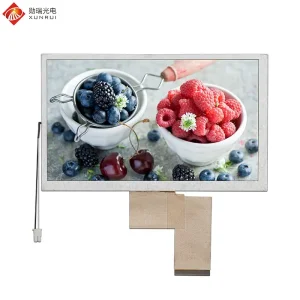
Custom 8 inch 800×480 RGB 60pin 350nit TN TFT LCD Module
View Specifications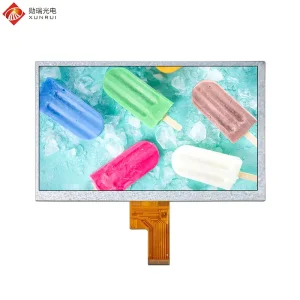
China 7 inch 1024×600 MIPI 30PIN 350nit IPS TFT LCD Display
View Specifications
Custom 10.1 inch 1024×600 1000nit High brightness TN TFT LCD module
View Specifications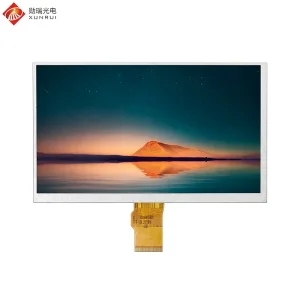
Custom 9 inch 800×480 RGB 50pin interface 500nit TN TFT LCD module
View Specifications
China 4.3 inch 480×272 RGB 40pin interface 350nit TN TFT LCD module
View Specifications
Custom 4.3 inch 480×272 MCU/SPI 40pin 350nit TN TFT LCD Display
View Specifications
Custom 10.1 inch 1024×600 LVDS 40pin 1000nit IPS TFT LCD Display
View Specifications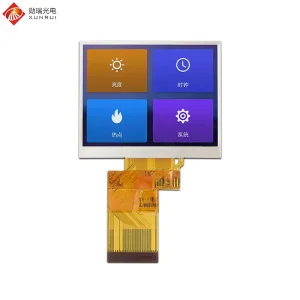
China 3.5 inch 320×240 RGB 54pin interface 350nit TN TFT LCD module
View Specifications
Technical & Procurement FAQ
Frequently Asked Questions: 6.2 TFT Screens & Custom Manufacturing
Direct technical and commercial answers from our engineering directors for display hardware developers, procurement leads, and system integrators.
What is the standard pinout and interface protocol for a 6.2 TFT screen?
The most standard 6.2-inch industrial panels utilize a 40-pin or 50-pin FPC delivering 24-bit RGB (TTL) or Single-channel 6/8-bit LVDS signals. For embedded automotive clusters and mobile terminals, 4-lane MIPI DSI interfaces are also widely supported. We provide adapter boards converting native interfaces directly into industrial HDMI or Type-C USB interfaces.
What is the MOQ and development lead time for a customized 6.2" display?
Initial engineering drawings take 3 to 5 working days. Physical samples are fabricated within 2 to 3 weeks upon drawing signoff. After sample qualification, we provide an agile pilot trial run of 5 to 500 units to validate mass production assembly lines. Volume production carries an MOQ of 1,000 units with delivery lead times typically between 4 to 6 weeks.
How does Xunrui achieve sunlight readability without thermal thermal runaway?
Sunlight readability is achieved using high-efficiency white LED chips (driving 1,000 to 1,500 nits) paired with enhanced aluminum heat-sink backplates that conduct heat away from the LCD cell. Additionally, we integrate low-reflection polarizers and full optical bonding (OCA/LOCA), reducing internal surface reflectance from 4.5% to below 0.5% without consuming unnecessary electrical wattage.
What touch panel options can be laminated onto the 6.2 TFT screen?
We offer both Projected Capacitive Touch (PCAP) with I2C/USB interfaces (supporting multi-touch, glove touch, and water rejection via Ilitek or Goodix ICs) and durable 4-wire Resistive Touch Panels (RTP) ideal for harsh industrial environments prone to heavy electromagnetic interference (EMI).
Can cover glass be customized with specific logos, cutouts, and surface treatments?
Yes. We supply chemically strengthened soda-lime or aluminosilicate cover glass ranging from 0.7mm to 6.0mm in thickness. Surface treatments include Anti-Glare (AG) via chemical etching, Anti-Reflective (AR) optical sputtering, and Anti-Fingerprint (AF) oleophobic vacuum evaporation. Custom ceramic silk-screen borders and custom CNC shapes are manufactured to drawing specifications.
How are quality standards maintained under ISO 9001 and ISO 14001?
All assemblies undergo five sequential inspection milestones: Incoming Raw Material QC (IQC), raw glass array test, automated COG/FOG bonding check with thermal shock, 100% full-screen burn-in inspection at 50°C under dynamic visual gradients, and final Outgoing Quality Control (OQC) packaging inspection for ESD compliance.